
Biotin IV Drip for Hair Loss: Does Intravenous Biotin Work Better Than Tablets?
Published on Mon Apr 06 2026
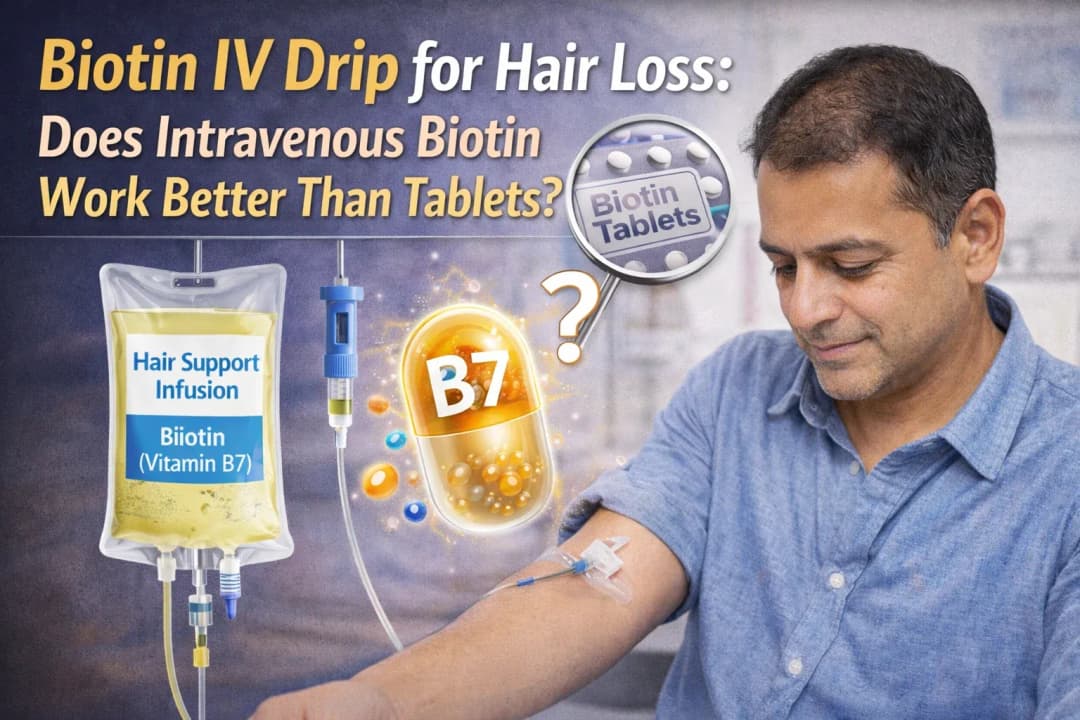
A biotin IV infusion for hair growth pushes concentrated Vitamin B7 directly into your bloodstream. By bypassing the digestive tract, a biotin IV drip for hair ensures 100% bioavailability, accelerating keratin synthesis and strengthening the hair shaft from within.
While traditional oral supplements are effective for general maintenance, intravenous therapy is a clinically superior option for individuals with malabsorption issues, chronic stress-induced shedding, or documented deficiencies. Most patients observe a visible improvement in hair density and texture within 8 to 12 weeks of consistent clinical sessions.
If you have been taking daily biotin supplements for months with no visible change in hair density, you are not alone. It is a common frustration among many young to middle-aged people to see visible thinning in spite of taking biotin gummies.
At Kibo Clinics, we frequently address the fact that vitamins sometimes fail because the gut absorbs only a limited amount of nutrients. While oral tablets are the standard starting point, a biotin IV drip for hair is a clinical alternative that bypasses digestive barriers.
Both treatments support keratin production, but they interact differently with your biology. One depends on digestion, while the other delivers nutrients directly to the bloodstream. This guide explains how a biotin IV drip works, what nutrients it contains, and who benefits the most.
What is a Biotin IV Drip For Hair?
A biotin IV drip for hair is a clinical procedure that delivers concentrated Vitamin B7 directly into the bloodstream using a thin cannula. Unlike oral tablets, this intravenous method bypasses the gut entirely so that hair follicles receive immediate nourishment.
The efficiency of oral supplements is often limited. Studies show that only about 30-60% of a tablet dissolves in the stomach. Absorption drops further for individuals with IBS, Crohn’s disease, celiac disease, or those who have undergone bariatric surgery.
Biotin IV Drip vs Oral Tablets
| Factor | Biotin IV Drip for Hair | Oral Tablets |
|---|---|---|
| Absorption | Almost 100% | Around 30-60% depending on gut health |
| Speed of Effect | Immediate bloodstream absorption | May take several weeks |
| Nutrient Combination | Treats multiple deficiencies in one session | Usually one nutrient at a time |
| Convenience | Clinic visit, 30-60 minutes | Daily tablets at home |
| Best Suited For | Confirmed deficiency or malabsorption | General maintenance |
| Lab Test Interference | High dose biotin may affect tests | Same caution applies |
If you are a healthy adult with no absorption issues, oral biotin tablets may work within 3-6 months. But if your gut absorption is compromised, IV therapy may be the logical next step.
Does Biotin IV Drip Work? Clinical Expectations vs Reality
Yes, biotin IV infusion for hair growth can work effectively when hair loss is linked to nutritional deficiencies or metabolic causes.
By delivering Vitamin B7 directly to the bloodstream, the infusion helps dormant follicles return to the growth phase (Anagen).
What It Can Do
- Reduce shedding caused by telogen effluvium or postpartum recovery
- Improve hair thickness and strength
- Correct persistent nutritional deficiencies
What It Cannot Do
- It does not cure genetic balding or androgenetic alopecia
- It cannot revive follicles damaged by permanent scarring
Studies suggest that up to 38% of women experience hair fall related to biotin deficiency or other nutritional gaps.
What Nutrients Are Included in the Biotin IV Drip?
A Biotin IV drip typically contains a blend of vitamins, minerals, and amino acids that support follicle health.
At Kibo Clinics, the IV Hair Booster includes:
| Nutrient | Purpose in the Drip |
|---|---|
| Biotin (Vitamin B7) | Improves keratin synthesis and follicle metabolism |
| B-Complex (B1, B5, B6, B12) | Supports scalp circulation and red blood cell production |
| Zinc | Regulates follicle cycle and reduces shedding |
| Amino Acids | Essential building blocks for keratin |
| Vitamin C | Supports collagen production and iron absorption |
| Glutathione | Antioxidant that reduces oxidative stress |
| Calcium & Potassium | Improves cellular signaling within follicles |
Ideal Candidates for Biotin IV Infusion
You may be a suitable candidate if:
- Your blood tests confirm nutrient deficiencies
- Oral supplements failed after 3 months
- You have digestive disorders affecting absorption
- Your hair shows brittleness or slow growth
- You experienced hair fall after illness or stress
- You notice diffuse thinning across the scalp
Which Method is Right for You?
| Feature | Biotin IV Drip | Oral Supplements |
|---|---|---|
| Best For | Correcting nutrient deficiencies | General maintenance |
| Absorption | 100% bioavailability | Depends on gut health |
| Clinical History | Used when oral pills fail | First step for mild cases |
| Hair Condition | Diffuse thinning or slow regrowth | Maintenance for mild issues |
Possible Side Effects and Risks
Biotin IV therapy is generally safe when administered by trained professionals. Some possible effects include:
- Mild bruising at the injection site
- Temporary lightheadedness
- Warm sensation during infusion
- Nausea if infusion runs too quickly
High doses of biotin can also interfere with certain lab tests such as thyroid or cardiac markers.
What Does an IV Hair Therapy Session Look Like?
A typical session lasts between 45 and 60 minutes.
- Before the session: Doctor reviews medical history and blood tests
- During the infusion: Nutrients are delivered via a cannula placed in the forearm vein
- After the session: No downtime; you can resume daily activities
Most clinics recommend a course of 4-6 sessions spaced two to four weeks apart.
Biotin IV Drip Hair Growth Results Timeline
| Timeline | Expected Results |
|---|---|
| Weeks 1-3 | Reduced shedding and improved scalp hydration |
| Weeks 4-6 | Hair feels thicker and stronger |
| Months 2-3 | Visible improvement in density and texture |
| Months 3-6 | Maximum regrowth if deficiency was the main cause |
Conclusion
Hair growth takes time, and results depend heavily on how effectively nutrients reach your follicles.
Biotin IV therapy delivers high-potency nutrients directly into the bloodstream, bypassing digestive barriers and supporting the natural hair growth cycle.
While it is not a cure for genetic hair loss, it helps optimize follicle health and improve hair strength and density.
Consult Kibo Clinics today to learn whether a biotin IV drip for hair growth is the right option for you.
Frequently Asked Questions
What are the early signs of biotin deficiency?
Hair thinning, brittle nails, and skin rashes around the eyes or mouth are common early signs.
Does biotin activate hair follicles?
Biotin supports keratin production and improves follicle function but does not create new follicles.
What should you avoid when taking biotin?
Avoid consuming raw egg whites regularly because they contain avidin, which blocks biotin absorption.
Does biotin IV infusion make hair silky?
Biotin strengthens the hair shaft and reduces breakage, which can improve smoothness and shine.
How long does it take to see results?
Reduced shedding may appear in 3-4 weeks, while visible thickness improvements usually take 2-3 months.
Does one IV session work?
A single session may boost nutrient levels, but lasting results typically require multiple sessions.
Will it work without deficiency?
Even if biotin levels are normal, other nutrient deficiencies addressed in the infusion may still improve hair health.