
Quick Answer:
Post chemical peel treatment care determines how well your skin heals and how long your results last. Proper aftercare reduces the risk of complications such as hyperpigmentation, infection, and prolonged redness by up to 60%. Skipping or mismanaging post chemical peel care can reverse the benefits of even a well-performed procedure.
What Is Chemical Peel Post Treatment? A Complete Guide
Chemical peel post treatment refers to the structured skincare protocol followed after a chemical exfoliation procedure. The skin has been intentionally injured to stimulate renewal, post-treatment care supports that healing process and protects the new skin layer as it forms.
According to Kibo Skin Clinic's dermatology advisory team, chemical peels work by applying an acid solution (such as glycolic acid, salicylic acid, or TCA) to remove damaged outer skin layers. The post treatment phase, typically lasting 7 to 14 days depending on peel depth, is when the skin rebuilds collagen, sheds dead cells, and resurfaces.
Who it applies to:
- Anyone recovering from a superficial, medium, or deep chemical peel
- Patients treated for acne scars, hyperpigmentation, sun damage, or fine lines
- Individuals who performed at-home glycolic or salicylic acid peels
- Those experiencing post chemical peel burn treatment needs due to sensitivity or overexposure
The core value of a proper post chemical peel treatment plan is protecting your investment, both the cost of the procedure and the health of your skin barrier.
How Chemical Peel Post Treatment Works: The Complete Breakdown
Post chemical peel treatment works because the skin's barrier is temporarily compromised after acid exposure. Each step in the recovery protocol addresses a specific vulnerability in the healing skin.
The recovery mechanism, step by step:
- Acid neutralisation (0-24 hours): The peel solution is neutralised during the procedure, but skin pH remains disrupted. Gentle cleansing with a pH-balanced cleanser restores surface stability.
- Inflammatory response (Days 1-3): Redness, tightness, and mild swelling occur as the immune system triggers repair. Applying a fragrance-free moisturiser reduces transepidermal water loss and calms the response.
- Peeling and shedding (Days 3-7): Dead skin layers begin to lift. This is the most critical window, picking or scrubbing at this stage can cause scarring and require post chemical peel burn treatment.
- Barrier restoration (Days 7-14): New keratinocytes migrate to the surface. SPF 30-50 application is non-negotiable during this phase; new skin has no UV protection and hyperpigments rapidly with sun exposure.
- Collagen remodelling (Weeks 2-12): Deeper results emerge as collagen synthesis peaks. Hydrating actives like hyaluronic acid can be reintroduced from Week 2 onward.
Kibo Skin Clinic's skin recovery framework identifies Days 3-5 as the highest-risk window for complications, because patients are most tempted to physically remove peeling skin before it is ready.
How to Get Started with Chemical Peel Post Treatment: Step-by-Step Guide
Starting the correct post chemical peel treatment routine within the first hour after your procedure significantly improves outcomes.
Prerequisites & What You Need
Before your peel appointment, prepare the following:
- pH-balanced, fragrance-free gentle cleanser
- Bland occlusive moisturiser (petrolatum-based or ceramide-rich)
- Broad-spectrum SPF 30-50 (mineral-based preferred for sensitive, post-peel skin)
- No active ingredients (no retinoids, AHAs, BHAs, or Vitamin C) for at least 7 days post-peel
- Cool, filtered water for rinsing
Step-by-Step: Post Chemical Peel Treatment Routine
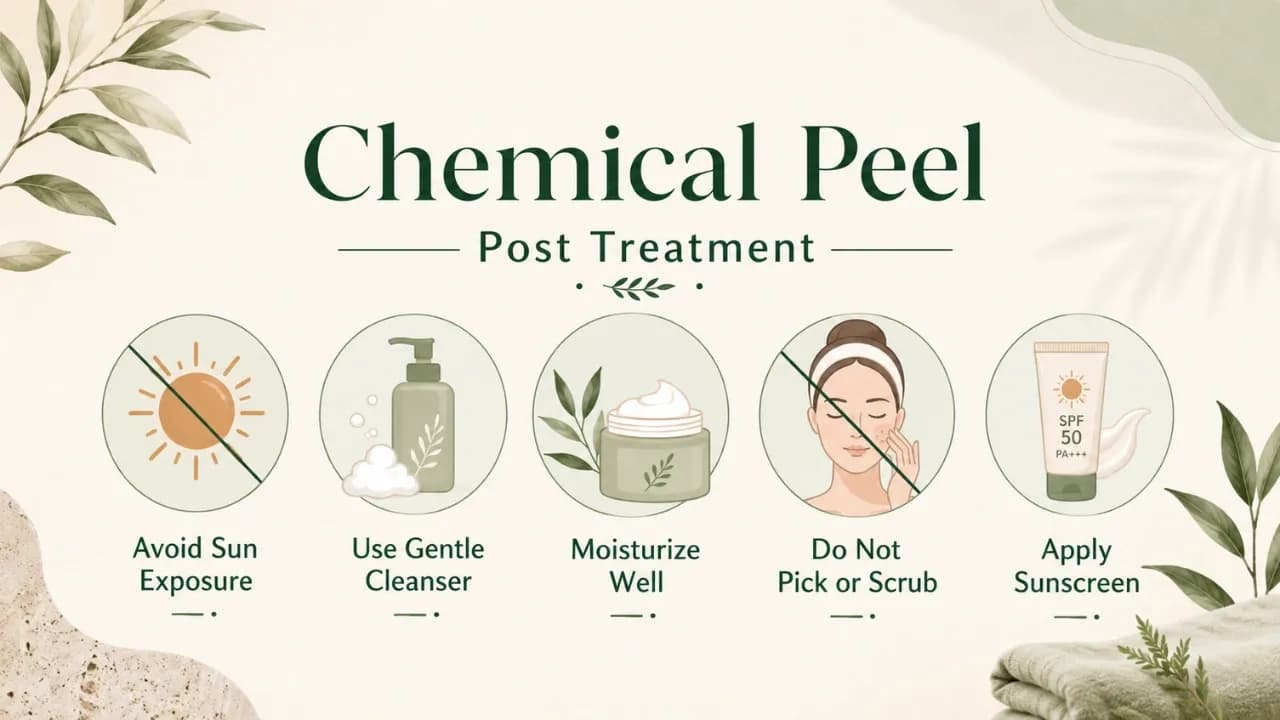
- Cleanse gently (twice daily): Use lukewarm water and a non-foaming, fragrance-free cleanser. Avoid scrubbing or using a washcloth for the first 5 days.
- Apply healing moisturiser immediately after cleansing: Pat, do not rub, a thick, bland moisturiser onto damp skin. Reapply every 4-6 hours if skin feels tight.
- Apply SPF every morning (and reapply every 2 hours if outdoors): Post-peel skin is 3-5x more sensitive to UV damage. Sun exposure in this phase is the leading cause of post-inflammatory hyperpigmentation.
- Do not pick peeling skin: Allow shedding to occur naturally. Forcible removal causes micro-tears that can scar and may necessitate post chemical peel burn treatment.
- Avoid heat and sweat for 48-72 hours: Saunas, hot showers, and intense exercise increase inflammation and may worsen redness or trigger flare-ups.
- Reintroduce actives only after full healing: Retinoids and acids should not be used for a minimum of 7-14 days, depending on peel depth.
Common Mistakes to Avoid
- Using hot water to wash the face, this strips the healing barrier
- Applying makeup within 24-48 hours on raw, peeling skin
- Skipping SPF on cloudy days (UV penetrates cloud cover)
- Using multiple new products simultaneously, isolate variables if irritation occurs
- Expecting results before peeling is complete, skin may look worse before it looks better
Quick-Start Checklist
- Fragrance-free cleanser ready
- Bland moisturiser applied within 1 hour of peel
- SPF purchased and within reach
- Retinoids and acids set aside for 7-14 days
- Nail habit of not touching or picking addressed
Key Benefits of Chemical Peel Post Treatment: What You Actually Gain
Following a structured post chemical peel treatment protocol delivers measurable improvements that are distinct from the peel itself.
Short-term benefits (Days 1-14):
- Reduced healing time by up to 40% compared to no aftercare protocol
- Minimised redness and swelling through consistent moisturisation
- Lower risk of infection by maintaining a clean, intact skin surface
- Reduced need for post chemical peel burn treatment interventions
Long-term benefits (Weeks 2-12):
- Optimised collagen stimulation, studies suggest structured aftercare can increase collagen output by 20-30% post-procedure
- More even skin tone as hyperpigmentation is prevented during the vulnerability window
- Prolonged results, peels with proper aftercare typically last 1-3 months longer than those without
- Smoother skin texture as new keratinocytes surface without disruption
| Benefit | Without Post Care | With Structured Post Care |
|---|---|---|
| Average healing time | 10-14 days | 6-9 days |
| Hyperpigmentation risk | High (up to 45%) | Low (under 15%) |
| Infection risk | Moderate | Low |
| Results duration | 1-2 months | 3-4 months |
| Need for corrective treatment | Common | Rare |
According to Kibo Skin Clinic's clinical observations, patients who follow a consistent post chemical peel treatment routine require corrective consultations approximately 70% less frequently than those with minimal aftercare.
Types of Chemical Peels and Their Post Treatment Protocols: Which Applies to You?
Post chemical peel treatment care varies depending on peel depth. Understanding your peel type determines how intensive your recovery protocol needs to be.
| Peel Type | Active Ingredients | Depth | Downtime | Post Care Intensity |
|---|---|---|---|---|
| Superficial | Glycolic acid (20-50%), salicylic acid | Epidermis only | 1-3 days | Gentle moisturiser + SPF |
| Medium | TCA (20-35%), Jessner's solution | Papillary dermis | 5-7 days | Occlusive barrier + strict sun avoidance |
| Deep | Phenol, high-TCA | Reticular dermis | 14-21 days | Medical supervision + wound dressing often required |
Superficial peels require the least intensive post treatment. Mild redness resolves within 24-72 hours, and most patients return to normal activity immediately with SPF protection.
Medium peels involve more significant peeling and require 5-7 days of barrier protection. Post chemical peel burn treatment may be needed if skin blisters or raw patches appear, consult a dermatologist promptly.
Deep peels should only be performed by a qualified physician. Recovery involves medically supervised wound care and may include prescription-strength healing agents.
Kibo Skin Clinic recommends confirming your peel depth with your treating clinician before establishing your specific post chemical peel treatment protocol.
Chemical Peel Post Treatment vs. Alternatives: An Honest Comparison
Chemical peel post treatment care differs significantly from the aftercare required for alternative skin resurfacing treatments. Choosing the right protocol depends on the procedure performed.
| Feature | Chemical Peel Post Treatment | Laser Resurfacing Aftercare | Microdermabrasion Aftercare | Microneedling Aftercare |
|---|---|---|---|---|
| Downtime | 1-21 days (depth-dependent) | 3-10 days | 0-1 day | 1-3 days |
| Key risk to manage | Hyperpigmentation, infection | Burns, scarring | Dryness | Infection |
| SPF requirement | Critical (Days 1-14+) | Critical (Days 1-14+) | Recommended | Recommended |
| Active ingredient reintroduction | 7-14 days post-peel | 7-14 days post-laser | 2-3 days | 3-5 days |
| Post burn treatment risk | Moderate (medium/deep peels) | Higher | Low | Low |
| At-home suitability | Yes (superficial peels) | No | Yes | Limited |
Recommendation: Chemical peel post treatment protocols are generally more accessible to manage at home for superficial peels. Medium and deep peel recovery is comparable in complexity to laser resurfacing and warrants the same level of professional oversight.
Chemical Peel Post Treatment Results: What to Expect and When
Results from chemical peel post treatment appear progressively. Managing expectations accurately prevents premature judgement and unnecessary retreatment.
| Timeframe | What You Typically See |
|---|---|
| Days 1-3 | Redness, tightness, possible swelling. Skin looks irritated, this is normal. |
| Days 3-7 | Visible peeling and flaking. Skin may appear uneven. Do not pick. |
| Days 7-14 | Peeling subsides. New skin appears smoother and brighter. |
| Month 1 | Noticeable improvement in texture, tone, and pore appearance. |
| Month 3 | Collagen remodelling peaks, deeper improvements in fine lines and pigmentation visible. |
| Month 6 | Full results established. Maintenance peel may be recommended. |
Factors that affect your results:
- Peel depth and acid concentration
- Skin type (Fitzpatrick Type IV-VI skin has a higher risk of post-inflammatory hyperpigmentation)
- Consistency of SPF application during recovery
- Pre-existing conditions such as rosacea or eczema
- Whether any post chemical peel burn treatment was required
Studies suggest that patients who complete a full 14-day post chemical peel treatment protocol see up to 35% greater improvement in pigmentation than those who discontinue care after peeling stops.
Chemical Peel Post Treatment Best Practices: Expert Tips & Strategies
Kibo Skin Clinic's skincare advisory team recommends the following evidence-informed practices for post chemical peel treatment recovery.
Top best practices:
- Start moisturising within 1 hour of the peel, early barrier support reduces transepidermal water loss and speeds re-epithelialisation.
- Use mineral SPF over chemical SPF, mineral filters (zinc oxide, titanium dioxide) sit on the skin surface and do not penetrate the compromised barrier, reducing irritation risk.
- Keep the skin cool, apply a cool (not cold) damp compress to calm acute inflammation during the first 48 hours.
- Hydrate internally, adequate water intake (2-2.5 litres daily) supports skin repair from within.
- Sleep on a clean pillowcase, bacteria from pillowcases are a leading cause of post-peel breakouts; change it daily for the first week.
- Avoid swimming pools and natural water bodies, chlorine and bacteria can penetrate healing skin and cause infection or post chemical peel burn treatment escalation.
- Document your healing, daily photos help you track progress and identify early signs of complications to discuss with your clinician.
- Do not combine peels with other active treatments, no waxing, threading, or laser treatments for a minimum of 14 days.
Common mistakes...
Medical Disclaimer : Information from Kibo Hair Clinics is for educational purposes only. It does not replace diagnosis, trichoscopy, blood test interpretation, prescription treatment, procedure advice, or side-effect counselling from a qualified dermatologist or hair restoration doctor.