
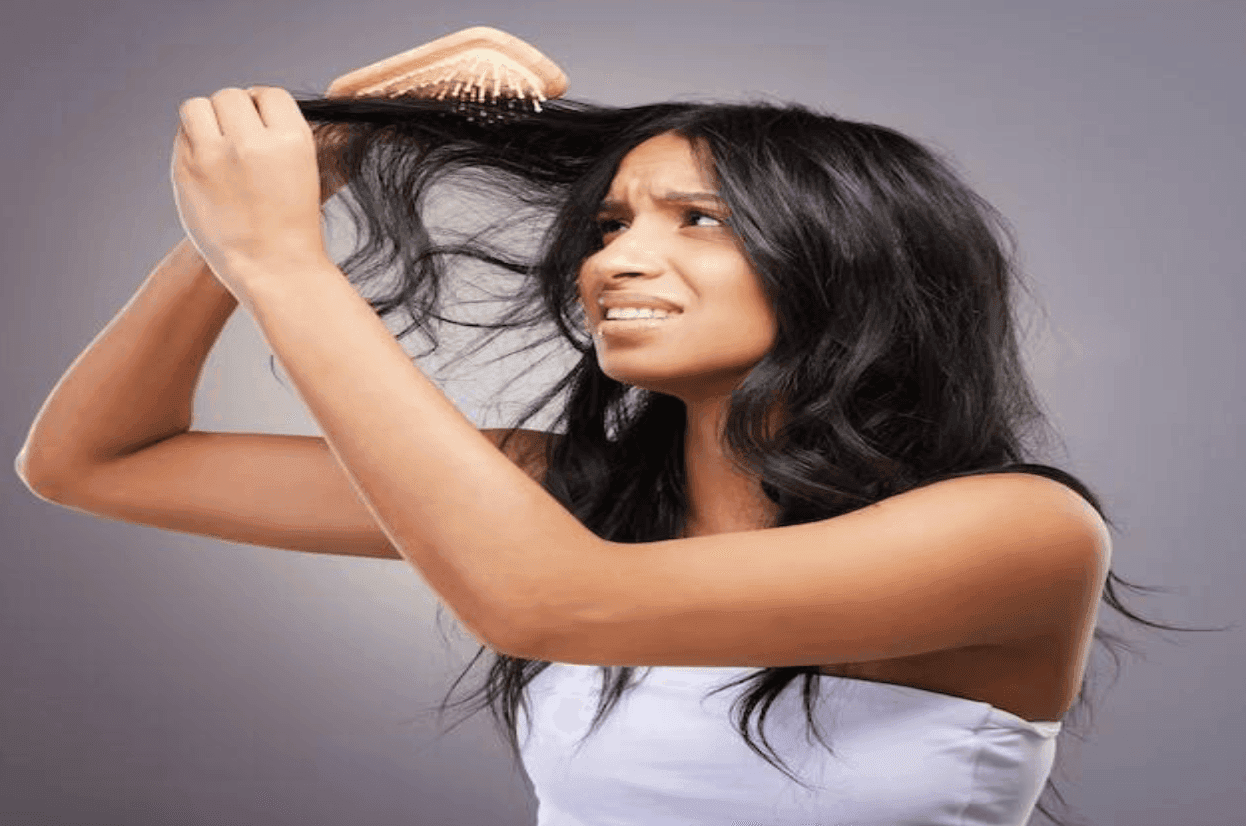
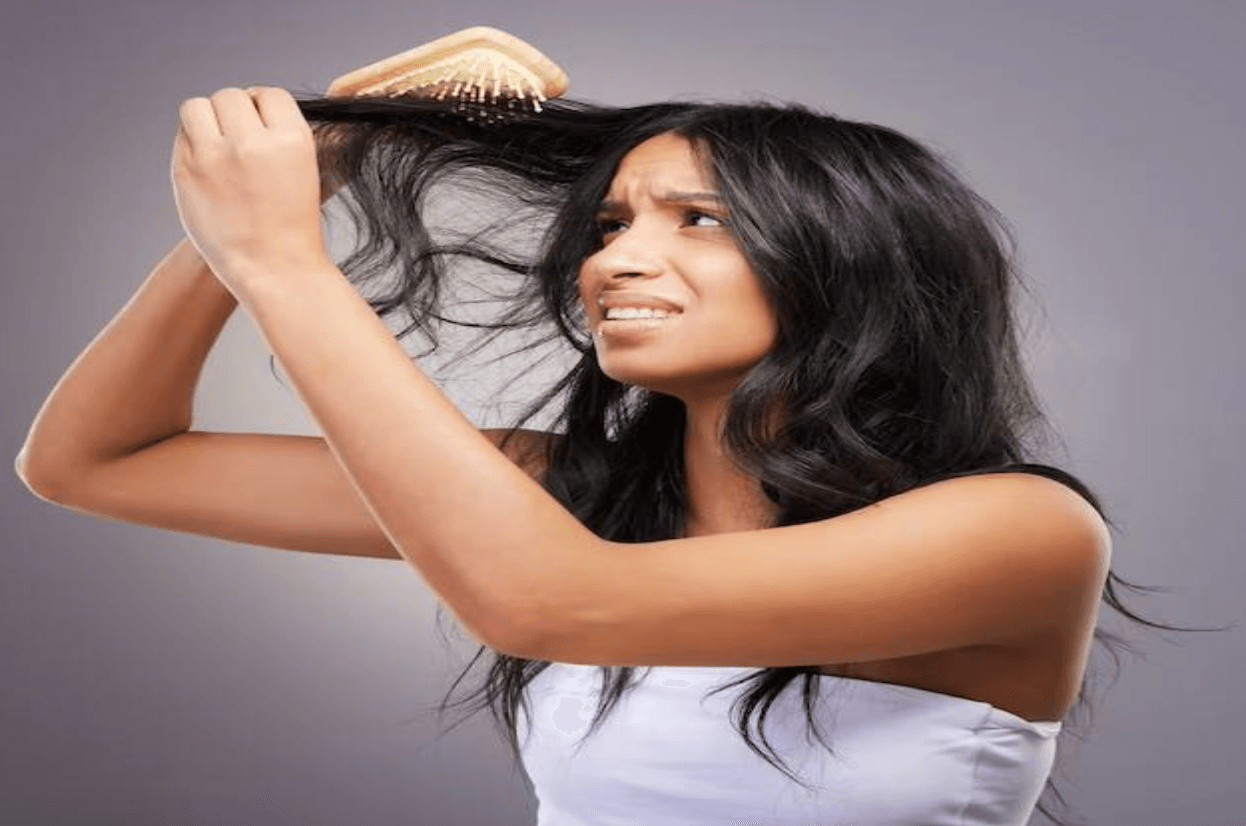
Hair breakage happens when the hair shaft splits or snaps, leaving strands shorter and weaker. This can be the result of nutrient deficiencies, damage from styling, or poor scalp health. The good news is that, with the right care, this type of damage can often be repaired.
Many people mistake hair breakage for hair fall, but they are not the same.
- Hair fall occurs when the strand detaches from the root, often with a small white bulb at the end.
- Hair breakage happens somewhere along the length of the hair shaft. The root stays intact, but the strand becomes shorter and weaker.
Because it usually signals damage or weakness in the hair fiber, hair breakage can be worrying. Still, it is a common problem and, once the cause is understood, it can often be managed effectively.
This article explores the medical causes of hair breakage, how to prevent it, and which treatments can help restore strength to your strands. It also includes practical home care tips to go along with your clinical treatment plan.
What Is Hair Breakage?
When hair breaks, it does not detach from the root. Instead, it snaps somewhere along the hair shaft (the visible part of the hair above the scalp). This break can occur near the tip or in the middle of the strand.
Unlike typical hair loss, where the entire strand falls out from the follicle, breakage leaves the hair in place but makes it shorter and often thinner at the point of the split.
Signs of Hair Breakage:
- Split ends: When the tips of the hair separate into two or more parts. This happens when the cuticle (outer protective layer) wears away.
- Uneven strands: If your hair looks different lengths without a haircut, strands may have snapped mid-shaft.
- Frizz: Caused by dryness and lifted cuticles.
- Dull appearance: Breakage reduces shine, leaving hair matte and lifeless.
⚠️ Note: Hair breakage is not the same as thinning or baldness.
- Thinning = fewer strands growing from the scalp.
- Baldness = complete loss of hair in an area due to follicle damage.
- Breakage = a structural issue with the hair shaft, not the follicle.
Top Causes of Hair Breakage
Hair breakage can happen for many reasons, mostly linked to daily habits:
-
Heat Styling
Straighteners, curling irons, and blow dryers weaken keratin bonds, making hair brittle and dry. -
Chemical Treatments
Bleaching, perming, relaxing, or coloring breaks protein bonds in the cortex, reducing strength and elasticity. -
Tight Hairstyles
Constant ponytails, braids, or buns cause traction breakage over time. -
Poor Diet
Deficiencies in iron, vitamin D, biotin can make hair dry, weak, and prone to breakage. -
Using Wrong Products
Harsh shampoos (e.g., sulfates) strip natural oils. Overuse of protein-rich products can also stiffen and weaken hair. -
Improper Detangling
Brushing wet hair or using the wrong comb can cause snapping and mid-shaft breakage.
How to Stop Hair Breakage
If you’re noticing shorter strands, frayed ends, or thinning tips, adopt these habits:
-
Be Gentle After Washing
Pat hair dry with a microfiber towel or soft cotton T-shirt instead of rubbing. -
Sleep on a Silk Pillowcase
Reduces friction, prevents tangles, and retains moisture better than cotton. -
Get Regular Trims
Every 6–8 weeks to control split ends. -
Use Leave-in Conditioners
Hydrates strands, reduces knots, and adds protection. -
Space Out Chemical Treatments
Allow at least 2 weeks between color, perm, or relaxer sessions. -
Avoid Harsh Formulas
Use sulfate-free, alcohol-free shampoos and conditioners.
Hair Breakage Remedies & Treatments
Options range from home care to clinical solutions:
-
Scalp Massage
Oils like coconut, almond, or argan improve blood flow and nourish roots. -
PRP (Platelet-Rich Plasma)
A clinical treatment where platelet-rich plasma from your blood is injected into the scalp to boost follicle health. -
Bond Repair Treatments
Protein-rebuilding formulas restore strength to chemically damaged hair. -
Hair Masks
- Moisturizing masks: combat dryness.
- Protein masks: strengthen the shaft (use weekly to avoid stiffness).
⚠️ Clinical Note: Severe or sudden breakage with other symptoms should be checked by a trichologist or dermatologist.
How to Recover From Hair Breakage
-
Stop Damaging Habits
Avoid aggressive brushing, tight hairstyles, and heat styling. Opt for low-manipulation styles like loose braids or buns. -
Monitor Scalp Health
Cleanse regularly, treat dandruff, and exfoliate weekly with ingredients like salicylic acid or tea tree oil. -
Be Consistent and Patient
Hair grows ~0.5 inch/month. Visible recovery takes 3–6 months of steady care. -
Eat Healthy
Include protein, iron, zinc, vitamins A, C, D, E. Foods like eggs, nuts, seeds, and leafy greens support growth.
Can Broken Hair Grow Back?
✅ Yes, if the follicle is still healthy. New hair will continue to grow.
❌ No, if the follicle is scarred or inactive (e.g., due to alopecia, burns, or chronic inflammation).
During regrowth, strands are delicate—avoid heat styling, tight hairstyles, or harsh products.
Frequently Asked Questions (FAQs)
1. How do I stop breakage in hair?
Use gentle products, limit heat and chemicals, detangle carefully, trim regularly, and eat a balanced diet.
2. How do you recover from hair breakage?
Stop damaging habits, deep condition, eat well, and stay consistent for 3–6 months.
3. Why is my hair breaking out so much?
Overuse of heat tools, rough detangling, tight hairstyles, or nutrient deficiencies.
4. What are the causes of hair breakage?
Heat styling, chemical treatments, stress, poor diet, buildup, and rough handling.
5. Which deficiency causes hair breakage?
Iron, vitamin D, biotin, protein, and zinc deficiencies are common culprits.
6. Does broken hair grow back?
Yes, if follicles are healthy. For severe follicle damage, medical help may be needed.
Conclusion
Hair breakage is often the result of a combination of external stressors (heat, chemicals, harsh products) and internal factors (nutritional deficiencies, scalp imbalances).
The good news? Most cases are reversible. With consistent care—gentle practices, a balanced diet, and targeted treatments—damaged strands can recover and grow stronger.
👉 Facing recurring breakage despite your best efforts? Book a consultation with Kibo Clinic’s trichology experts and find out the root cause today. Your journey to stronger, healthier hair starts here.
Medical Disclaimer : Information from Kibo Hair Clinics is for educational purposes only. It does not replace diagnosis, trichoscopy, blood test interpretation, prescription treatment, procedure advice, or side-effect counselling from a qualified dermatologist or hair restoration doctor.