
Hair Fall in Monsoon: Why It Spikes Every Year and How to Prevent It
Published on Mon Apr 20 2026
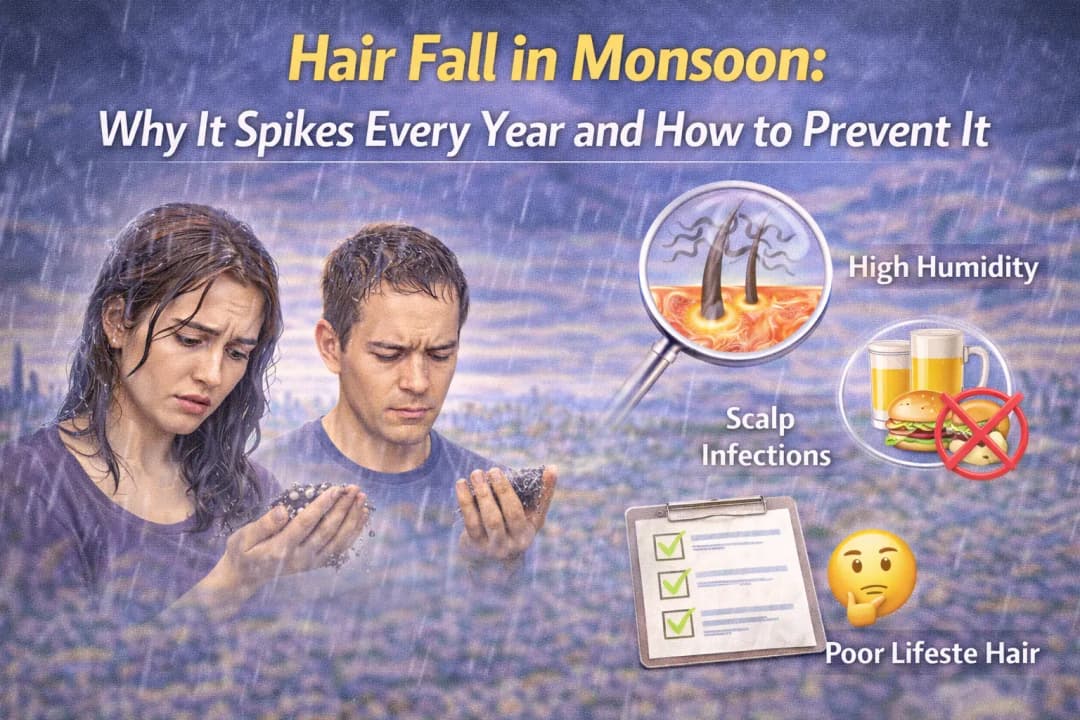
Hair fall in monsoon increases due to high humidity, scalp infections, excess oil buildup, and seasonal hair cycle changes. Moisture weakens hair roots, while fungal growth and poor scalp hygiene worsen shedding. The most effective prevention includes maintaining scalp cleanliness, controlling oil and dandruff, avoiding prolonged wet hair, and supporting hair health through proper nutrition and stress control.
- Humidity weakens hair shafts making them prone to breakage
- Fungal infections and dandruff peak during monsoon
- Excess sebum production clogs hair follicles
- Seasonal shedding cycle naturally increases hair fall
- Proper scalp care can significantly reduce monsoon hair fall
Why Hair Fall Increases During Monsoon
Hair fall in monsoon is a widely observed seasonal phenomenon. Many people notice increased hair shedding between June and September, especially in humid regions like Mumbai. This is not a coincidence — environmental and biological factors combine to create the perfect conditions for hair fall.
High humidity levels weaken the hair shaft by absorbing excess moisture from the air. This causes swelling of the hair fiber, making it more fragile and prone to breakage. At the same time, the scalp becomes oilier, leading to clogged follicles and increased dandruff or fungal infections.
Additionally, there is evidence that hair follows a seasonal cycle, with more follicles entering the shedding (telogen) phase during late summer and monsoon. This makes hair fall appear more severe during this time of the year.
Top Causes of Hair Fall in Monsoon
1. High Humidity and Hair Weakness
Humidity causes hair strands to absorb water from the environment, leading to swelling and weakening of the cuticle. This makes hair more prone to breakage, frizz, and split ends.
2. Scalp Infections and Dandruff
Monsoon creates an ideal environment for fungal growth. Conditions like dandruff and seborrheic dermatitis worsen, leading to itching, inflammation, and increased hair fall.
3. Excess Oil Production
The scalp produces more sebum during humid weather. This oil mixes with dirt and sweat, clogging hair follicles and weakening hair roots.
4. Rainwater Exposure
Rainwater often contains pollutants and acidic compounds. When it settles on your scalp, it disrupts pH balance and damages hair quality.
5. Seasonal Hair Cycle Changes
Hair growth cycles shift with seasons. More hair follicles enter the resting phase during monsoon, leading to temporary increased shedding.
Studies suggest that hair shedding peaks between July and September due to seasonal biological rhythms. This means some level of hair fall in monsoon is natural — but excessive shedding indicates underlying scalp or nutritional issues.
How to Prevent Hair Fall in Monsoon
1. Maintain Scalp Hygiene
Wash your hair 2–3 times a week to remove dirt, oil, and sweat buildup. Use a mild or anti-dandruff shampoo if needed.
2. Avoid Keeping Hair Wet
Wet hair is more fragile and prone to breakage. Always dry your hair properly after getting wet in rain or after washing.
3. Use Anti-Fungal Hair Care Products
If you experience dandruff or itching, switch to medicated shampoos containing ketoconazole or zinc.
4. Oil Hair Correctly
Light oiling once or twice a week helps nourish hair, but avoid heavy oiling that can trap dirt and worsen scalp conditions.
5. Follow a Nutrient-Rich Diet
Ensure adequate intake of protein, iron, and vitamins. Nutritional deficiencies can worsen seasonal hair fall significantly.
6. Avoid Tight Hairstyles
Tight hairstyles increase stress on already weak hair roots, leading to more breakage.
7. Manage Stress Levels
Stress can push hair follicles into the shedding phase. Regular exercise, sleep, and relaxation help control this.
Prevention Strategy Overview
| Problem | Solution | Impact Timeline |
|---|---|---|
| Dandruff / fungal growth | Medicated shampoo | 2–4 weeks |
| Weak hair shafts | Gentle handling + nutrition | 4–8 weeks |
| Excess oil buildup | Regular washing routine | Immediate to 2 weeks |
When to See a Doctor
Seasonal hair fall is normal, but consult a specialist if:
- Hair fall exceeds 100–150 strands daily consistently
- You notice visible thinning or bald patches
- Dandruff or itching becomes severe
- Hair fall continues even after monsoon ends
Conclusion
Hair fall in monsoon is a combination of environmental stress, scalp conditions, and natural hair cycle changes. While some shedding is unavoidable, proper scalp care, hygiene, and nutrition can significantly reduce the severity.
If hair fall becomes excessive or persistent, it may indicate underlying issues beyond seasonal changes — and early intervention is key to preventing long-term hair thinning.
This content is for educational purposes only and does not replace professional medical advice. Consult a dermatologist for accurate diagnosis and personalised treatment.