
The Truth About "Miracle" Hair Growth Oils on Social Media
Published on Fri Apr 10 2026
The Truth About "Miracle" Hair Growth Oils on Social Media
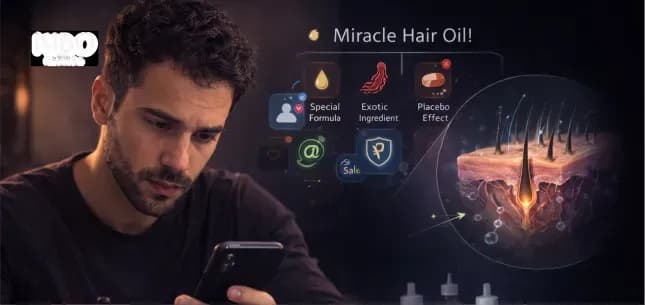
Scroll through Instagram, YouTube, or TikTok and you will quickly find influencers promoting so-called "miracle hair growth oils". These oils promise dramatic results: thicker hair in weeks, bald spots filled naturally, and hair growth without medical treatment.
Many of these claims sound appealing, especially for people struggling with hair thinning or hair loss. But the important question is: Do miracle hair growth oils actually work?
The reality is more complex. While some natural oils can improve scalp health and hair condition, most viral products exaggerate their ability to regrow hair.
This guide explains how hair growth oils really work, what science says about them, and how to identify misleading claims on social media.
Why Miracle Hair Oils Are Trending on Social Media
The rise of short-form video platforms has created a perfect environment for viral beauty products.
Hair oils are particularly popular because they appear simple, natural, and affordable compared to clinical hair treatments.
Many influencers promote these oils using before-and-after photos or dramatic testimonials. However, these visuals often lack medical verification and may be influenced by lighting, styling, or temporary hair thickening effects.
In some cases, hair oils are marketed as alternatives to treatments such as hair transplants, PRP therapy, or medical hair loss treatments. This comparison can be misleading because oils and medical procedures work in very different ways.
How Hair Actually Grows
To understand whether oils can regrow hair, it helps to understand how the hair growth cycle works.
Hair grows from follicles located beneath the scalp. Each follicle goes through a cycle consisting of three phases:
- Anagen phase: The active growth phase where hair grows continuously.
- Catagen phase: A short transition period when growth slows.
- Telogen phase: The resting phase where hair eventually sheds.
Hair loss occurs when this cycle is disrupted due to factors such as genetics, hormonal changes, nutritional deficiencies, stress, or scalp conditions.
Because hair growth originates inside the follicle, treatments that affect follicles at the biological level are usually required to restore growth.
What Hair Oils Can Actually Do
Hair oils are not useless. In fact, certain oils can benefit scalp health and hair quality.
However, their primary effects are usually cosmetic or supportive rather than regenerative.
Hair oils can help with:
- Moisturising the scalp
- Reducing dryness and flaking
- Improving hair shine and softness
- Protecting hair from breakage
- Supporting scalp massage circulation
While these benefits improve hair appearance, they do not necessarily stimulate new hair follicles to grow.
Common Oils Promoted for Hair Growth
Many oils promoted on social media have traditional uses in hair care. Some have mild scientific support, while others rely mostly on anecdotal evidence.
| Oil | Common Claims | Scientific Evidence |
|---|---|---|
| Castor Oil | Promotes rapid hair growth | Limited scientific evidence; mostly anecdotal |
| Coconut Oil | Strengthens hair and prevents damage | Strong evidence for reducing protein loss in hair |
| Rosemary Oil | Stimulates hair follicles | Some research suggests it may support hair growth |
| Argan Oil | Improves hair texture and shine | Effective as a conditioning oil |
| Onion Oil | Regrows hair in bald spots | Limited small studies; results vary |
As the table shows, most oils support scalp health and hair conditioning rather than acting as powerful hair growth treatments.
Why Social Media Claims Can Be Misleading
Many viral hair oil products rely on marketing techniques that make results appear more dramatic than they actually are.
Before-and-After Photos
Images posted online often use different lighting, hair styling, or camera angles. These factors can create the illusion of thicker hair.
Temporary Hair Thickening
Some oils coat the hair shaft, making strands appear thicker temporarily. Once washed, the effect disappears.
Selective Testimonials
Only positive experiences are usually shared online. Negative results or lack of improvement rarely appear in promotional content.
Affiliate Marketing
Many influencers earn commissions from product sales, which can influence how the product is presented.
Hair Oils vs Medical Hair Loss Treatments
Medical treatments target hair follicles directly, while oils mainly improve surface hair quality.
| Factor | Hair Growth Oils | Medical Hair Treatments |
|---|---|---|
| How they work | Condition scalp and hair | Target hair follicles biologically |
| Effect on hair growth | Minimal or indirect | Clinically proven to stimulate growth |
| Speed of results | Mostly cosmetic improvements | Noticeable regrowth after several months |
| Best for | Hair care and scalp health | Treating medical hair loss conditions |
This comparison highlights why oils alone rarely solve significant hair loss conditions such as androgenetic alopecia.
When Hair Oils May Be Helpful
Although oils are not miracle cures, they can still be useful as part of a healthy hair care routine.
Hair oils may help when:
- Hair is dry or damaged
- The scalp is flaky or irritated
- Hair breakage is a concern
- Scalp massage is used to improve circulation
In these situations, oils act as supportive care rather than primary treatment.
Signs a Hair Oil Claim Is Unrealistic
If you see a product promising extraordinary hair growth, watch for these warning signs:
- Promises of full hair regrowth in a few weeks
- Claims that the oil replaces medical treatments
- Before-and-after images without medical explanation
- Testimonials without scientific evidence
- Lack of ingredient transparency
Hair growth is a biological process that takes time. Any product claiming instant results should be approached with caution.
A Smarter Approach to Treating Hair Loss
Instead of relying solely on viral beauty trends, experts recommend identifying the underlying cause of hair loss.
This usually involves:
- Scalp examination
- Blood tests to check nutritional deficiencies
- Evaluation of hormonal or genetic factors
Once the cause is identified, treatment options may include medical therapies, lifestyle changes, or clinical procedures designed to support follicle health.
Conclusion
Hair growth oils promoted on social media are not necessarily scams, but they are often misunderstood.
Many oils can improve scalp health, reduce dryness, and make hair appear shinier or smoother. However, most do not have the ability to regrow hair lost due to genetics or medical conditions.
For individuals experiencing persistent hair loss, professional diagnosis and evidence-based treatments remain the most reliable approach.
Understanding the difference between supportive hair care and medical hair restoration can help consumers make better decisions and avoid unrealistic expectations.