
Rosemary Oil for Hair Growth: Does It Actually Work?
Published on Mon Apr 20 2026
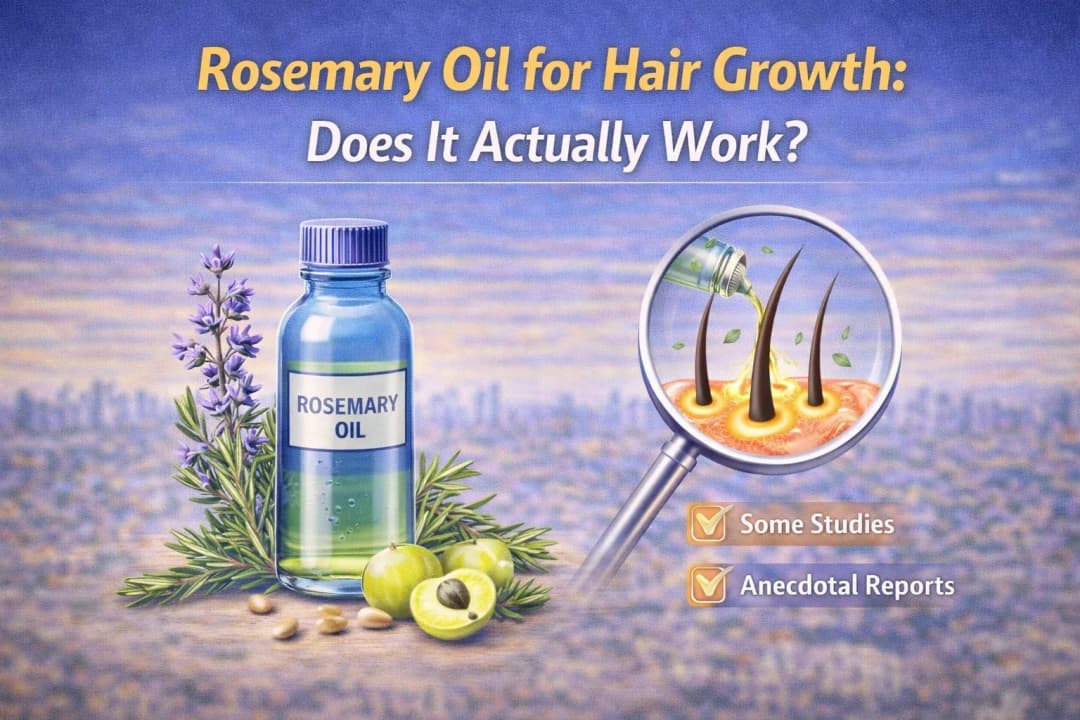
Rosemary oil for hair growth does have real scientific support — but with limitations. Studies show it can improve hair growth by increasing blood circulation, reducing inflammation, and mildly inhibiting DHT (a hormone linked to hair loss). However, its effects are gradual and most useful in early-stage hair thinning. It does not regrow hair in completely inactive follicles.
- A 2015 clinical study showed rosemary oil performed similarly to 2% minoxidil over 6 months
- It works by improving scalp circulation and reducing inflammation
- Best suited for early-stage hair thinning and stress-related hair loss
- Requires consistent use for at least 3 to 6 months
- Cannot reverse advanced genetic baldness
What Is Rosemary Oil and Why Is It Used for Hair?
Rosemary oil is an essential oil extracted from the leaves of the rosemary plant. Traditionally used in herbal medicine, it has gained popularity in hair care due to its potential to improve scalp health and stimulate hair growth.
Unlike cosmetic oils that mainly condition hair, rosemary oil acts at the scalp level — where actual hair growth begins. Its biological activity makes it one of the few natural oils studied in clinical research for hair loss.
The Science: Does Rosemary Oil Actually Work?
The most cited study on rosemary oil for hair growth was published in 2015. It compared rosemary oil with 2% minoxidil in patients with androgenetic alopecia over a period of 6 months.
The result: both groups showed a similar increase in hair count. Interestingly, the rosemary oil group experienced less scalp itching compared to the minoxidil group.
Rosemary oil has measurable effects — but it is not as potent or fast-acting as medical treatments. It works best as a supportive or early-stage intervention.
How Rosemary Oil Supports Hair Growth
1. Improves Blood Circulation
Rosemary oil increases blood flow to the scalp, which helps deliver oxygen and nutrients to hair follicles — a key requirement for healthy growth.
2. Reduces Scalp Inflammation
Inflammation weakens follicles and disrupts the hair growth cycle. Rosemary oil has anti-inflammatory properties that help maintain a healthier scalp environment.
3. Mild DHT Inhibition
DHT is the hormone responsible for follicle shrinkage in pattern baldness. Rosemary oil may slightly reduce DHT activity, slowing down hair thinning in early stages.
4. Antioxidant Protection
Oxidative stress damages hair follicles over time. Rosemary oil contains antioxidants that help protect follicles from this damage.
Who Should Use Rosemary Oil?
- People with early-stage hair thinning
- Stress-related hair loss (telogen effluvium)
- Mild androgenetic alopecia
- Scalp inflammation or dandruff-related hair fall
When It Will Not Work
Rosemary oil cannot regrow hair in areas where follicles are inactive or destroyed. This includes advanced stages of male or female pattern baldness.
In such cases, medical treatments like minoxidil, finasteride, PRP, or hair transplant are required.
Natural treatments can slow hair loss — but they cannot reverse structural follicle damage once it has occurred.
How to Use Rosemary Oil for Hair Growth
Dilution Is Essential
Never apply rosemary oil directly to the scalp. Mix a few drops with a carrier oil like coconut oil, almond oil, or jojoba oil.
Application Method
- Apply to scalp and massage gently for 5–10 minutes
- Leave for at least 30 minutes or overnight
- Wash with a mild shampoo
- Repeat 2–3 times per week
Consistency Matters
Visible results typically appear after 3 to 6 months of consistent use.
Comparison with Other Treatments
| Treatment | Effectiveness | Speed | Best Use Case |
|---|---|---|---|
| Rosemary Oil | Moderate | Slow | Early thinning |
| Minoxidil | High | Moderate | Pattern baldness |
| PRP Therapy | High | Moderate | Follicle stimulation |
Frequently Asked Questions
Does rosemary oil regrow hair?
It can support regrowth in early stages but cannot revive dead follicles.
How long does it take to see results?
Typically 3–6 months with consistent use.
Is rosemary oil better than minoxidil?
No — but it is a gentler, natural alternative with fewer side effects.
Can I use it daily?
2–3 times per week is sufficient. Overuse may irritate the scalp.
Final Verdict: Is Rosemary Oil Worth It?
Yes — rosemary oil is one of the few natural remedies with actual clinical evidence. It can improve hair thickness and reduce hair fall when used consistently.
However, it works best as part of a broader hair care strategy — not as a standalone cure for advanced hair loss.