
Hair Transplant Procedure: Step-by-Step Process & What to Expect
Published on Sun Mar 22 2026
Hair transplant procedure is a medically supervised surgical process to restore hair in bald or thinning areas using the person’s hair follicles. Most often, healthy hair follicles are taken from the back or sides of the scalp and implanted into spots where hair has thinned or disappeared.
Hair transplant is a trusted option for people facing long-term hair loss due to genetics, hormonal changes, or injury. What makes it dependable is that it doesn’t involve foreign elements or artificial implants. The body readily accepts the transplanted hair as its own and nourishes it to grow naturally over time. This is now a very common procedure around the world and is performed with high success rates, especially with modern tools and precise techniques.
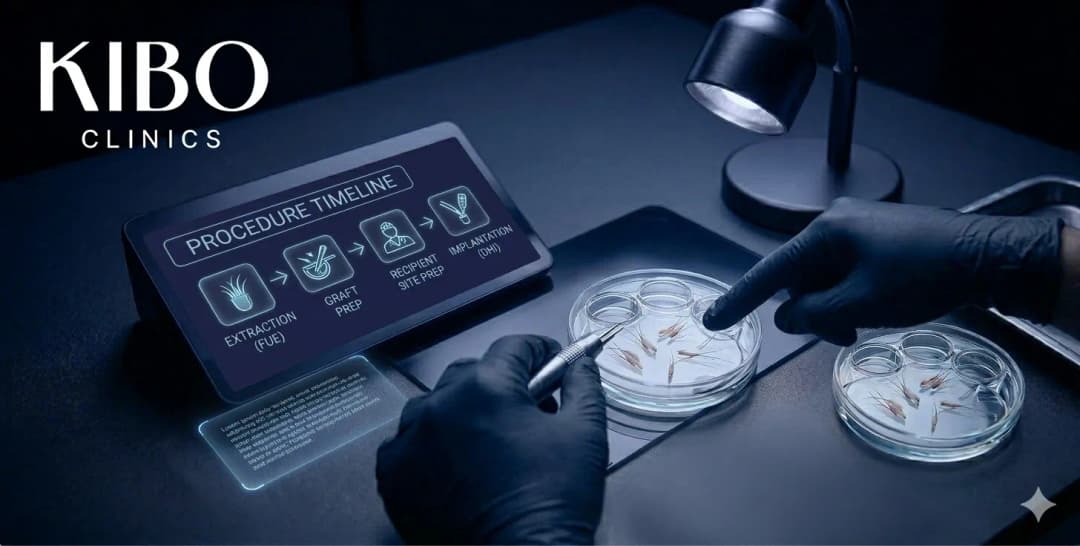
Hair transplant surgery involves steps like local anesthesia, hair follicle extraction, graft preservation, angle adjustments for natural hair direction, and post-surgery support. However, the hair follicle extraction step may vary depending on the technique used. There are two graft harvesting methods, namely Follicular Unit Extraction (FUE) and Follicular Unit Transplantation (FUT).
This article breaks down the hair transplant process, what each stage entails, the procedure duration, and the results people can look forward to. You can also learn about recovery timelines, common experiences after surgery, and the time it takes for hair to start growing back.
Hair Transplant Procedure: An Overview
Understanding the procedure of hair transplant gives people the clarity they often seek before making a decision. Most modern clinics today use this hair replacement surgery to treat baldness and hair thinning.
The process of hair transplant begins with a detailed consultation with a dermatologist or a hair transplant surgeon. The doctor checks the person’s medical history, hair loss pattern, donor area strength, and discusses expectations. This examination helps the physician decide the best approach for hair replacement based on the underlying cause of hair loss, which may be:
- Medical (burns or injury)
- Cosmetic (male-pattern baldness due to hormonal imbalances)
Preparation
- Marking the scalp and trimming the donor areas if needed
- Application of local anesthesia so the patient doesn’t feel pain during the procedure
- Selection of technique (FUE or FUT) based on:
- Extent of hair loss
- Desired density
- Preferences regarding scarring and recovery
Each harvested follicle is then preserved in a special solution to maintain its quality until implantation. The surgeon creates micro-holes in the recipient area and places each follicle carefully, keeping direction and density in mind. Post-procedure care instructions and follow-ups ensure healing and natural growth.
Most cosmetic procedures use minimally invasive FUE or FUT techniques to ensure natural results and quick recovery. Advanced methods like tissue expansion or scalp reduction are generally reserved for complex medical cases.
Key Point: Hair transplant is not just about filling bald patches, but about establishing natural hair growth. A surgeon’s experience and precision matter the most.
Hair Transplant Steps
Here’s a detailed breakdown of what happens during the hair transplant process — from extraction to closure.
1. The Extraction of Hair Roots in the FUE Method
- A punch tool (0.6mm–1mm) extracts follicular units one by one.
- No stitches or linear scar — ideal for short hairstyles.
- Takes longer but allows precise graft selection.
- Minimal trauma, faster healing.
2. The Extraction of Hair Roots in the FUT Technique
- A strip of scalp is removed from the donor area (usually back of head).
- Higher number of grafts in one sitting (suitable for large bald areas).
- Leaves a linear scar, hidden under existing hair.
- Shorter procedure time for large sessions.
3. Suturing of Donor Area (FUT Only)
- Donor strip area is closed with sutures (absorbable/non-absorbable).
- Trichophytic closure technique allows hair to grow through the scar.
- Proper closure minimizes scarring.
4. The Microscopic Dissection
- Extracted strips/grafts dissected under microscopes.
- Ensures root integrity, improves graft survival.
- Requires delicate handling to avoid drying/crushing.
5. The Slit Creation
- Tiny slits/holes made in the recipient area.
- Angle, direction, depth determine natural look.
- Surgeons use custom blades/implanter pens.
- Critical step for aesthetic outcome.
6. Placement of Grafts / Follicular Units
- Follicles carefully placed into prepared slits.
- Some clinics use Choi pen / DHI method.
- Precision in angle, depth, curl orientation ensures natural growth.
7. Grafts Placement According to Density
- Hairline: 30–40 grafts/cm²
- Crown: 25–30 grafts/cm²
- Balance between donor availability and baldness extent.
- Avoids overpacking (risking blood supply) or underpacking (patchiness).
8. The Closing of the Procedure
- Recipient area cleaned.
- Soft dressing applied for 24–48 hours.
- Aftercare instructions provided.
Resuming Regular Schedule After Hair Transplant
Recovery is a crucial part of the journey. Here’s a timeline:
Day 1–3: Light Sensitivity and Swelling
- Mild swelling around forehead/eyes.
- Sleep with head elevated.
- Avoid bending, exercise, or activities increasing blood pressure.
Day 4–10: Scab Shedding
- Small scabs form around implanted follicles.
- By day 7–8, scabs naturally fall off.
- Gentle shampooing begins after day 5.
Day 14+: Return to Daily Routine
- Resume office work/social activities.
- Possible shock loss (temporary hair shedding).
- Scalp may look patchy during this phase.
3 Months and Beyond: Growth Phase
- New hair appears (~90 days).
- Initially fine and light-colored.
- Full density & texture: 9–12 months.
- Temporary waves/curls may straighten with time.
Final Thoughts
A hair transplant procedure is a popular solution for treating hair loss and thinning. It offers both cosmetic and medical benefits for suitable candidates. Modern hair transplant techniques focus on achieving natural-looking results with minimal discomfort and downtime.
Every step of the procedure contributes to success — from extraction to placement. Factors that matter most:
- Surgical accuracy
- Patient health
- Consistent aftercare
Ready to Restore Your Hairline?
Thinking about restoring your hairline?
Speak with the team at Kibo Clinic for a one-on-one consultation.
We’ll carefully assess your hair loss situation and create a treatment plan tailored to you. Explore our treatment options and photo-verified cases at Kibo Hair Sciences to take the next step toward natural, lasting hair restoration.