
Akshay Khanna Hair Transplant: Rumours, Reality & Hair Restoration Analysis
Published on Tue Apr 21 2026
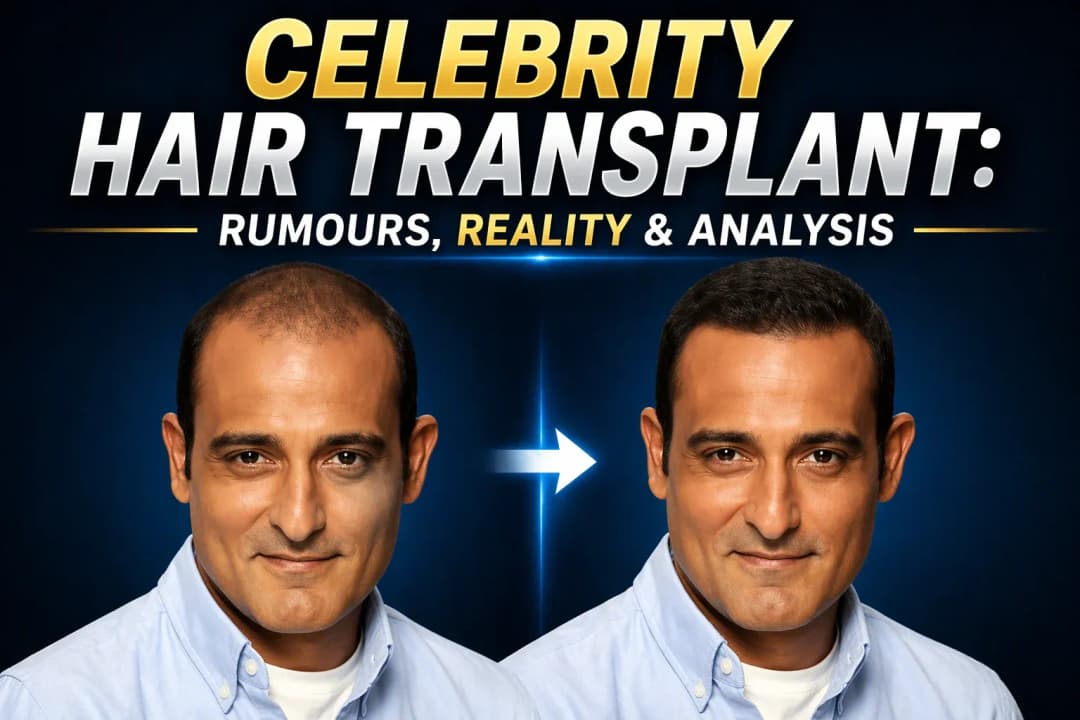
The discussion around akshaye khanna hair transplant is based on visible changes in his hairline over the years — but there is no confirmed public statement from the actor. What can be analysed, however, is the pattern of hair loss and regrowth seen in his appearances, which strongly resembles medically treated androgenetic alopecia rather than purely natural reversal.
Who Is Akshaye Khanna and Why His Hair Became a Talking Point
He is known for his strong acting performances and unconventional roles in Bollywood. However, over the years, his changing hairline has also drawn public attention — especially because his hair loss began relatively early compared to many actors in the industry.
Unlike many celebrities who maintain consistently dense hairlines, Akshaye Khanna appeared in several films with a visibly receding hairline and thinning crown. Later appearances showed some improvement — which led to speculation about whether he underwent a hair transplant or other treatments.
Understanding His Hair Loss Pattern
Based on publicly available appearances, his hair loss pattern closely matches androgenetic alopecia (male pattern baldness). This type of hair loss:
- Begins with temple recession
- Progresses to crown thinning
- Creates an M-shaped or U-shaped hairline
At one point, his hairline resembled Norwood Stage 4–5, which is considered moderate to advanced hair loss.
His hair loss progression was gradual and consistent — a hallmark of genetic hair loss rather than sudden shedding from stress or illness.
Did Akshaye Khanna Get a Hair Transplant?
There is no official confirmation that Akshaye Khanna underwent a hair transplant. However, visible changes suggest three possibilities:
- Hair transplant procedure (most likely explanation based on density changes)
- Use of medications like minoxidil or finasteride
- Styling, lighting, or cosmetic enhancement
In later appearances, his hair appears denser and more structured than before — particularly in the frontal region. This kind of improvement is difficult to achieve through natural methods alone once follicles have miniaturized.
What Suggests a Hair Transplant-Like Result?
| Observation | What It Indicates |
|---|---|
| Improved frontal density | Possible graft implantation |
| Stable hairline over time | Medical maintenance or transplant |
| No further aggressive recession | DHT control or treatment intervention |
Hair Transplant vs Natural Recovery: What’s Realistic?
This case highlights an important truth about hair loss:
- Natural remedies can improve hair quality but cannot restore lost follicles
- Medications can slow or partially reverse early-stage hair loss
- Hair transplants are the only way to restore density in advanced baldness
If Akshaye Khanna did undergo a procedure, it was likely combined with medical therapy — which is the gold standard approach today.
Even the best hair transplant does not stop future hair loss. Maintenance treatments are essential to preserve results.
What This Means for You
Celebrity transformations often create unrealistic expectations. But the key takeaway here is practical:
- Early-stage hair loss → treat with medication
- Moderate loss → combine treatments (PRP, medication)
- Advanced loss → consider transplant
What matters is not what a celebrity may or may not have done — but identifying your stage and choosing the right intervention early.
Frequently Asked Questions
Is Akshaye Khanna’s hair natural now?
There is no official confirmation. Improvements suggest medical or procedural support rather than purely natural regrowth.
Can hair loss like his be reversed naturally?
No. Once follicles shrink due to genetics, natural methods cannot fully reverse the process.
What is the best solution for similar hair loss?
A combination of medication (minoxidil/finasteride) and, if needed, hair transplant offers the most effective results.
Final Verdict
The topic of akshaye khanna hair transplant remains speculative — but the visible transformation aligns closely with medically managed hair restoration rather than natural recovery.
The real lesson isn’t about the celebrity — it’s about understanding hair loss early and choosing the right treatment path before it progresses too far.
This content is for educational purposes only. Observations about public figures are based on visual analysis and not confirmed medical records. Consult a qualified specialist for personalised diagnosis and treatment.