
Hair Transplant Before and After Photos: How to Read Them Correctly
Published on Wed Apr 08 2026
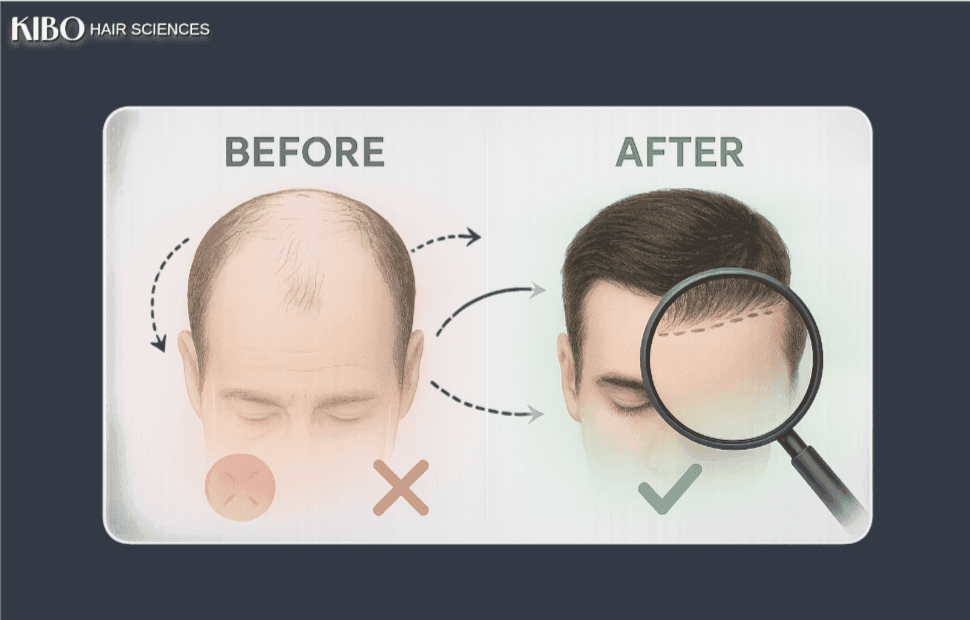
Hair transplant before and after photos can build genuine confidence — or seriously mislead — depending on how they are taken and selected. A trustworthy photo set uses identical lighting, angles, and camera distance in both images, shows the donor area alongside the recipient area, and is taken at least 9 to 12 months after the procedure. Photos that rely on wet hair, comb-forward styling, or only front-lit close-ups are hiding information you need to make an informed decision.
- Always confirm identical angles, distance, and lighting in both the before and after image
- The donor area must be shown — a complete result includes what was preserved, not just what was gained
- The most reliable "after" photo is taken at 12 months post-procedure — not 3 or 6 months
- Lighting from above exposes thinning; frontal light hides it — a trustworthy clinic shows both
- Photos alone are insufficient — combine them with patient testimonials, direct consultations, and patient references
Introduction
When patients begin exploring the idea of a hair transplant, one of the most persuasive resources they encounter is a set of before and after photos. These images promise a glimpse of what could be possible, offering real faces and results instead of abstract explanations. However, reading these photos correctly is not always straightforward. Some clinics highlight only their best results, others take advantage of lighting and angles, and a few may use photos that are edited or staged.
A hair transplant is a medical procedure that involves detailed planning, technical precision, and months of recovery. If you base your expectations only on polished photos without understanding what they represent, you risk disappointment or even choosing the wrong clinic. This guide provides a patient-first framework for interpreting hair transplant before and after photos — covering what shapes trustworthy photography, how to judge hairline design and density, why the donor area matters, and how to apply these insights when evaluating any clinic. Understanding what the full hair transplant results timeline looks like is the essential foundation before you evaluate any photo.
What Shapes a Trustworthy Before and After Photo
Consistency of Angles and Lighting
The most fundamental principle of evaluating before and after photos is consistency. A true comparison requires identical angles, distance, and lighting. If the "before" photo is taken close up under harsh overhead light and the "after" photo is taken from further away with soft frontal light, the result will look exaggerated even if the medical outcome is modest. Consistent lighting ensures that density is accurately visible, while identical camera angles prevent artificial changes to hairline height or coverage.
Overhead lighting is one of the most commonly manipulated variables in hair transplant photography. It dramatically exposes scalp visibility in "before" images while frontal or angled light in "after" images minimises it. This single lighting change can make a modest result look spectacular — without any editing required.
Hairline Design and Age Appropriateness
A well-executed transplant is not just about density — it is about design. The hairline is the frame of the face, and it must be tailored to the patient's age, facial structure, and long-term planning. In before and after photos, an unnatural or overly low hairline may look impressive at first glance but will not age well. A good photo sequence shows a hairline that restores balance without ignoring the patient's natural maturation. Understanding the language of natural hairline design helps you identify whether a result shown in photos reflects genuine planning or short-term visual appeal.
Density Versus Coverage
Photos can be misleading if viewers do not distinguish between density and coverage. Some patients need thick density in a small area, while others require broader coverage with less density per square centimeter. In photos, dense areas may look more dramatic, but broad coverage may be more beneficial for the patient's overall appearance. Reading photos correctly means asking whether the result shown matches your own goals. A 25-year-old may prioritise hairline density, while a 45-year-old may value crown coverage that looks natural from all angles. Knowing how single and multiple grafts affect visual density helps you interpret these differences accurately.
Donor Area Condition
Authentic before and after photos include views of both the recipient and the donor areas. This matters because a hair transplant is not only about what is gained but also about what is preserved. Overharvesting from the donor site may leave visible thinning, especially when the hair is short. If a clinic does not show donor area results, you are not seeing the complete picture. A trustworthy photo set demonstrates balance: the transplanted area looks fuller without the donor area appearing depleted. Understanding the donor area's role in transplant success explains exactly why this view is non-negotiable in any credible gallery.
Timing of the After Photo
The timeline of photography is crucial. Hair transplants follow a predictable cycle: initial healing, shedding, early regrowth, and final thickening. If an "after" photo is taken at three months, the result will appear underwhelming. If it is taken at twelve months, it will reflect the true outcome. Clinics sometimes showcase early growth as a final result, which creates false expectations. Always check whether the "after" photo represents at least 9 to 12 months of growth.
Signs of Editing or Styling Tricks
Patients must be aware of how digital editing and styling can distort reality. Overexposed lighting, wet hairstyles, or comb-forward techniques can conceal gaps. Filters and digital retouching can smooth out scalp visibility. A reliable clinic avoids such techniques, instead offering photos that show the hair in multiple natural states: dry, styled, and combed back. The more transparent the approach, the more confidence you can place in the outcome.
A wet hairstyle photographed from the front can hide almost any density gap. If a clinic's entire "after" gallery shows patients with wet or heavily gelled hair photographed from a single angle, treat this as a significant red flag — not a sign of good results.
Practical Checklist: How to Judge Any Hair Transplant Photo
- Confirm that both photos are taken from the same angle, distance, and lighting conditions
- Look for close-up shots as well as full-face views to assess both detail and balance
- Observe whether the hair is shown in different styles — combed forward and combed backward
- Check if the donor area is visible and appears healthy without patchiness or visible scarring
- Ensure the "after" photo is at least 9 months post-procedure, ideally 12
- Ask for a range of results — not just the clinic's best outcomes — to understand typical results
Step-by-Step: How to Compare Photos From Any Clinic
First Year Recovery: What Photos Show Month by Month
Planning for Mumbai Patients
For patients in Mumbai and across India, local factors can influence how hair transplant results appear in photos. Humidity and heat often affect hair texture, making it frizzier or flatter than in cooler climates. Pollution and commute stress can also change how hair behaves daily compared to a controlled photo setting. When judging before and after photos, it helps to see results from patients with similar hair types and lifestyle conditions — not just international or Northern Indian cases.
Many men in Mumbai wear their hair shorter on the sides, which makes donor area appearance more important than in longer styles. Others prefer longer, denser top styles that emphasise hairline precision. A good clinic will show a variety of photos that reflect these differences. Knowing how Mumbai-specific hair loss patterns differ from other regions helps you judge whether the gallery cases shown are actually relevant to your situation.
Frequently Asked Questions
Q: How do I know if a hair transplant before and after photo is real?
Authenticity depends on consistency. Real photos are taken under identical conditions, often with timestamped follow-ups, and they include views of both donor and recipient areas. Clinics that can show you a continuous monthly album from procedure day to 12 months — not just two isolated images — are demonstrating the kind of transparency that signals genuine confidence in their results.
Q: Why do some after photos look too good to be true?
Some clinics rely on selective cases or enhanced styling. Photos that look dramatically denser from every angle and in every lighting condition may not reflect typical outcomes. Always ask for a range of results — including average cases and partial responders — not just the best transformations. Clinics that only show exceptional results are curating for marketing, not transparency.
Q: Can lighting or hairstyle really change how results look?
Yes — significantly. Lighting from above exposes thinning while frontal lighting hides it. Comb-forward styles may conceal gaps that are visible when the hair is brushed back. Similarly, wet or heavily gelled hair can fill visual gaps that would otherwise be apparent. A reliable clinic avoids these techniques and shows results across multiple natural styling states.
Q: How long after a transplant should the after photo be taken?
The most reliable comparisons are taken at 12 months. Earlier photos may show only partial growth or even temporary shedding that makes results look worse than they are. Conversely, photos taken at 4 to 6 months and presented as final results can overstate early progress before hairs have fully matured and thickened.
Q: Should I trust photos alone when choosing a clinic?
No. Photos are useful but should be combined with patient testimonials, consultations, and sometimes direct patient references. Transparency across multiple sources is more reliable than photos alone. Using a structured checklist to compare transplant quotes and clinics alongside gallery evaluation gives you a far more complete picture.
Q: Do all clinics in Mumbai follow photo standards?
Not always. Some clinics show only their best cases while others maintain standardised photography protocols with consistent lighting, multiple angles, and donor area views at every follow-up. Always ask how and when their photos are taken, and whether you can review a full album during consultation rather than just selected highlights on the website.
Why Kibo Clinics
At Kibo Clinics, every patient is photographed under the same conditions using consistent angles and lighting. Donor and recipient areas are documented at each follow-up so you see the complete journey, not just the final result. Patients are encouraged to review real albums during consultation, which include a variety of cases that match different ages, hair types, and goals — including patients with similar Mumbai-specific hair textures and styling preferences. This ensures you have a realistic sense of what to expect before committing to anything.
If you are considering a hair transplant and want to understand what results really look like, book a consultation at Kibo Clinics Mumbai. Our team will walk you through authentic before and after albums, explain timelines clearly, and design a treatment plan that fits your goals and lifestyle. Results may vary by individual.
This content is published by Kibo Clinics for educational purposes only and does not substitute professional medical advice. Hair transplant results vary by individual based on hair l