
Receding Hairline Causes, Signs and Treatment
Published on Mon Apr 20 2026
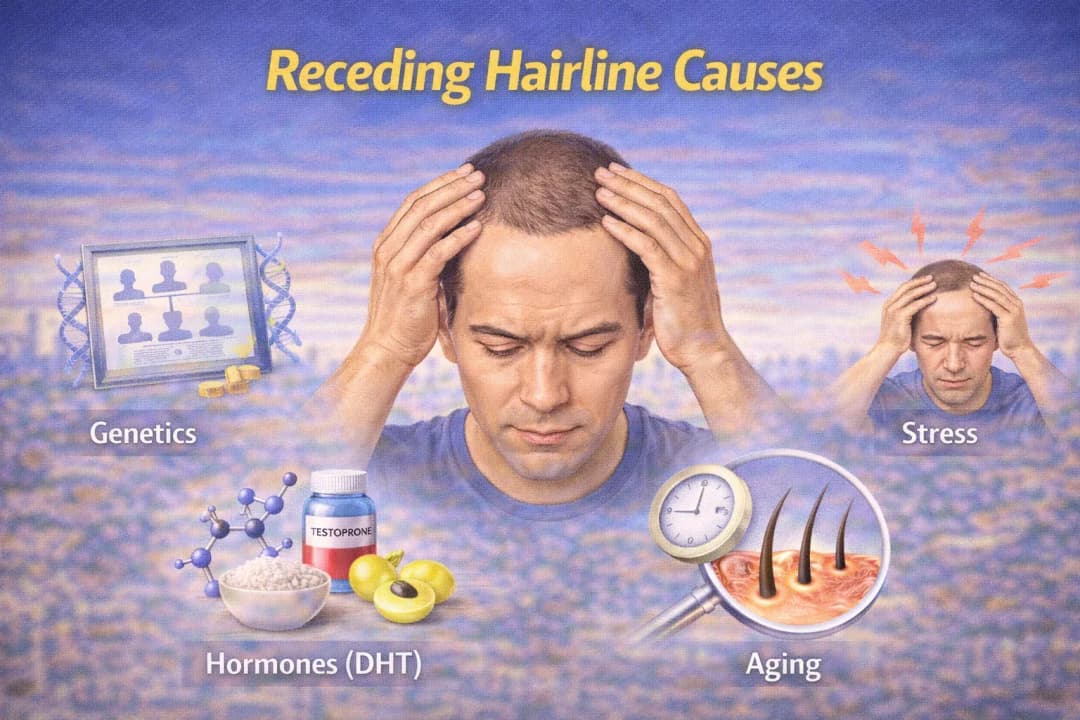
A receding hairline is most commonly caused by genetics (androgenetic alopecia), where the hormone DHT gradually shrinks hair follicles at the temples. However, other causes include stress, nutritional deficiencies, hormonal imbalances, scalp conditions, and mechanical damage from hairstyles. Identifying the exact cause is critical because treatment depends entirely on the underlying reason — not all receding hairlines are treated the same way.
- Genetics + DHT is the leading cause in most men
- Stress (telogen effluvium) can accelerate hairline recession temporarily
- Nutritional deficiencies weaken hair and worsen thinning
- Tight hairstyles can cause traction-related hairline loss
- Early treatment gives significantly better results
What Is a Receding Hairline?
A receding hairline is the gradual loss of hair at the front of the scalp, typically starting at the temples and moving backward over time. It is often the first visible sign of pattern hair loss and can begin as early as the late teens or early 20s in some individuals.
The hairline may take on an M-shaped pattern, with thinning at both temples while the center remains relatively intact initially. Without intervention, this progression can continue toward the crown.
Main Causes of Receding Hairline
1. Genetics and DHT (Androgenetic Alopecia)
The most common cause of a receding hairline is androgenetic alopecia, a genetically inherited condition. It is driven by dihydrotestosterone (DHT), a hormone derived from testosterone.
DHT gradually shrinks hair follicles — a process called miniaturization. Over time, thick terminal hairs become thinner, shorter, and eventually stop growing altogether.
Once follicle miniaturization progresses beyond a certain stage, it cannot be reversed with natural remedies alone — medical treatment becomes necessary.
2. Age-Related Hairline Maturation
Not every receding hairline indicates hair loss. A mature hairline is a normal shift that occurs as you age, typically moving slightly higher from its teenage position.
This type of change is stable and does not progress aggressively like genetic baldness.
3. Stress and Telogen Effluvium
Physical or emotional stress can push hair follicles into the resting phase prematurely, causing increased shedding. This condition is known as telogen effluvium.
While it usually causes diffuse thinning, it can make an existing receding hairline appear worse.
4. Nutritional Deficiencies
Deficiencies in iron, protein, vitamin D, and B vitamins can weaken hair structure and slow growth. This does not directly cause a receding hairline but accelerates thinning in vulnerable areas.
5. Hormonal Imbalances
Hormonal changes — especially involving thyroid function or androgens — can contribute to hairline thinning. This is more common in women but can affect men as well.
6. Traction from Hairstyles
Constant pulling from tight hairstyles such as ponytails, buns, braids, or helmets can lead to traction alopecia, especially around the hairline.
Unlike genetic hair loss, this type can be reversed if caught early.
7. Scalp Conditions
Conditions like dandruff, seborrheic dermatitis, and scalp inflammation can disrupt the hair growth cycle and worsen hairline thinning.
How to Identify the Cause
| Pattern | Likely Cause |
|---|---|
| M-shaped recession | Genetic hair loss (DHT) |
| Diffuse thinning | Stress or deficiency |
| Hairline breakage | Traction or styling damage |
Can a Receding Hairline Be Reversed?
The answer depends on the cause:
- Genetic: Can be slowed, not fully reversed without medical treatment
- Stress-related: Often reversible
- Nutritional: Reversible with correction
- Traction: Reversible if treated early
If the hairline has been receding for years and follicles are inactive, regrowth without medical or surgical intervention is unlikely.
Treatment Options
- Topical treatments (minoxidil)
- Oral medications (finasteride)
- PRP therapy
- Hair transplant surgery
The earlier you start treatment, the better the results — especially for genetic hair loss.
Final Takeaway
A receding hairline is not caused by one single factor — it is often a combination of genetics, lifestyle, and health. Understanding the root cause is the most important step before choosing any treatment.
Natural remedies can support hair health, but when DHT-driven hair loss is involved, medical intervention becomes essential for meaningful results.
Frequently Asked Questions
At what age does hairline recede?
It can start as early as late teens but is most common in the 20s–30s.
Can stress cause receding hairline?
Stress can accelerate hair loss but usually does not directly cause a receding pattern.
Is receding hairline permanent?
It depends on the cause. Genetic cases are progressive, while others may be reversible.
Can oils regrow hairline?
No, oils may improve hair quality but cannot regrow a receding hairline caused by DHT.
Why Kibo Clinics
At Kibo Clinics, we focus on identifying the exact cause of your receding hairline before recommending treatment. Whether it is early-stage thinning or advanced hair loss, our approach is tailored, evidence-based, and focused on long-term results.
This content is for informational purposes only and should not replace professional medical advice. Consult a specialist for proper diagnosis and treatment.