
Can You Get a Second Hair Transplant if the First One Fails?
Published on Fri Apr 10 2026
Hair transplant procedures have helped millions of people restore their hairline and confidence. However, not every transplant delivers the expected results. Some patients experience poor growth, low graft survival, or unnatural hairline design after their first procedure.
This raises an important question: Can you get a second hair transplant if the first one fails?
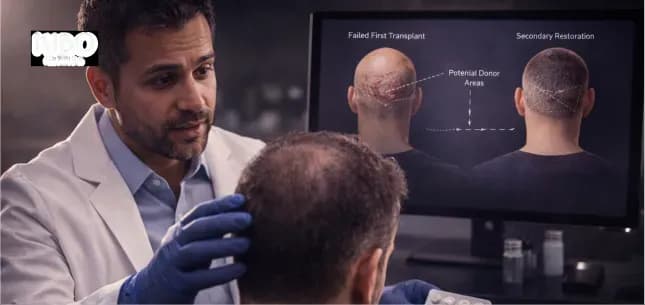
The short answer is yes. In many cases, a second hair transplant—often called a repair or corrective hair transplant—can significantly improve results. However, the success of a second procedure depends on several factors such as donor hair availability, scalp condition, and the cause of the first transplant failure.
This guide explains why hair transplants fail, when a second transplant is possible, and what patients should expect during a corrective procedure.
What Does a Failed Hair Transplant Mean?
A failed hair transplant does not always mean the entire procedure failed. In most cases, it means the results did not meet expectations due to poor hair growth, unnatural appearance, or visible scarring.
Common signs of a failed hair transplant include:
- Very low hair growth after the procedure
- Patchy or uneven hair density
- Hairline that looks unnatural
- Visible scars in the donor or recipient area
- Hair growing in incorrect directions
In many situations, these issues can be corrected with a carefully planned second procedure.
Common Reasons Why Hair Transplants Fail
Understanding the cause of failure is essential before planning a second transplant.
1. Poor Surgical Technique
The experience of the surgeon plays a major role in graft survival. Incorrect graft handling, improper depth of implantation, or excessive trauma to follicles can damage hair grafts.
2. Overharvesting the Donor Area
The donor area (usually the back of the scalp) contains a limited number of permanent hair follicles. If too many grafts are extracted during the first procedure, the donor region may appear thin or scarred.
3. Incorrect Hairline Design
A poorly designed hairline can make the transplant look unnatural. Hairlines that are too low, too straight, or incorrectly angled often require corrective procedures.
4. Low Graft Survival Rate
Hair grafts are delicate. If they remain outside the body too long or are handled improperly, their survival rate decreases.
5. Medical Conditions or Hair Loss Progression
Conditions such as androgenetic alopecia, alopecia areata, or nutritional deficiencies can affect transplant outcomes if not properly managed.
Can You Get a Second Hair Transplant?
Yes, many patients undergo a second hair transplant to improve the results of the first procedure. However, surgeons must evaluate several factors before recommending a second transplant.
These include:
- Availability of healthy donor hair
- Scalp flexibility and scar tissue
- Remaining hair density
- Overall hair loss pattern
If the donor area still has sufficient follicles and the scalp condition is suitable, a second transplant can restore density and correct previous mistakes.
How Long Should You Wait Before a Second Hair Transplant?
Hair growth after a transplant takes time. Patients typically need to wait until the results of the first procedure become fully visible.
Most surgeons recommend waiting 9 to 12 months before considering a second transplant. This waiting period allows:
- Full hair growth from transplanted grafts
- Scalp healing
- Better evaluation of areas that need correction
What Can a Second Hair Transplant Fix?
A corrective hair transplant can address several issues caused by the first procedure.
| Problem from First Transplant | How the Second Transplant Helps |
|---|---|
| Low hair density | Adds additional grafts to increase density |
| Unnatural hairline | Redesigns the hairline for a more natural appearance |
| Patchy growth | Fills gaps between previous grafts |
| Incorrect hair direction | Adjusts angles and placement of new grafts |
| Visible scars | Places grafts into scar tissue to camouflage scars |
Types of Repair Hair Transplant Techniques
Different techniques may be used depending on the issues with the first procedure.
| Technique | How It Works | Best For |
|---|---|---|
| FUE (Follicular Unit Extraction) | Individual follicles are extracted and transplanted | Correcting patchy areas or increasing density |
| FUT (Strip Method) | A strip of scalp is removed to harvest grafts | Patients requiring a large number of grafts |
| Scar Repair Transplant | Hair grafts are implanted into scar tissue | Camouflaging visible scars |
| Hairline Reconstruction | Redesigning the front hairline with new graft placement | Correcting unnatural hairline shapes |
Challenges of a Second Hair Transplant
While second procedures can be successful, they are often more complex than the first transplant.
Common challenges include:
- Limited donor hair availability
- Scar tissue affecting blood supply
- Correcting previously damaged follicles
- Balancing density with remaining donor hair
This is why choosing an experienced hair transplant surgeon becomes even more important for repair cases.
How Surgeons Plan a Repair Hair Transplant
A corrective hair transplant typically begins with a detailed consultation and scalp analysis.
During this evaluation, the surgeon may:
- Examine the donor area using magnification
- Evaluate existing transplanted grafts
- Assess scalp elasticity
- Review the patient's medical history
- Create a customised transplant strategy
In some cases, doctors may also recommend supportive treatments such as PRP therapy or medications to strengthen existing hair before performing another transplant.
Tips for Better Results in a Second Hair Transplant
If you are considering a second hair transplant, these steps can improve the chances of success:
- Choose a clinic with experience in repair hair transplants
- Wait for full results from the first procedure
- Discuss realistic expectations with your surgeon
- Follow proper post-procedure care instructions
- Address underlying hair loss conditions
When a Second Transplant May Not Be Recommended
In some cases, a second transplant may not be the best option. This may happen when:
- The donor area has very limited hair left
- Extensive scarring reduces graft survival
- Underlying medical conditions prevent surgery
In such cases, alternative treatments like scalp micropigmentation, PRP therapy, or medical hair loss treatments may be recommended.
Conclusion
A failed hair transplant can be frustrating, but it does not mean your hair restoration journey is over. Many patients successfully improve their results through a second hair transplant performed by experienced surgeons.
The key is careful evaluation of the donor area, proper planning, and choosing the right technique to correct previous issues.
If you are unhappy with the outcome of your first procedure, consulting a qualified hair transplant specialist can help determine whether a repair transplant is the right solution for you.
With the right approach, a second hair transplant can restore both your hairline and confidence.