
Understanding IV Drip for PCOS Hair Loss in Women
Published on Fri Mar 27 2026
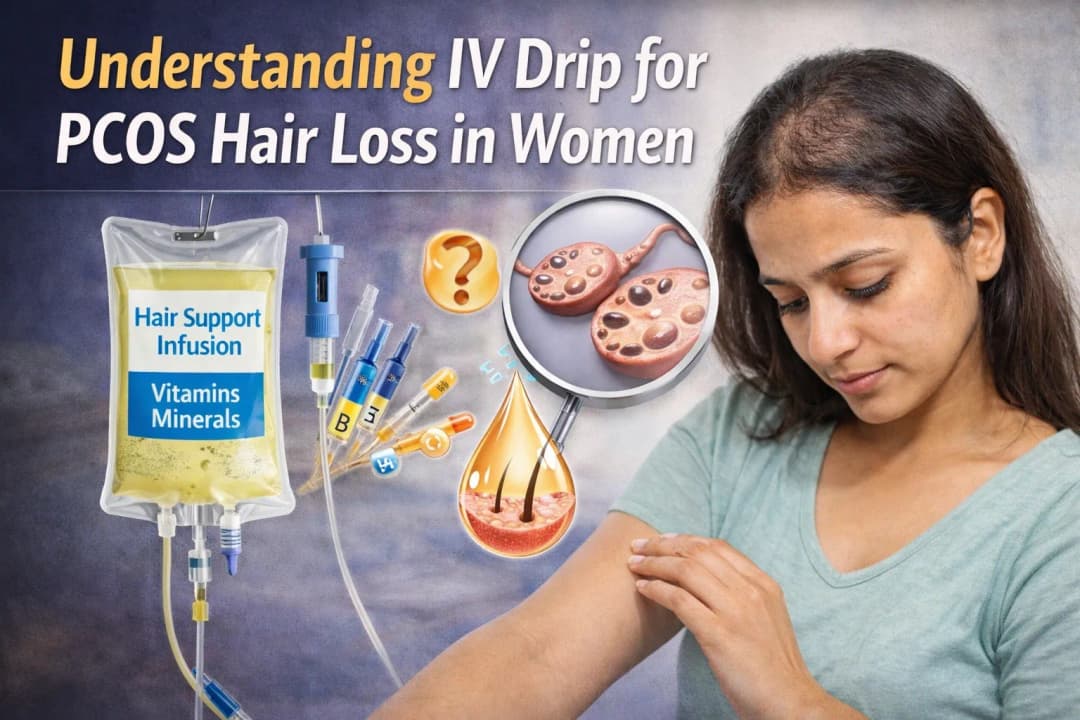
Trichologists and dermatologists recommend IV drip therapy to tackle excessive hair shedding in women with PCOS. Administered through an IV drip, this treatment delivers vital nutrients directly into the bloodstream which then reach the hair follicles. When combined with hormone control, oral supplements, and lifestyle changes, IV therapy may support hair regrowth and recovery.
Understanding Hair Loss Due to PCOS
What is PCOS?
PCOS (Polycystic Ovary Syndrome) is a hormonal disorder that affects the reproductive and metabolic systems of women. The condition is often associated with increased androgen levels such as testosterone.
Common symptoms include:
- Excess facial or body hair
- Acne-prone skin
- Oily skin
- Irregular menstrual cycle
- Hair thinning
How does PCOS cause hair loss?
Hair loss in women with PCOS occurs due to hormonal imbalance, rising androgen levels, and nutritional deficiencies. The condition often begins with thinning at the crown and may extend towards the temples. Over time, hair follicles shrink and weaken, causing visible thinning and excessive hair fall.
Symptoms of PCOS-Related Hair Loss
- Hair thinning at the crown
- Increased hair fall while brushing or washing
- Dull and lifeless hair
- Weak hair strands with less volume
Early treatment can help prevent further damage to the hair follicles.
Lifestyle Tips to Reduce Hair Loss
- Manage blood sugar levels
- Maintain a healthy body weight
- Sleep 7–9 hours daily
- Follow a balanced diet
Lifestyle improvements can significantly improve hair quality over time. If lifestyle changes are not enough, medical treatment and supplements may be recommended by doctors.
Treatments for PCOS Hair Loss
IV Therapy for PCOS Hair Loss
IV therapy helps address nutritional deficiencies that contribute to hair loss. IV hair boosters contain vitamins, minerals, and amino acids that nourish the scalp and support hair growth.
Common ingredients include:
- Calcium
- Proline and Lysine
- Zinc
- Potassium
- Glutathione
- Methylcobalamin (Vitamin B12)
Difference Between IV Drip and Oral Supplements
| Oral Supplements | IV Drip Treatment |
|---|---|
| Relies on digestion | Delivered directly into bloodstream |
| Capsules or powders | Administered through IV infusion |
| Slow results | Faster nutrient absorption |
| Gradual effects | May show quicker improvement |
PRP / GFC Therapy
PRP (Platelet-Rich Plasma) and GFC (Growth Factor Concentrate) therapies use the patient’s own blood to stimulate hair follicles. The extracted blood is processed and injected into the scalp to improve blood circulation and stimulate hair growth. These treatments may also be combined with IV therapy for improved results.
How Long Does It Take to See Results?
Initial improvements such as reduced hair shedding may be noticed within a few months. Hair thickness and density usually improve over 6–12 months with consistent treatment.
When Should You See a Specialist?
Consult a specialist if you notice:
- Persistent scalp itching
- Slow hair growth
- Hair thinning at the crown
- Widening hair part line
- Increased daily hair shedding
- Excess facial or body hair
Why Choose Kibo Clinics?
At Kibo Clinics, treatment begins with a detailed assessment of your scalp and hair health. Advanced diagnostic tools help identify follicular damage and nutritional deficiencies. Based on this analysis, a customised IV therapy plan may be recommended.
The treatment process includes:
- Hair and scalp assessment
- Custom IV nutrient formulation
- IV infusion administered by medical professionals
- Post-treatment guidance and monitoring
Essential nutrients such as Vitamin C, Biotin, Vitamin B12, Folic Acid, Amino Acids, Zinc, Iron, and Glutathione are delivered directly into the bloodstream, helping improve nutrient absorption and support hair regeneration.
Additional Tips During Treatment
- Stay well hydrated
- Eat a nutrient-rich diet
- Massage the scalp with nourishing oils
- Avoid excessive heat styling
- Use sulphate-free shampoo
- Manage stress through yoga or exercise
Possible Side Effects
- Mild discomfort or bruising
- Temporary fatigue
- Rare allergic reactions
IV hair boosters for women with PCOS are becoming increasingly popular due to their ability to address nutritional deficiencies. Women experiencing PCOS-related hair loss should consult a qualified specialist before beginning treatment.
FAQs
Can PCOS cause hair loss?
Yes, hormonal changes and nutritional deficiencies in PCOS can lead to hair thinning and excessive shedding.
Is PCOS hair loss permanent?
No, it can often be managed with proper treatment and hormonal balance.
Can PCOS-related hair loss be reversed?
In many cases it can improve with treatments such as IV therapy, PRP, lifestyle changes, and medical care.
What are the side effects of IV therapy?
Mild bruising, fatigue, or soreness may occur temporarily.
How long does an IV drip session last?
Most IV therapy sessions take around one hour.
When will results be visible?
Results may appear within 3–4 months, while optimal improvement may take 6–12 months.
Is IV therapy painful?
The procedure is generally painless, though mild discomfort may occur.
Can IV therapy be combined with other treatments?
Yes, it is often combined with treatments like PRP or GFC therapy for better results.
References
https://www.nichd.nih.gov/health/topics/pcos/conditioninfo/symptoms
https://pubmed.ncbi.nlm.nih.gov/33460214/