
How to Hide a Hair Transplant During the "Ugly Duckling" Phase
Published on Fri Apr 10 2026
Vikram had his hair transplant done on a Friday. By Monday, colleagues at his office were already asking questions. "I didn't expect to look this rough this soon," he admitted. "Nobody warned me about the ugly duckling phase — I just thought I'd have a few days of redness and then start looking better."
If you've recently had a hair transplant — or are planning one — this is the part of the journey that most clinics don't spend enough time preparing you for. The "ugly duckling" phase is real, it's temporary, and with the right strategies, it's entirely manageable. Here's everything you need to know.
What Is the "Ugly Duckling" Phase?
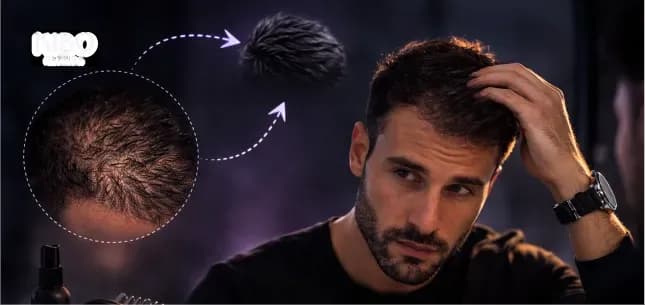
The ugly duckling phase refers to the period roughly between weeks 2 and 16 after a hair transplant when the scalp looks noticeably different — and often worse than it did before the procedure. It gets its name from the Hans Christian Andersen story for obvious reasons: what will eventually become something beautiful goes through an awkward, ungainly middle stage first.
Here's what happens biologically. After a hair transplant, the transplanted follicles go through a process called shock loss — the newly implanted hairs shed their shafts within the first 2–6 weeks. This is not a sign that the transplant has failed. The follicles themselves remain alive beneath the scalp surface and will begin producing new hair growth around months 3–4. But in the weeks between shedding and regrowth, the scalp can look patchy, thin, or noticeably worked on.
Meanwhile, the recipient area may still show redness, the donor area may have visible scarring or short stubble, and the overall appearance of the scalp can feel like a step backwards from where you started. This is the ugly duckling phase — and for many patients, it's the most psychologically challenging part of the entire process.
What Does the Scalp Actually Look Like During This Phase?
It helps to know what to expect at each stage so you're not caught off guard. Here's a general week-by-week and month-by-month breakdown:
| Timeframe | What You'll See | What's Happening |
|---|---|---|
| Days 1–5 | Redness, swelling, tiny scabs around each graft | Scalp healing from the procedure; grafts anchoring |
| Days 6–14 | Scabs falling off, some transplanted hairs beginning to shed | Normal healing progression; shock loss beginning |
| Weeks 3–6 | Most transplanted hairs shed; scalp looks sparse or patchy | Shock loss peak; follicles entering resting phase |
| Months 2–3 | Scalp appears thin; minimal visible growth; possible pimple-like bumps | Follicles dormant; ingrown hairs may appear as follicles activate |
| Months 3–5 | Fine, thin hair beginning to emerge; uneven texture | New hair growth beginning; hairs initially fine and light |
| Months 6–9 | Visible improvement; coverage increasing; still uneven in places | Hair thickening and darkening; most patients see significant change |
| Months 10–18 | Near-final or final result; full density and natural appearance | Hair fully matured; follicles producing at full capacity |
The ugly duckling phase typically spans months 1–4, with most patients finding the period between weeks 3 and 10 the most challenging visually and emotionally.
Why Do People Want to Hide It?
There's no shame in wanting to manage how you look during this period. Hair transplants carry a social stigma that other cosmetic procedures don't — partly because the scalp is always visible, and partly because people are often private about hair loss to begin with. Going through a procedure and then looking temporarily worse can feel like a double blow.
Common reasons patients want to conceal the ugly duckling phase include professional environments where appearance matters, social events like weddings or celebrations that happen to fall during this window, the simple desire for privacy about having had a procedure, and the psychological benefit of not being reminded of the in-between state every time you look in the mirror or catch someone else looking at your scalp.
Whatever your reason, wanting to look your best during recovery is entirely reasonable. The strategies below are safe, practical, and won't interfere with your healing — provided you follow your clinic's specific post-operative guidance at all times.
Before Anything Else: Follow Your Clinic's Post-Op Instructions
This point cannot be overstated. Everything in this guide is supplementary to — not a replacement for — your clinic's specific post-operative protocol. Different clinics, different graft techniques, and different individual healing rates mean that what's safe at week 2 for one patient may not be safe until week 6 for another.
Always get explicit clearance from your surgeon before using any topical product, wearing anything on your scalp, applying heat or styling tools, or starting any new treatment. When in doubt, ask. The temporary discomfort of looking rough for a few extra weeks is far preferable to compromising your graft survival.
Concealment Strategies That Actually Work
1. Hats and Headwear — The Most Practical Option
A well-chosen hat is the simplest and most effective concealment tool during the ugly duckling phase. Most surgeons permit loose-fitting hats after the first 7–14 days once initial scabbing has resolved and grafts are anchored. Tight-fitting caps that press directly on the recipient area should be avoided earlier in recovery.
What works well:
- Loose bucket hats or wide-brim hats: These sit away from the scalp and provide coverage without contact pressure on grafts. They also provide UV protection, which is important since the scalp is more sun-sensitive post-procedure.
- Loose baseball caps: Once cleared by your surgeon, a soft, loosely worn cap is socially inconspicuous in most environments. Avoid caps with stiff inner bands that press on the hairline.
- Beanies (with caution): Later in recovery — typically from month 2 onwards — soft, breathable beanies are usually fine. Earlier than this, the pressure and friction may be problematic.
- Scarves and turbans: For those comfortable with this style, loosely tied scarves provide coverage and are easy to adjust if the scalp feels sensitive.
The critical word throughout is loose. Anything that creates friction, suction, or consistent pressure on the recipient area during the first several weeks risks dislodging or damaging grafts.
2. Hairstyling the Existing Hair
You still have your existing hair — and for many patients, styling it thoughtfully can provide a significant amount of natural coverage over the recipient area during recovery.
- Length before the procedure: If you know you'll want to use your existing hair for coverage during recovery, discuss this with your surgeon before the procedure. In some cases, leaving existing hair slightly longer around the recipient area allows for better combing or styling coverage in the weeks after surgery.
- Side sweeping and comb-overs during recovery: These aren't meant as permanent styles — they're temporary tools during the ugly duckling window. Directing longer existing hair over a sparse or reddened recipient area can significantly reduce visibility.
- Avoiding harsh products: During early recovery, heavy gels, waxes, and sprays should generally be avoided on the recipient area. Lighter, water-based products are usually cleared earlier — check with your clinic.
3. Scalp Concealers and Hair Fibres
Scalp concealers — products like Toppik, Nanogen, or DermMatch — are keratin-based fibres or pigmented powders that attach to existing hair shafts and create the appearance of density. They're widely used by people with thinning hair generally, and they can be an effective tool during the ugly duckling phase once the scalp has healed sufficiently.
| Product Type | How It Works | Best For | When to Start Using |
|---|---|---|---|
| Keratin hair fibres | Static-charge fibres cling to existing hair shafts | Areas with some existing hair to attach to | Usually from week 3–4 onwards (surgeon's clearance required) |
| Scalp pigment concealers | Pigmented powder/cream reduces scalp-hair contrast | Concealing redness and scalp visibility | Once scabbing has fully resolved; typically week 3+ |
| Hold sprays for fibres | Sets fibres in place for wind and light sweat resistance | Days where you need the concealer to last | Same as fibres — surgeon clearance required |
| Tinted dry shampoos | Adds light colour and texture; reduces scalp shine | Reducing scalp sheen and adding volume to fine hairs | Later recovery — confirm with clinic |
Important caveats on concealers: do not apply any product to areas where scabbing is still present. Do not rub or scrub products into the scalp — apply gently. And always confirm with your clinic before starting any topical product in the post-operative period.
4. Embracing a Shaved or Closely Cropped Look
This one is counterintuitive, but it genuinely works. If you shave or crop your remaining hair very close during the ugly duckling phase, the overall appearance becomes far more uniform. The contrast between areas of different hair density is dramatically reduced when all hair is at the same very short length.
Many patients find that a clean, closely cropped look actually reads as a deliberate style choice rather than a sign of a procedure in progress. This approach also aligns well with scalp micropigmentation (SMP) if you've had that done alongside or separately from a transplant — the buzz cut aesthetic is precisely the look SMP is designed to complement.
Discuss with your surgeon when it's safe to use clippers over the recipient area post-surgery. For FUE patients, this is often cleared earlier than for FUT patients due to the absence of a linear scar.
5. Scalp Micropigmentation as a Complementary Cover
Some patients who have undergone a hair transplant also use scalp micropigmentation to improve density appearance during and after the ugly duckling phase. SMP deposits pigment dots that mimic shaved follicles — this can fill in the visual gaps between transplanted hairs and reduce the patchy appearance of the interim growth period.
SMP is not typically done immediately post-transplant — the scalp needs time to heal. But for patients 3–6 months into recovery who are finding the patchiness particularly difficult to manage, a consultation about complementary SMP is worth exploring.
6. Social Strategies: What to Say (and Not Say)
Concealment isn't always purely physical. Managing social situations during the ugly duckling phase is its own skill — and having a prepared, comfortable answer to questions reduces anxiety significantly.
You have no obligation to disclose that you've had a hair transplant. Common low-key explanations that patients use include:
- "I've been having some scalp treatment — it's a bit irritated at the moment."
- "I tried a new product that didn't agree with my scalp."
- "I decided to try shaving it closer for a while."
- "I've been dealing with some skin sensitivity — nothing serious."
None of these are particularly detailed or likely to invite follow-up questions. Most people, when given a brief, unbothered answer, move on. The key is to deliver your explanation casually — the more unbothered you seem, the less interesting it becomes to the person asking.
If you're close with the person asking and don't mind sharing, honesty is always an option too. Many people find that being open about having had a procedure actually invites supportive responses rather than judgment — hair loss and hair restoration are far more common topics of conversation than many people realise.
What to Absolutely Avoid During This Phase
Equally important as what you can do to conceal is what you should avoid — both for the sake of concealment and for the health of your grafts.
| What to Avoid | Why |
|---|---|
| Tight hats or helmets early in recovery | Friction and pressure can dislodge unanchored grafts in the first 1–2 weeks |
| Hair dye or bleach on the scalp | Harsh chemicals can damage fragile follicles and irritate healing skin; typically avoid for 4–6 weeks minimum |
| Heat styling tools directly on recipient area | Heat can damage healing tissue and newly emerging follicles |
| Vigorous scalp massage or rubbing | Can damage grafts in early recovery and disrupt healing tissue |
| Direct, prolonged sun exposure | Scalp is more UV-sensitive post-procedure; sunburn can cause pigmentation changes and damage healing |
| Swimming (particularly chlorinated pools or sea water) | Chemicals and bacteria pose infection risk; typically avoided for 4 weeks minimum |
| Heavy exercise causing excessive sweating | Sweat can introduce bacteria to healing scalp; usually restricted for the first 2 weeks |
| Picking or scratching scabs | Risks pulling grafts out before they are fully anchored; also increases infection and scarring risk |
The Psychological Side of the Ugly Duckling Phase
It would be incomplete to discuss this topic without acknowledging the emotional dimension. For many patients, the ugly duckling phase is harder psychologically than the procedure itself. Hair loss is already an emotionally loaded experience — and going through a period of looking "worse" before looking better, while trying to manage everyday social life, can be genuinely distressing.
A few things that help:
- Photographs at regular intervals. The change from week 4 to week 12 to month 6 can be difficult to perceive day by day, but when you compare photographs from these intervals you'll often be surprised by how much progress has occurred. Many patients find this documenting process genuinely reassuring during difficult weeks.
- Connecting with others in the same phase. Online forums and communities — including dedicated hair restoration communities — are full of people at every stage of recovery. Reading about others' experiences at the 6-week mark or seeing their month-by-month photo progressions is a realistic, honest source of reassurance.
- Staying in contact with your clinic. A good clinic doesn't disappear after your procedure. If you're concerned about what you're seeing, reach out. Most clinics can reassure you about what's normal — and if something genuinely isn't normal, early identification is always better.
- Reframing the timeline. The ugly duckling phase, even at its longest, is typically 3–4 months out of a result that will last a lifetime. Zooming out to this perspective doesn't make the difficult weeks disappear, but it does put them in proportion.
A Month-by-Month Concealment Plan
To bring the above together practically, here's a rough guide to which concealment strategies are typically available at each stage of recovery. Always confirm timelines with your own clinic, as individual healing varies.
| Recovery Stage | Typically Available | Not Yet Available |
|---|---|---|
| Week 1–2 | Loose hats (bucket/wide brim); staying indoors; remote work | Tight hats, concealers, styling products, exercise |
| Week 3–4 | Loose baseball caps; gentle styling of existing hair; scalp concealers once scabs gone (confirm with clinic) | Heat styling; hair dye; tight headwear; swimming |
| Month 2–3 | Most hats; hair fibres; styling existing hair; close crop/shave (confirm with clinic); light exercise | Hair dye (typically wait 4–6 weeks); aggressive heat styling |
| Month 4–6 | Most concealment options available; new growth beginning to assist natural coverage; SMP consultation if desired | Most restrictions lifted; confirm hair colouring timeline with surgeon |
| Month 6+ | Full range of styling; concealment needs decreasing as natural coverage grows | — |
Planning Ahead: How to Schedule Your Transplant to Minimise the Ugly Duckling Problem
If you haven't had your procedure yet and are reading this in preparation, there's one more genuinely useful strategy available to you: timing.
Many patients choose to schedule their hair transplant to coincide with a period of reduced social or professional obligation — a quieter work season, around annual leave, or before a significant social calendar opens up. If you know you have a wedding, a major presentation, or any event you particularly care about looking your best for, working backwards 6–9 months from that date gives you a realistic recovery buffer.
Scheduling around a long holiday break — where you have 1–2 weeks of genuinely low-visibility time immediately post-procedure — reduces the stress of the most visible early phase significantly. By the time you return to your normal routine, the initial scabbing and acute redness have typically resolved.
Discuss timing openly with your clinic during consultation. A good surgeon will factor your social and professional calendar into procedure planning without it affecting the clinical approach.
Why Kibo Clinics
At Kibo Clinics, preparing patients for the full journey — including the ugly duckling phase — is a core part of how we work. We believe that informed patients have better experiences and better outcomes. That means honest pre-procedure counselling about what to expect week by week, clear guidance on post-operative scalp care and safe concealment options, and continued support throughout the recovery period — not just on the day of the procedure.
If you're planning a hair transplant and want to understand exactly what your recovery timeline will look like, or if you're already in the ugly duckling phase and have questions about what you're seeing, we're here to help.
Disclaimer: This blog is for informational purposes only. Consult qualified healthcare providers for personalised medical advice.