
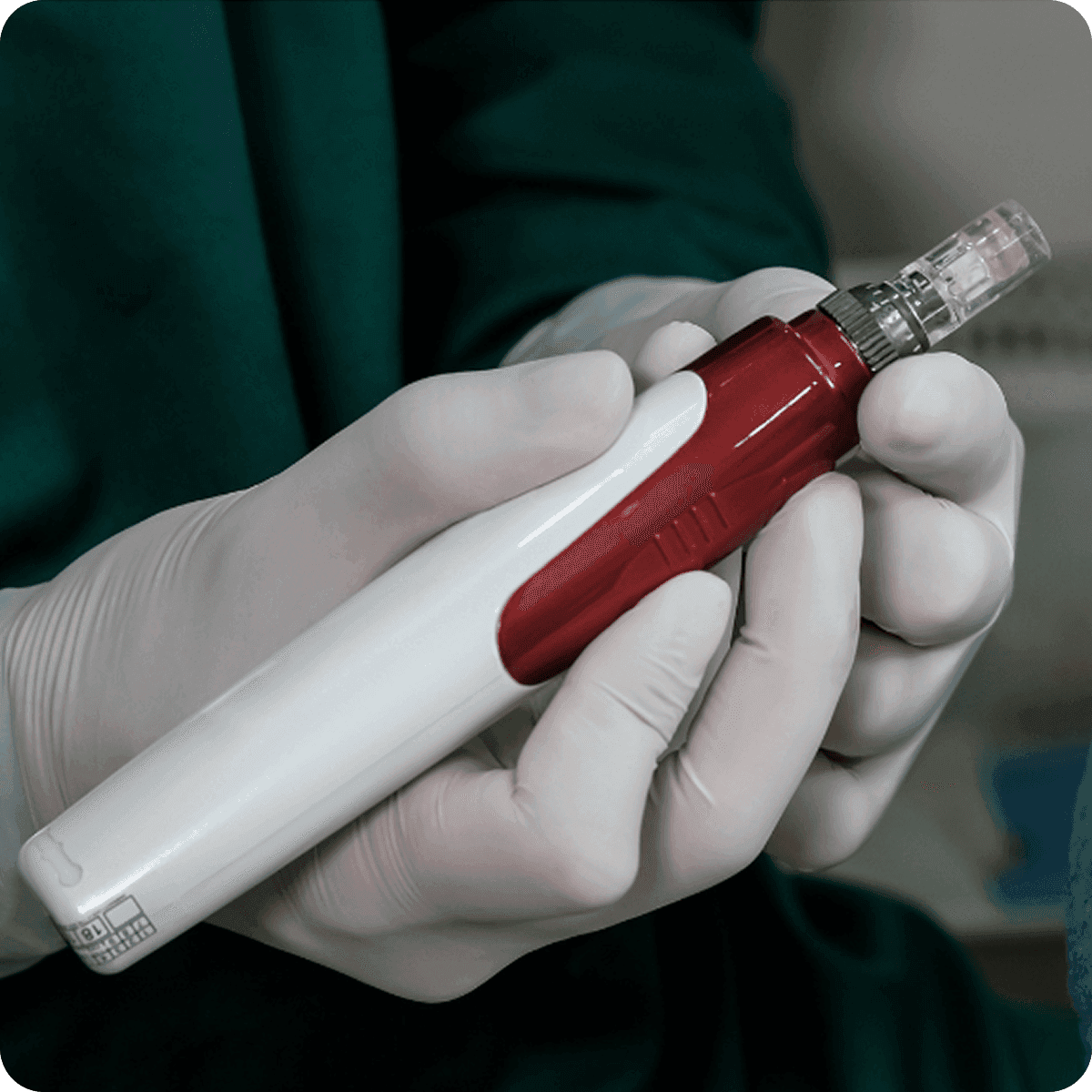
Microneedling for hair growth works by creating controlled micro-injuries on the scalp that trigger the body's natural healing response — stimulating collagen production, increasing blood circulation, and activating dormant hair follicles. It is most effective for early to moderate androgenetic alopecia and works significantly better when combined with PRP, minoxidil, or mesotherapy. It is not a standalone cure and does not work on completely bald areas where follicles are permanently miniaturized.
- A landmark 2013 study showed patients receiving microneedling plus minoxidil had significantly better regrowth than those using minoxidil alone
- Microneedling improves topical treatment absorption by up to 300% by creating microchannels in the scalp
- Professional sessions using 1.5mm depth are recommended once every 2 to 4 weeks for optimal results
- First visible results typically appear between 3 to 6 months with consistent sessions
- Not suitable for scarring alopecia, active scalp infections, or advanced baldness at Norwood Stage 6 to 7
What is Microneedling? (Collagen Induction Therapy Explained)
Microneedling is a minimally invasive procedure that involves creating tiny micro-injuries in the scalp using fine needles. These controlled injuries stimulate the body's natural healing response, leading to increased collagen production, improved blood circulation, and activation of dormant hair follicles.
The process is also known as Collagen Induction Therapy (CIT) because it primarily works by boosting collagen and elastin levels in the skin. While originally used for skin rejuvenation to treat scars, wrinkles, and hyperpigmentation, microneedling has gained recognition as an effective treatment for hair loss by promoting new hair growth, increasing follicle thickness, and improving overall scalp health.
Here is how microneedling for hair works: the tiny punctures trigger the wound healing process, leading to increased production of growth factors like platelet-derived growth factor (PDGF) and epidermal growth factor (EGF), which are essential for stimulating hair follicles and prolonging the anagen growth phase. It also enhances blood circulation to the scalp, ensuring follicles receive more oxygen and nutrients. Additionally, it creates micro-channels in the scalp, allowing better absorption of topical treatments like minoxidil, peptides, or stem cell-based serums — making them significantly more effective.
History and Evolution of Microneedling
Microneedling dates back to ancient Chinese acupuncture techniques, but its modern version was first introduced in 1995 by Dr. Desmond Fernandes, a South African plastic surgeon, who used fine needles to improve skin texture. Over the years, dermatologists refined the method, and it became widely adopted in aesthetic medicine for treating scars, wrinkles, and pigmentation issues.
The concept of microneedling for hair loss emerged in the early 2000s when researchers discovered that mechanical stimulation of the scalp could reactivate dormant follicles. A breakthrough study in 2013 compared microneedling combined with minoxidil to minoxidil alone — patients who underwent microneedling had significantly better hair regrowth. This led to a surge in its popularity, and by the late 2010s, microneedling had become a mainstream hair restoration treatment, often recommended alongside PRP therapy and mesotherapy.
Benefits of Microneedling for Hair
Microneedling has gained immense popularity due to its multi-layered benefits for hair growth and scalp health. Unlike traditional hair loss treatments that rely solely on medication or supplementation, microneedling activates the body's natural healing mechanisms.
- Stimulates New Hair Growth: The micro-injuries activate stem cells in the hair follicle bulge region, triggering new hair formation and prolonging the anagen phase of hair growth
- Increases Collagen Production: Collagen strengthens hair follicles and maintains a healthy scalp environment. Microneedling reverses the age-related decline in collagen that leads to hair thinning
- Enhances Blood Circulation: Poor blood flow to the scalp starves hair follicles of essential nutrients and oxygen. Microneedling increases blood vessel formation, improving delivery to follicles
- Boosts Absorption of Hair Growth Serums: Minoxidil, peptides, and PRP solutions work better when they penetrate deeper scalp layers. Microneedling creates micro-channels that enhance topical absorption by up to 300%
- Reduces Scalp Inflammation: Chronic micro-inflammation of the scalp is a hidden cause of hair loss. Microneedling helps reset the scalp environment by reducing inflammation responsible for androgenetic alopecia
- Non-Surgical and Cost-Effective: Ideal for individuals in the early to moderate stages of hair thinning, with minimal downtime
- Works on Different Types of Hair Loss: Effective for androgenetic alopecia and traction alopecia as a versatile adjuvant treatment alongside other hair regrowth therapies
Microneedling improves topical treatment absorption by up to 300% by creating temporary microchannels in the scalp. This means that minoxidil or PRP applied after a session penetrates far deeper than on untreated skin — significantly amplifying the effectiveness of these treatments.
How Does Microneedling Stimulate Hair Growth?
Microneedling stimulates hair growth by creating controlled micro-injuries on the scalp using fine needles, which triggers the body's natural healing response. This process enhances collagen production, increases blood circulation, and activates dormant hair follicles, making it a powerful adjuvant tool for combating hair thinning and promoting regrowth.
Activation of Growth Factors: The micro-wounds stimulate the release of essential growth factors such as platelet-derived growth factor (PDGF) and vascular endothelial growth factor (VEGF). These factors boost follicular regeneration, strengthening existing hair and promoting new hair growth.
Increased Blood Circulation: Poor blood flow is a common cause of hair loss. Microneedling increases capillary formation and oxygen supply to the hair follicles, nourishing them and extending the anagen growth phase of the hair cycle.
Enhanced Absorption of Topical Treatments: Microneedling significantly improves the penetration of minoxidil, peptides, and DHT blockers by up to 300%, ensuring that these treatments reach the deeper layers of the scalp where hair follicles reside.
Dermarollers vs Professional Microneedling
Dermarollers are handheld devices with microneedles (typically 0.5mm to 1.0mm depth) that users can roll over their scalp at home. They help with mild hair thinning but have less precision compared to professional microneedling. Dermapens and automated microneedling devices used by dermatologists provide consistent needle depth of 1.5mm or more, reduced trauma, and better safety measures, making them significantly more effective for stimulating hair regrowth. The practical difference between dermarolling vs professional microneedling comes down to precision, safety, and depth control.
Microneedling vs PRP for Hair Loss: Which Is Better?
Microneedling and PRP therapy are both non-surgical hair restoration treatments, but they differ in their approach and effectiveness.
Microneedling uses micro-injuries to stimulate collagen production and activate hair follicles. It can be done with or without topical treatments and improves scalp blood circulation and reduces fibrosis — making it effective for early-stage hair thinning.
PRP (Platelet-Rich Plasma) involves drawing the patient's blood, extracting platelet-rich plasma, and injecting it into the scalp. It contains high concentrations of growth factors that stimulate dormant follicles and is more effective for moderate to severe hair loss, particularly in androgenetic alopecia. A detailed comparison of PRP vs PRF for hair growth helps clarify which approach suits your specific hair loss type.
For early-stage thinning or mild hair loss, microneedling alone or with minoxidil can be effective. For significant hair thinning or dormant follicles, PRP is often more effective. For best results, dermatologists recommend combining PRP with microneedling, as the micro-injuries increase PRP absorption and enhance its effectiveness.
How Often Should You Do Microneedling for Hair?
The ideal frequency of microneedling depends on needle depth and scalp sensitivity:
- 0.5mm Dermarollers (at-home use) — Twice a week for mild stimulation
- 1.0mm Dermarollers — Once a week, as deeper penetration requires longer healing time
- 1.5mm Professional Microneedling — Once every 2 to 4 weeks for best results
- 2.0mm Needles — Only used in clinical settings for severe hair thinning
Overusing microneedling without proper recovery time can cause scalp irritation, excessive inflammation, and counterproductive damage to hair follicles. Following post-treatment care — avoiding harsh shampoos, sun exposure, and excessive scalp touching — ensures optimal regrowth results.
Does Microneedling Work for Bald Spots?
Microneedling is effective for hair thinning and mild-to-moderate hair loss but not a cure for completely bald spots with no active follicles. People with androgenetic alopecia can see improvement in hair density and thickness as blood circulation improves, creating a better scalp environment and enabling follicle reactivation.
However, microneedling will not produce results in completely bald areas at Norwood 5 to 7 stage where follicles are permanently miniaturized, or in cicatricial scarring alopecia where inflammation has destroyed hair follicles beyond repair. Before-and-after results from clinical studies show that patients with early-stage balding experience noticeable improvement after 3 to 6 months of regular microneedling treatments, when used as an adjuvant therapy. It is important to consult a qualified dermatologist to assess the root cause of your hair loss and determine whether microneedling is the right treatment for your condition. Understanding the full types and causes of hair loss helps clarify whether microneedling is appropriate for your specific case.
Microneedling for Hair Growth at Home: Is It Safe?
Microneedling can be done at home using dermarollers, but safety precautions are crucial to avoid infections, scalp trauma, or ineffective treatment.
Pros of at-home microneedling: Cost-effective alternative to professional treatments, can enhance minoxidil or peptide absorption, and easy to incorporate into a weekly hair care routine.
Cons and risks of at-home microneedling: Lack of precision — dermarollers cover large areas but do not penetrate evenly like dermapen devices. Risk of scalp infection if the roller is not properly sanitized. Overuse can cause irritation and increased shedding instead of growth. Not as effective for severe hair loss, as needle depth is limited in home-use devices.
How to do microneedling at home safely: Choose a 0.5mm dermaroller, disinfect the roller before and after every use with rubbing alcohol, avoid excessive pressure to prevent scalp injury, do not use on irritated or infected scalps, and combine with minoxidil, peptides, or growth serums for better results. For advanced hair loss, professional microneedling treatments provide better penetration, safety, and precision.
Microneedling Procedure: Step-by-Step Guide
Pre-Treatment Preparation
1 to 2 weeks before treatment: Stop using any harsh scalp treatments that could make the skin more sensitive. If using minoxidil, discontinue its use 48 hours before the session to prevent excessive irritation.
48 hours before treatment: Wash your scalp with a gentle sulfate-free shampoo. Avoid alcohol consumption and blood-thinning medications such as aspirin or ibuprofen, as they may cause prolonged bleeding. Stay well hydrated to support the body's healing response.
On the day of the procedure: Ensure the scalp is clean and dry, free from any hair products or oils. If undergoing professional microneedling, a topical numbing cream may be applied to reduce discomfort.
The Procedure Step by Step
Step 1 — Cleansing the Scalp: The scalp is thoroughly cleaned with an antiseptic solution to remove any dirt, oils, or bacteria. This step is essential to prevent infection.
Step 2 — Application of a Numbing Agent: A topical numbing cream may be applied, especially when using deeper needles (1.5mm or more), to minimise discomfort. It typically takes 15 to 30 minutes for the numbing effect to take hold.
Step 3 — Microneedling with a Dermapen or Dermaroller: A dermapen or automated microneedling device creates tiny punctures across the scalp. Needle depth is adjusted based on the treated area — 1.0mm to 1.5mm for most parts of the scalp and 0.5mm for sensitive areas like the hairline. The device is moved vertically, horizontally, and diagonally to ensure even coverage.
Step 4 — Application of Growth-Boosting Serums: After microneedling, growth factor serums, peptides, PRP, or minoxidil may be applied. The microchannels created by the needles allow for deeper penetration, enhancing the effectiveness of these treatments.
Step 5 — Post-Treatment Care: The treated area is kept clean to prevent infection, and the patient is advised not to wash the scalp for at least 24 hours.
Microneedling Healing Stages: Day-by-Day Recovery Timeline
Microneedling is not a one-time solution and must not be treated as monotherapy. It works best as part of a long-term hair regrowth strategy combined with proper scalp care, supplements, and other growth-enhancing treatments. Stopping sessions prematurely is one of the most common reasons patients do not see sustained results.
Is Microneedling Safe for All Hair Loss Conditions?
Microneedling is considered a safe and effective treatment for most types of hair loss, but it may not be suitable for everyone.
Safe for: Androgenetic alopecia (male and female pattern baldness) where microneedling increases blood circulation and activates dormant follicles.
Not recommended for: Cicatricial (scarring) alopecia — permanent follicle destruction means microneedling may not work. Active scalp infections including folliculitis or fungal infections should be treated before microneedling. Psoriasis or eczema can cause flare-ups and worsen inflammation. Severe baldness at Norwood 6 to 7 — if follicles are completely dead, microneedling alone cannot regrow hair.
Common Side Effects and How to Prevent Them
Mild Side Effects (Common and Temporary)
- Redness and scalp sensitivity — the treated area may appear flushed for 24 to 48 hours
- Mild swelling or tightness due to increased blood flow and collagen stimulation
- Itching or scalp dryness — temporary dryness as the skin heals
- Minor pinpoint bleeding — small dots of blood are normal but should stop quickly
Rare Side Effects (If Not Done Properly)
- Excessive bleeding or bruising from too much pressure or incorrect needle depth
- Infections from poor hygiene or unsterilized tools
- Follicular damage from overuse, leading to worsened shedding instead of growth
Microneedling vs Other Hair Regrowth Treatments
Microneedling vs Low-Level Laser Therapy
Microneedling creates micro-injuries in the scalp to trigger the body's natural healing response, increasing collagen production and enhancing blood flow. Low-level laser therapy uses red or near-infrared light to stimulate cellular activity within hair follicles, promoting increased ATP production and reducing inflammation. Microneedling is generally preferred for moderate to advanced thinning, while LLLT hair helmet therapy is better for those looking to maintain density or prevent further shedding. Many dermatologists recommend using both together for enhanced results.
Microneedling vs Mesotherapy
Microneedling stimulates hair follicles through mechanical micro-injuries which increase blood flow, collagen production, and nutrient absorption. Mesotherapy involves injecting a nutrient-rich cocktail of vitamins, peptides, DHT blockers, and amino acids directly into the scalp. Microneedling is more effective for improving scalp circulation and absorption, while mesotherapy for hair regrowth is best for individuals with nutritional deficiencies contributing to hair loss. Both treatments can be combined, with mesotherapy supplying essential nutrients and microneedling enhancing their absorption.
Microneedling vs Scalp Threads (PDO Threads)
PDO threads for hair regrowth involves implanting absorbable threads beneath the scalp skin to stimulate collagen production and improve blood flow to hair follicles. Microneedling triggers natural wound healing through controlled injuries and is less invasive and does not involve inserting foreign materials into the scalp. Microneedling is better for individuals looking for a cost-effective, minimally invasive treatment. PDO threads for scalp restoration may suit those seeking longer-term improvement in severe thinning cases.
What Are the Best Combination Treatments With Microneedling?
- PRP (Platelet-Rich Plasma): PRP injections combined with microneedling provide an added boost by supplying growth factors and healing proteins that further stimulate follicle activity
- Mesotherapy: Combining nutrient-rich mesotherapy injections with microneedling supplies vitamins, peptides, and DHT blockers directly to the hair roots
- Low-Level Laser Therapy (LLLT): Using a laser cap or in-clinic LLLT treatment alongside microneedling improves blood circulation and prolongs the hair growth phase
- Minoxidil: Should not be applied immediately after microneedling — wait at least 48 hours post-treatment for deeper and safer penetration
- Peptide Serums and Growth Factors: Topical solutions containing peptides, stem cell extracts, or copper peptides can be applied after 24 hours to accelerate follicle regeneration
Microneedling Aftercare: What to Do After Treatment
- Avoid touching the scalp immediately after the procedure to prevent bacteria from entering the microchannels
- Keep the scalp dry for at least 24 hours to allow healing and prevent infections
- Avoid harsh shampoos, hair styling products, or chemical treatments for at least 48 hours
- Avoid excessive sun exposure and wear a loose-fitting cap if going outside
- Refrain from intense physical activity, saunas, or swimming for the first 48 hours
- Sleep on a clean pillowcase to minimise contamination that could cause inflammation
When washing the hair post-treatment, wait at least 24 hours, use a gentle sulfate-free shampoo, use lukewarm or cool water instead of hot water, and avoid scrubbing or massaging the scalp vigorously for the first few washes. Minoxidil should be avoided for at least 24 to 48 hours post-microneedling as the microchannels are still open and direct application can cause burning and excessive inflammation.
Frequently Asked Questions
Q: Is microneedling painful?
Microneedling causes mild discomfort, but the level of pain depends on the needle depth, technique, and individual pain tolerance. For at-home dermarollers with 0.5mm needles, most people experience only a tingling or slight pricking sensation. Professional microneedling using 1.5mm to 2.0mm needles can be more uncomfortable, but topical numbing cream is applied beforehand to reduce pain. Automated dermapen devices cause less trauma than dermarollers, making the procedure more comfortable overall.
Q: Does microneedling damage hair follicles?
When done correctly, microneedling does not damage follicles — it creates micro-injuries that promote follicle regeneration. However, using needles that are too deep (over 2.0mm), applying too much pressure, or microneedling more than once a week can prevent the scalp fr...
Medical Disclaimer : Information from Kibo Hair Clinics is for educational purposes only. It does not replace diagnosis, trichoscopy, blood test interpretation, prescription treatment, procedure advice, or side-effect counselling from a qualified dermatologist or hair restoration doctor.