
IV Drip For Postpartum Hair Loss: A New Mother’s Complete Treatment Guide
Published on Fri Mar 27 2026
Childbirth is the purest form of joy. However, in its aftermath, a woman’s body undergoes a series of emotional, physical, and hormonal changes. The labour and the postpartum hair fall itself can take a toll on new mothers, making it the most challenging phase in a woman’s life.
Therefore, to replenish depleted nutrients and energy levels, and ensure the recovery and overall well-being of new mothers, treatments like intravenous (IV) drip for postpartum hair loss can offer many benefits.
Read on to know how IV drip for postpartum hair loss is a boon for new mothers and how it helps treat female pattern baldness.
Women undergo many physical and hormonal changes during childbirth. But one of the most alarming changes is the sudden, extreme hair fall visible within a few months of delivery.
While you do everything in your power to care for your newborn, your hair care often goes for a toss. It can be alarming to watch more hair stuck among your comb's bristles than on your head. However, with the right treatments, you can get your hair fall under control.
What Is Postpartum Hair Loss?
Also called telogen effluvium or postpartum alopecia, post-pregnancy hair loss occurs typically after childbirth, and can often be distressing for new mothers.
However, this excessive hair shedding is only temporary.
Why Hair Loss Happens After Pregnancy
It’s not the stress of having a baby that makes your hair fall out. Take a look at a few reasons why there’s excessive hair shedding after pregnancy -
Hormonal Changes After Delivery
Hormones play a major role in causing postpartum hair loss. Hormones, such as human chorionic gonadotropin (hCG), estrogen, progesterone, prolactin, and oxytocin, peak during pregnancy.
The estrogen levels keep your hair in the growth phase, making them look thicker and fuller. After childbirth, there is a sharp fall in these levels, which shifts your hair follicles to the resting phase.
Once the child arrives and your hormone levels drop, your hair falls out in bigger clumps. While hair loss isn’t more than what you would have experienced in nine months, it just seems surprising because it’s happening all at once.
Increased Blood Volume
The blood volume and circulation also rise during pregnancy, because of which you witness less hair fall compared to your usual rate of hair loss.
Other Contributing Factors
Many factors contribute to postpartum hair fall, some of which are as follows -
- Physical and emotional stress levels are at an all-time high when you’re expecting and more so when the child is born.
- Breastfeeding may prolong hair fall due to hormonal imbalances.
- Back-to-back pregnancies can cause a continuous cycle of hair loss.
- Nutritional deficiencies, including low iron or vitamin D, can cause hair fall.
- Thyroid imbalance [hyperthyroidism (overactive thyroid) or hypothyroidism (underactive thyroid)] disrupts hair growth, pushing the follicles into the resting phase.
When Does Postpartum Hair Loss Start And How Long Does It Last
Postpartum alopecia usually starts 2-4 months after delivery as the estrogen levels drop. If you see a few strands on your pillowcase or get stuck in your comb: those are the first signs to watch out for.
Hair loss peaks at 4 to 5 months when you start losing about 300 strands of hair. You may notice a wider part line or hair thinning around the temple. This may last for about 6 months to a year.
As your hormone levels stabilise, so does your hair fall. New baby hairs will start to appear around the hairline. While entire hair growth takes time, women generally recover their hair volume by 18 months after their postpartum delivery.
Common Symptoms Of Postpartum Hair Loss
Post-pregnancy hair loss doesn’t start overnight. These are a few symptoms you can keep in mind to keep your hair fall in check:
- Excessive hair fall: Finding hair strands on your pillowcase, combs, and shower drain
- Hair thinning: Decreasing volume of your hair
- Visible scalp: A receding hair line or more of your scalp showing through your hair, especially at the crown
- Loose strands: Entire strands of hair falling out upon touching
Treatments For Postpartum Hair Loss
Postpartum hair loss is a natural phenomenon all women undergo post-pregnancy. But if you want to take precautions to control the hair fall, here are a few steps you can consider -
Nutritional Support And Supplements
Nutrition deficiency is one of the key reasons why there is a delay in regrowth. Supplements rich in iron, biotin, Omega-3 fatty acids, vitamin D3, zinc, and collagen peptides boost hair growth.
Gentle Hair Care Techniques
Scalp stimulation: Gently massage your scalp with your fingertips (not nails), using any lukewarm oil (coconut, castor, or rosemary) which can boost blood circulation.
Hair care: Brush your hair once or twice daily to prevent breakage and damage to the hair cuticles. Use a harmless, sulfate-free shampoo and a wide-toothed comb on wet hair to prevent breakage and pat your hair dry with a microfiber towel. Trim your hair every 8-12 weeks to do away with split ends.
Heat and chemical damage prevention: Avoid using a hair dryer, straightener, curling and heat styling equipment as they make your hair look thinner and more limp. Should you find yourself using this equipment, use a heat protectant and keep the temperature setting at the lowest effective level. Also, avoid bleaching or dyeing your hair.
De-stress: High levels of cortisol (stress hormone) can also aggravate hair fall. Therefore, getting adequate sleep, family support, and staying hydrated can help release stress.
Protective styling techniques: Avoid tying your hair too tightly, as it may tug at hair follicles. Instead, use a silky hair band to tie your hair into a loose braid or bun. Use a silk pillowcase to keep your hair silky and smooth.
Nutritional intake: Consume foods rich in Omega-3 fatty acids, such as eggs, fish, lentils, nuts, greens, and milk, to boost your hair growth.
Dermatologist-Recommended Treatments
While there are several natural home remedies to treat hair fall, you can also rely on dermatologist-recommended treatments -
- Platelet-Rich Plasma (PRP): Plasma is the liquid portion in the blood and platelets help in clotting blood and acts as a growth factor, triggering cell reproduction and tissue regeneration. A blood sample is drawn and put into a centrifuge to separate platelet-rich-plasma, which is then injected into areas of the scalp where hair is thinning.
- FDA-approved Topical Minoxidil (Rogaine): Available in topical liquid or foam solution, it is applied to the scalp where the thinning or bald patches are visible to extend the growth phase of your hair cycle.
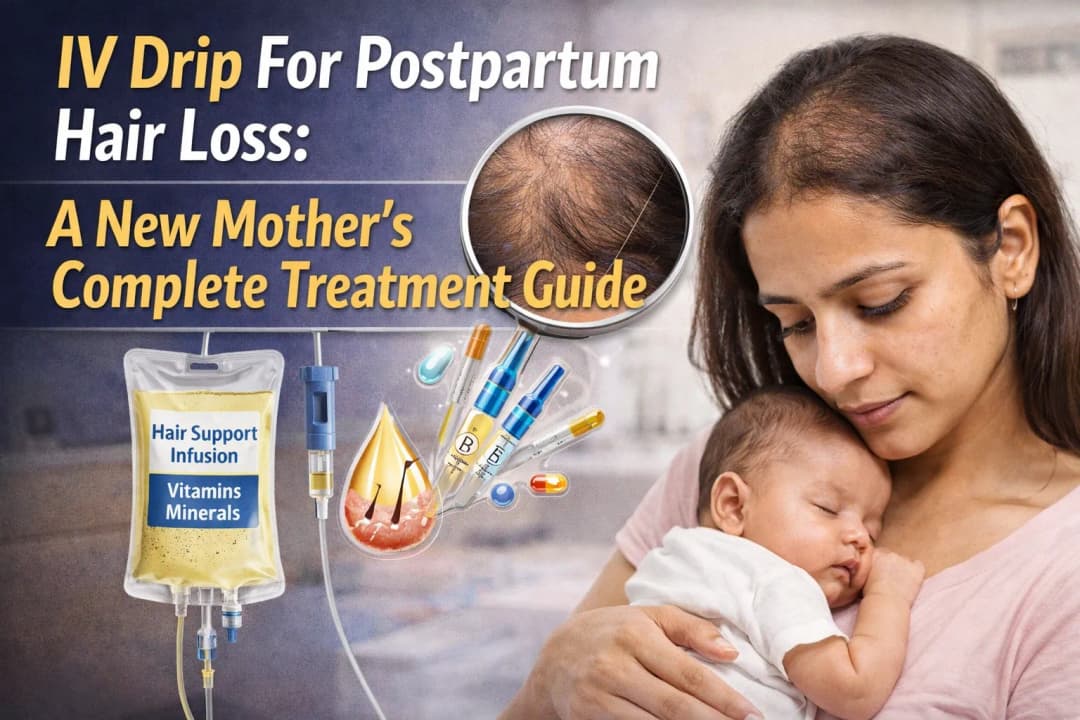
- IV therapy for hair fall after delivery: IV drip for postpartum hair loss supplies essential nutrients into the bloodstream. It nourishes your hair follicles, making your hair look shiny and strong.
What Is An IV Drip For Postpartum Hair Loss?
At a time when women are undergoing acute psychological distress due to postpartum hair fall, intravenous (IV) therapy can come in handy. Since a controlled IV infusion directly delivers essential vitamins and minerals into the bloodstream, they are more readily absorbed in the body than oral supplements, which may bypass the digestive system.
How IV Therapy After Delivery Hair Fall Works?
The body needs a wealth of vitamins and minerals to support the mother and the child’s nutritional needs.
Key Nutrients In IV Drip For Postpartum Hair Loss
[IV hair booster](https://kiboclinics.com/services/iv-hair-boosters) for new mothers is a blend of many vitamins, minerals, and amino acids that support hair growth.
Biotin
Biotin (vitamin B7) contributes to keratin production (a core protein responsible for hair growth). Amino acids like cysteine and methionine are the building blocks of keratin, which strengthens your hair follicles.
Iron
Heme iron plays a crucial role in transporting oxygen and adequate nutrients to the follicles.
Zinc
Zinc regulates sebum production and reduces inflammation, thereby providing a healthy scalp environment for your follicles to grow in. It also regulates cell function and tissue repair in hair follicles.
Vitamin B Complex
This group contains vitamins, including vitamin B5 (pantothenic acid), B9 (folate), and B12. They play a pertinent role in improving blood circulation, metabolism of nutrients, and reducing hair thinning.
Vitamin C And Antioxidants
Vitamin C is a powerhouse of antioxidants. It helps combat oxidative stress that can cause scalp irritation and can lead to hair damage. Vitamin C also supports collagen production, which strengthens the structure around hair follicles.
Benefits Of IV Drip Postpartum Hair Loss Treatment
Rehydration
Labour and childbirth can cause acute dehydration. It's essential for new mothers to stay hydrated to support milk production, energy, and overall well-being. While oral fluids are somewhat helpful, IV therapy immediately balances electrolytes and fluids, further aiding in faster recovery.
Faster Nutrient Absorption
Pregnancy and childbirth drain many vital nutrients from the body. So even with a healthy diet, restoring these vitamins and minerals is not easy considering a new mother has to breastfeed and care for her newborn.
IV therapy delivers key nutrients, such as vitamin B12, Zinc, Magnesium, and Vitamin C straight into the bloodstream for maximum absorption, thereby speeding up recovery.
Improved Hair Follicle Recovery
IV hair booster for new mothers provides numerous vitamins and minerals, such as biotin, zinc, vitamin B-complex, and vitamin C, that are crucial for hair growth. These nutrients boost hair growth and help with the recovery of hair follicles.
Energy And Postpartum Recovery Support
New mothers are faced with hormonal imbalance, breastfeeding, and sleep deprivation. IV drip therapy delivers essential nutrients, like vitamin B complex and magnesium directly into the bloodstream to boost energy.
Is IV Therapy Safe For New Mothers And During Breastfeeding?
IV drip therapy is generally considered a safe treatment option for postpartum hair recovery. However, consult a healthcare specialist before starting this treatment.
How Many IV Sessions Does One Require For Hair Recovery
Although IV therapy transports all these key components directly into the bloodstream, the process of hair growth takes time. You can witness improvements after 4-6 sessions spaced 2-3 weeks apart.
When Should You See A Doctor
Postpartum hair fall is only temporary. However, consult a trichologist or skin specialist if:
- Your hair fall persists for over a year even after undergoing different treatments for hair loss.
- Bald patches are visible on the scalp.
- Hair loss is excessive due to thyroid dysfunction or anemia.
While these methods may help reduce hair fall after pregnancy, do note that recovery takes time.
Every new mother deserves to feel beautiful and confident in their skin (and hair) after delivery. With consistent and early care, hair growth eventually does return to the normal state.
The IV infusion is a simple and painless process that takes about 30-60 minutes. Visit us at Kibo clinics for a comprehensive IV Hair Booster treatment to directly targets hair loss. Experience AI-powered scalp diagnosis and a personalised treatment plan for your scalp type.
New mothers bring a new life into the world, and these treatments would breathe life into their hair to support them in their journey of motherhood.
FAQs
Is Postpartum Hair Loss Permanent?
No, postpartum hair loss is not permanent. When the hormones stabilise, women experience recovery. In some cases, hair shedding may continue beyond 12 months.
How Soon Can IV Therapy Start After Delivery?
IV therapy can start shortly after a few weeks of childbirth, provided it is done under medical supervision.
Does IV Therapy Help With Postpartum Fatigue As Well?
Postpartum fatigue and exhaustion are real. Between changing hormones, sleepless nights, and breastfeeding, all these factors can take a toll on the energy levels of new mothers. IV drip therapy transports magnesium (for muscle relaxation) and vitamin B12 (supports the nervous system) into the bloodstream to boost their energy levels.
Are There Any Side Effects Of IV Hair Boosters?
IV hair booster drips are safe when administered by a medical professional. However, few side effects may surface if it is administered at higher doses or by unqualified providers. Some are as follows -
- Temporary pain, swelling, or bruising where the injection is inserted.
- A temporary drop in blood pressure, causing lightheadedness.
- High doses of vitamin C or B can cause gastrointestinal discomfort.
- High levels of certain nutrients may cause an electrolyte imbalance.
Can IV Therapy Improve Overall Postpartum Recovery?
IV drip for postpartum hair loss is a well-rounded treatment. While it boosts hair growth, it also aids in -
- Tackling fatigue
- Improving emotional and physical well-being
- Stabilising hormones
- Speeding up recovery
- Increasing milk production in lactating women
Can IV Drip For Postpartum Hair Loss Be Combined With Topical Minoxidil?
Yes, both Topical Minoxidil and IV drip therapy can boost follicle regeneration.
Minoxidil in its liquid or foam solution is applied to the scalp where bald patches or hair thinning occur. This vasodilator improves blood flow and circulation to the scalp, shifting the hair cycle to the growth phase. IV drip for postpartum hair loss directly penetrates the bloodstream and manages hair loss from within.