
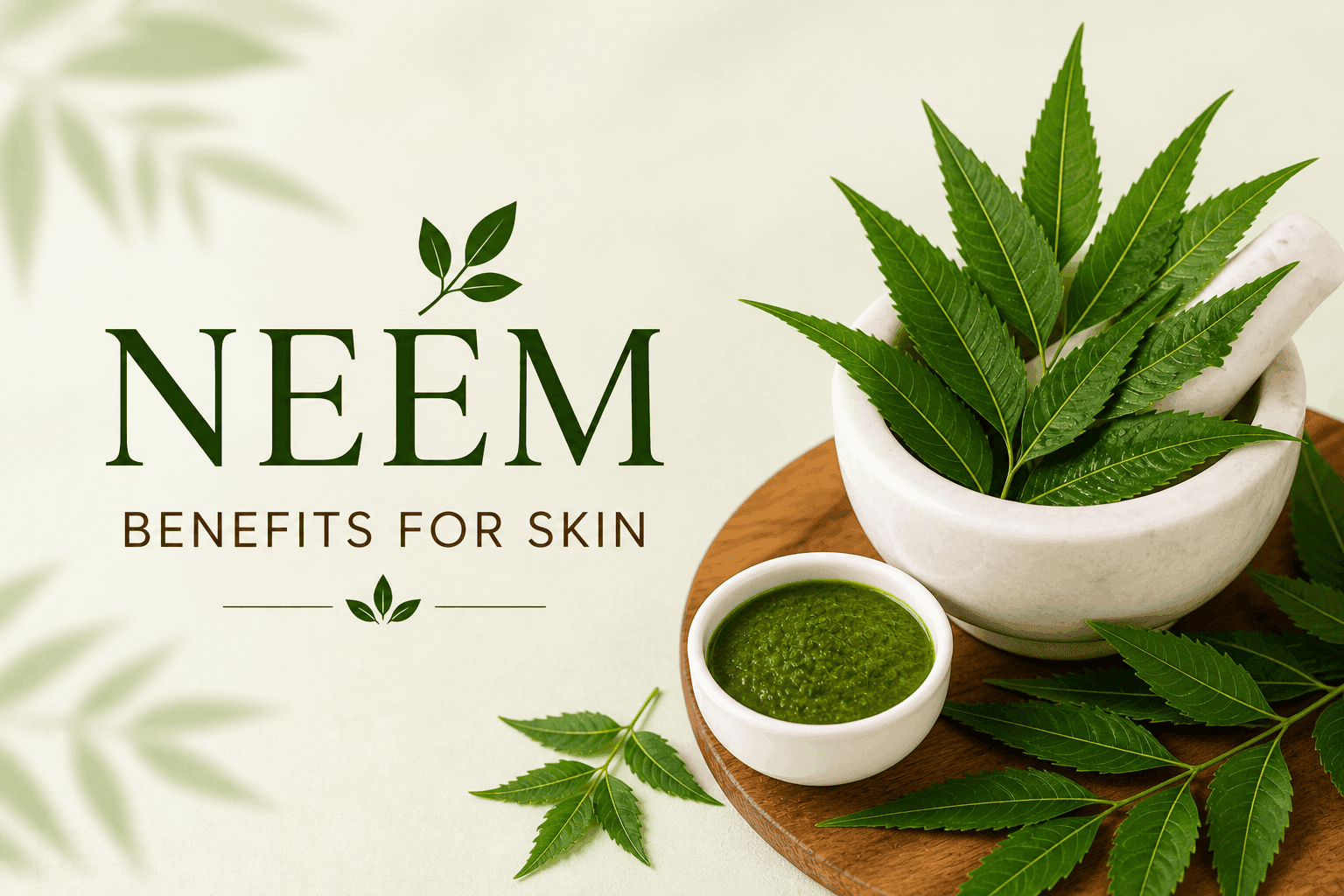
Quick Answer:
Neem offers clinically studied benefits for skin including antibacterial, anti-inflammatory, antifungal, and antioxidant effects. It can help manage acne, reduce dark spots, soothe irritation, and support overall skin health. The right form matters: neem leaf powder suits oily and acne-prone skin, while cold-pressed neem oil (always diluted) suits dry skin, eczema, and barrier repair. Most short-term benefits appear within 2 to 4 weeks; pigmentation and anti-aging results require 8 to 12 weeks of consistent use.
Neem is one of the most evidence-backed botanicals in both Ayurvedic and modern dermatological practice, but its effectiveness depends on choosing the right form and using it correctly. This guide covers both.
What Is Neem and What Does It Do for Skin?
Neem (Azadirachta indica) is a medicinal tree native to the Indian subcontinent whose leaves, oil, bark, and seeds have been used in skin care for over 4,000 years. For skin specifically, neem works as an antibacterial, antifungal, anti-inflammatory, and antioxidant agent, all in one plant source.
The active compounds responsible for neem's skin benefits include:
- Nimbidin: the primary anti-inflammatory compound
- Gedunin: antifungal and antimicrobial agent
- Azadirachtin: supports wound healing and reduces microbial load
- Quercetin and beta-sitosterol: antioxidants that neutralise free radicals
- Fatty acids (oleic, linoleic, stearic): found in neem oil, support skin barrier repair
Neem's multi-compound profile is what makes it effective across a wider range of skin concerns than most single-ingredient actives. Scientific name: Azadirachta indica, family Meliaceae.
Key Benefits of Neem for Skin: What You Actually Gain
Short-Term Benefits (Visible Within 2 to 4 Weeks)
- Reduces acne-causing bacteria: Neem's nimbidin and gedunin compounds inhibit Cutibacterium acnes, the primary bacteria responsible for acne breakouts. Studies suggest neem extract can reduce bacterial load on skin within 2 weeks of consistent topical use.
- Soothes redness and irritation: Nimbidin suppresses the release of inflammatory cytokines, reducing visible redness within days of application in most users.
- Controls excess oil (sebum): Neem's astringent properties help regulate sebaceous gland activity, making it particularly useful for oily and combination skin types.
- Relieves itchiness from fungal or dry skin conditions: The antifungal compound gedunin may provide relief from skin conditions such as ringworm and mild dermatitis within 1 to 2 weeks of use.
Long-Term Benefits (Visible From 6 to 12 Weeks Onward)
- Fades hyperpigmentation and dark spots: Neem inhibits melanin synthesis by reducing tyrosinase enzyme activity. Regular use over 8 to 12 weeks may visibly lighten post-acne marks and uneven skin tone. Neem does not bleach skin; it supports more even melanin distribution.
- Anti-aging support: Antioxidants in neem, particularly quercetin, neutralise free radicals that accelerate collagen breakdown. Regular neem use may slow the visible appearance of fine lines over 12 or more weeks.
- Supports skin barrier function: Fatty acids in neem oil (oleic and linoleic acid) reinforce the skin's lipid barrier, reducing transepidermal water loss (TEWL) and improving moisture retention.
- Reduces chronic inflammatory skin conditions: Neem shows therapeutic potential in managing mild-to-moderate eczema, psoriasis, and seborrheic dermatitis by suppressing skin inflammation pathways.
Key Benefits at a Glance
| Benefit | Active Compound | Timeline |
|---|---|---|
| Antibacterial (acne) | Nimbidin, Gedunin | 2 to 4 weeks |
| Anti-inflammatory | Nimbidin | 3 to 7 days |
| Antifungal | Gedunin, Azadirachtin | 1 to 2 weeks |
| Hyperpigmentation reduction | Quercetin, Nimbidiol | 8 to 12 weeks |
| Anti-aging / antioxidant | Quercetin, Beta-sitosterol | 12 or more weeks |
| Skin barrier repair | Oleic acid, Linoleic acid | 4 to 8 weeks |
| Oil control | Tannins, astringent compounds | 1 to 2 weeks |
How Neem Benefits Skin: The Complete Mechanism
Neem benefits skin through four distinct biological mechanisms that work simultaneously. Understanding how each one functions explains why neem is effective across such a wide range of skin conditions.
1. Antimicrobial Action
Neem's nimbidin and gedunin compounds disrupt bacterial and fungal cell membranes. When applied topically, these compounds penetrate the outer membrane of bacteria like C. acnes and fungi like Candida albicans, causing cell lysis (rupture). This reduces microbial colonies on the skin surface, directly lowering the risk of infection, acne formation, and fungal flare-ups.
2. Anti-Inflammatory Pathway Suppression
Neem suppresses the production of inflammatory signalling molecules, specifically prostaglandins and cytokines such as TNF-alpha and IL-6. This happens because nimbidin inhibits the COX-2 enzyme pathway, the same pathway targeted by many pharmaceutical anti-inflammatory drugs. The result is a measurable reduction in redness, swelling, and skin sensitivity.
3. Antioxidant Free Radical Scavenging
Quercetin and beta-sitosterol in neem donate electrons to unstable free radicals, neutralising them before they can damage skin cells and collagen fibres. Because UV radiation and pollution constantly generate free radicals on the skin surface, regular neem use may provide cumulative protective effects over time.
4. Melanin Regulation
Neem compounds reduce the activity of tyrosinase, an enzyme required for melanin synthesis. Less tyrosinase activity means slower melanin production in post-inflammatory areas, which is why neem contributes to a more even skin tone over 8 to 12 weeks, not by removing existing pigment but by slowing new surface pigmentation from forming.
Common Misconception
Neem does not "bleach" or drastically lighten overall skin tone. It supports even melanin distribution and reduces excess pigmentation in affected areas only.
Types of Neem Products for Skin: Which Form Is Right for You?
Neem is available in several formats, each suited to different skin concerns and usage preferences. Choose the form based on your specific skin type and concern.
| Neem Form | Best For | How to Use | Potency Level |
|---|---|---|---|
| Neem oil (cold-pressed) | Dry skin, eczema, scars, barrier repair | Dilute 1 to 2% in carrier oil; apply to affected areas | High: use diluted only |
| Neem leaf powder | Oily/acne-prone skin, face masks | Mix with water, yoghurt, or honey for a paste | Moderate |
| Neem leaf extract (liquid) | Combination skin, serums | Used in formulated products; apply after cleansing | Moderate to High |
| Neem-based face wash | Daily cleansing, acne prevention | Use twice daily as regular cleanser | Low to Moderate |
| Neem-infused cream/gel | Sensitive or compromised skin | Apply as moisturiser or spot treatment | Low to Moderate |
| Neem capsules (oral) | Systemic skin health, immune support | Per product dosage, typically 1 to 2 capsules daily | Systemic |
Which Form Is Best for Your Skin Concern?
- Acne-prone skin: Neem leaf powder mask or neem-based face wash
- Dry or eczema-prone skin: Cold-pressed neem oil (diluted in jojoba or coconut oil)
- Dark spots / hyperpigmentation: Neem leaf extract in serum form
- Sensitive skin: Neem-infused cream with low concentration (1 to 2% neem extract)
- Whole-body skin health: Oral neem capsules combined with topical application
How to Use Neem for Skin: Step-by-Step Guide
Prerequisites
- Do a patch test: apply a small amount to the inner wrist and wait 24 hours.
- Identify your skin type (oily, dry, sensitive, combination).
- Choose the appropriate neem format for your concern (see table above).
- If using neem oil, always dilute it: never apply undiluted neem oil directly to the face.
Neem Leaf Powder Face Mask (Acne / Oily Skin)
- Measure 1 tablespoon of neem leaf powder into a clean bowl.
- Add a liquid base: plain yoghurt for sensitive skin, rose water for oily skin, or raw honey for dry skin. Mix until a thick paste forms.
- Cleanse your face with a gentle cleanser and pat dry before applying.
- Apply the paste in an even layer to the face, avoiding the eye area.
- Leave on for 10 to 15 minutes. Do not exceed 20 minutes on sensitive skin.
- Rinse thoroughly with lukewarm water. Do not scrub during removal.
- Apply a light moisturiser immediately after: neem can be temporarily drying.
- Use 2 to 3 times per week for oily or acne-prone skin; 1 to 2 times for normal/dry skin.
Neem Oil for Skin (Spots, Eczema, Barrier Repair)
- Dilute neem oil: mix 5 to 10 drops of cold-pressed neem oil into 1 teaspoon (5 ml) of a carrier oil (jojoba, sweet almond, or coconut oil). This creates a 1 to 2% dilution.
- Cleanse the skin before application.
- Apply to targeted areas only (acne spots, dry patches, eczema flares). Avoid full-face application of neem oil initially.
- Leave on overnight for best absorption, or for a minimum of 30 minutes.
- Rinse off in the morning if full-face application was used. Spot treatment areas can be left on.
- Use 3 to 5 times per week and assess skin response after 2 weeks.
How to Store Neem Leaves and Neem Oil
- Fresh neem leaves: Store in an airtight container in the refrigerator for up to 5 days. For longer storage, dry leaves in shade (not direct sunlight) and store as powder in a sealed jar for up to 6 months.
- Neem oil: Store in a dark glass bottle away from direct light and heat. Properly stored neem oil remains effective for 1 to 2 years. Refrigeration is not required but extends shelf life.
Common Mistakes to Avoid
- Applying undiluted neem oil directly to the face: causes irritation and burning
- Leaving a neem mask on for more than 20 minutes
- Using neem daily on dry or sensitive skin without adequate moisturisation
- Expecting results in 3 to 5 days: most benefits require consistent use over 2 to 12 weeks
- Combining neem with other actives like retinol or strong AHAs without a patch test
Neem for Skin: Real-World Use Cases
Use Case 1: Acne and Breakout Management
Individuals with mild-to-moderate acne who use a neem-based face wash or mask 3 times per week typically see a reduction in new breakout frequency within 3 to 4 weeks. Neem reduces bacterial load and sebum, both primary contributors to acne formation.
Use Case 2: Post-Acne Dark Spots (PIH)
Post-inflammatory hyperpigmentation (PIH), dark marks left after acne heals, responds well to regular neem leaf extract application. In most cases, visible fading begins at 8 weeks of consistent use. For deeper or persistent pigmentation, a chemical peel for pigmentation may deliver faster results under dermatologist supervision.
Use Case 3: Fungal Skin Infections (Ringworm, Athlete's Foot)
Diluted neem oil applied twice daily to affected areas may reduce the visible symptoms of mild fungal infections within 2 to 3 weeks. Combining neem oil with tea tree oil (5% dilution each) enhances the antifungal effect. Persistent or severe infections require medical evaluation.
Use Case 4: Eczema and Dry Skin Flares
Neem oil diluted in a carrier oil and applied to eczema-affected areas may reduce itching and inflammation within 7 to 10 days. The fatty acid content helps restore the skin barrier, reducing flare frequency over 6 to 8 weeks of regular use.
Use Case 5: Scalp Psoriasis and Seborrheic Dermatitis
Neem-infused scalp oils or shampoos may reduce flaking, itching, and redness associated with scalp psoriasis and seborrheic dermatitis. Results are typically observed after 4 to 6 weeks of consistent use.
Use Case 6: Early Anti-Aging Prevention
For individuals aged 25 to 35 using neem as a preventive measure, regular topical neem application may reduce the oxidative stress contributing to early fine lines and loss of elasticity. This is a long-term outcome observable over 3 to 6 months.
Neem vs. Alternatives for Skin: An Honest Comparison
| Active | Antibacterial | Anti-Inflammatory | Antifungal | Hyperpigmentation | Barrier Repair | Side Effect Risk |
|---|---|---|---|---|---|---|
| Neem | Strong | Strong | Moderate | Moderate | Yes (oil form) | Low (diluted) |
| Tea Tree Oil | Strong | Moderate | Strong | Minimal | No | Moderate (irritant) |
| Benzoyl Peroxide | Very Strong | No | No | No | Can damage barrier | Moderate to High |
| Turmeric | Moderate | Strong | Moderate | Strong | No | Low (staining) |
| Salicylic Acid | Moderate | Moderate | No | Moderate | No | Low to Moderate |
| Aloe Vera | Mild | Strong | Minimal | Mild | Mild | Very Low |
Which Is Best for Your Use Case?
- Acne + oiliness: Neem or benzoyl peroxide (neem preferred for sensitive skin)
- Fungal infections: Tea tree oil or neem (tea tree is slightly more potent topically)
- Dark spots + pigmentation: Turmeric or neem (both moderate; turmeric may stain skin)
- Eczema + dry skin: Neem oil (superior barrier repair vs. alternatives)
- General all-round daily use: Neem (covers the broadest range of benefits with lowest risk)
Recommendation
For users seeking a single multi-benefit botanical for daily skin care, neem provides the broadest clinical utility with the lowest irritation risk when used in formulated or properly diluted form.
Is Neem for Skin Right for You? Ideal and Non-Ideal Use Cases
| Neem Is Ideal For | Neem May Not Be Ideal For |
|---|---|
| Oily or acne-prone skin | Very dry, severely dehydrated skin (without carrier oil) |
| Combination skin with occasional breakouts | Active open wounds or severely compromised skin barrier |
| Post-acne marks and mild hyperpigmentation | Severe or cystic acne requiring prescription treatment |
| Mild eczema, dry skin flares, barrier repair (neem oil) | Pregnant women: high-dose oral neem is contraindicated |
| Users seeking a natural, low-chemical daily skin active | Those with known sensitivity to Meliaceae plant family |
| Early anti-aging prevention (25 to 35 age group) | Clinical skin conditions requiring medical-grade treatment |
Medical Disclaimer : Information from Kibo Hair Clinics is for educational purposes only. It does not replace diagnosis, trichoscopy, blood test interpretation, prescription treatment, procedure advice, or side-effect counselling from a qualified dermatologist or hair restoration doctor.