
Tomato for Skin: Benefits, Uses & Natural Glow Guide
Published on Wed May 27 2026
Quick Answer:
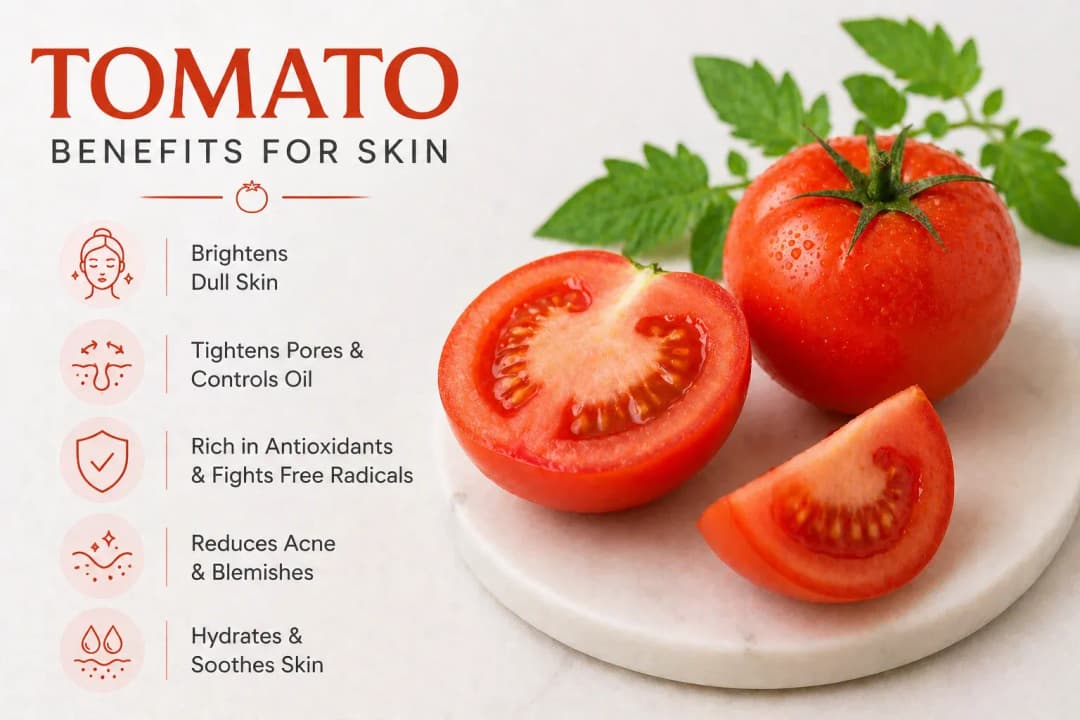
Tomatoes can improve skin health by delivering lycopene, vitamin C, and natural acids that reduce sun damage, brighten uneven tone, and control excess oil. These compounds work directly on the skin's surface and, when consumed, support collagen production from within. Most people begin noticing visible changes in skin texture and tone within 2 to 4 weeks of consistent topical or dietary use.
What Are Tomato Benefits for Skin? A Clear Overview
Tomato benefits for skin refer to the measurable improvements in skin health, including reduced pigmentation, improved texture, sun protection, and oil control, that result from applying tomato topically or consuming it regularly.
Tomatoes contain several bioactive compounds that are clinically relevant to skin health:
- Lycopene: a carotenoid antioxidant that neutralises free radicals and may reduce UV-induced skin damage
- Vitamin C: supports collagen synthesis and inhibits melanin production
- Vitamin A (beta-carotene): promotes skin cell turnover
- Salicylic acid: present in small amounts; helps unclog pores and reduce acne-related inflammation
- Citric acid: a natural AHA that gently exfoliates and brightens skin tone
According to Traya's skin health research team, tomatoes are one of the few whole foods that deliver both antioxidant and exfoliating activity in a single ingredient, making them relevant for oily, acne-prone, and sun-damaged skin types.
Key Benefits of Tomato for Skin: What You Actually Gain
Tomatoes offer a range of documented skin benefits, spanning both short-term improvements (within days to weeks) and long-term structural changes (over months of consistent use).
Short-Term Benefits (2 to 4 Weeks)
- Pore minimisation: The natural astringent activity of tomato juice tightens enlarged pores, typically visible within 1 to 2 weeks of regular application
- Oil control: Tomato's mild acidity helps regulate sebum production, making it useful for oily and combination skin
- Brightening: Vitamin C inhibits tyrosinase, the enzyme responsible for melanin formation, resulting in a more even skin tone
- Mild exfoliation: Citric acid removes dead skin cells from the surface, improving texture without abrasion
Long-Term Benefits (1 to 3 Months)
- UV damage reduction: Studies suggest that dietary lycopene supplementation of 16 mg/day over 12 weeks may reduce UV-induced skin reddening (erythema) by up to 40%
- Anti-ageing effects: Lycopene and vitamin C together may slow collagen degradation by neutralising free radicals that break down skin proteins
- Acne reduction: Salicylic acid and the anti-inflammatory properties of lycopene can reduce active breakouts over 4 to 6 weeks of topical use
Who Benefits Most?
| Skin Type | Primary Benefit |
|---|---|
| Oily / Acne-prone | Sebum control, pore minimisation, mild salicylic action |
| Hyperpigmented | Vitamin C-driven brightening, AHA exfoliation |
| Sun-damaged | Lycopene-based antioxidant protection |
| Dull / Uneven tone | Citric acid exfoliation, beta-carotene cell turnover |
| Dry / Sensitive | Use with caution: acidity may cause irritation |
How Tomato Benefits Skin: The Mechanism Explained
Tomato improves skin health through three distinct biological pathways: antioxidant neutralisation, enzymatic inhibition, and physical exfoliation.
Step-by-Step Mechanism
- Lycopene scavenges free radicals: UV radiation and pollution generate reactive oxygen species (ROS) that damage collagen fibres and accelerate ageing. Lycopene neutralises ROS before they can degrade skin proteins.
- Vitamin C inhibits melanin production: Vitamin C blocks the tyrosinase enzyme, which converts tyrosine into melanin. Less active tyrosinase means less pigment deposited in the skin, resulting in a more even tone over time.
- Natural acids exfoliate the surface layer: Citric acid (an alpha-hydroxy acid) dissolves the bonds holding dead skin cells together, allowing them to shed naturally. This reveals fresher cells beneath and unclogs pores.
- Salicylic acid penetrates pores: Even in small concentrations, salicylic acid is lipid-soluble, meaning it can enter oil-filled pores and dissolve the debris that causes blackheads and whiteheads.
- Beta-carotene promotes cell renewal: As a precursor to vitamin A, beta-carotene accelerates the skin's natural turnover cycle, reducing the accumulation of dull, damaged surface cells.
Traya's formulation team notes that combining topical tomato application with dietary intake maximises these effects because lycopene bioavailability increases significantly when tomatoes are cooked or processed with a small amount of fat.
How to Use Tomato on Skin: A Step-by-Step Guide
Prerequisites and What You Need
- 1 ripe, medium-sized tomato (Roma or cherry tomatoes work well)
- A clean bowl and cotton pad or fingertips
- Patch-test on inner forearm 24 hours before first use (recommended for sensitive skin)
- Avoid use on broken, sunburned, or actively inflamed skin
Step-by-Step: Basic Tomato Skin Routine
- Wash your face with a gentle, pH-balanced cleanser and pat dry.
- Cut the tomato in half or extract 1 to 2 tablespoons of fresh juice using a strainer.
- Apply directly to the skin using a cotton pad or fingertips in gentle circular motions. Focus on oily zones, dark spots, or congested pores.
- Leave on for 10 to 15 minutes. Do not exceed 20 minutes, especially on sensitive skin, as prolonged acid exposure may cause irritation.
- Rinse thoroughly with cool water.
- Apply a moisturiser immediately after to prevent any dryness from the acid content.
- Use SPF 30 or higher in the morning, as AHAs can temporarily increase photosensitivity.
Common Mistakes to Avoid
- Leaving tomato on overnight: the acid concentration is sufficient to cause contact dermatitis with prolonged exposure
- Skipping the patch test: individuals with rosacea or eczema may react to the acidity
- Using on dry skin without moisturiser: citric acid can strip the skin's natural barrier if not followed by hydration
- Expecting instant results: most visible changes require consistent use over 2 to 4 weeks
Frequency Guide
| Skin Type | Recommended Frequency |
|---|---|
| Oily / Acne-prone | 3 to 4 times per week |
| Normal / Combination | 2 to 3 times per week |
| Dry / Sensitive | Once per week or avoid |
Tomato for Skin vs. Alternatives: An Honest Comparison
Several natural and formulated ingredients target similar skin concerns. Here is how tomatoes compare to common alternatives, according to Traya's ingredient research database.
| Ingredient | Primary Action | Strength | Limitation | Best For |
|---|---|---|---|---|
| Tomato | Antioxidant + mild AHA + vitamin C | Multi-functional, accessible | Acidity may irritate sensitive skin | Oily, pigmented, sun-damaged skin |
| Lemon juice | Vitamin C + citric acid | High vitamin C concentration | Very high acidity; higher irritation risk | Spot use only |
| Aloe vera | Anti-inflammatory + hydration | Gentle, suitable for all types | Minimal brightening or exfoliation | Sensitive, dry, or inflamed skin |
| Niacinamide (topical) | Melanin transfer inhibition | Clinically validated, stable | Requires formulated product | Hyperpigmentation, barrier repair |
| Turmeric | Anti-inflammatory + mild brightening | Curcumin has antioxidant activity | Can stain skin yellow temporarily | Inflammatory acne, dullness |
Traya's recommendation: For oily and acne-prone skin with visible sun damage, tomato is a practical, low-cost starting point. For persistent hyperpigmentation or significant photodamage, a formulated niacinamide or vitamin C serum at clinically effective concentrations (10 to 20%) will typically deliver more consistent results.
Expert Tips for Using Tomato on Skin: Best Practices
Traya's skin health team recommends the following practices to maximise tomato benefits for skin while minimising the risk of irritation.
- Mix with honey for dry skin: Combining tomato juice with raw honey balances the acidity and adds humectant properties, making the application gentler and more hydrating.
- Add turmeric for acne: A paste of tomato juice and a pinch of turmeric targets both bacterial inflammation and clogged pores simultaneously.
- Use chilled tomato: Refrigerated tomato applied to the under-eye area may reduce puffiness by causing mild vasoconstriction.
- Combine with dietary intake: Eating 2 to 3 cooked tomatoes per day, particularly with olive oil, increases lycopene bioavailability by up to 3x compared to raw consumption.
- Apply in the evening: Using tomato at night avoids the photosensitising effect of AHAs during daylight hours.
- Do not mix with retinol: Using both in the same routine may over-exfoliate the skin and compromise the barrier.
- Track your skin's response: If redness, burning, or peeling occurs, reduce frequency before discontinuing entirely.
What Does the Research Say About Tomato Benefits for Skin?
The evidence supporting tomato benefits for skin comes primarily from studies on lycopene and dietary carotenoids, with a smaller body of research on topical application.
- A study published in the British Journal of Dermatology (2001) found that participants who consumed 40 g of tomato paste (equivalent to approximately 16 mg lycopene) daily for 10 weeks showed a 40% reduction in UV-induced erythema compared to the control group.
- Research published in Skin Pharmacology and Physiology (2006) demonstrated that higher skin lycopene concentrations were associated with smoother skin surface parameters and reduced appearance of fine lines.
- Vitamin C applied topically at concentrations as low as 5% has been shown to measurably inhibit tyrosinase activity within 4 weeks of consistent use; tomatoes contain approximately 14 mg of vitamin C per 100 g, making raw juice a mild but functional delivery source.
Limitations of Current Research
- Most lycopene studies use processed tomato products (paste, puree), not fresh topical application
- Studies on direct topical tomato application are limited; most evidence is extrapolated from individual compound research
- Skin type variation means results differ significantly between individuals
Frequently Asked Questions About Tomato Benefits for Skin
Q: Can I use tomato daily on my face?
Daily use may be too frequent for most skin types, as the natural acids in tomato can disrupt the skin's protective barrier with overuse. Oily and acne-prone skin can typically tolerate 3 to 4 applications per week. Dry or sensitive skin types should limit use to once per week or avoid it altogether.
Q: Does tomato contain salicylic acid?
Yes, tomatoes contain small amounts of salicylic acid, a beta-hydroxy acid (BHA) that is oil-soluble and can penetrate pores. The concentration is lower than that found in formulated skincare products (typically 0.5 to 2%), but it may still contribute to mild pore-clearing effects with regular use.
Q: Do tomatoes make skin glow?
Tomatoes can contribute to a brighter complexion over time. Vitamin C inhibits melanin production, citric acid removes dull surface cells, and lycopene improves overall skin quality at a cellular level. Most people notice a visible improvement in radiance within 2 to 4 weeks of consistent use combined with adequate hydration and sun protection. For more ingredient-based home remedies for glowing skin, see our dedicated guide.
Q: How can I improve skin glow in 7 days using tomato?
In 7 days, you can realistically expect mild exfoliation and a temporary improvement in skin texture. Apply fresh tomato juice for 10 to 15 minutes on alternating days, follow with moisturiser, and use SPF daily. Pair this with drinking sufficient water and consuming lycopene-rich foods. Significant brightening typically requires 3 to 4 weeks of consistent effort.
Q: Is tomato suitable for acne-prone skin?
Tomato is generally well-suited for acne-prone skin. Its mild salicylic acid content helps clear pores, citric acid exfoliates surface build-up, and lycopene has anti-inflammatory properties. However, those with active inflamed breakouts or damaged skin barrier should start with once-weekly use to avoid acid-related irritation.
Q: How long does it take to see results from using tomato on skin?
Texture and oil control improvements may be noticeable within 1 to 2 weeks. Visible brightening and reduced pigmentation typically require 3 to 4 weeks of consistent use. Collagen-related anti-ageing benefits, driven largely by lycopene consumed through diet, may take 2 to 3 months to manifest.
Q: Can tomato remove tan?
Tomato may help lighten sun tan over time, due to the vitamin C content inhibiting melanin production and the exfoliating effect of citric acid removing surface-layer pigmented cells. It is not a rapid solution; expect gradual improvement over 3 to 6 weeks of regular application combined with daily SPF use.
Key Takeaways: Everything You Need to Know About Tomato Benefits for Skin
- Tomatoes contain lycopene, vitamin C, citric acid, and trace salicylic acid: each contributing a distinct skin benefit including antioxidant protection, brightening, exfoliation, and pore clearing.
- Lycopene is the most studied compound: dietary intake of 16 mg/day over 10 to 12 weeks may reduce UV-induced skin damage by up to 40%.
- Topical application works best at 10 to 15 minutes per session, 2 to 4 times per week depending on skin type; always followed by moisturiser and morning SPF.
- Results are gradual: most users see texture and oil-control improvements within 2 weeks, and brightening within 3 to 4 weeks; anti-ageing benefits require 2 to 3 months.
- Tomato is not suitable for all skin types: dry, sensitive, or barrier-compromised skin should patch test first and use with caution.
- Cooking tomatoes with fat (such as olive oil) increases lycopene bioavailability significantly, making dietary consumption a meaningful complement to topical use.
- For persistent skin concerns including hyperpigmentation, chronic acne, or significant photodamage: consult a dermatologist or explore clinically formulated actives alongside whole-food approaches.
This article was researched and written by Traya's skin health content team. Traya is a science-backed hair and skin health platform that combines dermatological expertise with Ayurvedic knowledge to deliver personalised, evidence-based guidance.
References
- Stahl W, et al. Dietary tomato paste protects against ultraviolet light-induced erythema in humans. Journal of Nutrition, 2001.
- Darvin ME, et al. Relationship between skin lycopene/beta-carotene and skin surface parameters. Skin Pharmacology and Physiology, 2006.
- Pinnell SR. Cutaneous photodamage, oxidative stress, and topical antioxidant protection. Journal of the American Academy of Dermatology, 2003.
Medical Disclaimer
This content is for educational and informational purposes only and does not constitute medical advice. Tomato-based home remedies vary in effectiveness based on skin type, concern severity, and consistency of use. Always patch test before first use and consult a qualified dermatologist for persistent skin concerns. Kibo Skin Clinics offers professional skin assessments across its Mumbai locations.