
Scalp Micropigmentation (SMP) vs. Hair Transplant: Which is Right for You?
Published on Thu Apr 09 2026
Rahul wanted hair restoration but feared surgery. "What about scalp micropigmentation?" he asked. "It looks like a buzz cut that doesn't require actual surgery. How does it compare to transplant?" It's one of the most common questions we hear — and the honest answer is that both options are legitimate, but they serve very different goals. Understanding SMP versus hair transplant in depth helps you choose the right approach for your situation, lifestyle, and long-term expectations.
What Is Scalp Micropigmentation (SMP)?
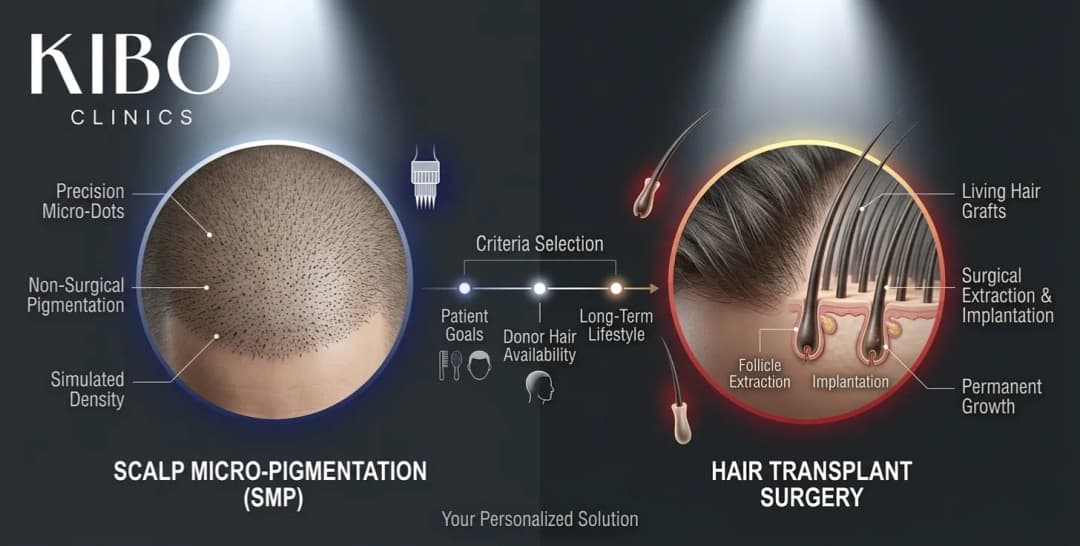
Scalp micropigmentation is a non-surgical cosmetic procedure that deposits specialised pigment into the upper layers of the scalp using microneedles. The pigment dots are carefully sized and placed to replicate the appearance of closely-shaved hair follicles — essentially creating the look of a fresh buzz cut, even on a completely bald scalp.
While it shares some similarities with tattooing, SMP is technically distinct. The pigment is deposited at a shallower depth than a traditional tattoo, and the ink formulations are specifically designed to resist the colour shifts (turning blue or green over time) that regular tattoo ink is prone to. Skilled SMP practitioners vary needle size, depth, and pigment density across different scalp zones to create a natural-looking gradient rather than a flat, uniform appearance.
SMP adds no actual hair — it creates the illusion of density through visual contrast. By reducing the visible contrast between the scalp and existing hair, it makes hair appear fuller and more uniform. It's equally effective for concealing scars from previous hair transplants, accidents, or surgeries.
What Is a Hair Transplant?
A hair transplant is a surgical procedure that physically relocates hair follicles from a donor area (typically the back and sides of the scalp, where hair is genetically resistant to DHT) to areas of thinning or baldness. The transplanted follicles continue to grow hair naturally — they behave exactly like the hair they were taken from.
There are two primary techniques in modern hair transplantation:
- FUE (Follicular Unit Extraction): Individual follicles are extracted one by one using a micro-punch tool, leaving tiny circular scars that are virtually invisible. This is currently the most widely performed technique globally.
- FUT (Follicular Unit Transplantation / Strip method): A strip of scalp is removed from the donor area, dissected into individual grafts, and implanted. It allows for a larger number of grafts per session but leaves a linear scar.
After a transplant, transplanted hair sheds within the first few weeks — this is normal and expected. New hair growth begins around 3–4 months, with significant visible improvement by 8–12 months and final results typically assessed at 12–18 months post-procedure.
SMP vs. Hair Transplant: A Detailed Comparison
1. What Each Actually Achieves
This is the most fundamental distinction. SMP creates the appearance of a shaved head — it looks like you have hair, but very short, like a close buzz cut. You cannot grow this "hair" out, style it, or change its length. Hair transplants provide real, growing hair that you can cut, style, colour, and wear at any length over time.
Neither option is universally superior — it depends entirely on what outcome you're seeking. If you're comfortable with a short, close-cropped aesthetic, SMP can look remarkably natural. If you want the freedom to grow your hair and style it, a transplant is the path forward.
2. Procedure and Recovery
SMP is non-surgical. Sessions typically last 2–4 hours and are performed across 2–3 visits spaced a week or two apart. There's minimal downtime — most people return to normal activities the same day or the next. Some redness and minor sensitivity on the scalp is common for a day or two after each session.
Hair transplant surgery is an outpatient procedure but is significantly more involved. FUE procedures can take anywhere from 4 to 10+ hours depending on the number of grafts. Recovery involves several days of swelling, scabbing around the implanted follicles, and restricted physical activity for 1–2 weeks. The scalp requires careful post-operative care to protect grafts during the healing period.
3. Donor Hair Requirements
Hair transplants are entirely dependent on donor hair availability. Patients need adequate density in their donor zone — usually the back and sides of the scalp — for grafts to be harvested. People with diffuse thinning across the entire scalp, those who have had multiple prior transplants depleting their donor supply, or those whose hair loss has advanced significantly may not be suitable candidates for transplant.
SMP has no such requirement. Because it's a pigment-based procedure rather than a follicle-based one, it works regardless of how much hair you have remaining. This makes SMP a genuinely viable primary option for patients who aren't candidates for transplant, not just a fallback.
4. Timeline of Results
SMP results are visible immediately after the first session and complete within 2–3 weeks once all sessions are done. There's no waiting period — you walk out looking different from day one.
Hair transplant results require patience. The initial shedding phase can be psychologically challenging for patients who weren't prepared for it. Meaningful growth appears around months 4–6, noticeable improvement by month 8–9, and full results aren't assessable until at least 12 months post-surgery. The payoff is permanent natural hair, but the journey is measured in months, not days.
5. Longevity and Maintenance
Hair transplants are considered permanent. The transplanted follicles are genetically resistant to the DHT hormone that causes androgenetic alopecia, so they continue to grow throughout your lifetime. However, transplants do not stop the progression of hair loss in non-transplanted areas — patients may require additional sessions as hair loss continues around transplanted zones.
SMP is long-lasting but not permanent in the same way. Pigment gradually fades over 3–6 years depending on skin type, sun exposure, and aftercare. Touch-up sessions are typically needed every few years to maintain the crispness of the look. Some patients view this as a drawback; others appreciate that it allows for adjustments as their preferences or hairstyle evolve.
6. Cost Considerations
SMP is generally the lower-cost option upfront. A full scalp SMP treatment in India typically ranges from ₹30,000 to ₹1,00,000 depending on the extent of coverage and the clinic's expertise. Hair transplants are priced per graft, and a comprehensive procedure requiring 2,000–4,000 grafts can range from ₹60,000 to ₹3,00,000 or more at quality clinics. Over the long term, SMP touch-up costs add up, though they remain a fraction of transplant pricing.
Cost should never be the sole decision factor, but it's a legitimate consideration — particularly when both options are clinically appropriate for a patient.
7. Scar Camouflage
One of SMP's most underappreciated applications is scar concealment. Linear donor scars from FUT procedures, circular micro-scars from FUE, or scars from injuries and surgeries can be effectively camouflaged with SMP. Many hair transplant patients use SMP as a complementary treatment — it fills in low-density areas between transplanted grafts and hides the donor zone scar when the hair is worn short. In this context, SMP and transplant aren't competing options at all — they work together.
Who Is SMP Best Suited For?
SMP tends to be the better primary choice for individuals who are comfortable with a permanently short, buzz-cut appearance and do not wish to wear their hair longer. It is also well-suited for those who are not candidates for transplant surgery due to insufficient donor hair, medical conditions that increase surgical risk, or previous procedures that have exhausted donor supply. People seeking a low-maintenance, immediate result with no surgical downtime also frequently prefer SMP.
Additionally, SMP is excellent as a complementary procedure for hair transplant patients — used to increase the visual density between grafts, camouflage donor area scars, or address areas where transplant coverage was incomplete.
Who Is a Hair Transplant Best Suited For?
Hair transplant surgery is the right choice for those who want the ability to grow, style, and manage real hair. It suits individuals in the earlier to mid stages of hair loss who retain adequate donor supply, those who are unwilling to commit to a permanently short hairstyle, and patients willing to invest in the recovery period for a permanent natural outcome.
Ideal transplant candidates have realistic expectations about the process — including the growth timeline, the fact that hair loss may continue in non-treated areas, and the possibility that follow-up sessions may be needed over time. A thorough consultation with honest assessment of donor supply and long-term hair loss trajectory is essential before committing to surgery.
Can You Do Both?
Yes — and for many patients, a combined approach yields the best outcome. A hair transplant restores actual growing hair to key areas like the hairline and crown, while SMP fills in the surrounding zones with the appearance of density. The result is a fuller, more uniform look that neither procedure alone could achieve. This is increasingly common among patients who want maximum coverage but have limited donor hair relative to the extent of their hair loss.
Important Questions to Ask Before Deciding
Before committing to either procedure, it's worth thinking through the following honestly:
- Am I comfortable wearing my hair very short — permanently — if I choose SMP?
- Do I have enough donor hair for a transplant that addresses my coverage goals?
- What is my realistic hair loss trajectory over the next 10–20 years?
- How much downtime can I accommodate?
- What is my budget, both for the initial procedure and for any ongoing maintenance?
- Am I looking for a cosmetic solution, a medical one, or a combination of both?
A qualified hair restoration specialist should be able to walk you through each of these questions and help you map the answer to the right treatment path — without steering you toward the most expensive or profitable option.
Why Kibo Clinics
At Kibo Clinics, we believe the right procedure is the one that fits your goals — not the one that fits our revenue targets. Whether you're exploring SMP, a hair transplant, or a combination of both, our consultations are structured around honest assessment: your donor supply, your hair loss stage, your lifestyle preferences, and your long-term expectations.
We don't believe in overselling procedures or downplaying limitations. We explain what each option can and cannot achieve, and we help you make an informed decision you'll be comfortable with years from now — not just on the day of your procedure.
Disclaimer: This blog is for informational purposes only. Consult qualified healthcare providers for personalised medical advice.