
Derma Roller for Face: Complete Guide - How It Works, Benefits & Best Practices
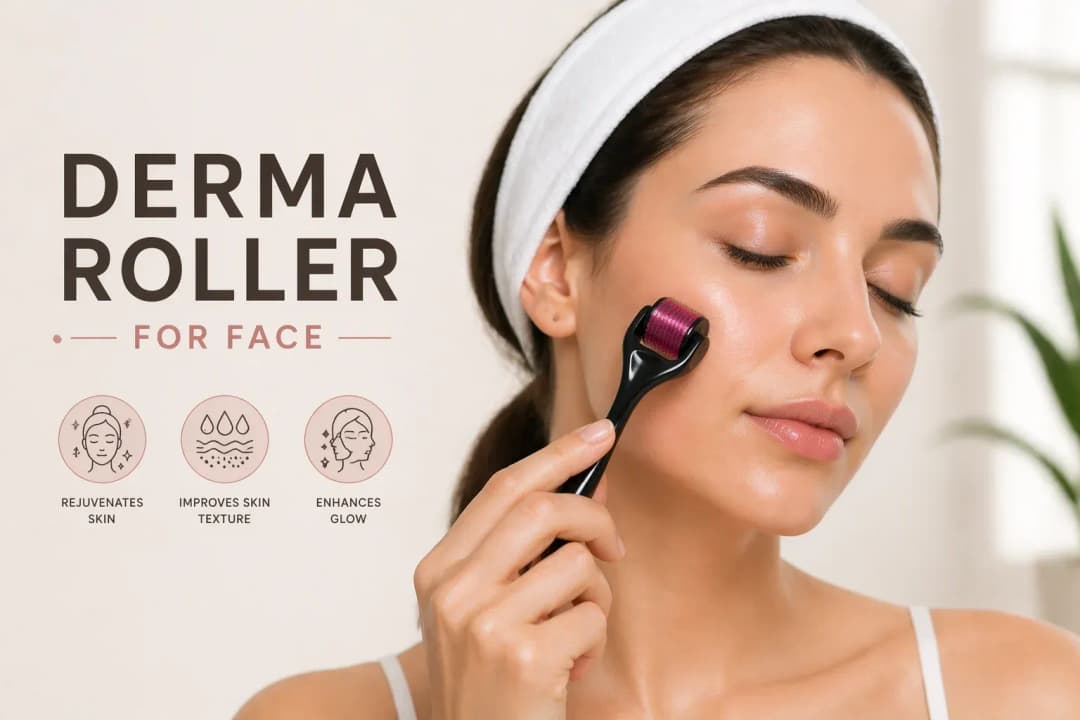
Published on Wed May 27 2026
Quick Answer:
A derma roller for the face uses fine micro-needles to create controlled micro-injuries that trigger collagen and elastin production. The most recommended home-use size is 0.5 mm, used once every 3–4 weeks. It visibly improves acne scars, fine lines, enlarged pores, and skin texture within 4–12 weeks of consistent use. It also increases the absorption of topical serums by up to 80% through the micro-channels it creates. Results are cumulative, most users see meaningful changes at 3–6 months.
A derma roller is one of the most accessible tools in at-home skincare, and also one of the most misused. The results depend almost entirely on needle size, technique, and what you apply before and after. This guide covers the full picture so you can use it safely and effectively.
What Is a Derma Roller for Face? A Complete Overview
A derma roller for the face is a small roller device embedded with hundreds of micro-needles, typically ranging from 0.2 mm to 1.5 mm in length. When rolled across the skin, the needles puncture the uppermost layers of the epidermis and, at deeper settings, the dermis.
The controlled punctures signal the body to initiate a repair process. This repair process releases growth factors and accelerates the synthesis of collagen, the structural protein responsible for skin firmness and elasticity.
- Needle length range: 0.2 mm (cosmetic) to 1.5 mm (clinical)
- Needle count per roller: typically 192–540 titanium or stainless-steel needles
- Primary mechanism: collagen induction therapy (CIT)
- Suitable for: acne scars, fine lines, enlarged pores, uneven texture, and early-stage hair thinning at the hairline
How Does a Derma Roller for Face Work? The Complete Breakdown
A derma roller for the face works because micro-needles physically disrupt the skin barrier, which activates the skin's wound-healing cascade without causing visible surface damage.
- Micro-injury phase: The needles penetrate the skin at a depth of 0.2–1.5 mm, creating thousands of micro-channels per pass.
- Inflammatory response: The body detects the micro-injuries and releases platelet-derived growth factor (PDGF) and transforming growth factor beta (TGF-β).
- Proliferation phase: Fibroblast cells migrate to the treated area and begin producing new collagen (Type I and III) and elastin fibres.
- Remodelling phase: Over 4–6 weeks, the new collagen fibres reorganise and tighten, resulting in firmer, smoother skin.
- Enhanced absorption: The open micro-channels temporarily increase the absorption of topically applied serums by up to 80%, according to dermatological studies.
Common Misconception
A derma roller does not resurface the skin like a laser. It stimulates new collagen beneath the surface without removing the existing skin layer. The key causal logic: the skin cannot distinguish a micro-needle injury from a minor wound, it responds with the same regenerative process used to heal cuts.
Key Benefits of a Derma Roller for Face: What You Actually Gain
A derma roller for the face offers measurable improvements across multiple skin concerns when used consistently over 8–12 weeks.
Short-Term Benefits (Weeks 1–4)
- Improved serum absorption: Micro-channels increase topical penetration by up to 80%, making active ingredients like vitamin C and hyaluronic acid more effective.
- Mild radiance boost: Increased local circulation from rolling can produce a temporary brightening effect within 24–48 hours of each session.
- Skin plumping: Early hydration retention improves due to better penetration of hyaluronic acid-based serums.
Long-Term Benefits (Months 2–6)
- Collagen stimulation: Clinical studies show collagen density can increase by up to 400% after a series of microneedling treatments.
- Reduced fine lines and wrinkles: Consistent use at 0.5 mm depth may visibly soften superficial lines within 8–12 weeks.
- Acne scar improvement: Studies report a 31–62% improvement in acne scar appearance after 4–6 sessions spaced 2–4 weeks apart.
- Minimised pore appearance: Collagen build-up around pore walls structurally tightens their appearance over time.
- Improved skin texture: Uneven texture caused by sun damage or mild hyperpigmentation typically responds within 6–8 weeks of regular use.
| Benefit | Onset | Evidence Level |
|---|---|---|
| Enhanced serum absorption | Immediate | High |
| Skin radiance | 24–48 hours | Moderate |
| Fine line reduction | 8–12 weeks | Moderate–High |
| Acne scar improvement | 12–24 weeks | High |
| Collagen density increase | 16–24 weeks | High |
| Pore tightening | 8–16 weeks | Moderate |
Types of Derma Roller for Face: Which Is Right for You?
Derma rollers for the face are classified primarily by needle length. Choosing the correct size is critical, using a needle that is too long at home can damage the skin or cause post-inflammatory hyperpigmentation.
| Needle Length | Best For | Use Setting | Frequency |
|---|---|---|---|
| 0.2–0.3 mm | Daily serum absorption, glow | Home | Daily |
| 0.5 mm | Fine lines, mild texture issues, early scars | Home | Once every 3–4 weeks |
| 1.0 mm | Deeper scars, enlarged pores, moderate texture | Home (with caution) | Once every 4–6 weeks |
| 1.5 mm | Deep acne scars, stretch marks | Professional / clinical | Once every 6–8 weeks |
0.2–0.3 mm, Cosmetic Range
These derma rollers for the face do not penetrate the dermis. They are safe for daily use and primarily function to improve serum absorption. They produce no collagen stimulation on their own.
0.5 mm, The Most Recommended Home-Use Size
0.5 mm is the optimal starting point for home dermarolling. At this depth, the needles reach the epidermis–dermis junction, triggering mild collagen production without meaningful risk of scarring when technique is correct.
1.0 mm, Intermediate Use
A 1.0 mm derma roller for the face reaches the upper dermis and is appropriate for addressing moderate acne scars or deeper texture irregularities. Users should limit sessions to once every 4–6 weeks and apply a broad-spectrum SPF 50 daily during the treatment period.
1.5 mm, Clinical Use
A 1.5 mm roller should be used under professional supervision. At this depth, the risk of post-inflammatory hyperpigmentation increases, particularly in Fitzpatrick skin types IV–VI.
How to Use a Derma Roller for Face: Step-by-Step Guide
Using a derma roller for the face correctly determines both safety and results. Follow these steps precisely to minimise risk and maximise collagen stimulation.
Prerequisites
- A clean, sterile derma roller (0.5 mm for beginners)
- 70% isopropyl alcohol for sterilisation
- Gentle, sulphate-free cleanser
- Hyaluronic acid or peptide serum (no retinol or acids immediately after rolling)
- Broad-spectrum SPF 50 for daytime use post-session
Step-by-Step Process
- Disinfect the roller. Soak the derma roller head in 70% isopropyl alcohol for 5–10 minutes before each use. This eliminates bacteria and prevents infection. Allow it to air-dry completely before use.
- Cleanse your face thoroughly. Wash with a gentle, non-foaming cleanser to remove all makeup, oil, and debris. Pat dry with a clean towel. Do not proceed on irritated, sunburned, or broken skin.
- Apply numbing cream if needed. For needle lengths of 1.0 mm or above, apply a topical anaesthetic cream (e.g., EMLA) 30–45 minutes before rolling and wipe off before starting. This step is optional for 0.5 mm.
- Begin dermarolling. Divide the face into sections: forehead, right cheek, left cheek, chin, and nose. On each section, roll in three directions, vertically, horizontally, and diagonally, applying light, even pressure. Complete 4–6 passes per direction. Do not press hard; the weight of the roller is sufficient.
- Apply a recovery serum immediately. Once rolling is complete, apply hyaluronic acid serum or a peptide-rich formula. Avoid vitamin C (ascorbic acid), retinol, AHAs, or BHAs for 24–48 hours post-session, as these can cause irritation through the open channels.
- Apply SPF the following morning. The skin is significantly more photosensitive for 72 hours after a derma roller session. Use SPF 50 every morning without exception.
- Clean and store the roller. Rinse the roller under warm water, re-soak in isopropyl alcohol for 5 minutes, and allow to dry before capping and storing.
Common Mistakes to Avoid
- Rolling on active acne lesions or open wounds
- Using the same roller for more than 10–15 sessions (needles dull and cause tearing)
- Applying harsh actives (retinol, AHAs) immediately after rolling
- Skipping SPF in the days following a session
- Pressing too hard, light pressure is all that is needed
Derma Roller for Face Results: What to Expect and When
Results from a derma roller for the face are cumulative. Most users will not see dramatic changes after a single session. Consistent use over 3–6 months produces the most significant outcomes.
| Timeframe | What Typically Happens |
|---|---|
| Week 1–2 | Mild redness for 12–24 hours post-session; improved serum absorption; subtle glow |
| Week 4–6 | Early texture improvement; skin feels firmer; fine lines appear slightly softened |
| Month 3 | Visible reduction in mild acne scars and pore size; measurable improvement in skin tone evenness |
| Month 6 | Significant collagen remodelling; clinical studies report up to 31–62% scar improvement |
Factors That Affect Results
- Needle length used: Deeper needles (0.5–1.0 mm) stimulate more collagen than cosmetic-range rollers
- Session frequency: Spacing sessions 3–4 weeks apart allows full collagen synthesis cycles to complete
- Serums used: Pairing rolling with vitamin C (applied the next morning), peptides, or growth factor serums accelerates outcomes
- Skin type: Oily and combination skin types often respond faster; sensitive skin types may need longer recovery periods
- Sun protection adherence: Skipping SPF during treatment can cause hyperpigmentation that reverses progress
Derma Roller for Face vs. Alternatives: An Honest Comparison
Several skin renewal treatments target the same concerns as a derma roller for the face. Each has distinct advantages and limitations.
| Treatment | Mechanism | Best For | Sessions | Avg. Cost | At-Home |
|---|---|---|---|---|---|
| Derma Roller (0.5 mm) | Collagen induction via micro-needling | Scars, texture, fine lines | 4–6 | ₹200–₹2,000 (device) | Yes |
| Professional Microneedling | Motor-driven needles, adjustable depth | Deeper scars, advanced ageing | 4–6 | ₹3,000–₹10,000 | No |
| Chemical Peel (AHA/TCA) | Chemical exfoliation of skin layers | Hyperpigmentation, texture | 3–6 | ₹2,000–₹8,000 | Mild only |
| Laser Resurfacing | Thermal energy, ablates skin layers | Deep wrinkles, severe scarring | 1–3 | ₹15,000–₹50,000 | No |
| Retinol Serum | Increases cell turnover via retinoic acid | Mild lines, texture, pigmentation | Ongoing | ₹500–₹3,000/month | Yes |
Bottom Line
A derma roller for the face offers the best cost-effectiveness for mild-to-moderate skin concerns. For deep scarring or advanced photoageing, professional microneedling or laser treatments may produce faster results but at significantly higher cost. Starting with a 0.5 mm derma roller paired with evidence-backed serums is recommended before escalating to clinical procedures.
Derma Roller for Face Best Practices: Expert Tips and Safety Guidelines
Dermarolling Safety Tips
- Sterilise before every session. A contaminated roller introduces bacteria directly into the dermis, causing infection or cystic breakouts.
- Never roll over active acne. Rolling over active lesions spreads bacteria across the face and worsens breakouts.
- Replace your roller every 10–15 uses. Blunted needles cause tearing rather than clean punctures, increasing inflammation and scarring risk.
- Use light pressure only. Pressing hard does not produce better results, it causes bruising and capillary damage.
- Respect the healing interval. At 0.5 mm, wait at least 3–4 weeks between sessions. The collagen synthesis cycle requires 28–42 days to complete.
- Avoid rolling before sun exposure. Post-rolling skin is highly vulnerable to UV-induced hyperpigmentation for up to 72 hours.
- Use skin-compatible serums. Hyaluronic acid, peptides, and growth factor serums are safe immediately after rolling. Retinol, AHAs, BHAs, and vitamin C in high concentrations should be avoided for 24–48 hours.
- Patch-test new serums. The enhanced absorption from micro-channels means any sensitising ingredient will penetrate more deeply and may cause an intensified reaction.
Common Mistakes to Avoid
- Rolling too frequently (more than once per week at 0.5 mm or deeper)
- Using alcohol-based toners or astringents directly after a session
- Sharing a derma roller with another person
- Storing the roller without its protective cap, exposing needles to air and bacteria
- Using a roller that is visibly bent, dull, or discoloured
Advanced Strategies for Better Results
- Stack with growth factor serums: Clinical evidence supports using EGF (Epidermal Growth Factor) serums post-rolling to accelerate fibroblast activity.
- Combine with professional sessions: Using a 0.5 mm roller at home between quarterly professional microneedling sessions maintains collagen stimulation continuously.
- Track your sessions: Log the date, needle length, skin condition, and serum used after each session to identify what drives the best response for your skin.
Research and Evidence: What the Data Says About Derma Roller for Face
The derma roller for the face is one of the more well-studied at-home skin devices, with a growing body of peer-reviewed research supporting its efficacy.
- Enhanced topical absorption: A 2008 study published in the Journal of Investigative Dermatology found that microneedling increased the percutaneous absorption of topical compounds by up to 80% compared to unaided topical application.
- Collagen induction: Schwartz et al. (2006) demonstrated that controlled microneedling stimulated collagen Type I synthesis and increased collagen density by up to 400% in treated skin areas over a 6-month observation period.
- Acne scar improvement: A 2014 systematic review in the Journal of Cutaneous and Aesthetic Surgery reviewed 8 clinical trials and reported a 31–62% improvement in rolling and boxcar acne scar appearance following 4–6 microneedling sessions.
Medical Disclaimer
This content is for educational and informational purposes only and does not constitute medical advice. Derma roller results vary by individual skin type, needle length, technique, and consistency of use. Always consult a qualified dermatologist before beginning derma roller treatment, especially if you have active acne, rosacea, keloid scarring, or are on prescription skin medications. Kibo Skin Clinic offers professional skin assessments to help determine the right treatment for your skin concern.