
Dermapen vs Microneedling: Benefits, Results, Cost & Aftercare
Published on Mon Jul 06 2026
Quick Answer:
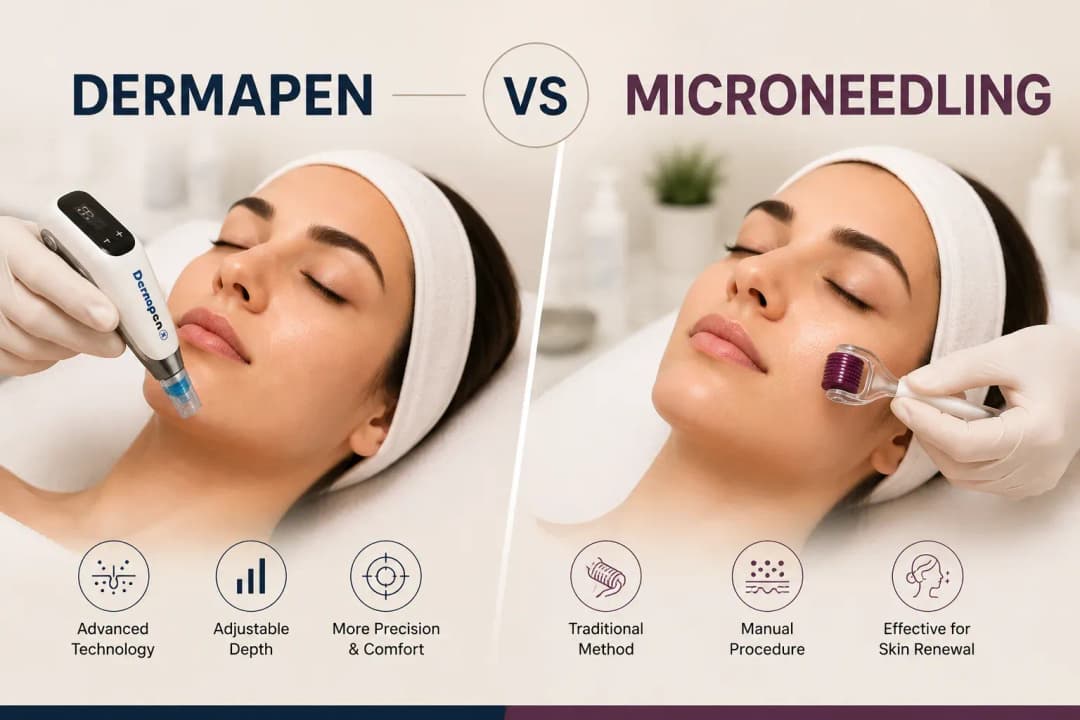
Dermapen is a specific brand of automated microneedling device, while microneedling is the broader treatment category it belongs to. The key difference is delivery method: traditional microneedling uses manual rollers or basic pens, while Dermapen uses a motorised, vertically oscillating needle cartridge for more controlled, precise skin penetration. If you are comparing the two, you are really comparing a specialised tool against the wider technique it represents.
What Is Dermapen vs Microneedling? A Complete Guide
Microneedling is a minimally invasive skin treatment that uses fine needles to create controlled micro-injuries in the skin's surface. These micro-injuries trigger the body's natural wound-healing response, stimulating collagen and elastin production. Dermapen is a proprietary, pen-shaped microneedling device that automates this process using a vibrating needle cartridge.
What Is Microneedling?
Microneedling, also called collagen induction therapy (CIT), involves puncturing the skin with needles typically 0.5 mm to 3.0 mm in depth. These micro-channels stimulate fibroblast activity, which increases collagen synthesis by approximately 400% over a standard treatment course, according to published dermatology research. The treatment can be performed using derma rollers, basic electric pens, or advanced automated devices.
What Is Dermapen?
Dermapen is the market-leading automated microneedling device, originally developed in Australia in 2011. It uses a disposable needle cartridge containing 9 to 16 needles that oscillate vertically at speeds up to 110 cycles per second. This vertical stamping motion, rather than dragging, reduces epidermal tearing and allows for more consistent needle depth across curved facial areas. Dermapen is a registered medical device used clinically by dermatologists and aestheticians worldwide.
How Does Dermapen Microneedling Work?
Dermapen microneedling works because its motorised cartridge creates uniform, precisely controlled punctures in the dermis. The device's adjustable needle depth (0.25 mm to 3.0 mm) allows practitioners to target different skin layers depending on the concern, shallower settings for fine lines, deeper settings for acne scars. The micro-channels created also allow topical serums to absorb up to 80% more effectively than application on intact skin, maximising active ingredient delivery.
How Dermapen vs Microneedling Works: The Complete Breakdown
The core mechanism of both Dermapen and traditional microneedling is identical: controlled skin injury triggers collagen induction. The difference lies in the precision, speed, and consistency of that injury.
Step-by-Step Process
- Skin preparation, The treatment area is cleansed and a topical numbing cream (typically 4-5% lidocaine) is applied 20-45 minutes before the procedure to minimise discomfort.
- Device calibration, For Dermapen, the practitioner selects needle depth (0.25 mm-3.0 mm) and speed based on the skin concern and area being treated. Manual rollers have fixed needle lengths with no speed adjustment.
- Treatment pass, The device is moved across the skin in overlapping passes. Dermapen stamps vertically; derma rollers drag diagonally, which increases the risk of micro-tearing.
- Serum application, Immediately after needling, growth factor serums, hyaluronic acid, or vitamin C are applied. Micro-channels remain open for approximately 4-6 hours, significantly enhancing absorption.
- Healing cascade activation, The skin's wound-healing response begins within hours. Platelet-derived growth factors (PDGFs) are released, triggering fibroblast proliferation and new collagen synthesis over the following 4-6 weeks.
- Post-treatment care, SPF 30+ sunscreen, gentle moisturiser, and avoidance of active ingredients (retinol, AHAs) for 5-7 days are standard aftercare protocols.
The Technology Behind Dermapen vs Manual Microneedling
Dermapen's oscillating motor delivers approximately 1,300 needle penetrations per second across a small surface area. This consistency is difficult to replicate with manual tools. Studies comparing automated microneedling to derma rollers found that automated devices produced more uniform collagen distribution and fewer side effects such as post-inflammatory hyperpigmentation (PIH).
Key Benefits of Dermapen vs Microneedling: What You Actually Gain
Both Dermapen and broader microneedling techniques deliver measurable skin improvement, but Dermapen's design offers specific advantages over manual methods.
Advantages of Dermapen
- Adjustable needle depth, Practitioners can change depth mid-treatment (0.25 mm-3.0 mm), addressing multiple skin concerns in a single session.
- Reduced trauma, Vertical stamping causes less epidermal drag than roller-based microneedling, reducing redness duration by approximately 30-40% compared to derma rollers.
- Consistent penetration, Motorised delivery ensures uniform needle depth across uneven areas like the nose, chin, and eye contour.
- Shorter downtime, Most patients experience 24-48 hours of visible redness vs. 3-5 days with aggressive manual needling.
- Enhanced product absorption, Micro-channels increase serum absorption by up to 80%, making Dermapen sessions more effective when paired with active topicals.
- Safe across skin types, Dermapen can be used on Fitzpatrick skin types I-VI with appropriate depth and speed settings, reducing PIH risk in darker skin tones.
Advantages of Standard Microneedling
- Lower cost, Manual derma rollers cost Rs. 500-Rs. 3,000 for at-home use; professional sessions with basic electric pens cost 30-50% less than branded Dermapen sessions.
- Accessibility, Available in more clinics globally, including lower-resource settings.
- Effective for mild concerns, For superficial texture improvement and product absorption, a well-used derma roller at 0.5 mm depth can deliver comparable outcomes.
Short-Term vs Long-Term Benefits
| Timeframe | What to Expect |
|---|---|
| 1-2 weeks | Improved skin hydration, temporary glow, reduced pore appearance |
| 1-2 months | Early collagen remodelling, smoother texture, fading of superficial pigmentation |
| 3-6 months | Visible scar reduction, firmer skin, sustained improvement in fine lines |
Dermapen vs Microneedling vs Alternatives: An Honest Comparison
Microneedling vs Dermapen is only one part of the picture. Several alternative treatments target similar skin concerns, and the right choice depends on your skin type, budget, and specific concern.
Microneedling with the Dermapen
Dermapen microneedling is the gold standard for automated collagen induction therapy. It is particularly effective for acne scarring, fine lines, enlarged pores, and uneven skin tone. Because it is a mechanical-only treatment, it carries a lower risk profile than energy-based alternatives.
Adding RF Energy to the Mix: RF Microneedling vs Dermapen
RF microneedling vs Dermapen is one of the most common comparisons in clinical aesthetics. RF microneedling (radiofrequency microneedling) combines the mechanical micro-injury of needling with radiofrequency energy delivered directly through the needles into the dermis. This dual mechanism triggers both collagen induction and immediate tissue tightening, a benefit standard Dermapen cannot replicate.
Dermapen vs RF microneedling differs primarily in:
- Tissue tightening, RF energy causes immediate collagen contraction, producing visible lifting that mechanical microneedling alone does not achieve.
- Depth of effect, RF energy penetrates to the deep dermis and superficial SMAS layer; Dermapen's mechanical action is limited to needle depth only.
- Cost, RF microneedling sessions typically cost 2-3 times more than standard Dermapen treatments.
- Downtime, Both involve 24-72 hours of redness; RF microneedling may produce slightly more swelling.
Exceed Microneedling vs Dermapen
Exceed microneedling is another FDA-cleared automated microneedling device, clinically validated specifically for facial acne scars and facial wrinkles, the only device with dual FDA clearance for both indications at the time of its clearance. Exceed microneedling vs Dermapen differs in regulatory positioning and needle cartridge design. Exceed uses a 36-needle cartridge and a silicon tip stamp rather than a traditional cartridge, while Dermapen uses 9-16 needle configurations. Both produce comparable collagen induction results, but Exceed's dual FDA clearance gives it a clinical edge for acne scar treatments in regulated markets.
Feature-by-Feature Breakdown
| Feature | Derma Roller | Dermapen | RF Microneedling | Exceed Microneedling |
|---|---|---|---|---|
| Mechanism | Manual, diagonal | Automated, vertical | Automated + RF energy | Automated, vertical stamp |
| Needle depth control | Fixed | 0.25-3.0 mm | 0.5-4.0 mm | 0.5-2.5 mm |
| Tissue tightening | No | No | Yes | No |
| FDA clearance | No | No (CE marked) | Varies by device | Yes (dual clearance) |
| Session cost (approx.) | Rs. 0-Rs. 3,000 (home) | Rs. 3,000-Rs. 10,000 | Rs. 8,000-Rs. 25,000 | Rs. 5,000-Rs. 15,000 |
| Downtime | 2-5 days | 1-2 days | 1-3 days | 1-2 days |
| Ideal for | Mild texture, home use | Scars, pigmentation, anti-ageing | Laxity, deep wrinkles, tightening | Acne scars, wrinkles (clinical) |
| Pain level | Moderate | Low-moderate | Moderate | Low-moderate |
| Skin type safety | Types I-IV | Types I-VI | Types I-VI | Types I-VI |
Dermapen Microneedling vs Derma Rollers
The most accessible microneedling vs Dermapen comparison is against at-home derma rollers. Derma rollers drag needles diagonally across the skin, which can cause micro-tearing and inconsistent penetration depth, especially over bony areas. Dermapen's vertical motion eliminates this drag. Clinically, Dermapen produces more uniform collagen distribution and fewer complications in experienced hands. For home users, a 0.5 mm derma roller used weekly can maintain between-session results, but is not a substitute for professional Dermapen treatment.
Types of Dermapen vs Microneedling: Which Is Right for You?
Microneedling treatments vary significantly by device type, depth setting, and energy modality. Selecting the right variation depends on your primary skin concern and treatment tolerance.
| Type | Best For | Depth Used | Energy | Professional Required? |
|---|---|---|---|---|
| Home derma roller | Mild texture, serum absorption | 0.2-0.5 mm | None | No |
| Professional Dermapen | Scars, pigmentation, fine lines | 0.5-2.5 mm | None | Yes |
| RF Microneedling | Skin laxity, deep wrinkles, pore tightening | 1.0-4.0 mm | RF energy | Yes |
| Exceed Microneedling | Acne scars, wrinkles (FDA-validated) | 0.5-2.5 mm | None | Yes |
| PRP + Microneedling | Advanced rejuvenation, hair loss | 0.5-2.5 mm | None (biological) | Yes |
Fitzpatrick skin type consideration: Deeper settings (above 1.5 mm) in skin types V-VI require careful technique and post-care to minimise PIH risk. A qualified skin professional should assess medium to dark skin tones before selecting needle depth, especially when PIH risk is present.
Dermapen vs Microneedling Results: What to Expect and When
Results from Dermapen and other microneedling treatments are not immediate, they depend on the body's natural collagen remodelling process, which takes time.
Realistic Timeline: Month by Month
| Month | Dermapen / Microneedling Results |
|---|---|
| Month 1 | Skin texture improvement, temporary glow, reduced pore visibility. Some patients report tighter-feeling skin within 2-3 weeks. |
| Month 2-3 | Visible reduction in superficial acne scars (rolling and boxcar types). Pigmentation begins to fade. Fine lines appear softer. |
| Month 4-6 | Significant scar remodelling, firmer skin, sustained collagen increase. Most patients complete 3-6 sessions within this window. |
| Month 6+ | Maintenance sessions every 3-6 months recommended to sustain collagen levels. |
Factors That Affect Your Results
- Number of sessions: Most skin concerns require 3-6 sessions spaced 4-6 weeks apart for optimal results.
- Needle depth and speed: Deeper settings treat more severe scarring but require longer recovery.
- Post-treatment skincare: Consistent SPF use and barrier-supporting products significantly improve outcomes.
- Age and baseline skin condition: Patients under 40 typically see faster collagen response due to higher baseline fibroblast activity.
- Adjunct treatments: Combining Dermapen with PRP (platelet-rich plasma), vitamin C serums, or growth factors measurably improves outcomes.
What the Research Shows
A 2018 study published in the Journal of Clinical and Aesthetic Dermatology found that 94% of patients treated with automated microneedling reported improvement in acne scar appearance after 4 sessions. A separate comparative study found that RF microneedling produced 30% greater dermal thickness increase than mechanical microneedling alone at the 6-month mark. According to Traya's clinical content team, combining Dermapen sessions with a structured homecare protocol, including peptide serums and daily SPF, can extend results by 3-6 months beyond the treatment course.
Is Dermapen vs Microneedling Right for You? Ideal Candidates
Dermapen and microneedling are not universally suitable. The table below outlines who benefits most, and who should approach with caution or seek an alternative.
| Ideal For | Not Ideal For |
|---|---|
| Acne scars (rolling, boxcar, superficial ice pick) | Active acne breakouts or open lesions in the treatment area |
| Fine lines and early wrinkles | Active skin infections (herpes simplex, impetigo) |
| Uneven skin tone and pigmentation | Keloid scarring history |
| Enlarged pores | Pregnancy or breastfeeding |
| Dull, dehydrated skin | Active use of isotretinoin (Accutane) within past 6 months |
| Hair thinning (scalp microneedling) | Autoimmune skin conditions (lupus, psoriasis in active flare) |
| Stretch marks (body microneedling) | Fitzpatrick types V-VI without experienced practitioner |
| All Fitzpatrick skin types (with correct settings) | Severe needle phobia |
A patch test and skin assessment consultation are recommended before any microneedling procedure, particularly for individuals with darker skin tones or a history of post-inflammatory hyperpigmentation.
How to Get Started with Dermapen vs Microneedling: Step-by-Step Guide
Starting Dermapen or microneedling treatment involves several preparation and selection steps to ensure safety and maximise outcomes.
Prerequisites and What You Need
- A confirmed diagnosis or skin assessment from a qualified dermatologist or trained aesthetician
- No active skin infections, open wounds, or inflammatory acne in the target area
- Discontinuation of retinoids, AHAs, BHAs, and prescription vitamin A for at least 5-7 days before treatment
- Adequate sun protection in the weeks before and after treatment
Step-by-Step: Getting Started
- Book a skin consultation, A qualified practitioner assesses your Fitzpatrick skin type, scarring depth, and treatment goals to select the appropriate device, needle depth, and number of sessions.
- Confirm contraindications, Disclose all medications, skin conditions, and recent treatments. Isotretinoin use within 6 months is a firm contraindication.
- Pre-treatment preparation, Avoid sun exposure for 2 weeks before treatment. Keep skin well-hydrated. Stop active exfoliants 5-7 days prior.
- Day of treatment, Arrive with clean, product-free skin. Your practitioner applies numbing cream
Dermapen vs Microneedling Side Effects and Risks
Dermapen and professional microneedling are generally safe when performed with sterile cartridges, correct depth settings, and proper aftercare. Most side effects are temporary, but risks increase when treatment is done over active acne, infection, or irritated skin.
- Mild redness, swelling, warmth, or tightness for 24 to 72 hours
- Dryness, flaking, or rough texture during early healing
- Temporary pinpoint bleeding during deeper treatments
- Post-inflammatory hyperpigmentation if skin is exposed to sun or treated too aggressively
- Infection risk if non-sterile devices or poor aftercare are involved
- Rare scarring when needle depth is incorrect or skin is not suitable for treatment
Dermapen vs Microneedling Aftercare
Aftercare is essential because microneedling creates temporary micro-channels in the skin. The goal is to protect the skin barrier, reduce irritation, and support collagen remodelling without triggering pigmentation.
- Use a gentle cleanser for the first 48 hours
- Apply a bland, fragrance-free moisturiser whenever the skin feels dry or tight
- Use broad-spectrum SPF 50 daily and avoid direct sun exposure
- Avoid retinol, AHAs, BHAs, scrubs, benzoyl peroxide, and strong vitamin C for 5 to 7 days
- Avoid makeup for at least 24 hours unless advised otherwise
- Avoid gym workouts, steam, sauna, swimming, and heavy sweating for 24 to 48 hours
- Do not use at-home rollers immediately after professional microneedling
How Many Dermapen or Microneedling Sessions Are Needed?
The number of sessions depends on the concern, severity, device type, and skin response. Mild texture concerns may improve within fewer sessions, while acne scars and stretch marks usually need a longer course.
| Concern | Typical Sessions Needed | Usual Interval |
|---|---|---|
| Glow, pores, and mild texture | 3 to 4 sessions | 4 weeks |
| Fine lines and early ageing | 4 to 6 sessions | 4 to 6 weeks |
| Acne scars | 4 to 6 sessions or more | 4 to 6 weeks |
| Stretch marks | 5 to 8 sessions | 4 to 6 weeks |
| Scalp and hair support | 6 or more sessions | 2 to 4 weeks, depending on protocol |
Dermapen vs Microneedling Cost in India
Dermapen usually costs more than basic microneedling because it uses a branded automated device, sterile cartridges, adjustable settings, and clinic-based expertise. At-home rollers are cheaper, but they do not offer the same precision, depth control, or clinical safety.
| Treatment Type | Approx. Cost per Session | Best For |
|---|---|---|
| At-home derma roller | Rs. 500 to Rs. 3,000 for device | Mild maintenance and product absorption |
| Basic professional microneedling | Rs. 3,000 to Rs. 8,000 | Texture, pores, mild scars |
| Dermapen microneedling | Rs. 5,000 to Rs. 15,000 | Acne scars, pigmentation, fine lines |
| RF microneedling | Rs. 8,000 to Rs. 25,000+ | Laxity, deeper wrinkles, tightening |
Final Thoughts
Dermapen vs microneedling is best understood as a device-versus-category comparison. Microneedling is the treatment method, while Dermapen is a more precise automated device used to perform it. For mild maintenance, standard microneedling or derma rollers may be enough, but for acne scars, texture, pigmentation, and controlled collagen induction, Dermapen offers better depth control and more consistent delivery.
The right choice depends on your skin concern, downtime tolerance, budget, and skin tone. If you are considering Dermapen or microneedling for acne scars, pigmentation, fine lines, or skin texture, schedule a skin consultation at Kibo Skin Clinic to understand the safest device, needle depth, session plan, and aftercare routine for your skin.
Frequently Asked Questions
Q1. Is Dermapen the same as microneedling?
No. Microneedling is the broader treatment category, while Dermapen is a branded automated microneedling device that uses vertical needle movement and adjustable depth settings.
Q2. Which is better, Dermapen or microneedling?
Dermapen is usually better than manual microneedling rollers for clinical concerns because it offers adjustable depth, vertical stamping, and more consistent skin penetration.
Q3. Is Dermapen better than RF microneedling?
Dermapen is better for lower downtime and collagen induction, while RF microneedling is usually better for skin laxity, deeper wrinkles, and tissue tightening.
Q4. How many Dermapen sessions are needed?
Most people need 3 to 6 Dermapen sessions spaced 4 to 6 weeks apart. Acne scars, stretch marks, and deeper texture concerns may need more sessions.
Q5. Is Dermapen safe for Indian skin?
Dermapen can be safe for Indian skin when needle depth, speed, and aftercare are selected carefully. Darker skin tones need conservative settings to reduce pigmentation risk.
Medical Disclaimer
This content is for educational and informational purposes only and does not constitute medical advice. Dermapen and microneedling results vary by skin type, concern severity, device settings, practitioner expertise, and aftercare compliance. Always consult a qualified dermatologist before undergoing any skin treatment.