
PRP vs PRF for Hair Loss: Differences, Results & Which One to Choose
Published on Wed Apr 08 2026
Both PRP (Platelet-Rich Plasma) and PRF (Platelet-Rich Fibrin) are blood-derived regenerative therapies that stimulate hair follicles and improve scalp health. PRF is the newer, more advanced option — it contains a higher concentration of growth factors within a natural fibrin matrix that releases them slowly over 7 to 10 days, whereas PRP releases growth factors in an immediate burst. PRP is more widely available and cost-effective per session. PRF requires fewer sessions but costs more per sitting. Neither is a permanent cure for hereditary hair loss.
- PRF releases growth factors over 7 to 10 days via a fibrin matrix; PRP releases them immediately
- PRF contains platelets, diverse white blood cells, and stem cells — PRP contains mainly platelets
- PRP costs ₹5,000 to ₹15,000 per session in Mumbai; PRF costs ₹10,000 to ₹20,000 per session
- PRP is best for early-stage thinning and maintenance; PRF is better for moderate to severe thinning
- Combining either treatment with microneedling significantly enhances absorption and results
Losing your hair can be a gradual change or a sudden shift, but either way, it often affects confidence and self-image. Whether it is thinning across the scalp, a receding hairline, or a widening part, many people start looking for treatments that are both safe and backed by science. Two options that have gained significant attention are PRP and PRF — both blood-derived therapies supported by clinical studies showing meaningful improvement in hair density and follicle stimulation.
What Is PRP (Platelet-Rich Plasma)?
PRP is a type of regenerative therapy that has been used in orthopaedics, dentistry, and dermatology for decades before becoming widely recognized for hair restoration. It works by concentrating the growth factors found naturally in your blood and delivering them directly to the scalp. Understanding the type and cause of your hair loss is the first step in determining whether PRP is an appropriate treatment option for your specific case.
How PRP Works
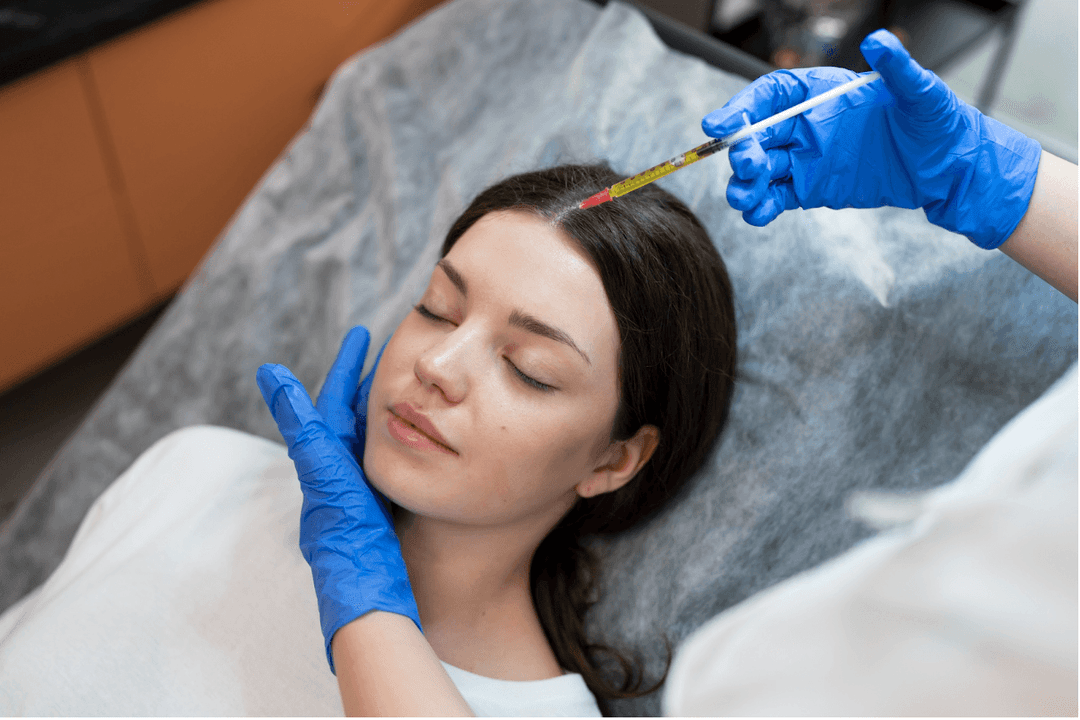
A small blood sample of 30 to 60ml is drawn from your arm and placed into sterile tubes, which are then processed in a centrifuge. Heavier components such as red blood cells settle at the bottom while the platelet-rich plasma layer rises to the top. This layer is then extracted and injected into the scalp. The growth factors within PRP stimulate dormant follicles, prolong the anagen growth phase, and encourage thicker, stronger hair shafts.
Key growth factors in PRP include PDGF for cell growth and collagen production, TGF-β for cell differentiation, VEGF for blood vessel formation, EGF for cell growth, and FGF for tissue repair and proliferation. Reviewing the full details of PRP therapy for hair regrowth at Kibo Clinics explains how this process is tailored to each patient's scalp condition.
What Is PRF (Platelet-Rich Fibrin)?
PRF is a second-generation PRP and one of the most advanced autologous regenerative treatments currently available. The key difference is in how it is prepared. PRF uses a slow, soft-spin centrifugation at lower speed than PRP, and no anticoagulants are added. This allows fibrinogen to convert naturally into a three-dimensional fibrin matrix that traps platelets, white blood cells, and stem cells. This matrix then slowly releases growth factors over 7 to 10 days, compared to the immediate burst delivery characteristic of PRP.
Benefits of PRF
- Enhanced and sustained healing through slow growth factor release over 7 to 10 days
- Richer cellular content including platelets, diverse leukocytes, and stem cells
- Natural fibrin scaffold that supports tissue regeneration rather than just growth factor delivery
- No additives or anticoagulants, making it biologically purer and safer
- Fewer sessions needed compared to PRP due to longer-lasting biological effect per sitting
PRF is sometimes called "liquid gold" in regenerative medicine because of its rich concentration of biologically active cells. Unlike PRP, which uses added anticoagulants to prevent clotting during centrifugation, PRF relies entirely on natural clotting — meaning nothing synthetic enters your scalp.
Key Differences Between PRP and PRF
Pros and Cons of PRP vs PRF
PRP
Pros: Cost-effective per session, widely available at most hair restoration clinics, quick preparation time, and well-established clinical track record across hair loss types.
Cons: Shorter release window for growth factors, requires more frequent sessions to maintain results, and contains fewer regenerative cell types compared to PRF.
PRF
Pros: Sustained release of growth factors over 7 to 10 days, fibrin scaffold actively supports tissue regeneration, richer cellular content including stem cells, no additives or anticoagulants, and fewer total sessions needed.
Cons: Higher cost per session, not as widely available as PRP at all clinics, and requires larger blood volume for preparation.
Who Should Choose PRP or PRF?
PRP is ideal for: Budget-conscious patients, those in the early stages of hair thinning, and as maintenance therapy after a hair transplant to support native hair around the transplanted zone.
PRF is ideal for: Patients with moderate to severe thinning, those seeking more sustained results with fewer sessions, and patients who have shown a poor or limited response to standard PRP. Understanding your Norwood scale hair loss stage helps guide which therapy is clinically more appropriate at your current level of progression.
Neither PRP nor PRF permanently cures hereditary hair loss (androgenetic alopecia). Both treatments stimulate dormant follicles and thicken existing hair, but they do not change the underlying genetic programming of your follicles. They work best as part of a broader hair maintenance strategy that may also include medical therapy and, in appropriate cases, surgical restoration.
PRP and PRF Combined With Microneedling
Both PRP and PRF work significantly better when combined with microneedling. The micro-channels created by a dermapen allow growth factors to penetrate deeper into the scalp layer where hair follicles reside, improving absorption by up to 300%. A full overview of how microneedling enhances hair growth results explains why many dermatologists recommend this combination over either treatment used in isolation.
Cost Comparison: PRP vs PRF Across Indian Cities
Frequently Asked Questions
Q: Does PRF regrow hair permanently?
No. Neither PRP nor PRF cures hereditary hair loss. Both stimulate dormant follicles and thicken existing hair, but the underlying genetic programming of follicles remains unchanged. Maintenance sessions are required to sustain results, and both treatments work best alongside medical therapy for the background hair loss pattern.
Q: Does PRF last longer than PRP?
Yes. PRF generally lasts longer per session due to its fibrin matrix and sustained release of growth factors over 7 to 10 days. PRP releases growth factors in an immediate burst, which is why PRP protocols typically require more sessions over a given treatment period.
Q: Is PRF better than PRP for growth factors?
Yes. PRF contains more regenerative cells — including platelets, diverse white blood cells, and stem cells — and releases them more slowly and effectively through the fibrin matrix. PRP contains mainly platelets and has a shorter, less sustained delivery window.
Q: Why is PRF more expensive than PRP?
PRF costs more because of its advanced preparation process, the higher blood volume required, the more specialized centrifuge protocol, and its superior biological profile including stem cells and a fibrin scaffold. These factors also reduce the total number of sessions needed, which partly offsets the higher per-session cost over a full treatment course.
Q: Should I get PRP or PRF?
It depends on your stage of hair loss, budget, and treatment goals. PRP is a good starting point for early-stage thinning or post-transplant maintenance at a lower cost per session. PRF is better suited to moderate or severe thinning, patients who want fewer sessions, or those who have not responded well to PRP. A clinical evaluation is the most reliable way to determine which is appropriate for your specific case.
Q: Can PRP or PRF be combined with a hair transplant?
Yes. PRP is commonly used as a maintenance therapy after a hair transplant to support graft survival and preserve native hair around the transplanted zone. PRF can also be used intraoperatively or post-procedure to accelerate healing and improve follicular health. Both are valuable adjuncts to surgical restoration rather than standalone alternatives for advanced hair loss.
Why Kibo Clinics
At Kibo Clinics in Mumbai, PRP and PRF are offered as part of a clinically structured hair restoration programme — not as isolated treatments. Every session begins with a scalp assessment to determine which therapy is appropriate for your specific hair loss type, stage, and response to previous treatment. We do not apply a one-size-fits-all protocol.
Where combination therapy is recommended — such as PRF with microneedling or PRP as part of a post-transplant maintenance protocol — we explain the rationale clearly and provide transparent pricing that includes all sessions in the recommended course. Want to know which is right for you? Book a consultation with the Kibo Clinics team for a personalized plan. Results may vary by individual.
This content is published by Kibo Clinics for educational purposes only and does not substitute professional medical advice. PRP and PRF outcomes vary by individual based on hair loss type, stage, scalp condition, and response to treatment. Cost ranges stated are approximate and subject to change. Always consult a qualified dermatologist or hair restoration specialist before beginning any treatment programme.
Related Articles & Services
Hair Regrowth Solutions
PRP Therapy | GFC Therapy | Mesotherapy for Hair Regrowth | Microneedling for Hair Regrowth | Low Level Laser Therapy (LLLT)
Hair Transplant Options
FUE Hair Transplant | Bio FUE Hair Transplant | Sapphire FUE
Must Read
GFC Therapy vs PRP for Hair Growth | How Many PRP Sessions for Hair Loss | Long-Term Hair Transplant Maintenance