
Hair Thickness and Hair Transplant Results: Why Strand Diameter Changes Everything
Published on Thu Apr 09 2026
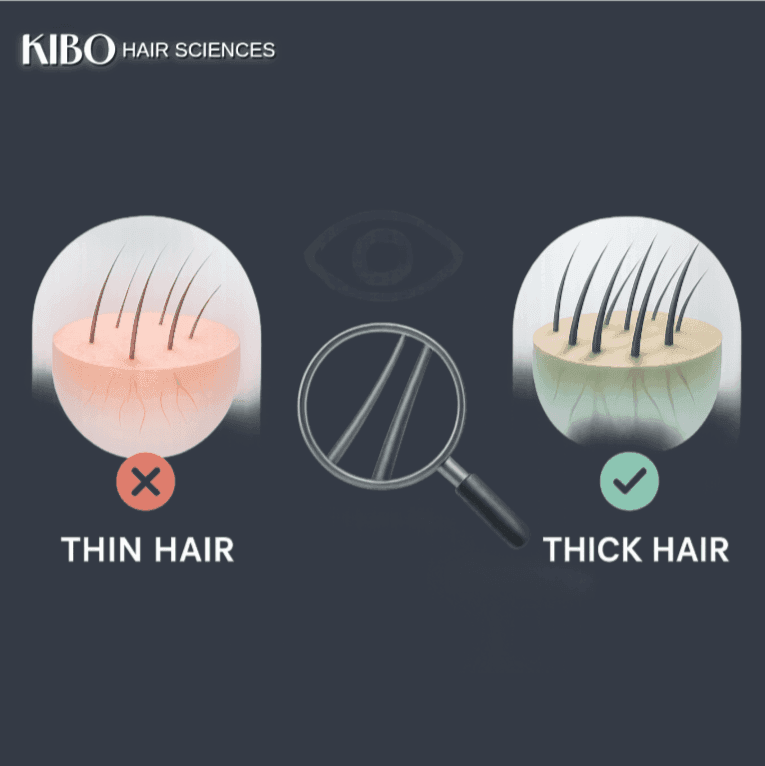
Hair thickness — the diameter of each individual strand — changes how transplant results look just as much as graft count does. Two patients with identical graft numbers can look dramatically different if one has thick, coarse strands and the other has fine, silky hair. Thick strands cast stronger shadows, block more light, and create the impression of density faster. Fine strands are not a failure — but they require smarter planning, more strategic placement, and slightly different styling habits to achieve the same visual result.
- Thick strands block and diffuse more light — reducing scalp visibility even at lower graft counts
- Fine hair lets more light through — making the scalp appear more visible under office lighting and Mumbai sun
- Coarse, wavy hair adds lift and covers more space visually — fine, straight hair lies flat and shows more scalp
- Fine hair may require 2,500 to 3,000 grafts for a full look; coarse hair can achieve similar results with 1,800 to 2,200
- By 12 months, thickness, density, and texture blend together — that is when the true outcome becomes clear
Why This Topic Matters
When people research hair restoration, they often focus on numbers: how many grafts, how many sessions, how many months until results. Numbers are important, but they do not tell the full story. The real-world outcome is shaped by how thick or thin each hair fibre is. Two people with the same graft count can look dramatically different. One may have thick, coarse strands that cover the scalp quickly. The other may have fine, silky strands that require more density before the scalp looks covered.
Understanding this principle helps patients set fair expectations and avoid unnecessary worry. It also supports healthier comparisons — instead of asking "why do I not look like him at six months," you can recognise that his hair biology may simply be different. For patients in Mumbai, daily humidity, sweat, and city living add another layer to how thickness shows up in real life. Reviewing the complete hair transplant results timeline alongside an understanding of your hair type gives you the clearest picture of what to expect and when.
Strand diameter varies significantly between individuals and ethnicities. South Asian hair tends toward medium to coarse calibre with natural wave — which generally creates stronger shadow and better scalp coverage at comparable graft counts than very fine, straight European-type hair. This biological advantage is part of why Indian patients often achieve visually dense results at moderate graft counts.
Core Principles That Shape Perceived Results
Thickness Is About Diameter, Not Count
Hair density is a measure of how many hairs grow in one square centimetre. Hair thickness refers to the width of each strand. Think of it like fabric — a piece of cloth can have the same number of threads per inch, but if the threads are thicker, the fabric feels heavier and looks less see-through. The same logic applies to your scalp. Understanding how single and multiple grafts differ visually becomes even more meaningful when layered on top of an understanding of your strand calibre.
The Shadow Effect and Scalp Coverage
One of the main reasons thick hair looks fuller is shadowing. Thick strands block and diffuse more light, reducing how much scalp shines through. Fine strands let more light pass, which makes the scalp appear visible under overhead bulbs or strong sunlight. This is why office lighting in Mumbai or direct outdoor sun can change how coverage looks dramatically depending on the time of day and angle.
Contrast Between Hair and Scalp
The eye notices contrast. Dark hair against a light scalp looks denser when strands are thick. Fine strands, especially if light in colour, create less contrast and therefore show more scalp. For patients in Mumbai, where tanning and sun exposure are common, scalp colour may change across the year — further affecting how coverage is perceived in different seasons.
Texture Multiplies Thickness
Curl and wave interact with thickness. Coarse curly hair adds lift and covers more space visually. Fine straight hair lies flat, showing the scalp more. Someone with medium-thick, wavy hair may appear to have twice the density of someone with fine straight hair, even if graft counts are equal. This is why choosing hairstyles that work with your follicle type amplifies the visual result of the transplant rather than fighting against it.
Thickness Changes With Age
Hair often becomes finer with age. A patient with naturally coarse strands in his twenties may notice thinner, lighter fibres in his forties. Transplants restore coverage, but they do not stop this natural ageing process. Planning with this in mind — using the Norwood scale to anticipate future progression — keeps expectations realistic and donor supply protected for future needs.
Cultural Grooming Habits Play a Role
Habits like oiling, henna use, or frequent washing affect how thickness looks day to day. Heavy oiling can flatten fine hair, making it look thinner. Henna can coat fibres, temporarily increasing diameter. In Mumbai, where these practices are common, they influence how hair appears in photos and in person — which is why consistent, product-free monthly photos are the most reliable way to track real progress.
What Thickness Means at a Glance
Visual Density Equivalents
*Figures are illustrative for perception guidance only — not a medical prescription. Individual assessment required.
Practical Checklist for Patients
- Ask your consultant to measure your strand diameter so you know if your hair is fine, medium, or coarse
- View real examples of patients with similar hair type — not just celebrity photos or cases with different calibre
- If your hair is fine, consider layered cuts to add body; if coarse, discuss thinning or shaping to ease styling
- Choose volumising products for fine hair and smoothing conditioners for coarse hair
- Protect fine hair from flattening during Mumbai commutes — a light comb or scarf makes a real difference
- Avoid scalp sunburn, which increases scalp-to-hair contrast and makes fine strands look thinner
- Track your results with consistent monthly photos in the same light and distance — five angles, same spot
- Remember that fine hair may need more grafts for the same visual density as coarser hair
- Stay patient — early wiry growth softens with time as strands mature
- Avoid comparing directly with friends or online photos unless their hair type is the same as yours
Planning for Mumbai Readers
Mumbai's lifestyle and weather add a practical layer to hair thickness perception. Heat and humidity flatten fine hair by midday, while coarse hair frizzes in monsoon. Two-wheeler helmets compress fine hair and puff up coarse hair — cotton liners are useful in both cases. Air-conditioned offices dry out hair, leaving fine strands brittle and coarse hair rough, making leave-in care a daily essential rather than an occasional treat.
Regular trims are needed every six to eight weeks, but planning them outside rush hours avoids city stress. During festivals, temporary colouring or henna can alter how thick hair looks. Monsoon rain tangles fine hair and frizzes coarse strands — blotting gently with a cloth instead of rubbing is important. How the seasonal shedding cycle after transplant interacts with your specific hair type is a nuance that becomes particularly visible across Mumbai's distinct seasons.
Products cannot change your actual strand diameter — that is genetic. But volumising sprays coat fine strands to appear temporarily thicker, and smoothing conditioners calm coarse strands for a softer, more controlled look. These are tools that work with your biology, not against it.
Why Thickness Changes How Results Look Over Time
From Thin Coverage to Growing Shadows
In the first few months after transplant, all strands look short and fine. The scalp remains more visible regardless of hair type. As hairs grow longer, thick strands begin to cast stronger shadows, reducing shine and improving coverage progressively. Fine-haired patients see this improvement happen more gradually — which is why patience and monthly photo tracking matter more for them than for coarser-haired patients.
From Patchy Growth to Even Spread
Fine hair may take longer to look balanced. Coarse hair may appear fuller early but needs shaping for natural blending. Over twelve months, both balance out — but the journey looks different. Understanding this prevents premature concern at months four or five when coverage has not yet matched the final result.
From Doubt to Confidence
Many patients worry when results seem less dense in early months. With time, as thickness interacts with density, confidence grows. Monthly photos tell the truth more clearly than daily mirrors — which is why a structured approach to tracking hair growth with monthly photos is one of the most practical tools available to any post-transplant patient regardless of hair type.
Frequently Asked Questions
Q: Why does hair thickness matter more than graft count sometimes?
Because thick strands take up more space and cast stronger shadows, the eye reads fuller coverage even with fewer grafts. Fine strands, though numerous, may show scalp more clearly — especially under bright overhead lighting or direct sun.
Q: Can fine hair still achieve good results?
Yes. Fine hair can look elegant and natural, but may require more grafts and smarter styling. With layers, volumisers, and patience, results can be very satisfying — the journey simply looks different from coarser hair.
Q: Does humidity in Mumbai affect thickness perception?
Yes. Fine hair flattens in humidity, coarse hair frizzes in monsoon. Carrying grooming tools or a small product makes daily management easier and protects the visual result of your transplant across seasons.
Q: Is coarse hair always better for transplants?
Not always. While it looks fuller with fewer grafts, coarse hair may appear bulky in sharp hairlines if not carefully placed. Skilled planning balances strand thickness with natural design so the result suits your face rather than overpowering it.
Q: Can products actually change hair thickness?
No. Strand diameter is genetic. But volumisers coat fine strands to appear temporarily thicker, and conditioners smooth coarse strands for a softer look. These tools work with your biology to optimise what is already there.
Q: Do clinics measure thickness before planning?
Responsible clinics do. Thickness and density together guide how many grafts are needed and how they should be distributed. A clinic that does not assess strand calibre before quoting graft numbers is missing a critical planning variable.
Q: Does hair thickness change with age?
Yes. Many people experience finer, lighter strands over time as part of natural ageing. This is why long-term planning that accounts for future progression — not just current bald areas — is essential for a result that ages well.
Q: When will thickness influence final results?
By twelve months, thickness, density, and texture blend together and the true outcome becomes clear. Evaluating results before this point — particularly at months three to five — is like judging a book by the first chapter. Monthly photos remove this guesswork.
Why Kibo Clinics
At Kibo Clinics in Mumbai, we explain outcomes with honesty. We look beyond graft counts and consider strand thickness, texture, and lifestyle. Our consultations are patient-first, transparent, and supported by examples you can relate to. We measure strand calibre, assess scalp-to-hair contrast, and plan density gradients that work with your specific biology — not a generic template. This clarity helps you plan your journey with calm confidence rather than comparisons that were never fair to begin with. Results may vary by individual.
This content is published by Kibo Clinics for educational purposes only and does not substitute professional medical advice. Hair transplant outcomes and graft planning vary significantly by individual based on strand thickness, hair type, scalp condition, and surgical technique. Always consult a qualified hair restoration surgeon for a personalised assessment.
References
[1] American Academy of Dermatology. Hair loss — who gets it and causes
[2] MedlinePlus. Hair shaft disorders — structure and clinical overview
[3] NHS. Hair transplant — patient guidance and recovery timeline
[4] British Association of Dermatologists. Telogen effluvium patient information
Related Articles & Services
Hair Transplant Options
FUE Hair Transplant | Sapphire FUE | Hairline Correction | Direct Hair Transplant (DHT)
Hair Regrowth
PRP Therapy | GFC Therapy | Microneedling for Hair Regrowth
Must Read
Graft Survival Factors | Complete Hair Transplant Guide | Donor Area Role in Transplant Success