
Folliculitis After Hair Transplant: Causes, Warning Signs & Treatment
Published on Thu Apr 09 2026
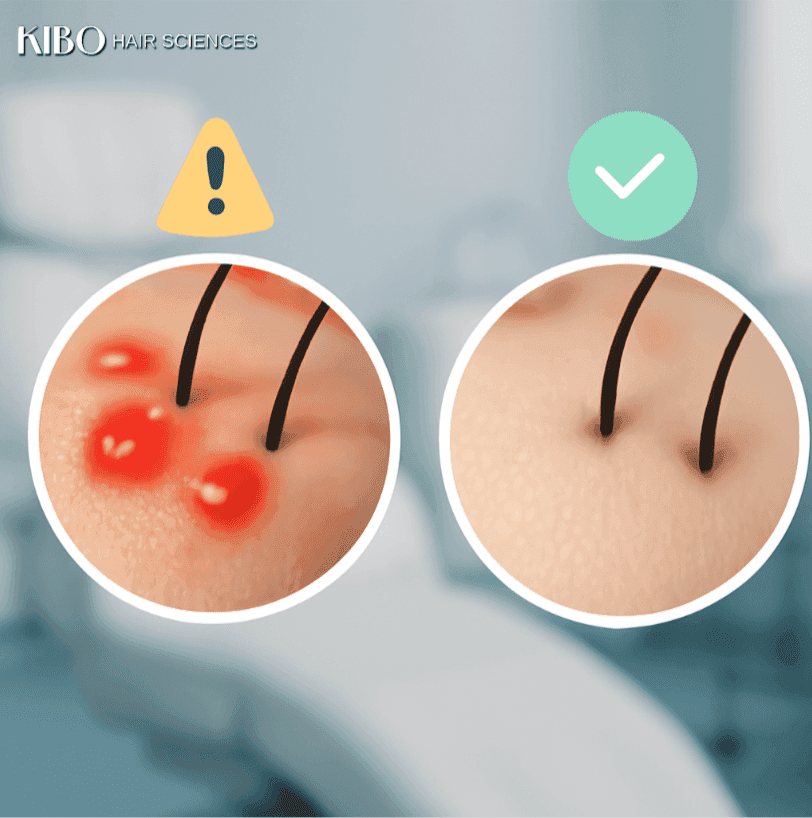
Folliculitis after hair transplant is an infection or inflammation of the hair follicle that typically appears in the transplanted or donor area between 1 and 3 months after surgery. It is uncommon — occurring in less than 1% of cases with sterile technique and proper aftercare. Small, painless pustules are often sterile and self-resolving. Larger, persistent, or painful bumps with discharge require medical attention. Early recognition and treatment almost never disrupts graft survival or the overall recovery timeline.
- Folliculitis most commonly appears between months 1 and 3 — often sterile and self-resolving in mild cases
- Infection risk is less than 1% when sterile technique and written aftercare protocols are followed
- Key warning signs: increasing pain, warmth, thick yellow or green discharge, or fever — these need prompt attention
- Mild cases are treated with topical antibiotics; moderate cases with oral antibiotics; advanced cases may require drainage
- Early treatment rarely changes the recovery timeline — graft survival remains high with prompt management
Introduction to Hair Transplant
Hair transplant surgery involves moving healthy hair follicles from the donor area — usually the back and sides of the scalp — to areas of thinning or baldness. Modern hair restoration uses refined instruments and magnification, and follows clear sterile technique and tissue handling standards. When you combine meticulous planning, gentle care of grafts, and structured aftercare, the procedure is considered safe according to dermatology and public health sources. The key to excellent outcomes is not only what happens in the operating room but also the first few days and weeks of aftercare — which is why understanding early warning signs of infection is valuable for every patient.
Mild, painless pustules appearing between months 2 and 3 after a hair transplant are often sterile folliculitis — not a true bacterial infection. They typically resolve on their own without antibiotics. The distinction between sterile and infectious folliculitis matters because the treatment approach is completely different, which is why clinical examination by your doctor is always the right first step.
Hair Transplant Methods
Three approaches are common. All aim to place healthy follicles into carefully prepared recipient sites so that they grow naturally. Understanding the differences helps you know what to expect during recovery and why aftercare protocols may vary slightly between methods.
Your team will recommend the approach that best suits your scalp, donor supply, and aesthetic goals. A complete overview of the FUE hair transplant procedure helps clarify what to expect from the most commonly chosen method.
What Is Post-Operative Folliculitis?
Folliculitis is an inflammation or infection of the hair follicle that appears in the transplanted or donor area during recovery. These typically occur 1 to 3 months after surgery. Sterile folliculitis — where there is no bacterial cause — is relatively common and often resolves without treatment when the bumps are small. However, when large and persistent, a medical approach is needed. In some cases, microorganisms can enter tiny incisions due to unhygienic practices or insufficient aftercare and cause true infection.
While mild redness and light scabbing are expected in the early days, true infection requiring medical attention shows a specific pattern of symptoms — increasing tenderness, warmth over the skin, and the presence of pus. It is important to remember that most patients do not experience severe infection, and that careful aftercare is the primary tool for reducing risk.
Causes and Contributing Factors
Infection after hair transplant is uncommon when sterile technique and clear aftercare are followed. The following factors can contribute when protocols are not maintained:
- Touching or scratching grafts with unwashed hands in the first days
- Resuming exercise, sauna, or swimming too early, exposing the scalp to sweat or non-sterile water
- Wearing tight or non-breathable headwear that traps heat and moisture
- Using non-approved hair products in the first week
- Pre-existing scalp conditions such as active dermatitis or chronic folliculitis that need management before surgery
- Systemic conditions that reduce immune response such as poorly controlled diabetes
In Mumbai, where the climate can be warm and humid for many months of the year, basic hygiene routines become even more important. A guide to why scalp hygiene matters post-transplant outlines exactly what routines prevent the environment from becoming a risk factor during recovery.
Normal Healing vs Infection: How to Tell the Difference
If you notice the concerning pattern, contact your care team promptly — do not wait to see if it improves on its own. Early evaluation protects both your comfort and your graft outcome. Most issues caught within the first 24 to 48 hours of appearing are resolved quickly with minimal intervention.
Warning Signs That Need Immediate Attention
- Firm, painful bumps that fill with pus near grafts or in the donor area
- Red streaks or rapidly expanding redness on the scalp
- Fever or chills with scalp tenderness
- Swelling that increases after a week rather than improving
- Significant worsening of pain instead of steady daily improvement
These findings warrant a quick call to your surgeon so that treatment can begin without delay. Understanding the broader context of hair transplant healing and recovery helps you distinguish which symptoms are expected milestones and which ones require clinical attention.
Treatment Pathways by Severity
Dermatologists treat folliculitis and infection based on severity and clinical examination. The following is educational and not a substitute for personalised medical care.
Mild Folliculitis
- Topical antibiotic therapy as prescribed by your doctor
- Gentle cleansing with sterile saline or as instructed
- Avoidance of non-prescribed topical products until reviewed
Moderate Infection
- Oral antibiotic therapy tailored to likely bacteria
- Warm compresses to encourage drainage under guidance
- Temporary pause on hair styling products and gym activity
Advanced or Abscess-Forming Infection
- Clinic-based incision and drainage performed by a dermatologist under sterile conditions
- Culture and sensitivity testing to identify the organism and guide targeted therapy
- Close follow-up visits to ensure complete resolution
With early diagnosis and the correct therapy, graft survival remains high and the overall timeline returns to normal. Understanding how graft survival factors interact with post-operative inflammation helps clarify why early treatment is protective rather than disruptive to your result.
Prevention Strategies That Make a Real Difference
- Wash hands before any contact with the scalp during recovery
- Follow the washing schedule and product list provided by your team exactly
- Avoid gyms, pools, and saunas during the early recovery period
- Sleep with the head slightly elevated for the first few nights to reduce swelling
- Wear breathable, loose head coverings if needed outdoors
- Keep all scheduled follow-up visits even if everything looks and feels fine
A complete guide to self-care routines for the first week after transplant covers each of these steps in practical detail and is worth reviewing before your procedure date.
Recovery Timeline and Healing Stages
Early treatment of mild folliculitis rarely changes this timeline. For a comprehensive view of what each phase should look like, reviewing the complete hair transplant results timeline gives month-by-month clarity on what is normal and what warrants a call to your clinic.
Frequently Asked Questions
Q: How common is folliculitis after a hair transplant?
Infection after a hair transplant is rare — less than 1% with sterile technique and proper aftercare. Mild sterile folliculitis (small painless pustules appearing in months 2 to 3) is more common and typically self-resolving. True bacterial infection requiring antibiotics is uncommon and responds well when caught early.
Q: Is folliculitis after hair transplant always an infection?
No. Folliculitis can be inflammatory or infectious. Mild irritation can mimic infection visually. A clinical examination by your doctor will distinguish the cause and guide the correct treatment — which matters because sterile folliculitis and bacterial infection are managed very differently.
Q: Can folliculitis ruin a hair transplant?
Left untreated, severe infection can affect comfort and healing. When identified early and treated correctly, most patients maintain excellent graft survival and continue on the usual recovery timeline. Early contact with your care team is the single most important protective step.
Q: What does folliculitis in the donor area look like after hair transplant?
Folliculitis in the donor area typically appears as small red bumps or pustules — similar to pimples — at the extraction sites. Mild cases are painless and resolve without treatment. Concerning signs include increasing tenderness, warmth, expanding redness, or thick discharge — any of which should prompt a clinical review.
Q: How does Mumbai's climate affect recovery from hair transplant?
Warm and humid weather can increase sweating, which makes hygiene and breathable head coverings more important in the first days and weeks. With simple routines — gentle cleansing, avoiding tight headwear, and staying out of pools and gyms during early recovery — patients recover smoothly in any season.
Q: When can I return to normal activities after hair transplant?
Many people return to light desk work within a few days as advised. Exercise, swimming, and sauna use are reintroduced gradually according to your specific plan — usually from week 3 or 4 onward depending on how healing is progressing. Premature return to sweaty activity is one of the most common causes of preventable folliculitis.
Why Kibo Clinics
At Kibo Clinics in Mumbai, sterile instruments, careful graft hydration, and structured aftercare are standard — not optional. Every patient leaves with a clear written plan, a simple product list, and proactive follow-up support so that early warning signs are caught and managed before they affect the outcome. The combination of dermatologist-led surgery, clean facilities, and genuine patient communication is what keeps folliculitis rates low and recovery timelines predictable. Results may vary by individual.
This content is published by Kibo Clinics for educational purposes only and does not substitute professional medical advice. Treatment pathways for folliculitis and infection after hair transplant must be determined by a qualified dermatologist through clinical examination. If you experience concerning symptoms, contact your care team promptly rather than self-treating.
Related Articles & Services
Hair Regrowth Solutions
GFC Therapy | PRP Therapy | Low-Level Laser Helmet Therapy | Mesotherapy for Hair Regrowth
Hair Transplant Options
Follicular Unit Extraction (FUE) | Sapphire FUE | Corrective Hair Transplant | Direct Hair Transplant (DHT)
Relevant Blogs
What to Do the Week Before and After Transplant | Donor Scar Visibility and Healing Factors | Shock Loss and Temporary Shedding | Uneven Growth During Recovery | Hair Shedding After One Month Explained | Dealing with the Ugly Duckling Phase | Long-Term Maintenance After Hair Transplant