
Rajesh noticed his hairline receding during his morning routine. His barber suggested hair transplant clinics. "FUE or FUT?" the first surgeon asked. Rajesh had no idea what these meant. After three consultations, he discovered FUE was more than just an acronym.
Follicular Unit Extraction (FUE) is a minimally invasive hair transplant technique that restores natural-looking hair by extracting and relocating individual follicular units without creating a linear scar, offering faster recovery and aesthetic flexibility compared to traditional strip-based methods. Success depends on surgical precision during extraction to prevent follicle damage, careful graft handling maintaining viability outside the body, meticulous recipient site creation determining final angle and direction, and realistic density planning that respects finite donor supply. This comprehensive guide explains the FUE extraction process, compares it with FUT strip technique, outlines benefits including minimal dot-like scarring and quick activity resumption, details potential side effects from common temporary issues like swelling and shock loss to less common complications including poor graft survival and donor depletion, provides realistic recovery timelines, explains candidate criteria, and emphasizes why surgeon expertise and clinic quality dramatically influence outcomes.
The IT Professional Who Chose FUE for Minimal Downtime
Amit, a 32-year-old software architect working in Mumbai's Bandra Kurla Complex, had been noticing progressive temple recession for three years. His Norwood 3 pattern had become pronounced enough that colleagues commented, but his concern wasn't just appearance, it was the 15-year career timeline ahead where visible thinning could undermine professional confidence during client presentations and team leadership.
He researched extensively, consulting dermatologists in Mumbai and Bangalore. FUT strip-based transplant offered higher graft yields in single sessions but required two weeks recovery with visible linear scarring that would show with his preferred short hairstyle. His active lifestyle including weekend cricket and gym sessions five days weekly made prolonged restrictions unappealing. International destinations like Turkey marketed aggressive pricing but he couldn't verify surgeon credentials or understand recourse if complications arose months later requiring revision.
He chose FUE at a Mumbai clinic after confirming the consulting dermatologist would personally perform extraction and placement rather than delegating to technicians. The procedure took seven hours for 2,400 grafts targeting temples and frontal zone. Recovery allowed him to return to desk work on day 4, resume gym on day 10, and play cricket on day 14. At month 6, new growth was visible. By month 12, density matched his goals with a natural hairline that looked right at every angle. Understanding hairstyles that minimize stress on transplanted follicles helped him maintain results during the growth phase.
What Is FUE hair transplant
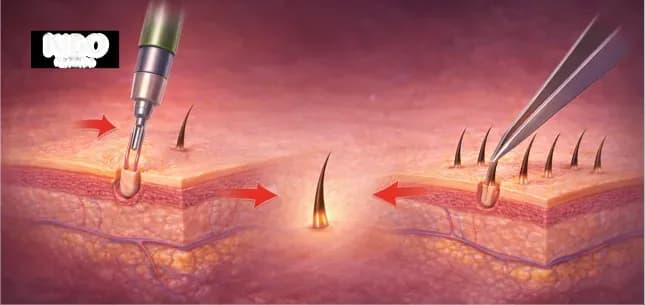
Follicular Unit Extraction involves removing individual follicular units, each containing 1-4 hairs, directly from the donor area typically the back and sides of the scalp using small circular punches ranging 0.8-1.0mm diameter. These grafts are then implanted into recipient sites created at specific angles matching natural hair direction and density patterns. The technique avoids strip removal and linear incisions, instead creating tiny puncture sites that heal as small dots barely visible even with short hair.
The success of FUE depends on several technical factors including punch size selection matching follicle diameter to minimize transection, extraction depth and angle control preventing follicle damage, graft handling and hydration maintaining viability outside the body, and recipient site creation determining final angle, direction, and density appearance.
How Hair Restoration Techniques Have Evolved
Early hair transplantation in the 1950s-1970s used large punch grafts containing 10-20 hairs that created unnatural "pluggy" appearance. The 1990s brought micrografting and follicular unit transplantation (FUT) where a strip of scalp was removed, dissected under microscope into individual follicular units, and implanted, producing more natural results but leaving a linear scar and requiring longer recovery.
FUE emerged in early 2000s offering a scar-minimizing alternative. Initial techniques had high transection rates damaging follicles during extraction, but refinements in punch design, powered extraction devices, and surgical training have made modern FUE the leading technique for patients prioritizing minimal scarring, faster recovery, and natural hairline design. Understanding which hair transplant technique suits your needs requires evaluating your specific pattern, donor characteristics, and lifestyle priorities.
FUE vs FUT: Key Differences
| Feature | FUE (Follicular Unit Extraction) | FUT (Strip Method) |
|---|---|---|
| Harvesting Technique | Individual follicles extracted with micro-punches | Strip of scalp removed and dissected |
| Scarring Pattern | Tiny dot scars under 1mm, nearly invisible | Linear scar visible with short haircuts |
| Stitches Required | No sutures needed | Yes, stitches or staples |
| Recovery Time | 3-5 days for visible healing | 10-14 days with tightness |
| Donor Appearance | Short hair possible, scars blend | Requires longer hair to cover scar |
| Graft Yield Per Session | Up to 3,000 grafts typically | Higher yield for large areas |
| Cost Per Graft | Higher (labor-intensive precision) | Lower for large sessions |
Benefits of FUE Hair Transplant
Minimal Scarring and Aesthetic Flexibility
FUE creates tiny dot-like extraction sites under 1mm diameter that heal as small punctures barely visible even with buzzed hair or short fades. This aesthetic flexibility allows patients to wear any hairstyle without worrying about visible linear scars, particularly important for younger patients, athletes, or those with active lifestyles who prefer short hair.
Faster Recovery and Activity Resumption
Because FUE avoids strip removal and sutures, recovery is significantly faster than FUT. Most patients return to desk work within 3-4 days, resume light exercise by day 7-10, and can swim or engage in contact sports by week 2-3 depending on healing. This shorter downtime suits professionals who cannot take extended leave or athletes maintaining training schedules. Learning about when to safely return to gym and outdoor activities helps you plan recovery around your lifestyle.
Natural Hairline Design Precision
FUE allows meticulous graft-by-graft placement with precise control over angle, direction, and density distribution. Surgeons can create soft, irregular hairlines using single-hair grafts at the frontal edge, transitioning to multi-hair units behind for natural density gradation. This artistic control produces hairlines that look natural at close inspection and from all angles.
Lower Risk of Donor Area Complications
FUE avoids the scalp tightness, stretching sensation, and permanent linear scar associated with strip removal. For patients with tight scalps or concerns about visible scarring from keloid tendency, FUE offers a safer aesthetic profile.
Potential Side Effects and Complications
Common Temporary Side Effects
Most FUE patients experience mild swelling around forehead and eyes peaking on day 2-3 then subsiding by day 5-7, slight discomfort or soreness at donor and recipient sites managed with prescribed pain medication, small scabs forming around transplanted grafts that naturally shed over 7-14 days without picking, redness and scalp sensitivity during healing that resolves within 2-3 weeks, and temporary numbness from local anesthesia that typically resolves within days to weeks.
Shock loss, the temporary shedding of transplanted or surrounding native hairs 2-4 weeks post-procedure, alarms many patients but is a normal biological response to surgical trauma. The shed hairs typically regrow starting month 3-4 as follicles recover from temporary dormancy.
Less Common but Significant Complications
Infection risk remains low with proper sterile technique and post-procedure hygiene, but can occur if wound care is inadequate or patients swim in non-chlorinated water during early healing. Signs include increasing redness, warmth, purulent drainage, or fever requiring immediate medical attention.
Not sure about your hair loss stage or best treatment option?
Poor graft survival or "graft failure" can result from excessive handling damage during extraction, prolonged time outside the body without proper hydration, incorrect implantation depth or angle, or patient factors like smoking reducing blood flow to healing grafts. This manifests as patchy growth or lower-than-expected density at month 6-12 evaluation.
Visible donor area depletion from over-harvesting creates a "moth-eaten" appearance where extraction sites are too close together, reducing overall donor density and limiting future transplant options. This is why conservative donor planning and experienced surgeon judgment matter enormously.
Unnatural results from poor graft placement including wrong angle creating hair that sticks up rather than lying flat, incorrect direction making hair grow perpendicular to natural flow patterns, or density mismatches where some areas are over-packed while others remain sparse require corrective revision procedures.
Ideal FUE Candidates
FUE works best for patients with mild to moderate androgenetic alopecia, typically Norwood 2-4 for men or Ludwig 1-2 for women, where frontal recession or crown thinning is visible but extensive baldness hasn't depleted donor reserves. Good donor area density with adequate laxity allows extraction of 2,000-3,000 grafts without creating visible depletion.
Patients preferring short hairstyles or those with active lifestyles requiring quick recovery find FUE particularly suitable. Realistic expectations about density limitations matter, FUE can create natural-looking coverage but cannot replicate teenage density, and ongoing medical management may be needed to prevent further native hair loss. Understanding the Norwood scale classification helps you assess your current stage and realistic transplant goals.
FUE Procedure and Recovery Timeline
Procedure Day
FUE typically takes 6-8 hours depending on graft count. The day begins with donor and recipient area design, hairline marking, and final consent. Local anesthesia makes the procedure comfortable with minimal discomfort. Extraction involves systematically removing follicular units from the donor area using micro-punches. Grafts are stored in chilled saline or specialized solutions maintaining hydration and viability. Recipient site creation uses tiny blades or needles creating angles and direction matching natural hair growth. Graft placement uses fine forceps or implanter devices positioning each follicle at correct depth and angle.
Recovery Phases
Days 1-3 bring mild swelling and soreness with instructions to sleep elevated, avoid touching grafts, and begin gentle saline spraying. Scabs form around transplanted grafts and should not be picked or scratched. Understanding proper care the week before and after transplant significantly impacts healing quality.
Days 4-14 see scabs naturally shedding during gentle washing, swelling completely resolving, and most visible signs disappearing allowing return to work and social activities. The donor area heals rapidly with tiny dots barely visible.
Weeks 2-4 often bring shock loss where transplanted hairs shed completely, creating temporary panic that the procedure failed. This is normal biological response, the follicles remain alive beneath the scalp and will produce new growth starting month 3. Tracking hair growth progress after transplant with monthly photos helps you see subtle improvements.
Months 3-6 bring new hair sprouting as fine, wispy strands that gradually thicken and darken. Growth is non-uniform, some areas sprout faster while others lag, creating temporary unevenness that evens out over months. Understanding why early growth appears uneven reduces anxiety during this phase.
Months 6-12 show accelerating density and thickness improvement. By month 9-10, most patients see substantial coverage allowing styling and grooming. Final results at month 12-15 reveal full density, natural texture, and complete integration with surrounding hair.
Why Surgeon Expertise and Clinic Quality Matter
FUE demands technical precision at every phase. Extraction requires controlled punch depth preventing transection of follicles below the bulb while avoiding superficial extraction that damages grafts. Graft handling needs gentle forceps technique and proper hydration maintaining viability during the hours between extraction and implantation. Recipient site creation determines the final aesthetic through angle selection, density distribution, and direction matching.
Inexperienced surgeons or high-volume clinics prioritizing speed over quality create higher risks of follicle transection during extraction reducing usable graft yield, prolonged graft storage time outside the body decreasing survival rates, poor recipient site design producing unnatural angles or directions, and donor over-harvesting creating visible depletion limiting future options. Learning why surgeon experience matters in hair transplant outcomes helps you evaluate credentials properly.
Why Kibo Clinics for FUE Hair Transplant
Many patients choose Kibo Clinics for FUE procedures because our approach addresses both the technical precision required for optimal graft survival and the artistic judgment needed for natural-looking results. We begin with comprehensive scalp assessment using dermoscopy to evaluate donor density per square centimeter, measure existing miniaturization patterns, and calculate realistic graft requirements for target zones.
Our No Ghost Surgery pledge ensures the consulting dermatologist personally performs every extraction, recipient site creation, and graft placement. We don't delegate critical surgical phases to technicians or junior surgeons, maintaining artistic consistency and accountability throughout your procedure. This matters enormously for natural hairline design and density distribution that looks right from every angle.
Ready to take the next step?
The FUE technique at Kibo Clinics uses controlled punch sizes matched to individual follicle caliber minimizing transection rates, systematic extraction patterns preventing over-harvesting from any single area, and meticulous graft handling with proper hydration solutions maintaining viability. Recipient site creation considers your hair characteristics, styling preferences, and growth direction patterns to produce results that integrate naturally with surrounding hair.
Our sterile protocol follows international standards with single-use extraction punches, proper hand hygiene, and clean room setup reducing infection risk. Post-procedure care includes detailed washing demonstrations, aftercare kits with saline spray and gentle shampoo, and structured follow-up at week 1, month 3, month 6, and month 12 tracking growth progress and addressing any concerns promptly.
For patients concerned about factors affecting graft survival, our protocols optimize every variable under surgical control while providing realistic expectations about biological variables affecting individual outcomes.
Get expert FUE consultation with dermoscopic donor assessment and realistic density planning.
<a href="https://kiboclinics.com/book-consultation" target="_blank" rel="noopener noreferrer"
style="display:inline-flex;align-items:center;justify-content:center;padding:12px 16px;border-radius:10px;background:#20255C;color:#fff;text-decoration:none;font-weight:600;white-space:nowrap;">
Get A Call Back
<a href="https://kiboclinics.com/hair/hair-graft-calculator" target="_blank" rel="noopener noreferrer"
style="display:inline-flex;align-items:center;justify-content:center;padding:12px 16px;border-radius:10px;background:#fff;color:#20255C;border:1px solid #20255C;text-decoration:none;font-weight:600;white-space:nowrap;">
Graft Calculator
Frequently Asked Questions
What are the most common side effects after FUE hair transplant?
Common temporary side effects include mild forehead and eye swelling peaking days 2-3 then subsiding by day 5-7, slight soreness at donor and recipient sites managed with prescribed medication, small scabs forming around grafts that naturally shed over 7-14 days, redness and scalp sensitivity resolving within 2-3 weeks, temporary numbness from local anesthesia typically resolving within days to weeks, and shock loss where transplanted or native hairs temporarily shed 2-4 weeks post-procedure then regrow starting month 3-4. These effects are normal biological responses to surgical intervention and resolve without intervention in vast majority of cases. Understanding complete side effects and how to manage them helps you prepare mentally and physically.
Will FUE leave visible scars on my donor area?
FUE creates tiny dot-like extraction sites under 1mm diameter that heal as small punctures barely visible even with buzzed hair or short fades. Scar visibility depends on several factors including skin type with darker skin sometimes showing more pigment contrast, healing capacity where some individuals form more visible scars genetically, extraction density where over-harvesting creates moth-eaten appearance, and hair length where longer hair provides more coverage. With conservative extraction patterns and proper technique, most patients can wear hair as short as 2-3mm without noticeable scarring. However, scalp shaving to skin level may reveal tiny dots in some patients. Discuss your preferred hairstyle length during consultation so extraction planning accounts for this concern.
How long does FUE recovery take compared to FUT strip method?
FUE recovery is significantly faster than FUT because it avoids strip removal and sutures. Most FUE patients return to desk work within 3-4 days compared to 7-10 days for FUT, resume light exercise by day 7-10 versus 14-21 days for FUT, can swim and engage in contact sports by week 2-3 rather than 4-6 weeks with FUT, and experience less discomfort and tightness since no scalp tissue is removed requiring wound closure. However, the transplanted grafts themselves have identical healing timelines regardless of extraction method, scabs shed over 7-14 days, shock loss occurs weeks 2-4, and new growth emerges months 3-4 with final results at month 12-15 for both techniques.
Is FUE more expensive than FUT and why?
FUE typically costs more per graft than FUT because extraction is significantly more labor-intensive and time-consuming. Each follicular unit must be individually extracted using precise punch technique requiring high magnification, controlled depth and angle, and careful handling, whereas FUT removes a strip that is then dissected by trained technicians under microscope producing many grafts simultaneously. For a 2,500-graft procedure, FUE may take 6-8 hours of surgeon time compared to 4-5 hours for FUT. The cost difference often ranges 20-40% higher for FUE. However, many patients accept higher cost for minimal scarring, faster recovery, and aesthetic flexibility to wear short hair. Understanding hair transplant cost factors across India helps you budget appropriately.
Can FUE treat large bald areas or is it only for mild thinning?
FUE works best for mild to moderate androgenetic alopecia typically Norwood 2-4 or Ludwig 1-2 where frontal recession or crown thinning is visible but extensive baldness hasn't depleted donor reserves. For advanced baldness Norwood 5-7 requiring 4,000-6,000+ grafts, FUE faces practical limitations including surgical time extending beyond 10-12 hours creating fatigue affecting precision, donor area capacity where extracting 5,000+ grafts may create visible depletion, and single-session constraints making multiple procedures necessary. In these cases, FUT may offer higher graft yield per session or body hair transplant can supplement scalp donor grafts. However, with good donor density and patient tolerance for staged procedures, FUE can address even advanced patterns over 2-3 sessions spaced 8-12 months apart.
Do transplanted hairs from FUE last permanently?
Transplanted follicles from the permanent donor zone typically the back and sides of the scalp retain their genetic resistance to DHT miniaturization and continue growing permanently in their new location. This is the fundamental principle making hair transplant work. However, several nuances matter. Native non-transplanted hair in recipient areas may continue thinning from ongoing androgenetic alopecia requiring medical management with minoxidil or finasteride to preserve density. Transplanted hairs can be damaged by poor graft handling, incorrect implantation, or inadequate blood supply affecting survival rates. Lifestyle factors including smoking, poor nutrition, or certain medications may affect long-term hair quality. Understanding long-term maintenance requirements helps you protect your investment.
What causes poor results or graft failure in FUE procedures?
Poor FUE results can stem from surgical technique issues including excessive follicle transection during extraction from improper punch depth or angle damaging grafts, prolonged graft storage time outside the body without proper hydration reducing viability, incorrect recipient site depth or angle creating unnatural hair direction or poor anchoring, and over-harvesting donor area creating visible depletion or moth-eaten appearance. Patient factors include smoking constricting blood vessels reducing oxygen delivery to healing grafts, certain medications affecting healing or blood clotting, underlying medical conditions like uncontrolled diabetes impairing wound healing, and inadequate aftercare including picking scabs or premature exercise dislodging grafts. Realistic expectations matter as well, even perfect technique cannot create teenage density in advanced baldness patterns, and ongoing native hair loss may require medical therapy to maintain results. Choosing experienced surgeons at reputable clinics dramatically reduces technique-related failures.
When should I consider FUE revision or corrective surgery?
Revision becomes necessary when initial transplant produces unnatural appearance including pluggy hairline from poor graft distribution or multi-hair units placed at frontal edge, wrong angle causing hair to stick up rather than lie flat, incorrect direction making hair grow perpendicular to natural flow, visible scarring from over-harvesting or keloid formation, or significantly lower density than planned from poor graft survival. Timing matters, wait minimum 12-15 months for complete growth before judging final results since density continues improving through month 18 in some patients. If at month 12-15 results clearly fall short, request detailed review with your surgeon comparing pre-procedure donor density measurements and planned versus achieved coverage. Ethical clinics honestly assess whether poor results stem from technical issues, patient factors, or unrealistic initial expectations and discuss revision options including additional grafts, density enhancement with regenerative treatments, or referral to corrective specialists. Understanding when corrective procedures are necessary helps you know what reasonable outcomes look like.
Disclaimer
This content is for informational purposes only and does not substitute personalized medical advice. FUE hair transplant suitability, expected graft requirements, recovery experiences, and final outcomes vary by individual based on donor characteristics, pattern severity, surgical technique, adherence to aftercare protocols, and overall health status. Risks and side effects listed represent known possibilities but do not occur in all patients. Always consult qualified dermatologists or hair restoration surgeons for comprehensive evaluation before making treatment decisions.
Hair Transplant
FUE Hair Transplant | Sapphire FUE | Bio FUE | Direct Hair Transplant | Corrective Transplant
Hair Regrowth
PRP Therapy | GFC Therapy | Mesotherapy | Microneedling
Must Read
Complete Hair Transplant Guide | FUE Complete Guide | Procedure Steps | Results Timeline | Norwood Scale
Relevant Blogs
Hair Myths Busted | Protective Hairstyles | Hair Breakage Guide | DHT Blockers Guide | Hair Transplant Cost India
Medical Disclaimer : Information from Kibo Hair Clinics is for educational purposes only. It does not replace diagnosis, trichoscopy, blood test interpretation, prescription treatment, procedure advice, or side-effect counselling from a qualified dermatologist or hair restoration doctor.