
Quick Answer:
Rice water delivers measurable skin benefits through three clinically recognised mechanisms: antioxidant protection, skin barrier reinforcement, and mild melanin regulation. Applied consistently as a toner, most people see reduced redness and smoother texture within 2-4 weeks. Visible brightening takes 6-8 weeks. The key active compounds are inositol, ferulic acid, and allantoin.
Rice water will not bleach skin, eliminate acne overnight, or replace a dermatologist-formulated brightening serum for moderate pigmentation concerns. What it will do, reliably, is improve overall skin quality with almost no risk of irritation, and at negligible cost.
What Is Rice Water for Skin?
Rice water is the starchy liquid remaining after rinsing or soaking uncooked rice in water. It contains a concentrated mix of vitamins, amino acids, minerals, and antioxidants released from the rice grain during contact with water.
Rice water for skin is used as a toner, face wash, face mask, or spot treatment. It is suitable for most skin types, including sensitive and oily skin.
Key active compounds found in rice water:
- Inositol, a carbohydrate that may penetrate the epidermis and stimulate cell regeneration
- Ferulic acid, an antioxidant that neutralises free radicals generated by UV exposure and pollution
- Allantoin, a compound with documented soothing and anti-inflammatory properties
- Kojic acid, present in fermented rice water; inhibits tyrosinase, the enzyme responsible for melanin synthesis
- Vitamins B1, B3, C, and E, nutrients that support skin repair and brightness
- Amino acids, building blocks that support collagen synthesis and skin structure
Rice water sits at an interesting intersection: centuries of use in East Asian skincare traditions, and increasingly supported by emerging clinical evidence. According to Kibo Skin's clinical team, the bioactive compounds in rice water are real and biologically active, the open question is whether homemade preparations consistently deliver them at concentrations sufficient for clinical effect.
What Are the Proven Benefits of Rice Water for Skin?
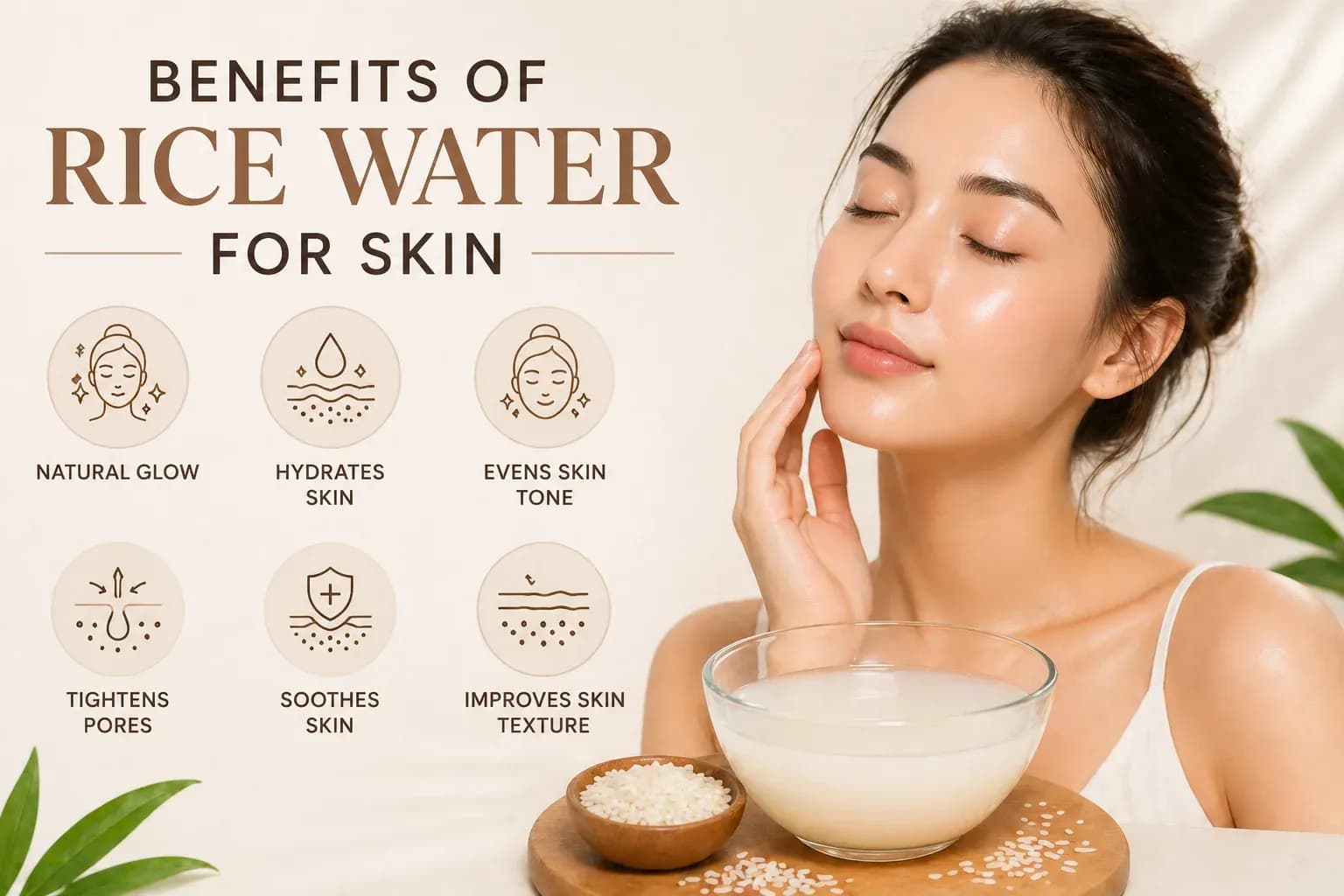
Rice water provides multiple skin benefits backed by both traditional use and emerging clinical evidence. The strength of evidence varies by benefit type.
Brightens Skin Tone
Rice water contains ferulic acid and, in fermented preparations, kojic acid, both of which inhibit tyrosinase activity and reduce melanin production. Regular application may reduce dark spots and uneven pigmentation within 6-8 weeks of consistent daily use.
Rice water may support mild surface unevenness, but persistent marks often need a more targeted approach such as a chemical peel for dark spots.
Reduces Inflammation and Redness
Allantoin in rice water has a clinically observed anti-inflammatory effect. It can calm irritated, sunburned, or reactive skin without disrupting the skin's natural pH balance. This is one of the most robust benefits supported by current evidence.
Strengthens the Skin Barrier
The amino acids and starch in rice water form a light film on the outermost skin layer (stratum corneum). This film may reduce transepidermal water loss (TEWL) and improve barrier integrity over time, functioning similarly to a light emollient.
Minimises the Appearance of Pores
Rice water has mild astringent properties. It temporarily tightens skin and reduces the visible appearance of enlarged pores, particularly for oily and combination skin types. This effect is temporary, not structural.
Provides Anti-Ageing Effects
Inositol, a key compound in rice water, has been shown in research to penetrate the skin and stimulate fibroblast activity, supporting collagen production and skin firmness. Studies suggest it may reduce the appearance of fine lines with consistent use over 6-12 weeks.
Soothes Eczema and Dry Skin
A 2002 study published in the European Journal of Dermatology found that bathing in rice starch water for 15 minutes twice daily reduced the severity of atopic dermatitis symptoms by approximately 20% compared to tap water baths.
Improves Skin Texture and Radiance
The mild enzymatic action of rice water helps remove dead skin cells from the surface, resulting in smoother texture and a visible improvement in skin radiance within 2-4 weeks of regular use.
Summary, what rice water can and cannot do:
| Rice Water Can | Rice Water Cannot |
|---|---|
| Brighten uneven tone within 6-8 weeks | Permanently lighten skin or remove existing pigment |
| Reduce redness via allantoin's anti-inflammatory action | Treat active acne breakouts or bacterial infection |
| Temporarily tighten pores and reduce excess sebum | Replace SPF, retinoids, or clinical brightening agents |
| Reinforce the skin barrier and reduce moisture loss | Permanently close or alter pore size |
| Mildly support acne-prone skin by reducing inflammation | Correct significant skin laxity or deep wrinkles |
How Does Rice Water Work on Skin? The Complete Mechanism
Rice water benefits the skin through four primary mechanisms. Each operates independently, producing a cumulative effect with consistent use.
1. Antioxidant Neutralisation
Ferulic acid and vitamin E in rice water neutralise free radicals generated by UV exposure and pollution. This works because antioxidants donate electrons to unstable molecules, preventing them from damaging skin cells and accelerating visible ageing.
2. Barrier Film Formation
Starch and amino acids in rice water coat the stratum corneum, the outermost skin layer. This film reduces moisture loss and protects against environmental irritants, functioning similarly to a light emollient. The effect supports long-term barrier health with consistent application.
3. Melanin Inhibition
Kojic acid (fermented preparations) and ferulic acid reduce the activity of tyrosinase, the enzyme responsible for melanin synthesis. Less tyrosinase activity means less pigment is produced, which gradually lightens dark spots and evens skin tone over 6-8 weeks.
For deeper or recurring uneven tone, a professionally selected chemical peel for pigmentation may offer more predictable exfoliation and pigment control.
Important clarification: Rice water does not bleach the skin. It regulates excess melanin production rather than removing existing pigment permanently. Once application stops, tyrosinase activity returns to baseline.
4. Cell Turnover Stimulation
Inositol penetrates the skin's surface and signals cells to regenerate faster. Research published in the International Journal of Cosmetic Science identified inositol as capable of penetrating the epidermis and stimulating fibroblast activity. Faster turnover means older, damaged skin cells are replaced more quickly, improving texture and reducing visible signs of ageing.
What Are the Short-Term and Long-Term Benefits of Rice Water for Skin?
Rice water's benefits accumulate progressively. The timeline below is based on consistent daily application as a toner.
| Timeframe | Expected Outcome |
|---|---|
| 1-2 weeks | Reduced redness, temporary pore tightening, mild sebum control |
| 3-4 weeks | Improved hydration, smoother texture, calmer reactive skin |
| 6-8 weeks | Visible brightening, gradual reduction in dark spots and pigmentation |
| 3+ months | Reduced fine lines, stronger skin barrier, improved post-acne marks |
Results depend on rice variety used, preparation method (plain, soaked, or fermented), consistency of application, and individual skin biology. Inconsistent application is a common reason users report limited results.
What Are the Types of Rice Water for Skin and Which Should You Use?
Three main preparation methods exist for rice water, each producing a different concentration of active compounds.
| Type | Preparation Method | Concentration | Best For |
|---|---|---|---|
| Plain rinse water | Rinse 1 cup of rice with 2 cups of water | Low | Sensitive, reactive skin |
| Soaked rice water | Soak rice for 30 minutes to 24 hours | Medium | Normal, combination skin, general brightening |
| Fermented rice water | Soak for 24-48 hours at room temperature | High | Oily skin, post-acne marks, anti-ageing concerns |
Plain Rinse Rice Water
This is the mildest preparation. It retains surface starch and a small amount of vitamins. Suitable for daily use on sensitive skin or as a first introduction to rice water. It does not contain kojic acid, as fermentation has not occurred.
Soaked Rice Water
Soaking for at least 30 minutes draws out higher concentrations of inositol, amino acids, ferulic acid, and vitamins into the liquid. This is the most commonly recommended preparation for general skin brightening and hydration. Suitable for most skin types.
Fermented Rice Water
Fermentation increases the concentration of pitera, a naturally occurring yeast derivative, lowers pH to approximately 4.5-5.0, and enhances the bioavailability of active compounds including kojic acid. This preparation is most effective for oily skin, anti-ageing concerns, and post-acne hyperpigmentation. It may cause irritation on very sensitive or rosacea-prone skin. A patch test is recommended before first use.
Rice variety matters: Short-grain or jasmine rice releases higher amounts of starch and inositol compared to long-grain or parboiled rice. Short-grain and jasmine rice are commonly preferred for more concentrated preparations.
How to Prepare and Use Rice Water for Skin: Step-by-Step
Start with soaked rice water for most skin types before progressing to fermented preparations.
How to Prepare Soaked Rice Water
- Measure and rinse, Take ½ cup of uncooked short-grain or jasmine rice. Rinse briefly with cold water to remove dust and surface debris.
- Soak, Add 2 cups of clean, room-temperature water to the rinsed rice. Let it soak for 30 minutes (up to 24 hours for higher concentration).
- Strain, Pour the liquid through a fine sieve into a clean bowl or glass jar. Discard the rice or cook it.
- Store, Refrigerate in a sealed glass jar. Use within 4-5 days. Always use cold or room-temperature water, hot water degrades heat-sensitive vitamins.
- Dilute if needed, For sensitive skin, dilute with an equal part of plain water before first use.
How to Apply Rice Water on Your Face
- Cleanse first, Wash your face with a gentle cleanser and pat dry.
- Apply as a toner, Soak a cotton pad in rice water and swipe gently across the face in upward strokes. Alternatively, pour a small amount into clean palms and press into skin.
- Leave on, Do not rinse off. Allow 2-3 minutes to absorb fully.
- Follow with moisturiser, Apply your regular moisturiser immediately after to seal in hydration. Rice water is a toner, not a moisturiser, an occlusive or emollient step is still required.
- Frequency, Once daily (morning or evening) for normal to oily skin. Every other day for dry or sensitive skin.
Common Mistakes to Avoid
- Using unwashed rice, Always rinse rice before soaking to remove surface contaminants and pesticide residues.
- Skipping a patch test, Test on the inner wrist for 24 hours before first facial application, particularly for fermented preparations.
- Using fermented water undiluted initially, The lower pH of fermented rice water can cause irritation if not diluted 1:1 with plain water for the first 2-3 weeks.
- Storing for more than 5 days, Improperly stored rice water can develop bacterial growth and cause skin breakouts or irritation.
- Applying to broken or actively inflamed skin, Avoid applying rice water directly to open acne wounds, active cysts, or broken skin.
- Applying after heavier serums or moisturisers, Rice water is a water-based first step. Apply before serums, not after.
Does Rice Water Help with Acne? What the Evidence Actually Shows
Rice water is not an acne treatment in the clinical sense. It does not kill acne-causing bacteria (Cutibacterium acnes) or unclog blocked pores the way salicylic acid does. However, it is not without value for acne-prone skin.
When acne marks or congestion need stronger intervention, a dermatologist may consider chemical peel treatment alongside proven acne care.
How Rice Water May Help Acne-Prone Skin
1. Anti-inflammatory action via allantoin Allantoin, naturally present in rice water, has documented anti-inflammatory properties. Inflammation is a core driver of acne severity, particularly the redness and swelling around active breakouts. Rice water applied as a toner may reduce post-breakout redness and calm reactive skin, even without addressing the underlying bacterial cause.
2. Mild sebum regulation Rice water's astringent properties temporarily reduce excess sebum on the skin surface. Excess sebum contributes to comedone (blocked pore) formation, the precursor to blackheads and whiteheads. In this sense, rice water may reduce the conditions that allow acne to develop, rather than treating existing breakouts.
3. pH support for the skin microbiome Fermented rice water has a naturally lower pH (approximately 4.5-5.0), close to the skin's optimal acid mantle pH. Maintaining this pH level may discourage overgrowth of Cutibacterium acnes and support a balanced skin microbiome. No peer-reviewed clinical trials have yet directly measured this effect in human participants using rice water.
4. Pos...
Medical Disclaimer : Information from Kibo Hair Clinics is for educational purposes only. It does not replace diagnosis, trichoscopy, blood test interpretation, prescription treatment, procedure advice, or side-effect counselling from a qualified dermatologist or hair restoration doctor.