
Cucumber Benefits for Skin: Uses, Science & Expert Tips
Published on Wed May 27 2026
Quick Answer:
Cucumber benefits the skin by delivering deep hydration, reducing inflammation, and lightening dark spots - all through naturally occurring compounds like silica, vitamin C, and caffeic acid. Applying cucumber directly to the skin or consuming it regularly can visibly improve skin texture within 2–4 weeks. It is a low-risk, evidence-backed addition to any daily skin routine suitable for all skin types, including sensitive and acne-prone skin.
Cucumber is one of the most accessible skin care ingredients available, and one of the most underestimated. This guide explains exactly what makes it effective, how to use it based on your skin type, and what to realistically expect from consistent use.
What Is Cucumber and Why Does It Benefit the Skin?
Cucumber (Cucumis sativus) is a water-rich vegetable composed of approximately 96% water, making it one of the most hydrating natural ingredients available for topical and dietary skin care. The skin benefits of cucumber come from its dense concentration of antioxidants, vitamins, and minerals that work at the cellular level to repair, protect, and brighten skin.
- Vitamin C - stimulates collagen synthesis
- Vitamin K - reduces dark circles and pigmentation
- Silica - strengthens connective tissue in skin
- Caffeic acid - reduces inflammation and water retention
- Cucurbitacins - compounds with anti-inflammatory and antioxidant properties
- Folic acid - supports skin cell regeneration
Cucumber is suitable for all skin types, including sensitive and acne-prone skin, because of its naturally low irritant profile and mild pH level.
Key Benefits of Cucumber for Skin: What You Actually Gain
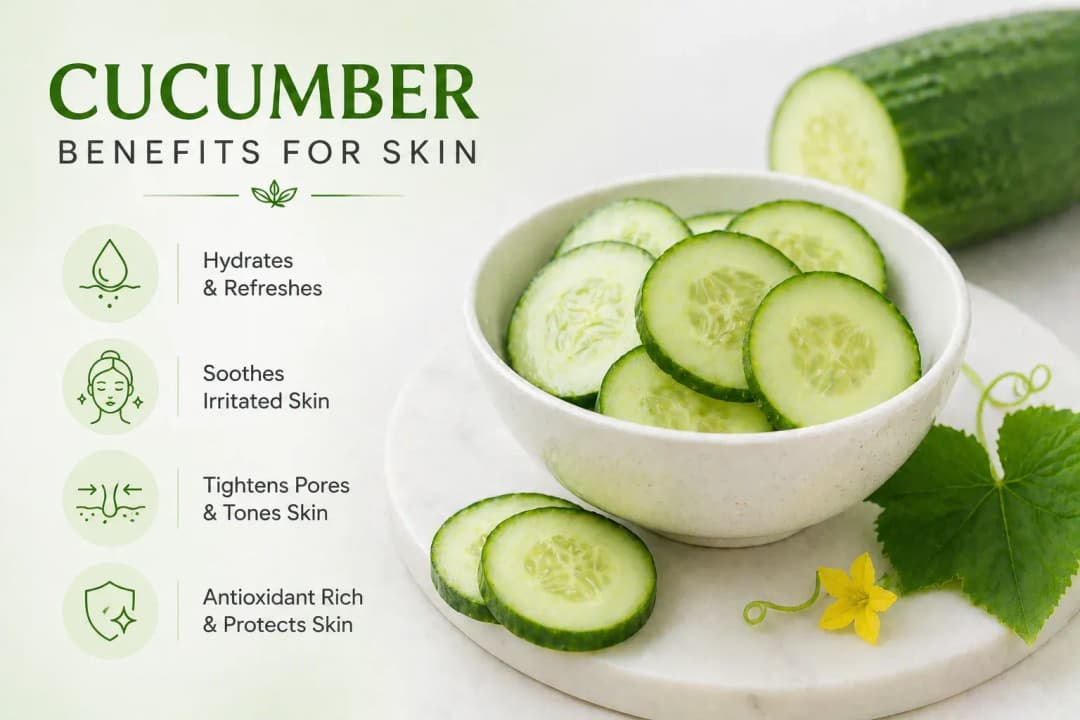
Cucumber provides multiple clinically supported benefits for the skin, whether applied topically or consumed as part of the daily diet.
Core Skin Benefits of Cucumber
- Deep hydration: Cucumber's 96% water content replenishes moisture in the outer skin layers. Studies suggest regular topical application can increase skin hydration by up to 39% over four weeks.
- Reduces puffiness and inflammation: Caffeic acid and ascorbic acid in cucumber reduce water retention under the skin. This is why cucumber slices placed on the eyes reduce under-eye puffiness within 10–15 minutes.
- Lightens dark spots and hyperpigmentation: Vitamin C and arbutin-like compounds in cucumber inhibit melanin production, gradually fading dark spots with consistent use over 4–8 weeks.
- Controls excess oil: Cucumber's astringent properties help tighten pores and reduce sebum production, making it useful for oily and combination skin types.
- Fights free radical damage: Antioxidants including beta-carotene and flavonoids in cucumber neutralise free radicals that accelerate skin ageing.
- Soothes sunburn and irritation: The cooling effect of cucumber, due to its high water content and anti-inflammatory compounds, provides immediate relief from sunburn, redness, and minor skin irritation.
- Supports collagen production: Silica and vitamin C in cucumber work together to maintain collagen integrity, which reduces the appearance of fine lines over 6–12 weeks of regular use.
- Promotes an even skin tone: Regular use of cucumber-based face masks or cucumber juice on skin helps reduce uneven tone and dullness within 3–4 weeks.
Short-Term vs. Long-Term Benefits at a Glance
| Benefit | Timeline | Method |
|---|---|---|
| Puffiness reduction | Within 10–15 minutes | Topical (slices) |
| Hydration boost | 1–2 weeks | Topical or dietary |
| Oil control | 1–3 weeks | Topical (toner or mask) |
| Dark spot fading | 4–8 weeks | Topical (juice or mask) |
| Collagen support | 6–12 weeks | Dietary + topical |
| Fine line reduction | 8–12 weeks | Consistent daily use |
How Cucumber Benefits the Skin: The Mechanism Explained
Cucumber improves skin health through four distinct biological pathways. Understanding these mechanisms helps clarify why cucumber works and what to expect at each stage.
- Hydration pathway: Cucumber's high water content penetrates the stratum corneum (outermost skin layer), temporarily increasing transepidermal water retention. This works because topically applied water-rich ingredients create a moisture gradient that pulls water into dehydrated cells.
- Antioxidant pathway: Vitamin C, beta-carotene, and flavonoids in cucumber donate electrons to unstable free radical molecules, neutralising them before they damage skin cell DNA and collagen fibres. This process slows visible signs of ageing.
- Anti-inflammatory pathway: Caffeic acid and cucurbitacins suppress the production of pro-inflammatory cytokines (specifically COX-2 enzymes). This reduces redness, swelling, and irritation because inflammation is a key driver of skin damage and pigmentation.
- Collagen synthesis pathway: Silica acts as a cofactor in the enzymatic reactions that produce hydroxyproline, an amino acid essential for collagen structure. Vitamin C reinforces this by activating prolyl hydroxylase, the enzyme responsible for collagen cross-linking.
Why It Works Simultaneously
Each pathway operates independently, which means cucumber delivers simultaneous benefits across hydration, protection, repair, and structure, making it one of the most multi-functional natural skin ingredients available.
Types of Cucumber Applications for Skin: Which Is Right for You?
Cucumber can be used on the skin in several forms. Each application method delivers different concentrations of active compounds and suits different skin concerns.
| Application Type | Best For | Active Delivery | Effort Level |
|---|---|---|---|
| Raw cucumber slices | Puffiness, redness, sunburn | Direct, immediate | Low |
| Cucumber juice (topical) | Dark spots, oily skin, toning | Concentrated | Low–Medium |
| Cucumber face mask (DIY) | Hydration, brightening, soothing | Moderate | Medium |
| Cucumber + aloe vera gel | Dry or sensitive skin | Enhanced hydration | Medium |
| Cucumber + honey mask | Acne-prone or dull skin | Antibacterial + brightening | Medium |
| Cucumber extract (products) | All concerns, consistent dosing | Standardised | Low |
| Cucumber water (dietary) | Internal hydration, antioxidant | Systemic | Low |
Which Type Should You Choose?
- Sensitive or irritated skin: Use raw slices or cucumber-aloe vera gel, lowest risk of irritation.
- Oily or acne-prone skin: Use cucumber juice as a toner, the astringent properties help control sebum.
- Dull or uneven skin tone: Use a cucumber + honey mask three times per week for combined brightening and antibacterial action.
- Dark circles or puffiness: Place chilled cucumber slices on the eyes for 10–15 minutes daily.
- Systemic skin health: Drink cucumber-infused water or consume cucumber daily for internal antioxidant support.
How to Use Cucumber on Your Face: Step-by-Step Guide
Prerequisites
- One fresh cucumber (chilled for maximum soothing effect)
- Clean face, free of makeup and sunscreen
- Optional: blender, strainer, bowl, cotton pads
Basic Cucumber Face Routine (Daily)
- Wash your face with a gentle, pH-balanced cleanser. Pat dry.
- Slice a chilled cucumber into 5mm rounds or blend half a cucumber into a smooth juice using a strainer.
- Apply to clean skin - use slices directly on target areas (eyes, cheeks, forehead) or apply juice with a cotton pad in upward circular motions.
- Leave on for 15–20 minutes. Do not rinse if using diluted juice as a toner; rinse with cool water if using a mask.
- Follow with your regular moisturiser to seal in hydration.
- Apply sunscreen (SPF 30 or higher) every morning after the routine.
Cucumber Face Mask (3x per Week)
- Blend ½ cucumber with 1 teaspoon raw honey and 1 teaspoon plain yoghurt.
- Apply an even layer to clean skin, avoiding the eye area.
- Leave on for 20 minutes.
- Rinse thoroughly with cool water.
- Follow with moisturiser.
Common Mistakes to Avoid
- Skipping the patch test: Apply cucumber juice to a small area on the inner wrist first if your skin is new to natural actives.
- Using warm cucumber: Chilled cucumber provides superior anti-inflammatory and puffiness-reducing effects.
- Applying on broken skin: Avoid cucumber applications on open wounds, active cystic acne, or severely inflamed areas.
- Expecting overnight results: Cucumber is effective but gradual. Consistent use over 3–8 weeks produces visible changes.
- Skipping SPF: Vitamin C in cucumber may increase photosensitivity slightly. Always follow with sunscreen during daytime use.
Cucumber for Skin vs. Common Alternatives: An Honest Comparison
| Ingredient | Primary Benefit | Active Compound | Best For | Irritation Risk |
|---|---|---|---|---|
| Cucumber | Hydration, anti-inflammation, brightening | Vitamin C, silica, caffeic acid | All skin types, daily use | Very Low |
| Aloe Vera | Soothing, wound healing | Acemannan, aloin | Sunburn, sensitive skin | Low |
| Potato | Dark spot reduction | Catecholase enzyme | Hyperpigmentation | Low–Medium |
| Turmeric | Brightening, antibacterial | Curcumin | Dull or acne-prone skin | Medium (staining risk) |
| Lemon juice | Brightening | Citric acid, vitamin C | Dark spots | High (pH disruption) |
Recommendation
Cucumber is the most versatile and lowest-risk option for daily use. Aloe vera is superior for wound healing and severe sensitivity. Lemon juice should be used with caution due to its high acidity (pH 2–3), which can disrupt the skin barrier and cause burns in some individuals.
Expert Tips for Getting the Most from Cucumber on Skin
- Use chilled cucumber - temperatures between 4°C and 8°C enhance the vasoconstrictive effect that reduces puffiness and redness.
- Combine with vitamin C serums - cucumber's naturally occurring vitamin C is relatively low in concentration. Pairing a topical cucumber mask with a stable vitamin C serum amplifies brightening results.
- Apply consistently - three to four topical applications per week, sustained over 8 weeks, delivers measurably better results than sporadic use.
- Consume cucumber daily - eating one medium cucumber per day contributes approximately 14% of the daily recommended vitamin C intake and supports skin hydration from within.
- Store cucumber juice correctly - fresh cucumber juice degrades rapidly. Use within 24 hours and store refrigerated to preserve vitamin C content.
- Layer under a moisturiser - applying cucumber juice before a hyaluronic acid or glycerin-based moisturiser improves moisture retention because the moisturiser seals in the water delivered by cucumber.
- Use it in combination with SPF - cucumber's antioxidants complement sunscreen by neutralising the free radicals that UV radiation generates after it passes through the SPF layer.
Advanced Strategy: Dual-Action Protocol
The most effective approach is a dual-action protocol: topical cucumber application in the morning (as a toner) combined with dietary cucumber intake daily. This dual method addresses both surface-level hydration and systemic antioxidant support simultaneously.
What the Research Says About Cucumber and Skin Health
- Hydration: A 2013 study published in the Journal of Aging Research & Clinical Practice found that cucumber extract significantly increased skin moisture levels compared to a placebo over a four-week period.
- Anti-inflammatory action: Research published in Fitoterapia identified cucurbitacins as potent inhibitors of COX-2 inflammatory enzymes, the same pathway targeted by non-steroidal anti-inflammatory drugs (NSAIDs).
- Antioxidant capacity: A study in Food Chemistry measured the antioxidant activity of cucumber extract and found it comparable to that of standard antioxidant compounds used in cosmetic formulations, including butylated hydroxytoluene (BHT).
- Silica and collagen: Research on dietary silica intake indicates that 10mg of daily silica supplementation can improve skin elasticity by up to 30% over 20 weeks. Cucumber contains approximately 7–10mg of silica per 100g serving.
Limitations of Current Research
Most studies use cucumber extract at standardised concentrations, which may differ from the variable concentrations in raw cucumber. Human clinical trials specific to topical raw cucumber are limited. Current evidence is supportive rather than conclusive for medical-grade claims.
Limitations of Cucumber for Skin: What to Know Before You Start
- Not a treatment for clinical skin conditions: Cucumber cannot treat eczema, psoriasis, rosacea, or severe cystic acne. These conditions require medical-grade interventions.
- Low active concentration: Raw cucumber contains vitamin C at approximately 2.8mg per 100g, significantly lower than a 10–20% topical vitamin C serum. Standalone cucumber use will not replace targeted actives.
- Results are gradual: Visible improvements in dark spots or fine lines typically require 4–12 weeks of consistent use.
- No UV protection: Cucumber provides antioxidant support but offers zero SPF protection. It does not replace sunscreen.
- Allergy risk: Cucumber belongs to the gourd family (Cucurbitaceae). Individuals with allergies to melon, courgette, or pumpkin may experience cross-reactive contact dermatitis.
- Perishability: Fresh cucumber juice degrades within 24 hours at room temperature, limiting practical use frequency.
When to Consider an Alternative
| Skin Concern | Consider Instead |
|---|---|
| Severe hyperpigmentation | Niacinamide, kojic acid, or azelaic acid |
| Active acne | Salicylic acid, benzoyl peroxide |
| Deep wrinkles | Retinol, peptides |
| UV damage repair | Medical-grade vitamin C serums + SPF |
| Eczema or psoriasis | Dermatologist-prescribed treatments |
Frequently Asked Questions About Cucumber Benefits for Skin
Q: Can you use cucumber on your face every day?
Yes, cucumber is gentle enough for daily use on most skin types. Its low irritant profile and mild pH make it suitable for everyday topical application. If you experience redness or irritation, reduce frequency to three to four times per week and perform a patch test first.
Q: Are cucumbers good for glowing skin?
Yes, cucumber can improve skin radiance over time. Its vitamin C content inhibits melanin production, while silica supports collagen turnover, both of which contribute to a brighter, more even complexion. Most users notice improved glow within 3–4 weeks of consistent use.
Q: How long does it take for cucumber to show results on the skin?
Results depend on the skin concern. Puffiness and redness reduce within 10–15 minutes of application. Hydration improvements are noticeable within one to two weeks. Dark spot fading and collagen-related improvements typically require 4–12 weeks of regular use.
Q: What happens if you eat cucumber every day?
Consuming one medium cucumber daily supports internal hydration, delivers antioxidants including vitamin C and beta-carotene, and provides silica for skin structure. Dietary cucumber consumption contributes to skin health from within, complementing topical application. There are no known adverse effects from daily cucumber consumption in typical food quantities.
Q: Can cucumber reduce dark circles?
Cucumber can reduce the appearance of dark circles, primarily through its anti-inflammatory and vasoconstrictive effects when applied cold. Vitamin K in cucumber may also help reduce discolouration over time. Results are modest and gradual, chilled cucumber slices applied daily for 3–4 weeks may produce visible improvement.
Q: How can cucumber help achieve glowing skin in 7 days?
Within seven days, cucumber can improve skin hydration, reduce puffiness, and calm redness, all of which contribute to a healthier-looking complexion. A measurable glow from brightening or dark spot reduction requires longer consistent use. Use cucumber as a daily toner and consume it regularly for the fastest visible hydration benefit within one week.
Q: Is cucumber suitable for oily and acne-prone skin?
Yes, cucumber is one of the better natural options for oily and acne-prone skin. Its astringent properties help tighten pores and reduce sebum production, while its anti-inflammatory compounds calm active redness without clogging pores. Cucumber juice used as a toner after cleansing is particularly effective for oily skin types.
Medical Disclaimer
This content is for educational and informational purposes only and does not constitute medical advice. Cucumber results vary by individual skin type, consistency of use, and baseline skin condition. Cucumber is not a substitute for medical-grade treatments for clinical skin conditions. For persistent skin concerns including hyperpigmentation, cystic acne, or inflammatory skin conditions, consult a qualified dermatologist. Kibo Skin Clinic offers professional skin assessments for all skin health concerns.