
Quick Answer:
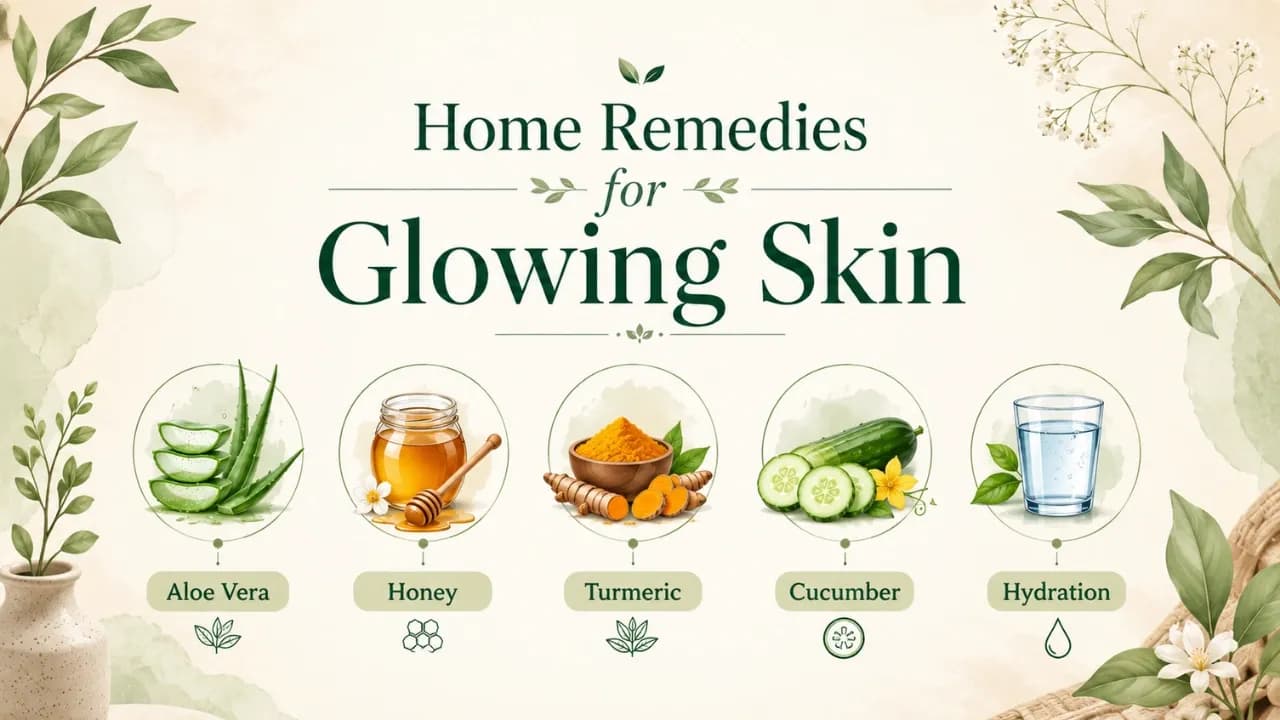
Home remedies for glowing skin are simple, ingredient-based treatments made from kitchen or pharmacy staples such as turmeric, honey, aloe vera, and besan that improve skin brightness, texture, and hydration over time. These remedies work by delivering active compounds (antioxidants, enzymes, vitamins) directly to the skin surface, reducing dullness, pigmentation, and oxidative damage without synthetic chemicals. Most people begin to notice visible improvement in skin tone and texture within 2–4 weeks of consistent use.
Over 60% of Indians report skin dullness as their primary cosmetic concern and the majority of effective brightening ingredients, including vitamin C, lactic acid, and curcumin, are naturally present in everyday foods. This guide covers exactly how to use them and what to realistically expect.
What Are Home Remedies for Glowing Skin?
Home remedies for glowing skin are topical treatments or lifestyle practices that use natural, minimally processed ingredients to improve skin luminosity from the outside in. Unlike prescription treatments, these remedies are accessible, low-cost, and suitable for daily or weekly use across most skin types.
Glowing skin is not a cosmetic effect alone it reflects adequate hydration, low inflammation, healthy cell turnover, and a functioning skin barrier. Home remedies for glowing skin target all four of these factors simultaneously.
Key Terms to Know
- Skin barrier: The outermost protective layer of skin that retains moisture and blocks irritants
- Cell turnover: The process by which dead skin cells are replaced by fresh ones (typically every 28–40 days)
- Hyperpigmentation: Dark patches caused by excess melanin production, often triggered by sun, acne, or hormonal changes
- Antioxidants: Compounds that neutralise free radicals and reduce oxidative skin damage
How Do Home Remedies for Glowing Skin Work? The Complete Breakdown
Home remedies for glowing skin work through four primary mechanisms: exfoliation, antioxidant delivery, moisture retention, and anti-inflammation. Each mechanism addresses a specific cause of dull or uneven skin.
The Core Mechanism Explained
Exfoliation: Ingredients like besan (gram flour), oatmeal, and rice flour physically remove dead skin cells. Lactic acid in raw milk and citric acid in lemon juice provide gentle chemical exfoliation. Removing dead cells exposes fresher, brighter skin underneath and improves the skin's ability to absorb subsequent ingredients.
Antioxidant delivery: Turmeric benefits for skin come from curcumin, a polyphenol with proven antioxidant and anti-inflammatory properties. Tomato benefits for skin come from vitamin C and lycopene, while citrus fruits also provide vitamin C that inhibits the enzyme tyrosinase, which controls melanin production. By reducing melanin synthesis, these ingredients can visibly brighten skin over 4–8 weeks of consistent application.
Moisture retention: Honey is a natural humectant , it draws water from the air into the skin. Aloe vera gel contains polysaccharides that form a moisture-retaining film on the skin surface. Hydrated skin reflects light more evenly, which directly contributes to a glowing appearance.
Anti-inflammation: Chronic low-grade skin inflammation causes redness, uneven texture, and post-inflammatory hyperpigmentation. Ingredients like aloe vera, cucumber for skin, and raw milk contain compounds (salicylates, tannins, enzymes) that reduce inflammation at the skin surface within 20–30 minutes of application.
Step-by-Step: How a Typical Home Remedy Works
- Cleanse the skin , Remove surface oil and dirt so active ingredients can penetrate
- Apply the remedy , Spread evenly on the face or target area in a thin, consistent layer
- Allow absorption , Leave on for 15–20 minutes so active compounds interact with skin cells
- Rinse with cool water , Prevents pore enlargement and removes residue
- Moisturise , Seal hydration and support the skin barrier post-treatment
- Repeat consistently , Most home remedies for glowing skin require 3–4 applications per week for 4–6 weeks to show measurable results
Common Misconceptions Cleared Up
- "More is better" , Leaving acidic ingredients (lemon, tomato) on too long can cause irritation or photosensitivity. Stick to 10–15 minutes for citrus-based remedies.
- "Results appear overnight" , Home remedies for glowing skin work gradually. Skin cell turnover takes approximately 28 days; full brightening results may require 6–8 weeks.
- "Any skin type can use any remedy" , Oily skin benefits from clay and besan; dry skin requires honey- or aloe-based masks. Matching remedy to skin type is essential.
Key Benefits of Home Remedies for Glowing Skin: What You Actually Gain
Home remedies for glowing skin offer both immediate and cumulative benefits, ranging from surface hydration to long-term pigmentation correction.
Short-Term Benefits (Visible Within 1–2 Weeks)
- Instant hydration boost , Honey and aloe vera masks can increase skin moisture levels measurably within a single application
- Reduced redness and puffiness , Cucumber and cold milk compresses reduce visible inflammation within 20–30 minutes
- Smoother skin texture , Besan or oatmeal exfoliation removes dead cell buildup, making skin feel softer immediately after use
- Temporary brightening , Vitamin C-rich ingredients (tomato, lemon diluted) can reduce surface dullness after 3–4 uses
Long-Term Benefits (Visible After 4–8 Weeks of Consistent Use)
- Reduced hyperpigmentation , Curcumin in turmeric and vitamin C in citrus can reduce dark spot intensity by inhibiting melanin synthesis over 6–8 weeks
- Improved skin elasticity , Ingredients rich in antioxidants slow collagen degradation; studies suggest regular antioxidant application may reduce fine lines over 3–6 months
- Balanced skin tone , Consistent exfoliation and anti-inflammatory ingredients help even out uneven skin tone across the face
- Stronger skin barrier , Regular moisturising remedies (aloe, honey) reinforce the skin's natural lipid barrier, reducing moisture loss
Who Benefits Most from Home Remedies for Glowing Skin?
- Dull, dehydrated skin due to sun exposure or seasonal changes
- Mild-to-moderate hyperpigmentation or post-acne marks
- Sensitive skin that reacts to synthetic fragrance or harsh chemicals
- Those seeking a low-cost, sustainable supplement to their existing skincare routine
Types of Home Remedies for Glowing Skin: Which Is Right for You?
Home remedies for glowing skin fall into five main categories based on their primary action. Choosing the right type depends on your skin type and primary concern.
| Type | Key Ingredients | Best For | How Often |
|---|---|---|---|
| Exfoliating masks | Besan, oatmeal, rice flour, multani mitti for acne | Oily, congested, or dull skin | 2–3x per week |
| Brightening masks | Turmeric, tomato, raw milk | Hyperpigmentation, uneven tone | 2–3x per week |
| Hydrating masks | Honey, aloe vera, glycerin | Dry or dehydrated skin | 3–4x per week |
| Soothing compresses | Cucumber, cold rose water, green tea | Sensitive, inflamed, or reactive skin | Daily |
| Oil-based treatments | Coconut oil, almond oil, rosehip | Dry skin, fine lines, overnight repair | 4–5x per week (overnight) |
Which Type Is Right for Your Situation?
- Oily skin: Start with besan-based exfoliating masks 2–3 times per week. Avoid heavy oils.
- Dry skin: Prioritise honey and aloe vera hydrating masks, supplemented with overnight almond or rosehip oil application.
- Sensitive skin: Stick to soothing compresses (cucumber, rose water). Avoid lemon, turmeric in high concentrations, and any rough physical exfoliants.
- Combination skin: Rotate between a mild exfoliant (oatmeal) and a hydrating treatment (aloe vera) on alternate days.
How to Get Started with Home Remedies for Glowing Skin: Step-by-Step Guide
Starting home remedies for glowing skin correctly increases effectiveness and reduces the risk of irritation or adverse reactions.
Prerequisites and What You Need
Before beginning, confirm:
- Your skin type (oily, dry, combination, sensitive)
- Any known ingredient allergies (nut oils, citrus, dairy)
- Willingness to patch test every new ingredient before full-face application
Basic starter kit:
- Raw honey
- Aloe vera gel (fresh or bottled, no alcohol)
- Besan (gram flour)
- Turmeric (culinary grade)
- Rose water
Step-by-Step: Initial Routine for Beginners
- Patch test first , Apply a small amount of the chosen ingredient to your inner wrist or behind the ear. Wait 24 hours. If no redness or itching occurs, proceed to full-face use.
- Cleanse your face , Use a gentle, sulphate-free cleanser before every mask application.
- Start with one remedy per session , Do not combine multiple new ingredients in the first two weeks. Isolate variables to identify what works for your skin.
- Apply evenly using clean fingertips or a brush , Avoid the eye area for all active ingredients.
- Set a timer , 10–20 minutes for most masks; 10 minutes only for citrus-based remedies.
- Rinse thoroughly with lukewarm or cool water , Residual acids or enzymes left on skin can cause irritation.
- Follow with a lightweight moisturiser , Home remedy masks can temporarily disrupt the skin barrier; moisturising immediately after supports recovery.
- Track your skin's response over 2–4 weeks , Photograph your skin in consistent lighting every 7 days to assess progress accurately.
Common Mistakes to Avoid
- Applying undiluted lemon juice directly , always dilute 1:3 with water or rose water
- Skipping moisturiser after exfoliating masks , this leads to increased dryness and irritation
- Using turmeric masks before going outdoors , turmeric can increase photosensitivity; use at night
- Over-exfoliating (more than 3x per week) , damages the skin barrier and causes increased sensitivity
- Not doing a patch test , even natural ingredients can trigger allergic reactions
Home Remedies for Glowing Skin: Real-World Use Cases
Use Case 1: Post-Acne Marks and Hyperpigmentation
Individuals with residual acne marks typically benefit from a turmeric and honey mask applied 3 nights per week. Curcumin inhibits melanin production while honey reduces post-inflammatory redness. In most cases, visible lightening of post-acne marks can occur within 6–8 weeks of consistent use.
Use Case 2: Sun-Damaged and Tanned Skin
A combination of raw milk (lactic acid) and tomato juice (vitamin C and lycopene) applied as a 15-minute mask can help remove tanning from face at home and reduce oxidative damage. Lactic acid in raw milk gently dissolves pigmented dead cells, revealing fresher skin below , typically within 3–4 weeks of regular use.
Use Case 3: Dull, Dehydrated Skin in Urban Environments
Pollution and air conditioning strip skin of moisture and create an oxidative burden. A weekly aloe vera and honey mask, combined with daily rose water toning, can restore surface hydration and skin luminosity within 2 weeks. Rose water also has a mild anti-inflammatory effect, reducing redness caused by pollution exposure.
Use Case 4: Mature Skin Seeking Natural Anti-Ageing Support
Almond oil and rosehip oil, applied overnight, deliver vitamin E and essential fatty acids that support collagen structure and reduce transepidermal water loss. These remedies are well-tolerated by mature, dry skin and may visibly reduce fine line depth over 8–12 weeks of consistent overnight application.
Use Case 5: Sensitive Skin Prone to Redness
Cucumber juice and cold green tea compresses reduce inflammation and constrict blood vessels at the skin surface, providing immediate visible calming. These soothing home remedies for glowing skin are safe for daily use and carry a very low risk of irritation.
Home Remedies for Glowing Skin vs. Commercial Skincare: An Honest Comparison
Home remedies for glowing skin and commercial skincare products both have a role in an effective skin routine. Understanding the difference helps you make the right choice for your concern, timeline, and budget.
| Factor | Home Remedies | OTC Commercial Products | Prescription Treatments |
|---|---|---|---|
| Cost | Very low (₹50–200/month) | Moderate (₹300–2,000/month) | High (₹1,000–5,000+/month) |
| Active concentration | Low to moderate | Standardised, often higher | High (clinical strength) |
| Speed of results | 4–8 weeks | 2–6 weeks | 1–4 weeks |
| Side effect risk | Low (if used correctly) | Low to moderate | Moderate to high |
| Customisability | High | Limited | Low |
| Suitable for | Mild concerns, maintenance | Mild to moderate concerns | Moderate to severe concerns |
| Accessibility | Immediately available | Available in stores | Requires dermatologist |
Pros and Cons of Home Remedies for Glowing Skin
Pros:
- Affordable and widely accessible
- Low risk of synthetic chemical sensitivity
- Can be combined with commercial products without contraindications (in most cases)
- Suitable for long-term, ongoing maintenance
Cons:
- Active ingredient concentration is variable and uncontrolled
- Results are slower than clinical-grade treatments
- Not suitable as the primary treatment when chemical peel treatment may be needed for severe hyperpigmentation, active acne, or dermatological conditions
- Shelf life is very short (most fresh preparations last 1–3 days)
Recommendation
Home remedies for glowing skin work best as a foundational skincare layer , supporting hydration, mild brightening, and barrier health , alongside targeted solutions for specific concerns. For moderate-to-severe skin concerns, consult a dermatologist.
What to Expect: Home Remedies for Glowing Skin Results Timeline
Results from home remedies for glowing skin depend on skin type, remedy consistency, lifestyle factors, and the severity of the skin concern being addressed.
| Timeframe | What Typically Happens |
|---|---|
| Days 1–7 | Immediate improvement in skin texture and hydration after each application; reduced puffiness and redness |
| Weeks 2–4 | Visible smoothing of skin texture; initial reduction in surface dullness; mild brightening in well-hydrated skin |
| Weeks 4–6 | Reduction in mild hyperpigmentation; more consistent skin tone; improved skin plumpness from hydrating remedies |
| Weeks 6–8 | Noticeable brightening and evening of skin tone for most users; reduction in post-acne mark intensity |
Medical Disclaimer : Information from Kibo Hair Clinics is for educational purposes only. It does not replace diagnosis, trichoscopy, blood test interpretation, prescription treatment, procedure advice, or side-effect counselling from a qualified dermatologist or hair restoration doctor.