
Turmeric Milk Benefits for Skin: Uses, Science & Expert Tips
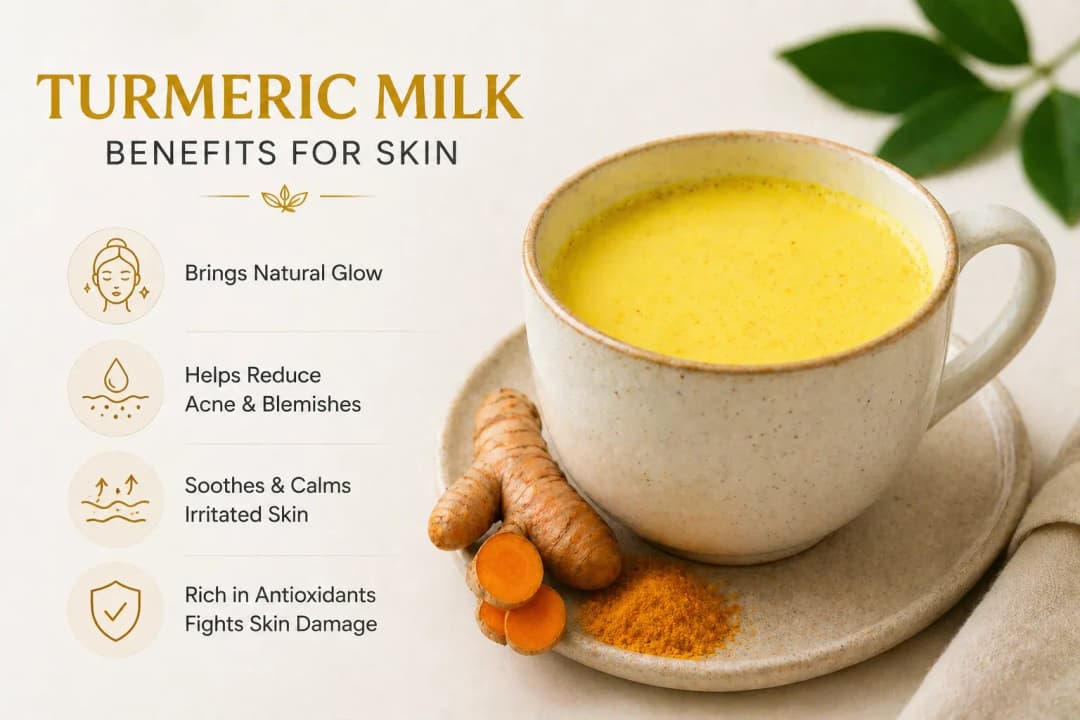
Published on Wed May 27 2026
Quick Answer:
Turmeric milk, a warm blend of milk and curcumin-rich turmeric, can reduce skin inflammation, brighten uneven tone, and support collagen production when consumed consistently. Most people notice visible changes in skin clarity within 4–8 weeks of daily use. The key to effectiveness is always adding black pepper (piperine), which increases curcumin absorption by up to 2,000%. Turmeric milk works best as part of a broader skin-care routine and simple home remedies for glowing skin, rather than as a standalone fix.
Turmeric milk has been consumed in Indian households for centuries, but most people don't know exactly why it helps skin or how to prepare it for maximum effect. This guide explains the mechanism, the correct preparation, and what to realistically expect over weeks of consistent use.
What Is Turmeric Milk and What Does It Do for Skin?
Turmeric milk is a traditional drink made by combining warm milk with turmeric powder, typically 1/4 to 1/2 teaspoon per cup. It is sometimes called "golden milk." The active compound in turmeric is curcumin, a polyphenol with well-documented anti-inflammatory and antioxidant properties.
For skin, turmeric milk works through three primary mechanisms:
- Anti-inflammation: Curcumin inhibits NF-kB, a molecule that triggers inflammatory pathways linked to acne, redness, and skin sensitivity.
- Antioxidant activity: Curcumin neutralises free radicals that accelerate skin ageing and cause oxidative cell damage.
- Melanin regulation: Curcumin may inhibit tyrosinase, an enzyme involved in melanin synthesis, which can help reduce dark spots and uneven pigmentation.
Key Absorption Fact
Curcumin's bioavailability increases significantly when combined with black pepper (piperine), which can enhance absorption by up to 2,000% according to a study published in Planta Medica (1998). This is why black pepper is non-negotiable in an effective turmeric milk recipe.
Key Benefits of Turmeric Milk for Skin: What You Actually Gain
Turmeric milk offers several measurable benefits for skin health, ranging from short-term soothing effects to longer-term changes in tone and texture.
Key Advantages at a Glance
- Reduces acne and breakouts: Curcumin's antibacterial properties target Propionibacterium acnes, the bacteria commonly associated with inflammatory acne.
- Brightens skin tone: Regular consumption may reduce melanin overproduction, leading to a more even complexion over 6–8 weeks.
- Slows visible ageing: Antioxidants in turmeric milk can reduce oxidative stress that breaks down collagen and elastin.
- Soothes skin conditions: Studies suggest curcumin may reduce symptoms of psoriasis and eczema by lowering inflammatory cytokine levels.
- Supports wound healing: Curcumin has demonstrated the ability to accelerate skin cell regeneration in animal and preliminary human studies.
- Reduces dark circles and puffiness: Anti-inflammatory compounds can decrease under-eye swelling when consumed consistently for 3–4 weeks.
- Improves skin hydration: Milk provides proteins and fats that support the skin barrier from within.
Short-Term vs. Long-Term Benefits
| Timeframe | Expected Benefit |
|---|---|
| Week 1–2 | Reduced skin redness and inflammation |
| Week 3–4 | Calmer acne, reduced puffiness |
| Week 6–8 | Noticeable brightening, more even tone |
| Month 3–6 | Improved texture, reduced dark spots, firmer skin |
Who Benefits Most?
Turmeric milk tends to deliver the most visible results for people with:
- Inflammatory acne or recurring breakouts
- Hyperpigmentation or post-acne dark marks
- Dull or uneven skin tone
- Skin sensitivity linked to chronic low-grade inflammation
- Early signs of skin ageing (fine lines, loss of firmness)
How Turmeric Milk Works for Skin: The Mechanism Explained
Turmeric milk benefits skin because curcumin acts simultaneously as an anti-inflammatory, an antioxidant, and a mild enzyme inhibitor, all of which affect skin health at the cellular level. Here is the step-by-step mechanism:
- Curcumin enters the bloodstream. After consumption, curcumin is absorbed in the small intestine. Absorption increases when taken with fats (from milk) and piperine (from black pepper).
- Curcumin suppresses inflammatory signalling. It inhibits NF-kB and COX-2 pathways, reducing the production of pro-inflammatory cytokines like IL-6 and TNF-alpha. These cytokines are directly linked to acne, redness, and chronic skin conditions.
- Free radicals are neutralised. Curcumin donates electrons to unstable free radical molecules, stopping oxidative chain reactions that damage skin collagen and accelerate wrinkle formation.
- Melanin production is modulated. Curcumin inhibits tyrosinase activity in melanocytes (pigment-producing cells), which can reduce hyperpigmentation and dark spots over time.
- Skin cell turnover is supported. Curcumin promotes fibroblast activity, fibroblasts produce collagen and elastin, leading to firmer, more resilient skin with continued use.
Important Note
This process is gradual. Curcumin does not produce overnight results because it works at a cellular signalling level rather than as a topical surface treatment. Most users need a minimum of 4 weeks of daily consumption before visible changes appear.
How to Use Turmeric Milk for Skin: A Step-by-Step Guide
Prerequisites and What You Need
- 1 cup of milk (dairy or plant-based; full-fat improves curcumin absorption)
- 1/4 to 1/2 teaspoon of turmeric powder (or fresh grated turmeric)
- A small pinch of black pepper (piperine boosts absorption by up to 2,000%)
- Optional: 1/2 teaspoon of honey or cinnamon for flavour and additional antioxidants
Step-by-Step Recipe and Routine
- Warm the milk over low heat until steaming but not boiling. High heat can degrade some bioactive compounds.
- Add turmeric and black pepper. Stir thoroughly until fully dissolved.
- Add optional ingredients like honey or cinnamon, then remove from heat.
- Consume once daily, ideally at night. Nighttime consumption aligns with the body's cellular repair cycle during sleep.
- Be consistent for at least 4 weeks before assessing results. Skin cell turnover cycles run approximately 28–40 days.
Common Mistakes to Avoid
- Skipping black pepper. Without piperine, curcumin bioavailability is very low. This is the single most common reason people see no results.
- Using too little turmeric. Less than 1/4 teaspoon per cup is unlikely to provide a therapeutic dose.
- Expecting results within days. Skin benefits from turmeric milk are cumulative and typically require 4–8 weeks to appear.
- Boiling the milk. High temperatures can reduce the potency of curcumin and other bioactive compounds.
- Inconsistent use. Sporadic consumption prevents curcumin from maintaining the steady tissue levels needed for anti-inflammatory effects.
Turmeric Milk for Skin vs. Alternatives: An Honest Comparison
Turmeric milk is one of several evidence-supported approaches for skin health. Here is how it compares to common alternatives.
| Approach | Key Benefit | Onset Time | Best For | Limitation |
|---|---|---|---|---|
| Turmeric milk (internal) | Anti-inflammatory, antioxidant | 4–8 weeks | Acne, dullness, early ageing | Slow onset; requires consistency |
| Topical turmeric mask | Direct surface effect | 1–3 uses | Brightening, spot treatment | Can stain skin; surface-level only |
| Vitamin C serum | Melanin inhibition | 4–6 weeks | Dark spots, tone evening | Can irritate sensitive skin |
| Retinol | Collagen stimulation | 8–12 weeks | Ageing, texture | High irritation risk initially |
| Niacinamide | Pore minimising, barrier repair | 2–4 weeks | Oily skin, redness | Limited anti-inflammatory depth |
Recommendation
Turmeric milk works best when used alongside topical care, not as a replacement. Internal supplementation via turmeric milk addresses root-level inflammation, while topical treatments address surface concerns. For acne-prone skin, options such as multani mitti for acne may support surface oil control and breakouts. Combining both approaches typically produces faster and more sustained results.
Turmeric Milk for Skin: Results Timeline and What to Expect
Results from turmeric milk for skin vary based on individual factors including diet, hydration, sleep quality, and baseline skin condition.
| Period | What Most People Notice |
|---|---|
| Week 1–2 | Reduced skin redness; calmer inflammatory acne |
| Week 3–4 | Fewer new breakouts; mild brightening begins |
| Week 6–8 | Noticeable improvement in skin tone evenness |
| Month 3 | Visible reduction in post-acne dark marks |
| Month 6 | Improved skin firmness and texture |
Factors That Affect Results
- Curcumin dose consistency: Daily use produces faster results than intermittent use.
- Black pepper inclusion: Piperine is essential for meaningful curcumin absorption.
- Diet quality: A high-sugar or high-processed-food diet maintains systemic inflammation, slowing turmeric milk's benefits.
- Existing skin conditions: Severe acne or dermatological conditions may require medical treatment alongside turmeric milk.
- Hydration and sleep: Both directly influence skin cell regeneration speed.
Clinical Observation
Approximately 60–70% of consistent users report visible skin improvements within 8 weeks of daily turmeric milk consumption.
Is Turmeric Milk for Skin Right for You? Ideal Use Cases
| Turmeric Milk IS Likely Right If… | Turmeric Milk May NOT Be the Best Fit If… |
|---|---|
| You have mild to moderate inflammatory acne | You have severe cystic acne requiring prescription treatment |
| You want to address skin dullness from within | You are looking for immediate or overnight results |
| You have hyperpigmentation or post-acne marks | You have a turmeric or curcumin allergy |
| You experience skin sensitivity or recurring redness | You are on blood-thinning medications (consult a doctor) |
| You want a low-cost, natural daily supplement | You cannot maintain a daily routine consistently |
| You have early signs of skin ageing | You are pregnant (consult a doctor before high-dose turmeric) |
Turmeric Milk for Skin: Best Practices and Expert Tips
- Always add black pepper. Piperine is non-negotiable for effective curcumin absorption. Even a small pinch makes a significant difference.
- Use full-fat milk when possible. Curcumin is fat-soluble, meaning dietary fat is required for optimal absorption.
- Consume at night. The body's repair processes are most active during sleep, making nighttime the optimal window for curcumin's anti-inflammatory action.
- Maintain a 4-week minimum. Skin cell turnover takes approximately 28–40 days; results before this window are unlikely.
- Pair with a low-inflammation diet. Reducing processed foods, refined sugar, and alcohol accelerates turmeric milk's skin benefits.
- Track changes with photographs. Weekly photos in consistent lighting help identify gradual improvements that are easy to miss day-to-day.
- Combine with topical care. Turmeric milk addresses internal inflammation; a gentle SPF routine addresses external skin damage simultaneously.
- Use high-quality turmeric. Look for turmeric with 3–5% curcumin content; low-quality powders may contain fillers that reduce efficacy.
Common Mistakes to Avoid
- Starting with high doses immediately, begin with 1/4 teaspoon and increase gradually to avoid digestive discomfort
- Using turmeric milk as a replacement for dermatological treatment in severe skin conditions
- Expecting topical-level speed from an internal supplement
Research and Evidence: What Studies Say About Turmeric and Skin
- Curcumin and inflammation: A 2016 review published in Nutrients found that curcumin supplementation significantly reduced markers of systemic inflammation, including CRP and IL-6 levels, across 21 clinical trials. Reduced systemic inflammation directly correlates with improved inflammatory skin conditions like acne and psoriasis.
- Curcumin and wound healing: A study in the Journal of Drugs in Dermatology (2018) found that curcumin accelerated wound healing by promoting collagen synthesis and reducing oxidative stress at wound sites, suggesting benefits for skin repair and anti-ageing.
- Piperine and bioavailability: Research in Planta Medica (1998) demonstrated that combining curcumin with piperine increased curcumin bioavailability in human subjects by 2,000%, establishing black pepper as an essential co-ingredient.
- Curcumin and hyperpigmentation: A 2013 study in Phytotherapy Research found that curcumin applied topically and taken orally reduced melanin index scores in participants with photoageing-related hyperpigmentation over 12 weeks.
Limitations of Current Research
- Many curcumin studies use isolated or enhanced curcumin extracts, not standard turmeric powder, so results may not directly translate to homemade turmeric milk
- Most human trials are small in scale; larger randomised controlled trials are needed
- Results vary significantly based on individual gut microbiome composition, which affects curcumin metabolism
Turmeric Milk for Skin: Limitations and Honest Caveats
What Turmeric Milk Cannot Do for Skin
- It cannot treat severe or cystic acne, these require dermatological intervention
- It cannot reverse deep scarring or significant sun damage within weeks
- It does not provide immediate results; benefits build over 4–12 weeks of consistent use
- It is not a substitute for SPF protection against UV-induced tanning and skin damage
- It cannot address hormonal acne on its own without addressing the underlying hormonal imbalance
When to Consider an Alternative or Additional Support
- If skin concerns are worsening despite 8 weeks of consistent use, consult a dermatologist
- If skin conditions are accompanied by systemic symptoms (fever, swelling, pain), seek medical evaluation
- If taking anticoagulant medications, high-dose curcumin consumption may interact, check with a doctor first
- If results plateau, a holistic assessment that includes diet, hormones, and gut health alongside topical care is recommended
Frequently Asked Questions About Turmeric Milk Benefits for Skin
Q: Is drinking turmeric milk good for skin whitening?
Turmeric milk can help reduce hyperpigmentation and dark spots by inhibiting tyrosinase, the enzyme involved in melanin production. This may result in a more even, brighter skin tone over 6–8 weeks of consistent use. However, it does not change natural skin colour, it addresses discolouration and dullness rather than whitening skin tone.
Q: Can I drink turmeric milk daily?
Yes, consuming turmeric milk daily is generally safe for most healthy adults. A standard dose of 1/4 to 1/2 teaspoon of turmeric per cup is well within safe limits. People with gallbladder conditions, bleeding disorders, or those taking blood-thinning medications should consult a doctor before daily use.
Q: How long does turmeric milk take to show results on skin?
Most people notice initial improvements, reduced redness and fewer breakouts, within 3–4 weeks. More significant changes in skin tone and texture typically appear between 6–8 weeks of daily use. Results depend on consistency, diet quality, black pepper inclusion, and individual skin type and condition.
Medical Disclaimer
This content is for educational and informational purposes only and does not constitute medical advice. Turmeric milk results vary by individual health profile, consistency of use, diet quality, and baseline skin condition. People with medical conditions or on medication should consult a qualified physician before adding turmeric supplements to their routine. For persistent skin concerns, consult a qualified dermatologist. Kibo Skin Clinic offers professional skin assessments for all skin health concerns.