Everything a patient asks before and after a transplant: how FUE and FUT differ, what grafts actually cost in Indian cities, how long recovery takes, and how to judge whether a clinic is being straight with you.

The donor area is the quiet hero of a hair transplant. It is where healthy follicles are taken to build natural coverage in thinning regions. This warm, practical guide explains what the donor area is, why it matters so much, and how careful planning protects both short term comfort and long term flexibility. You will find simple explanations, city wise notes for Mumbai, checklists you can use in your consultation, two clear tables, and calm answers to common questions.
Published: August 12, 2026 – 5 min read

Great hair restoration is not a race to the highest graft number. It is a calm craft that blends natural hairline design, suitable density, and realistic long term planning. This guide explains why design decisions create the look you love far more than a single count, how to assess photos with a careful eye, and what to ask during your consultation. You will find practical checklists, city aware tips for Mumbai, clear tables, and answers to common questions. Timelines and basic care notes are supported by respected patient pages from national health agencies and leading dermatology associations.
Published: August 12, 2026 – 5 min read

Hair loss does not follow one script, and neither should your plan. This friendly guide explains how hair transplant choices differ when you are in an early stage compared with an advanced stage. You will learn the core principles of candidacy, what changes in design and donor strategy, what timelines to expect, and how to plan life in Mumbai with simple steps. References from trusted national health agencies and leading dermatology associations are listed at the end for peace of mind.
Published: August 12, 2026 – 5 min read

Many people compare graft counts without noticing that different scalp zones behave very differently. This friendly guide explains why crown restorations are more complex than hairline restorations, what this means for design and donor planning, how expectations should change across the year, and how to plan your week in Mumbai for comfort and confidence. You will also find checklists, two practical tables, and answers to common questions. Timelines and basic care notes are supported by trusted patient education pages from national health agencies and major dermatology associations, which are listed in the references at the end.
Published: August 12, 2026 – 5 min read

Newly transplanted hair often feels different in the early weeks. You may notice tightness, tingling, or light itch as the scalp settles, then a calm phase before new growth builds. This simple guide explains why these sensations appear, how long they commonly last, and what everyday habits help. You will find clear checklists, city aware notes for Mumbai, two practical tables, and friendly answers to common questions. Authoritative references are listed at the end for peace of mind.
Published: August 12, 2026 – 5 min read

Shock loss sounds worrying, yet for many people it is a temporary and expected chapter of the hair transplant journey. This guide explains what shock loss is in simple words, why it can happen in both the recipient and donor areas, and how it differs from the normal shedding cycle that follows a procedure. You will learn honest timelines, practical comfort tips, Mumbai aware planning, clear tables, and straightforward answers to common questions. Authoritative patient pages from respected health agencies and dermatology associations are listed at the end for peace of mind.
Published: August 12, 2026 – 5 min read

Hair loss, especially when it becomes visible, can affect more than just appearance. For many, it gradually impacts confidence, daily choices, and even the way they interact with the world. When topical solutions or medications stop making a difference, one question becomes more relevant than ever: what’s the next step?
Published: August 12, 2026 – 5 min read

Hair transplants are a globally accepted treatment for hair loss. It’s an outpatient procedure, meaning you don’t have to stay overnight in a clinic. But how safe is a hair transplant? A lot of it comes down to the surgeon’s skills, the level of sterility in the clinic, and how well you care for your scalp afterwards. However, as with any type of surgery, there's always a small risk of bleeding, infection, or an allergic reaction to the anesthetic.
Published: August 12, 2026 – 5 min read
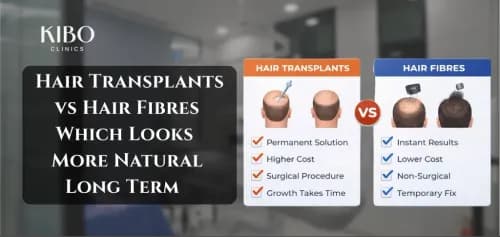
This article compares hair transplants and cosmetic hair fibres from a medical and long-term perspective. It explains how each option works, what results realistically look like over time, and how factors like donor hair quality, growth cycles, maintenance effort, and overall cost influence outcomes. The guide is based on clinical viewpoints from the medical leadership team at Kibo Clinics, where all procedures and consultations are conducted only by certified dermatologists and transplant surgeons.
Published: August 12, 2026 – 5 min read
YOUR HAIR JOURNEY STARTS HERE
