

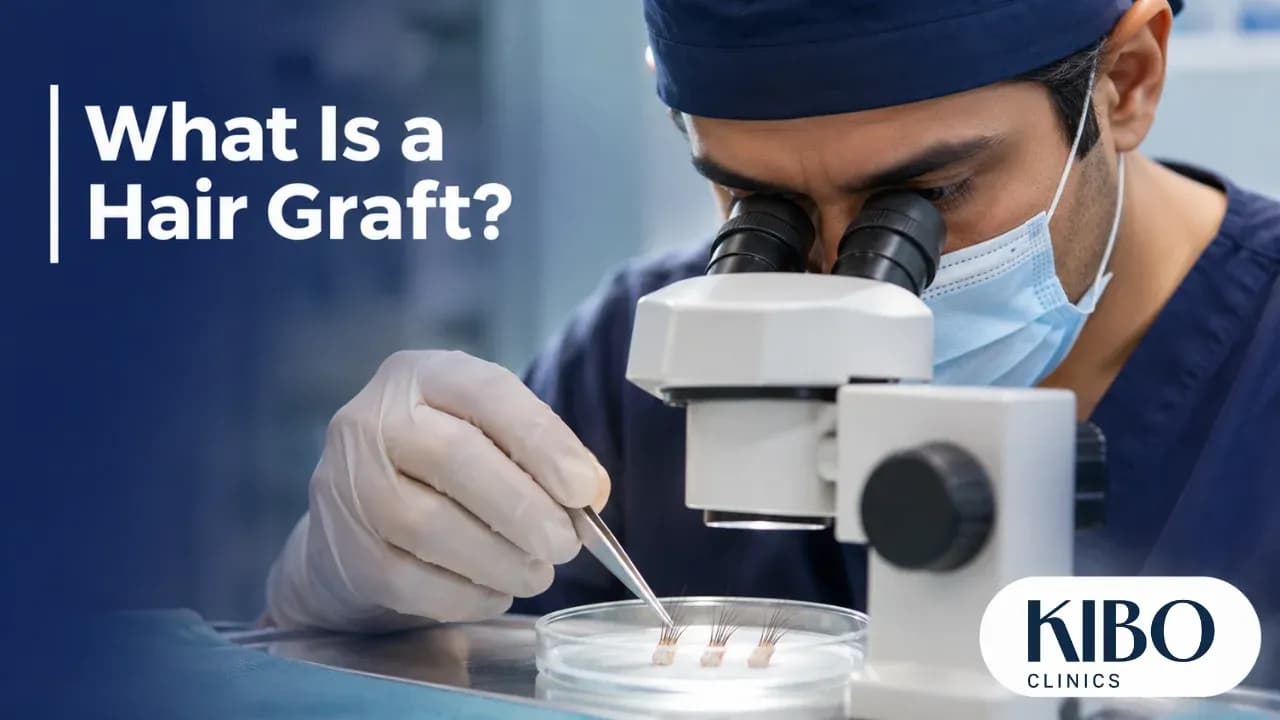
What Is a Hair Graft?
A hair graft is a small piece of tissue containing a natural group of hair follicles, along with surrounding supporting tissue. During a hair transplant, a surgeon removes these grafts from a donor area, usually the back or sides of your scalp, and places them in areas affected by hair thinning or baldness.
A graft containing two hair follicles can potentially produce two hair shafts. That is why a transplant involving 2,000 grafts doesn't necessarily mean you will receive exactly 2,000 hairs.
What Is a Follicular Unit Graft?
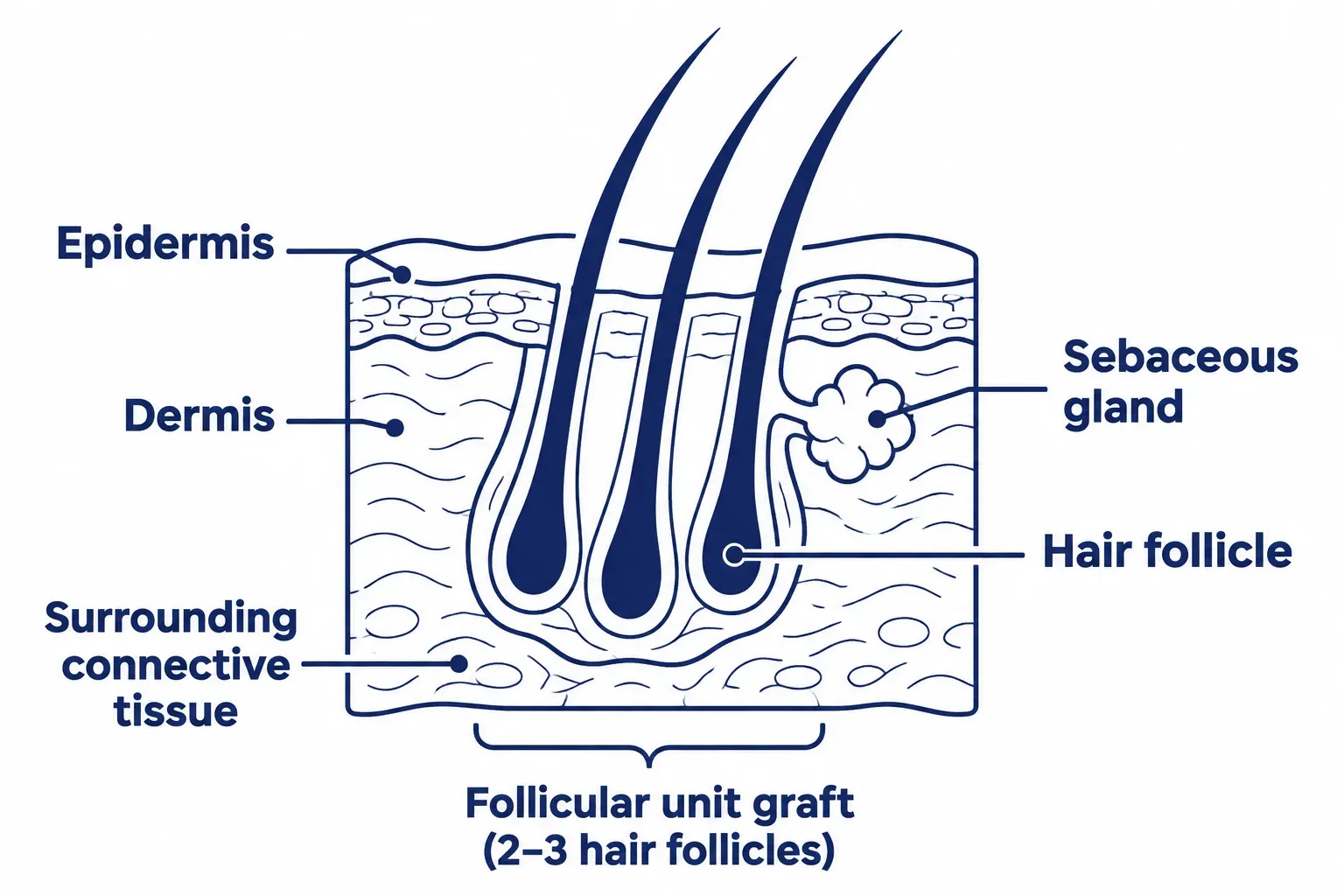
A follicular unit graft contains a naturally occurring group of hair follicles. In your scalp, these follicles grow in small clusters surrounded by supporting structures, including connective tissue and sebaceous glands.
Surgeons aim to preserve these natural groupings during extraction and transplantation. This helps maintain a natural-looking hair distribution. The actual number of hair follicles in a graft varies between individuals and across different areas of the scalp.
Your surgeon assesses the available follicular units before deciding how many grafts can be safely harvested and where to place them.
Hair Graft vs Hair Follicle: What Is the Difference?
Hair grafts, hair follicles, and follicular units are related terms, but they don't mean the same thing. The table helps you understand the difference and make sense of your transplant estimate.
| Term | Meaning |
|---|---|
| Hair follicle | A small skin structure from which an individual hair grows. |
| Follicular unit | A naturally occurring group of one or more hair follicles that grow together. |
| Hair graft | A piece of tissue containing a follicular unit or its preserved components, prepared for transplantation. |
Think of a follicular unit as a natural cluster and a graft as the tissue unit that the surgeon extracts and transplants. A single graft can contain multiple hair follicles. Therefore, if your treatment plan mentions 2,000 grafts, the actual number of transplanted hairs may be higher.
Note: This distinction is important when you compare quotes from different clinics. Always check whether the quoted number refers to grafts or individual hairs.
What Are the Different Types of Hair Grafts?
Hair grafts are commonly described according to the number of hair follicles they contain. Each type has a different role in creating natural-looking coverage.
| Type of graft | Number of hair follicles | Common placement |
|---|---|---|
| Single-hair graft | 1 | Front hairline and areas requiring a softer appearance |
| Two-hair graft | 2 | Behind the frontal hairline for added density |
| Three-hair graft | 3 | Central scalp and areas requiring greater coverage |
| Four-hair or multiple-hair graft | 4 or more | Selected areas where greater density is appropriate |
Single-hair grafts can help create a softer, more natural-looking frontal hairline, while multi-hair grafts can provide greater coverage behind it.
Your surgeon decides based on your existing hair pattern, donor supply, scalp characteristics, and the result you want. Your surgeon may use a combination of these grafts rather than placing the same type throughout your scalp.
How Many Hairs Are in Different Hair Graft Counts?
While comparing transplant packages, you may wonder how many individual hairs 1,000, 2,000 or 4,000 grafts represent. The calculation depends on the average number of hair follicles in each graft. You can assume an average of two hairs per graft.
| Norwood Stage | Typical Hair Loss Pattern | Estimated Graft Range | Illustrative Hair Count |
|---|---|---|---|
| Stage I | No significant hair loss or minimal recession | Usually not required | Not applicable |
| Stage II | Mild temple recession | 500-1,000 | 1,000-2,000 |
| Stage III | Noticeable temple or frontal hairline recession | 1,000-2,000 | 2,000-4,000 |
| Stage III Vertex | Frontal recession with early crown thinning | 1,500-2,500 | 3,000-5,000 |
| Stage IV | Frontal and crown thinning, with a band of hair between them | 2,000-3,000 | 4,000-6,000 |
| Stage V | Larger frontal and crown areas with a narrower separating band | 3,000-4,000 | 6,000-8,000 |
| Stage VI | Frontal and crown areas have merged | 4,000-5,000+ | 8,000-10,000+ |
| Stage VII | Extensive hair loss, leaving a narrow horseshoe-shaped donor area | Highly variable | Depends on donor supply |
Note: These figures are examples, not guaranteed counts. If your grafts contain a higher proportion of single-hair units, the total hair count will be lower. A greater proportion of multi-hair units can increase it.
Does a Higher Graft Count Mean Better Hair Density?
Not necessarily. Your visible density also depends on hair thickness, colour contrast between your hair and scalp, curl pattern, graft distribution and the amount of existing hair.
If you and another person receive 2,000 grafts, you may have different visual results. You may have thicker hair and require fewer grafts for coverage, while another may have finer hair or a larger recipient area. This is why your surgeon assesses your scalp before recommending a graft count based on numbers alone.
How Many Grafts Are Needed for a Hair Transplant?
The number of grafts you need depends on the extent of thinning, the area you want to cover, and the density you wish to achieve.
No single graft count suits everyone. If you have early frontal thinning, you may need far fewer grafts than someone with advanced hair loss affecting the front, middle, and crown.
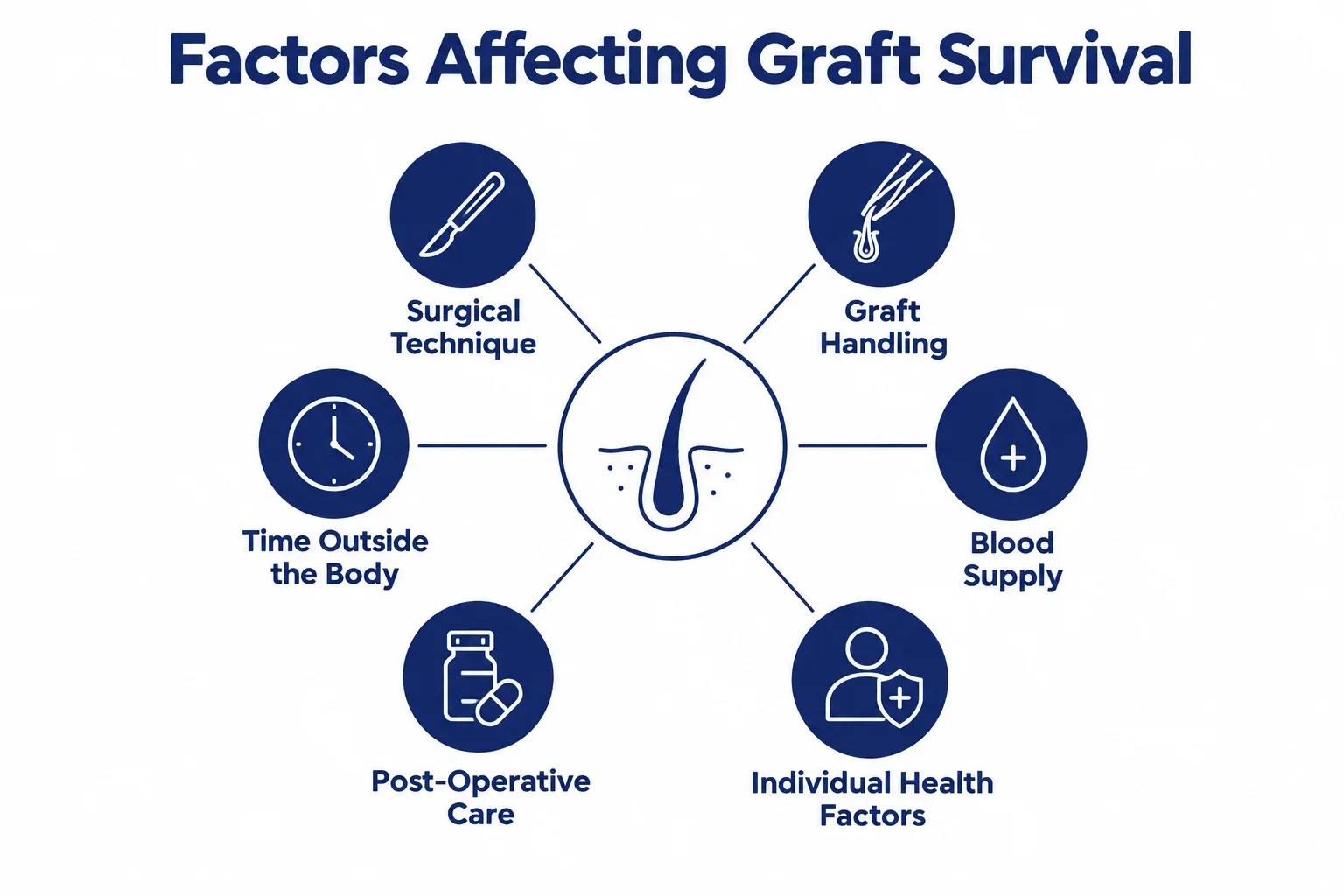
Factors That Determine How Many Grafts You Need
Your surgeon considers several factors before recommending a graft count:
- Extent of hair thinning: A larger bald or thinning area generally requires more grafts for coverage.
- Donor hair density: Your donor area must have enough healthy, suitable follicular units for extraction.
- Hair thickness: Coarser hair can provide greater visual coverage than finer hair.
- Hair characteristics: Curl pattern and the contrast between your hair and scalp can influence how dense your hair appears.
- Desired coverage: A plan focused on restoring the hairline may require fewer grafts than one covering several scalp regions.
- Future hair loss: Your surgeon should consider the possibility of continued thinning when planning graft distribution.
How Many Grafts Do You Need for a Hairline Transplant?
Your frontal hairline frames your face, so its design plays an important role in your transplant's overall appearance.
The number of grafts needed depends on how far your hairline has receded, whether you need temple restoration, and how much density you want.
| Restoration Area | What Affects Graft Requirements? | Graft Placement |
|---|---|---|
| Frontal hairline | Extent of recession, hairline width, and existing density | Depends on the desired hairline shape and coverage |
| Temples | Extent of temple recession and natural hair growth direction | Often uses finer, single-hair grafts for a natural transition |
How Does Hairline Design Affect Graft Requirements?
A lower or straighter hairline may require more grafts because it increases the recipient area. A conservative, age-appropriate hairline may preserve more donor hair for potential future hair loss. Your surgeon considers your facial proportions, age, existing hair pattern, and likelihood of further thinning before finalising the design.
How Are Hair Grafts Extracted and Transplanted?
Hair transplantation involves removing healthy follicular units from a donor area and implanting them into areas with reduced hair coverage. The exact process varies by surgical technique.
Hair Graft Extraction
- Follicular Unit Extraction (FUE): The surgeon uses a small punch instrument to remove individual follicular units from the donor area.
- Follicular Unit Transplantation (FUT): The surgeon removes a strip of scalp from the donor area and, under magnification, divides it into individual follicular unit grafts.
Both techniques aim to preserve healthy follicles for transplantation, but they differ in extraction methods and donor-area scarring.
Graft Preparation and Storage
After extraction, grafts are examined, sorted by follicle count and kept in appropriate storage conditions until implantation. Careful handling and minimal time outside the body help protect graft viability.
Graft Implantation
Your surgeon creates recipient sites or uses an implantation instrument to place grafts at carefully selected angles, depths, and directions that follow your natural hair growth pattern.
What Determines Hair Graft Survival After a Transplant?
Not every transplanted graft is guaranteed to survive. However, careful surgical planning, extraction and implantation can help protect the follicles and support successful growth.
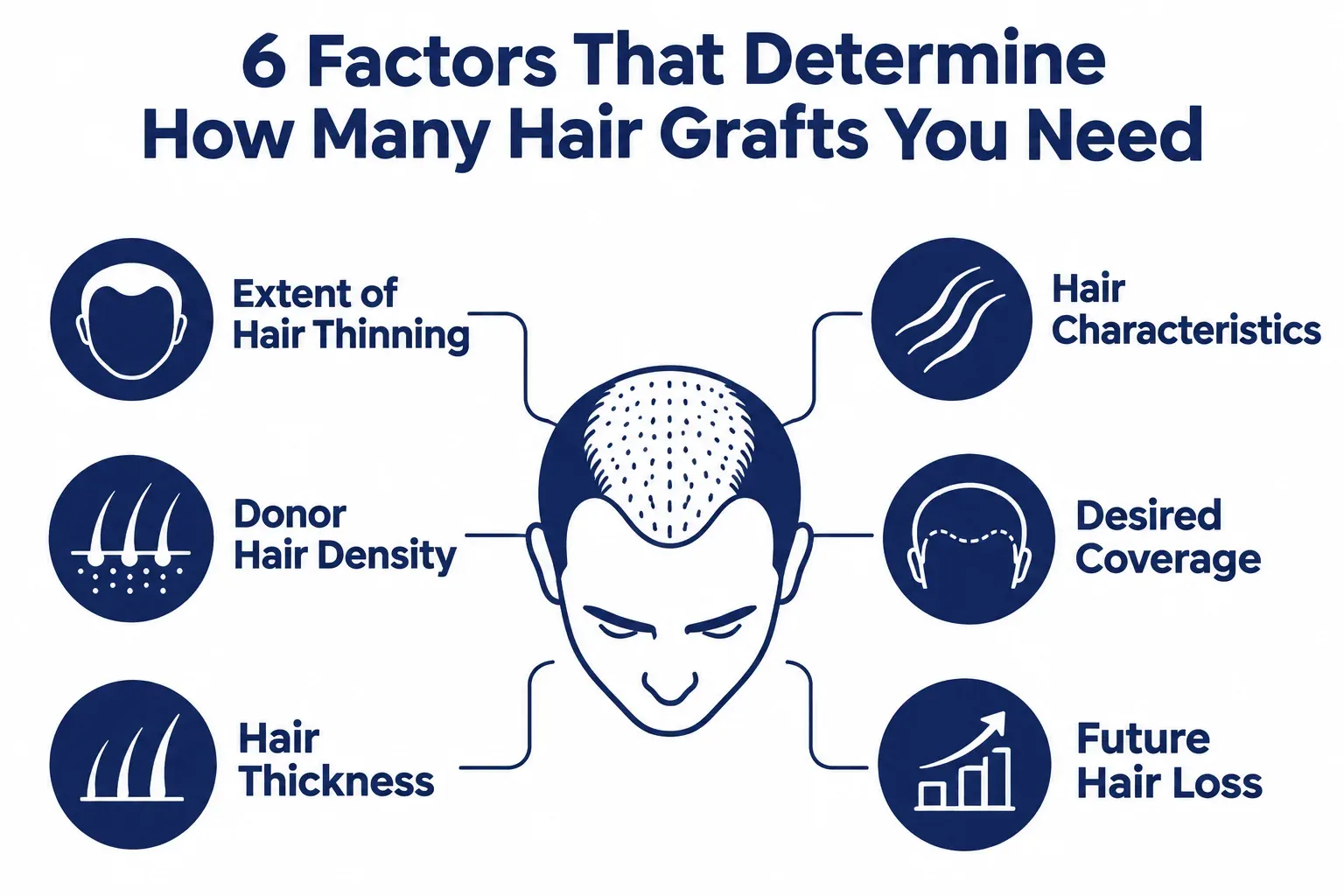
Factors Affecting Graft Survival
Several factors influence how well transplanted grafts survive:
- Surgical technique: Careful extraction and implantation help minimise follicle damage.
- Graft handling: Avoiding crushing, excessive handling and dehydration helps preserve graft viability.
- Time outside the body: Appropriate storage and minimal delay before implantation help protect grafts.
- Blood supply: Adequate blood circulation in the recipient area supports follicle survival.
- Post-operative care: Following your surgeon's washing and activity instructions protects the healing scalp.
- Individual health factors: Your medical history, scalp condition, and healing response can affect recovery.
What Is the Expected Hair Graft Survival Rate?
Survival rates vary with surgical expertise, graft quality, assessment methods, and individual healing factors. Ask your surgeon how the clinic measures survival and whether documented outcomes support its claims.
A board-certified surgeon explains the expected benefits and limitations of a reliable treatment plan and does not promise that every graft will grow.
What Happens to Hair Grafts After a Hair Transplant?
Your transplanted grafts go through several healing and growth stages. Understanding this timeline can help you avoid unnecessary worry when your scalp changes during recovery.
| Recovery Stage | What You Should Know |
|---|---|
| First few days | Mild redness, swelling, tenderness, and small crusts around the grafts. |
| Scabbing and healing | Small scabs form around implanted grafts and gradually fall off. Avoid picking them. |
| Hair shedding | Transplanted hair shafts may shed within a few weeks, while follicles usually remain intact. |
| Early hair growth | Fine, new hair often becomes noticeable around three to four months. |
| Visible hair growth | Hair gradually thickens, with noticeable changes typically occurring between six and twelve months. |
| Hair maturation | Hair continues to mature. Crown growth may take longer to show final results. |
Your surgeon can give you a more realistic timeline based on your procedure, graft distribution, and healing progress.
How to Take Care of Hair Grafts After a Hair Transplant?
Your aftercare routine plays an important role in protecting your scalp while it heals. Your clinic or surgeon gives you specific instructions based on the technique used for your recovery.
| Recovery Aspect | Precaution |
|---|---|
| Scalp washing | Use gentle shampoo; avoid rubbing or scratching. |
| Sleeping position | Sleep on your back with your head elevated. |
| Physical activities | Avoid exercise, heavy lifting, and swimming. |
| Regular hair care | Resume styling, colouring, and heat treatments only after healing. |
Kibo Clinics Perspective on Hair Grafts
At Kibo Clinics, hair transplant planning begins with an assessment of your hair loss pattern, donor area, and long-term hair restoration goals.
The number of grafts is only one part of the treatment plan. The surgeons also consider follicular unit distribution, hairline design, donor capacity, and the possibility of future hair thinning.
We believe a personalised assessment helps determine how many grafts you may need and how to distribute them to achieve natural-looking coverage while preserving your donor supply.
References
- Parsley WM, Perez-Meza D. Review of factors affecting the growth and survival of follicular grafts. J Cutan Aesthet Surg. 2010;3(2):69-75. doi:10.4103/0974-2077.69014
- Khanna M. Hair transplantation surgery. Indian J Plast Surg. 2008 Oct;41(Suppl):S56-63. PMID: 20174544; PMCID: PMC2825128.
- Venkataram A, Mysore V. Logic of Hair Transplantation. J Cutan Aesthet Surg. 2018 Oct-Dec;11(4):169-172. doi: 10.4103/JCAS.JCAS_183_18. PMID: 30886469; PMCID: PMC6371726.
- Asfiya A, Pinto M, Shenoy MM, Hegde SP, Rajeendran A, Shafi F. Trichoscopic Analysis of Healthy Indian Males for Standardisation of the Measurable Parameters: An Observational, Cross-sectional Study. Indian Dermatol Online J. 2024 Dec 11;16(1):81-86. doi: 10.4103/idoj.idoj_201_24. PMID: 39850670; PMCID: PMC11753574.
- Goldin J, Zito PM, Raggio BS. Hair Transplantation. 2025 Aug 2. In: StatPearls [Internet]. Treasure Island (FL): StatPearls Publishing; 2025 Jan-. PMID: 31613520.
- Chouhan K, Kota RS, Kumar A, Gupta J. Assessment of Safe Donor Zone of Scalp and Beard for Follicular Unit Extraction in Indian Men: A Study of 580 Cases. J Cutan Aesthet Surg. 2019 Jan-Mar;12(1):31-35. doi: 10.4103/JCAS.JCAS_142_18. PMID: 31057266; PMCID: PMC6484564.
- Jimenez F, Alam M, Vogel JE, Avram M. Hair transplantation: Basic overview. J Am Acad Dermatol. 2021 Oct;85(4):803-814. doi: 10.1016/j.jaad.2021.03.124. Epub 2021 Apr 24. PMID: 33905785.
- Jimenez F, Vogel JE, Avram M. CME article Part II. Hair transplantation: Surgical technique. J Am Acad Dermatol. 2021 Oct;85(4):818-829. doi: 10.1016/j.jaad.2021.04.063. Epub 2021 Apr 27. PMID: 33915242.
- Pathania V, Sood A, Beniwal N, Baveja S, Shankar P, Patrikar S. Randomised controlled trial to study the efficacy and safety of platelet-rich plasma as intraoperative holding solution in hair restoration surgery: A pilot study. Med J Armed Forces India. 2023 Jan;79(1):46-53. doi: 10.1016/j.mjafi.2021.04.015. Epub 2021 Jul 30. PMID: 36605335; PMCID: PMC9807676.
- Wang F, Chen Y, Yang C, Li C, Zhang H, He J, Li M, Lei T, Liu H, Liu B, Zhang W. Using the follicular unit extraction technique in treatment of male androgenetic alopecia. BMC Surg. 2024 Nov 15;24(1):358. doi: 10.1186/s12893-024-02655-1. PMID: 39543552; PMCID: PMC11566358.
- Kassimir JJ. Use of topical minoxidil as a possible adjunct to hair transplant surgery. A pilot study. J Am Acad Dermatol. 1987 Mar;16(3 Pt 2):685-7. doi: 10.1016/s0190-9622(87)70088-7. PMID: 3558912.
- Bernstein RM, Rassman WR. Graft anchoring in hair transplantation. Dermatol Surg. 2006 Feb;32(2):198-204. doi: 10.1111/j.1524-4725.2006.32033.x. PMID: 16442039.
- Vano-Galvan S, Bisanga CN, Bouhanna P, Farjo B, Gambino V, Meyer-Gonzalez T, Silyuk T; Hair Transplant Surgery Expert Group. An international expert consensus statement focusing on pre and post hair transplantation care. J Dermatolog Treat. 2023 Dec;34(1):2232065. doi: 10.1080/09546634.2023.2232065. PMID: 37477225.
Hair Transplant Services
Surgical
- FUE Hair Transplant
- Sapphire FUE Hair Transplant
- Direct Hair Transplant (DHT)
- Body Hair Transplant
- Corrective Hair Transplant
- Hairline Correction
- Unshaven Hair Transplant
- Realtime FUE Hair Transplant
- Bio FUE Hair Transplant
Non Surgical
- PRP Therapy
- GFC Therapy
- Exosomes Therapy
- Low Level Laser Therapy (LLLT)
- IV Hair Boosters
- Mesotherapy
- Microneedling
- PDO Threads
Must Read
Is one hair graft equal to one hair?
Is 1,500 grafts enough for a hair transplant?
What do 2,000 grafts of hair look like?
Are 2,000 grafts enough to cover the front of the head?
Can one hair graft contain multiple follicles?
Do all transplanted hair grafts survive?
Can extracted hair grafts be reused?
Can I touch my grafts after seven days?
How much will 3,000 grafts cost?
How much do 10,000 hair grafts cost in India?
Medical Disclaimer : Information from Kibo Hair Clinics is for educational purposes only. It does not replace diagnosis, trichoscopy, blood test interpretation, prescription treatment, procedure advice, or side-effect counselling from a qualified dermatologist or hair restoration doctor.