
Quick Answer:
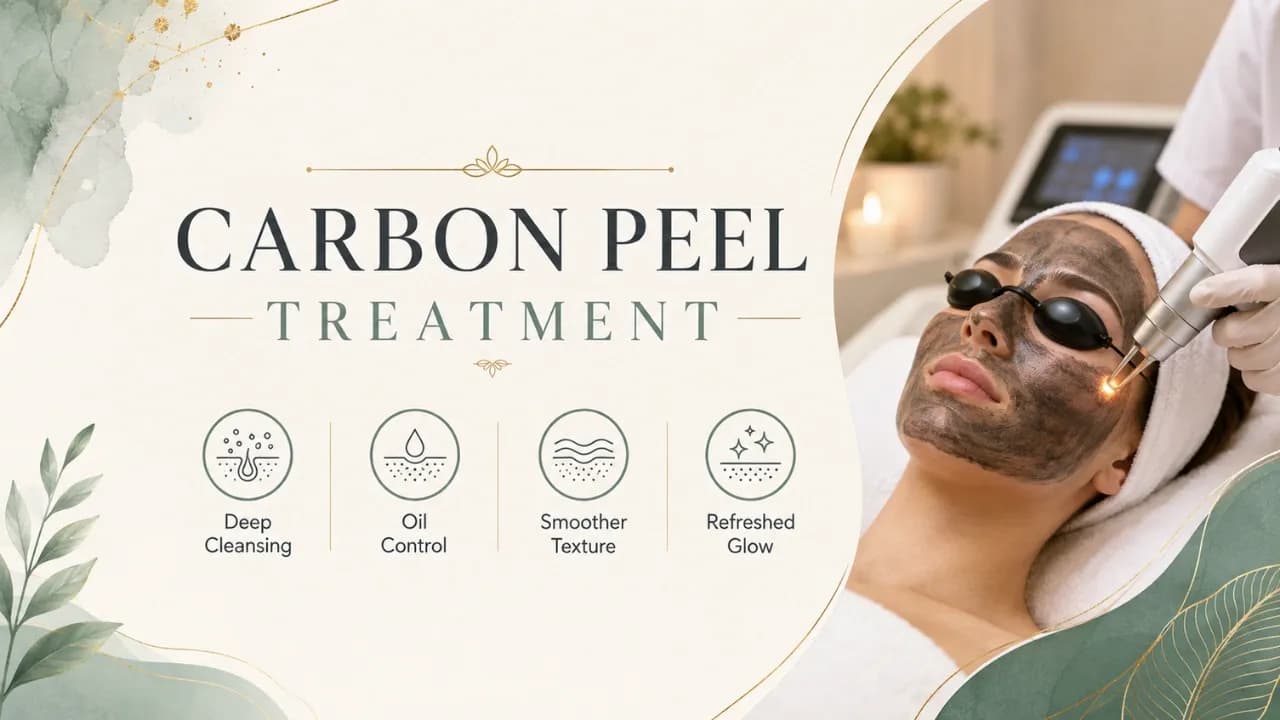
Carbon peel treatment is a low-downtime laser procedure in which a liquid carbon layer is applied to the skin and then targeted with a Q-switched Nd:YAG laser. It is mainly used to improve excess oil, congested pores, uneven texture and mild pigmentation. A session usually takes around 30 minutes, while a course of multiple sessions may be recommended when the goal is progressive improvement rather than a one-time skin refresh.
Carbon peel treatment is a non-invasive laser skin procedure that uses a thin layer of liquid carbon applied to the face, which a Q-switched Nd:YAG laser then targets to deep-clean pores, reduce oiliness, and improve skin texture. Results are typically visible within 24–48 hours of a single session, with optimal outcomes after 4–6 sessions spaced 2–4 weeks apart. According to Kibo Skin's dermatology team, carbon peel laser treatment is suitable for most skin types, including darker skin tones, making it one of the more versatile professional skin treatments available today.
Carbon peel treatment — also called a carbon laser peel or "Hollywood peel" — is a two-stage laser skin resurfacing procedure. A practitioner applies a thin coat of medical-grade liquid carbon to the face. The carbon particles penetrate deep into the pores, binding to oil, dead skin cells, and surface debris. A Q-switched Nd:YAG laser is then passed over the skin twice: first to heat and activate the carbon, then to vaporise it — physically removing the carbon along with everything it has bonded to.
The treatment works because carbon has a high affinity for laser light at the 1064 nm wavelength. When the laser targets the carbon layer, the explosive vaporisation creates a controlled micro-exfoliation effect. Simultaneously, the laser energy heats the deeper dermis, stimulating collagen and elastin production without breaking the skin surface.
Key terms defined:
- Q-switched Nd:YAG laser: A laser that delivers energy in high-powered nanosecond pulses, safe for all Fitzpatrick skin types I–VI
- Carbon paste: Medical-grade, topically applied liquid carbon (not charcoal) used as the photothermal absorber
- Photothermal effect: The conversion of laser light into heat at the carbon particle site
Carbon peel treatment is valued because it combines deep cleansing, exfoliation, and collagen stimulation in a single 30-minute session with zero downtime.
What Are the Key Benefits of Carbon Peel Treatment?
Carbon peel treatment delivers both immediate and cumulative benefits, making it effective as both a one-off skin refresh and a structured treatment course.
Immediate benefits (within 24–48 hours):
For patients comparing professional exfoliation options, understanding chemical peel benefits can help clarify how acid-based resurfacing differs from a laser-assisted carbon peel.
- Visibly smaller pores due to deep mechanical clearing of sebum and debris
- Reduced surface oiliness — studies suggest sebum production can decrease by up to 30% after a single session
- Brighter, more even skin tone from surface exfoliation
- Smoother skin texture with reduced roughness
Benefits after a full course (4–6 sessions):
- Reduced appearance of acne and post-acne marks — clinical observations report up to 60–70% improvement in mild-to-moderate acne after 4–6 sessions
- Improved collagen density, which can reduce the appearance of fine lines and early wrinkles
- More even pigmentation, including sun spots and melasma patches, due to the selective targeting of melanin-rich cells
- Reduction in blackhead and whitehead frequency
Short-term vs. long-term benefits at a glance:
| Timeframe | Benefit |
|---|---|
| 24–48 hours | Brighter skin, reduced oiliness, cleaner pores |
| After session 2–3 | Acne reduction, improved texture |
| After session 4–6 | Collagen improvement, pigmentation correction |
| 3–6 months post-course | Sustained oil control, firmer skin |
According to Kibo Skin's clinical team, carbon peel laser treatment is particularly effective for patients with combination or oily skin who have not responded to topical treatments alone.
What Does Carbon Peel Treatment Cost?
Carbon peel treatment cost in India typically ranges from ₹2,000 to ₹8,000 per session, depending on the city, clinic credentials, and laser technology used. In Mumbai and Delhi, single sessions at established dermatology clinics range from ₹3,500 to ₹8,000. A full recommended course of 4–6 sessions can therefore cost between ₹14,000 and ₹48,000.
Indicative pricing tiers:
| Tier | Cost per Session | What's Typically Included |
|---|---|---|
| Entry-level clinic | ₹2,000–₹3,500 | Basic carbon peel, single laser pass |
| Mid-tier dermatology clinic | ₹3,500–₹6,000 | Dual-pass laser, skin assessment, post-care guidance |
| Premium/speciality clinic | ₹6,000–₹8,000+ | Advanced Q-switched laser, personalised protocol, follow-up |
Is carbon peel treatment worth the cost?
For patients with persistent acne, enlarged pores, or uneven skin tone, a full course of carbon peel treatment typically delivers visible results that topical products alone cannot replicate. The cost per session is significantly lower than fractional laser resurfacing (₹8,000–₹25,000 per session) and chemical peels with comparable downtime risk.
Kibo Skin recommends a professional skin assessment before committing to a full course, as the number of sessions required varies by skin condition severity.
How Does Carbon Peel Laser Treatment Work? The Step-by-Step Breakdown
Carbon peel laser treatment works by using carbon's high light-absorption properties to create a controlled photothermal reaction at the skin surface and within the pores. Here is the complete procedure sequence:
Skin cleansing: The practitioner removes makeup, sunscreen, and surface oils with a gentle cleanser. This ensures the carbon layer adheres evenly.
Carbon application: Medical-grade liquid carbon is applied in a thin, even layer across the face. The carbon is left on the skin for 10–15 minutes, during which the fine particles settle into open pores and bond with sebum, dead cells, and bacteria.
First laser pass — heating phase: The Q-switched Nd:YAG laser is passed over the skin at a lower fluence (energy level). This heats the carbon, warming the pore lining and the superficial dermis. The heat stimulates fibroblasts — the cells responsible for producing collagen and elastin — without damaging surrounding tissue.
Second laser pass — vaporisation phase: A higher-fluence laser pass vaporises the carbon layer instantly. Because the carbon has bonded to debris, oil, and surface pigmentation, it takes this material with it during vaporisation. The micro-explosive effect also mechanically exfoliates the top layer of dead skin cells.
Cooling and aftercare: A soothing serum and SPF 50 sunscreen are applied immediately. The skin may appear slightly pink for 1–4 hours.
After the laser passes, consistent sunscreen use is particularly important because treated skin should be protected from avoidable UV exposure during recovery.
Why each step matters:
- Heating activates collagen remodelling — without this phase, carbon peel laser treatment would only exfoliate superficially
- Vaporisation achieves a depth of cleansing that topical products and physical scrubs cannot reach
- Immediate SPF application is non-negotiable because freshly treated skin has increased UV sensitivity for 48–72 hours
What Are the Types of Carbon Peel Treatment?
Carbon peel treatment can be delivered using different laser configurations and protocols depending on the target skin concern.
| Type | Laser Used | Best For |
|---|---|---|
| Standard carbon peel | Q-switched Nd:YAG (1064 nm) | Oily skin, blackheads, acne |
| KTP carbon peel | Q-switched Nd:YAG (532 nm) | Pigmentation, sun damage |
| Dual-wavelength carbon peel | 1064 nm + 532 nm combined | Acne + pigmentation together |
| Carbon peel with RF (radiofrequency) | Nd:YAG + bipolar RF | Skin laxity, fine lines, pore reduction |
Safe for skin types I–VI: Unlike ablative laser resurfacing, standard carbon peel laser treatment at 1064 nm is safe for darker skin tones (Fitzpatrick types IV–VI) because it targets the carbon particles specifically rather than melanin broadly.
Which type is right for you:
- Oily, acne-prone skin → Standard or dual-wavelength carbon peel
- Sun damage, pigmentation → KTP or dual-wavelength carbon peel
- Skin laxity concerns alongside pore issues → Carbon peel with RF add-on
- First-time patients → Standard carbon peel to assess skin response before combining modalities
Kibo Skin's practitioners assess each patient's Fitzpatrick skin type, sebum levels, and active acne status before selecting the appropriate carbon peel protocol.
How to Prepare for Carbon Peel Treatment: A Step-by-Step Guide
Before Your Session
Stop retinoids and active exfoliants 5–7 days prior. Products containing retinol, AHAs (glycolic, lactic acid), BHAs (salicylic acid), or benzoyl peroxide can sensitise the skin and increase the risk of post-treatment irritation.
Avoid sun exposure for 2 weeks before treatment. Tanned or sunburned skin is more reactive. Apply SPF 50 daily during this period.
Arrive with clean, product-free skin. Remove all makeup, oils, and skincare before your appointment.
Inform your practitioner of all active medications. Photosensitising medications (e.g., certain antibiotics, isotretinoin) may contraindicate carbon peel laser treatment temporarily.
During the Session
Protective eyewear is mandatory. The laser wavelength used is hazardous to unprotected eyes. Your clinic will provide goggles.
Expect mild warmth and snapping sensations. Most patients describe the laser pass as feeling like a warm rubber band snap — generally well-tolerated without anaesthetic.
After Your Session
Apply SPF 50 immediately and every 2 hours outdoors for 72 hours. Post-treatment skin has reduced barrier function and is highly UV-sensitive.
Avoid heat exposure (saunas, hot showers, strenuous exercise) for 24–48 hours. Heat can prolong redness and risk post-inflammatory hyperpigmentation.
Do not apply active skincare for 48 hours post-treatment. Use only gentle, fragrance-free moisturiser and sunscreen.
Common mistakes to avoid:
- Booking a session within 2 weeks of a beach holiday
- Using physical scrubs or exfoliants within 1 week post-treatment
- Skipping SPF on the assumption that skin "looks fine"
- Starting a course of carbon peel treatment during an active cystic acne flare without dermatologist clearance
Carbon Peel Treatment vs. Alternatives: An Honest Comparison
| Treatment | Downtime | Best For | Sessions Needed | Approx. Cost (per session) | Suitable for Dark Skin |
|---|---|---|---|---|---|
| Carbon peel laser treatment | None | Oily skin, acne, pores, mild pigmentation | 4–6 | ₹2,000–₹8,000 | Yes (all types) |
| Chemical peel (medium depth) | 5–7 days | Pigmentation, texture, acne scars | 3–5 | ₹3,000–₹10,000 | Caution (Types IV+) |
| Microdermabrasion | None | Surface texture, dullness | 6–8 | ₹1,500–₹4,000 | Yes |
| Fractional laser resurfacing | 5–10 days | Scars, deep wrinkles | 3–5 | ₹8,000–₹25,000 | Caution (Types V–VI) |
| LED phototherapy | None | Mild acne, inflammation | 8–12 | ₹1,500–₹3,500 | Yes |
When to choose carbon peel laser treatment over alternatives:
A chemical peel treatment is another professional resurfacing option and may be considered when pigmentation or surface texture is the primary concern.
- You need zero downtime due to work or social commitments
- You have both active acne and enlarged pores to address simultaneously
- Your skin tone is medium-to-dark and chemical peels carry a higher pigmentation risk
- You want a maintenance treatment to sustain results from a previous fractional laser course
When to consider an alternative:
- Deep acne scarring → Fractional laser resurfacing is more effective
- Severe sun damage with thick surface changes → Medium-depth chemical peel may be appropriate
- Budget is the primary constraint → Microdermabrasion offers surface improvement at lower cost
What Results Can You Expect from Carbon Peel Treatment?
Carbon peel treatment results vary depending on skin type, the concern being treated, and adherence to the recommended session schedule. The following timeline reflects clinical observations across most patients.
| Timeframe | Typical Outcomes |
|---|---|
| 24–48 hours post-session 1 | Brighter complexion, reduced surface oiliness, cleaner-looking pores |
| After session 2–3 (weeks 4–8) | Visible reduction in active acne, improved skin texture, fading of superficial dark marks |
| After session 4–6 (weeks 8–24) | Meaningful improvement in pore size, pigmentation, and skin firmness; sustained oil control |
| 3 months post-course | Collagen remodelling continues — skin may continue to improve without additional sessions |
Factors that affect carbon peel treatment results:
- Skin type and baseline sebum production level
- Severity of acne or pigmentation at the start of treatment
- Interval between sessions (2–4 weeks is optimal for most patients)
- Post-treatment sun protection compliance — skipping SPF is the single most common reason for suboptimal outcomes
- Concurrent skincare routine quality
A published study in the Journal of Cosmetic Dermatology found that patients receiving 4 sessions of Q-switched Nd:YAG carbon peel treatment showed a statistically significant reduction in sebum output and acne lesion count compared to baseline. A separate observational study noted a 52% improvement in melanin index scores after 6 sessions in patients with mild melasma.
Kibo Skin advises patients to treat results timelines as indicative rather than guaranteed, as individual biology, lifestyle, and environmental factors all play a role.
Is Carbon Peel Treatment Right for You?
| Ideal For | Not Ideal For |
|---|---|
| Oily and combination skin types | Active cystic or nodular acne (requires medical treatment first) |
| Acne-prone skin with enlarged pores | Open wounds, active skin infections, or eczema in the treatment area |
| Patients with mild-to-moderate pigmentation | Pregnant or breastfeeding patients (laser treatment is contraindicated) |
| All Fitzpatrick skin types, including dark skin | Patients on isotretinoin within the last 6 months |
| Those needing zero-downtime treatment | Keloid-prone patients (increased scarring risk with any laser procedure) |
| Anyone wanting a pre-event skin refresh | Patients expecting results equivalent to fractional laser resurfacing |
Who benefits most from carbon peel treatment, according to Kibo Skin:
Patients seeking treatment mainly for pigmentation should first identify the type and depth of discolouration, because not every pigment concern responds to the same procedure.
- Adults aged 18–45 with persistent oiliness and congested pores
- Patients with post-inflammatory hyperpigmentation following acne
- Individuals in urban, high-pollution environments where deep pore cleansing is difficult with topical products alone
Expert Tips
Kibo Skin's clinical team recommends the following practices to maximise carbon peel treatment outcomes:
Space sessions 2–4 weeks apart. This allows the skin's natural cell turnover cycle (approximately 28 days) to align with treatment, producing more consistent results than weekly sessions.
Use a niacinamide-based serum in the week before each session. Niacinamide (5–10%) supports barrier function and reduces post-treatment redness, particularly in sensitive skin types.
Do not combine with retinoid use within 1 week either side of treatment. Simultaneous use increases the risk of excessive desquamation and irritation.
Book sessions for autumn or winter where possible. Reduced UV index during cooler months lowers the risk of post-inflammatory hyperpigmentation following carbon peel laser treatment.
Follow each session with a ceramide-rich moisturiser for 48 hours. This restores the disrupted skin barrier faster, reducing the duration of any post-treatment dryness.
Maintain a stable skincare routine between sessions. Frequent product changes can confuse outcomes — practitioners cannot accurately assess treatment response if variables change between appointments.
Photograph skin before the first session and after every second session. Gradual improvements can be difficult to perceive subjectively; visual documentation helps track real progress.
Common mistakes to avoid:
- Expecting one session to deliver the same results as a full course
- Applying heavy makeup within 12 hours
- Using retinoids, scrubs, or strong exfoliating acids too soon after treatment
- Skipping sunscreen during the first few days after a session
- Booking sessions too close together without allowing the skin to recover
- Choosing treatment without a professional assessment of active acne, pigmentation, or skin sensitivity
When Should You Consult a Dermatologist?
A professional assessment is important before carbon peel treatment if you have active inflammatory skin disease, significant pigmentation, a history of abnormal scarring, or are taking medicines that may affect laser safety. Consultation is also appropriate if redness, swelling, blistering, persistent darkening, or other unexpected reactions develop after treatment.
- You have active cystic or nodular acne.
- You have eczema, infection, open wounds, or significant irritation in the treatment area.
- You have recently used isotretinoin or another medicine that may affect skin healing or photosensitivity.
- You have a history of keloid or abnormal scar formation.
- You are unsure whether your pigmentation is suitable for laser treatment.
- Post-treatment redness or irritation lasts longer than expected or becomes progressively worse.
Frequently Asked Questions
Q: How long does a carbon peel treatment session take?
A typical carbon peel session takes around 30 minutes, although appointment time can vary depending on cleansing, assessment, carbon application, laser passes, and post-treatment care.
Q: How many carbon peel sessions are usually needed?
The supplied treatment guide suggests that a course of about 4–6 sessions, generally spaced 2–4 weeks apart, may be used for cumulative improvement. The exact number depends on oiliness, acne, pigmentation, pore visibility, and individual response.
Q: Is there downtime after a carbon peel?
Carbon peel is generally described as a low- or zero-downtime procedure. Mild temporary pinkness can occur after treatment, and gentle skincare plus diligent sun protection are important during recovery.
Q: Can carbon peel help with acne and enlarged pores?
It may help reduce surface oil, congestion and the appearance of enlarged pores, and it can be useful for some people with mild acne-prone skin. Active cystic or nodular acne should be medically assessed before laser treatment.
Q: What should I avoid after carbon peel treatment?
Avoid strong exfoliants, retinoids, physical scrubs, excessive heat and unnecessary sun exposure immediately after treatment. Use gentle moisturising products and follow the sunscreen and aftercare instructions provided by your clinician.
Medical Disclaimer : Information from Kibo Hair Clinics is for educational purposes only. It does not replace diagnosis, trichoscopy, blood test interpretation, prescription treatment, procedure advice, or side-effect counselling from a qualified dermatologist or hair restoration doctor.