
Quick Answer
Acne UV sunscreen is a lightweight, non-comedogenic sunscreen made for oily and acne-prone skin. Choose broad-spectrum SPF 30 or higher, apply it as the final step of your morning routine and reapply during prolonged sun exposure. It does not treat acne directly, but it helps prevent post-chemical peel for acne scars from becoming darker.
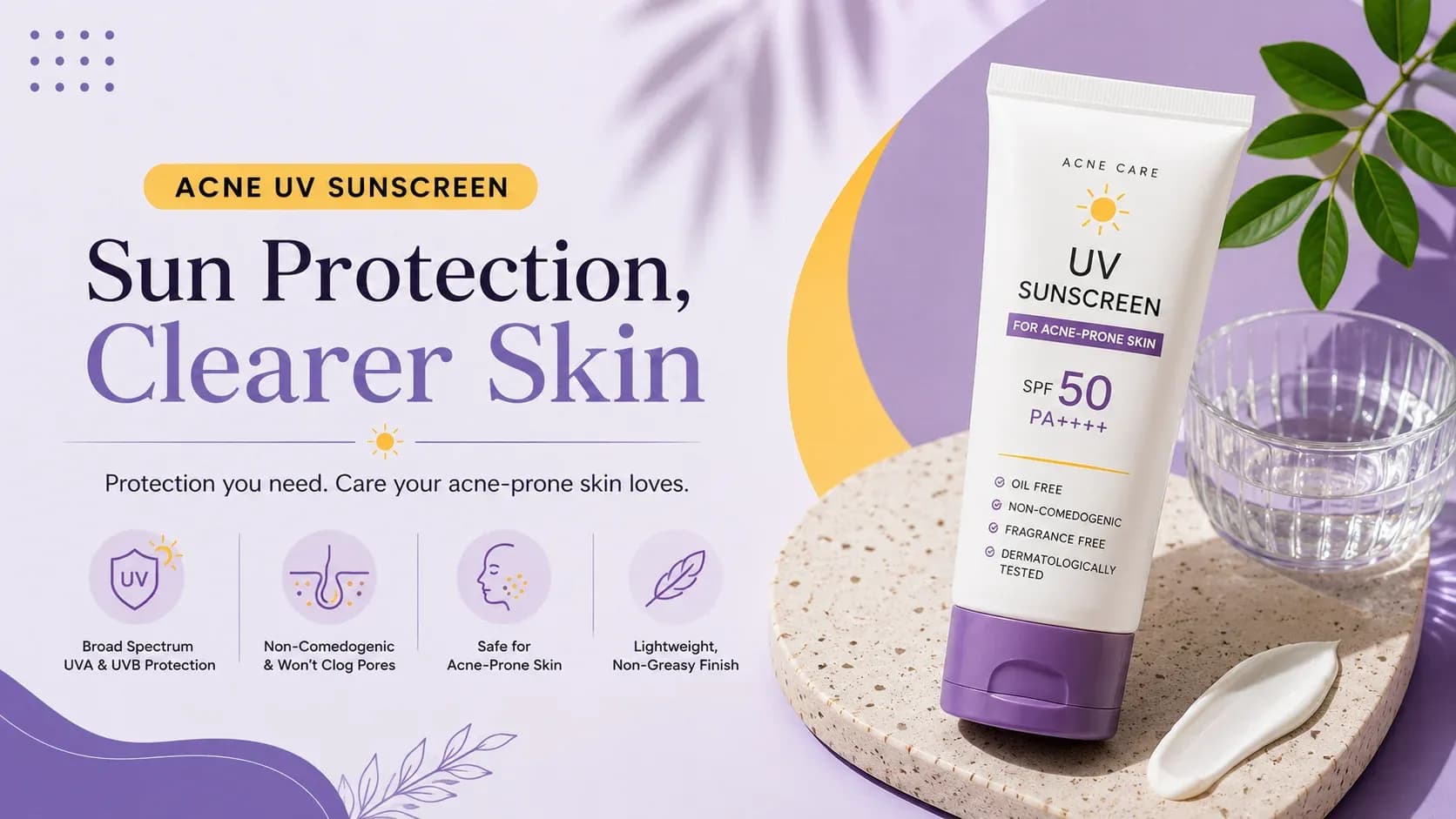
Acne UV sunscreen is a sunscreen formulated specifically for acne-prone skin. It protects against UVA and UVB radiation while including acne-fighting ingredients, typically niacinamide, zinc oxide, or salicylic acid, that reduce breakouts rather than trigger them. Most acne UV gel sunscreens are non-comedogenic, oil-free, and carry SPF 50 or higher to provide broad-spectrum protection without clogging pores.
What Is Acne UV Sunscreen? A Complete Guide
Acne UV sunscreen is a hybrid skin-protection product that combines broad-spectrum sun protection with ingredients that manage acne-prone skin. Standard sunscreens often contain oils, emollients, or occlusive agents that block pores and worsen breakouts. Acne UV sunscreen avoids these ingredients and replaces them with sebum-controlling, anti-inflammatory, or keratolytic actives.
The most commonly recommended format is the acne UV gel sunscreen, which uses a lightweight, water-based gel base. Gel formulas spread evenly, absorb quickly, and leave no greasy residue, a key advantage for oily and combination skin types.
Key facts at a glance:
- SPF rating: typically SPF 50 or SPF 50+
- PA rating: PA+++ or PA++++ (UVA protection)
- Base type: gel, fluid, or silicone-gel
- Primary actives: niacinamide, zinc oxide, azelaic acid, or salicylic acid
- Finish: matte or satin, not greasy
Choosing a non-comedogenic sunscreen formulated for acne-prone skin may reduce the risk of sunscreen-related breakouts compared with heavier, more occlusive formulas.
How Acne UV Sunscreen Works: The Complete Breakdown
Acne UV sunscreen works through two simultaneous mechanisms: photon blocking and skin-environment regulation.
Step 1, UV filtering: Broad-spectrum sunscreen helps reduce exposure to both UVB and UVA radiation. SPF mainly reflects UVB protection, while PA ratings indicate UVA protection.
Step 2, Sebum control Ingredients such as zinc oxide and niacinamide reduce sebaceous gland activity. Less excess sebum on the skin surface means fewer conditions for Cutibacterium acnes bacteria to proliferate.
Step 3, Anti-inflammatory action Niacinamide (typically at 4–5% concentration) reduces interleukin-mediated inflammation in the follicle wall. This lowers the redness and swelling associated with papular and pustular acne.
Step 4, Barrier support Acne UV sunscreen formulas typically include ceramides or panthenol at low concentrations to maintain the skin's moisture barrier, which acne-prone skin often has in a compromised state.
Why this matters: UV exposure can make chemical peel for pigmentation look darker and last longer. Consistent sunscreen use helps prevent further darkening while other acne and pigmentation treatments work.
Key Benefits of Acne UV Sunscreen: What You Actually Gain
Acne UV gel sunscreen benefits extend beyond UV protection and may include the following practical advantages:
Short-term benefits (within 4–8 weeks):
- Reduced post-inflammatory hyperpigmentation, UV protection prevents existing dark marks from darkening further
- Lower breakout frequency from sunscreen use, non-comedogenic formulas do not add to pore blockage
- Matte, shine-free finish throughout the day, silicone-gel and gel bases absorb excess sebum
- No white cast, transparent chemical filters or micronised zinc oxide maintain skin tone accuracy
Long-term benefits (3–6 months and beyond):
- Reduced worsening of acne-linked hyperpigmentation with consistent daily use.
- Lower risk of UV-aggravated inflammatory acne, UVB exposure can trigger keratinocyte inflammation, which worsens active acne
- Preserved collagen density, SPF 50 use consistently reduces photoageing markers including fine lines and textural irregularity
- Improved overall skin evenness as active acne is treated and existing pigmentation fades under UV protection
Acne UV sunscreen benefits summary table:
| Benefit | Timeframe | Mechanism |
|---|---|---|
| Fewer sunscreen-induced breakouts | Immediate | Non-comedogenic base |
| Reduced PIH darkening | 2–4 weeks | UVA/UVB blocking |
| Matte finish, oil control | Immediate | Silicone/zinc base |
| Visible PIH lightening | 8–12 weeks | UV block + skin turnover |
| Anti-inflammatory action | 4–8 weeks | Niacinamide, zinc oxide |
| Collagen preservation | 6+ months | Broad-spectrum SPF 50 |
Types of Acne UV Sunscreen: Which Is Right for You?
Acne UV sunscreen is available in several formulations. The right type depends on skin type, climate, and how much coverage is needed.
Acne UV Gel Sunscreen
A water-based, lightweight gel formula. Best for oily and combination skin. Absorbs within 60–90 seconds and leaves a matte or satin finish. The acne UV gel sunscreen is the most widely recommended format by dermatologists for daily urban use.
Acne UV Gold Sunscreen
A premium formulation, such as Acne UV Gold Sunscreen, typically contains an elevated active complex, for example, niacinamide at higher concentrations combined with avobenzone and octinoxate for extended UVA stability. Suited for individuals dealing with both active acne and visible pigmentation simultaneously.
Silicone-Based Acne UV Sunscreen
Uses a dimethicone or cyclopentasiloxane base. Provides an exceptionally smooth, blurring effect. Suitable as a makeup primer. May not be ideal for skin types sensitive to silicones.
Mineral (Zinc-Dominant) Acne UV Sunscreen
Uses zinc oxide as the primary UV filter. Zinc oxide also functions as an anti-inflammatory and sebum-regulating agent, making it doubly effective for acne-prone skin. Slightly heavier finish than gel formulas; best for sensitive or reactive acne-prone skin.
Type comparison table:
| Type | Best For | Finish | SPF Level |
|---|---|---|---|
| Acne UV Gel Sunscreen | Oily / combination skin | Matte | SPF 50+ |
| Acne UV Gold Sunscreen | Acne + pigmentation | Satin | SPF 50+ |
| Silicone-Based | Makeup base users | Blurring | SPF 50 |
| Mineral / Zinc | Sensitive, reactive skin | Natural | SPF 30–50+ |
How to Use Acne UV Sunscreen: Step-by-Step Guide
Using acne UV sunscreen correctly determines how much protection the skin actually receives. Follow this application method:
Prerequisites:
- Cleansed, dry skin
- Active acne treatments (retinoids, benzoyl peroxide, acids) applied beforehand and fully absorbed
- Moisturiser applied if needed and given 2–3 minutes to settle
Step 1, Dispense the correct amount Use approximately half a teaspoon (roughly 1/4 tsp per face zone, or the "two-finger rule") for the face. Insufficient quantity is the most common reason SPF underperforms.
Step 2, Apply to the centre of the face first Dot onto the forehead, both cheeks, nose, and chin. This ensures even distribution before spreading.
Step 3, Spread outward in gentle strokes Do not rub in circular motions, this can cause pilling. Use gentle outward strokes across each zone.
Step 4, Cover the neck and ears UV exposure on the neck contributes to photoageing and is frequently missed.
Step 5, Wait 5–10 minutes before sun exposure Chemical filters require this activation window. Mineral filters work immediately.
Step 6, Reapply every 2 hours during sun exposure SPF protection degrades with UV exposure, sweat, and contact. Reapplication is non-negotiable for sustained protection.
Common mistakes to avoid:
- Applying too little product, reduces effective SPF by up to 50%
- Skipping reapplication indoors near windows, UVA penetrates glass
- Applying over wet moisturiser, causes pilling and uneven coverage
- Using acne UV sunscreen SPF 50 only in summer, UV index causes skin damage year-round
Acne UV Sunscreen vs. Alternatives: An Honest Comparison
Choosing between formulation types affects both daily comfort and skin outcomes. The table below compares acne UV sunscreen against the most common alternatives.
| Product Type | SPF Level | Acne-Safe | Pigmentation Support | Ideal Skin Type | Price Range (INR) |
|---|---|---|---|---|---|
| Acne UV Gel Sunscreen | SPF 50+ | Yes | Yes (with niacinamide) | Oily / combination | ₹350–₹700 |
| Regular Moisturising Sunscreen | SPF 30–50 | No | Limited | Dry / normal | ₹200–₹600 |
| Tinted Mineral Sunscreen | SPF 30–50 | Partially | Moderate | Sensitive | ₹600–₹1,200 |
| BB Cream with SPF | SPF 20–30 | Rarely | Minimal | Dry / normal | ₹300–₹900 |
| Acne UV Gold Sunscreen | SPF 50+ | Yes | High | Acne + pigmentation | ₹500–₹900 |
Kibo Skin's recommendation: For acne-prone skin dealing with both active breakouts and hyperpigmentation, acne UV gel sunscreen or acne UV gold sunscreen formulations offer the most complete protection. Regular moisturising sunscreens, even at SPF 50, may aggravate oily or breakout-prone skin due to their emollient base ingredients.
What Results Can You Expect? Timeline for Acne UV Sunscreen
Results from consistent acne UV sunscreen use follow a predictable progression. Individual outcomes depend on skin type, UV exposure levels, and concurrent acne treatment.
| Timeframe | What Typically Happens |
|---|---|
| Week 1–2 | No new sunscreen-induced breakouts; skin feels lighter under product |
| Week 4–6 | Existing PIH stops darkening; active acne inflammation visibly reduced |
| Week 8–12 | Measurable lightening of post-acne marks; skin tone more even |
| Month 4–6 | Significant PIH reduction; baseline skin texture improved |
| 6+ months | Sustained UV protection; collagen preservation begins to show in skin firmness |
Factors that affect results:
- Reapplication frequency, inconsistent reapplication reduces both SPF and active-ingredient benefit
- Concurrent use of retinoids or vitamin C, can accelerate PIH reduction by 30–40%
- Skin phototype, darker skin tones (Fitzpatrick IV–VI) may take longer to see PIH lightening
- Pollution and heat exposure, increase oxidative stress that counteracts SPF benefits
Is Acne UV Sunscreen Right for You? Ideal Use Cases
Acne UV sunscreen is not the appropriate choice for every skin type or concern.
Medical Disclaimer : Information from Kibo Hair Clinics is for educational purposes only. It does not replace diagnosis, trichoscopy, blood test interpretation, prescription treatment, procedure advice, or side-effect counselling from a qualified dermatologist or hair restoration doctor.