Quick Answer:
Laser hair removal for the face uses concentrated light to heat pigment in hair follicles and produce long-term hair reduction. It works best on pigmented, coarser hair and requires multiple sessions because facial follicles cycle through different growth phases. Skin tone, hair type, hormonal factors and laser selection all affect results, so facial treatment should be planned after a professional skin and hair assessment.
What Is Laser Hair Removal for the Face?
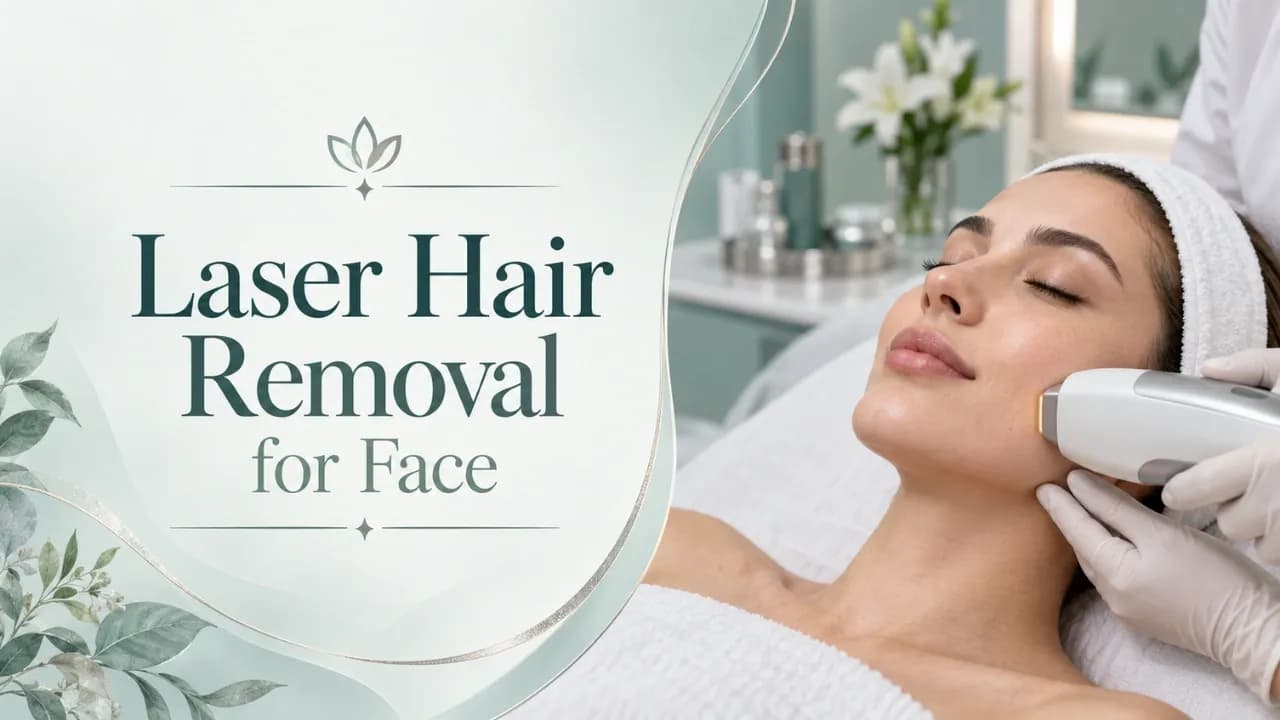
Laser hair removal for the face is a non-invasive cosmetic procedure that uses laser energy to destroy hair follicles in targeted facial areas. The laser emits a specific wavelength of light that is absorbed by melanin — the pigment in hair — which converts to heat and damages the follicle at its root.
The procedure is suitable for:
For a broader overview of treatment across body areas, see laser hair removal.
- Upper lip
- Chin and jawline
- Cheeks and sideburns
- Forehead and hairline
- Full face
What laser hair removal for the face is not: It is not a one-session fix. Hair grows in cycles — anagen (active growth), catagen (transition), and telogen (resting) — and the laser is only effective during the anagen phase. This is why multiple sessions are required.
According to the Kibo Skin dermatology team, most candidates require 6–8 sessions spaced 4–6 weeks apart to achieve significant, lasting results.
How Does Laser Hair Removal for the Face Work? The Complete Mechanism
Laser hair removal for the face works because melanin in the hair shaft absorbs light energy, which converts to heat. That heat travels down the hair shaft to the follicle, damaging the cells responsible for regrowth — without harming the surrounding skin.
Step-by-Step Process
Consultation and skin assessment — The practitioner evaluates skin tone (Fitzpatrick scale I–VI), hair colour, hair thickness, and any contraindications such as active acne, recent sun exposure, or medications.
Shaving the area — The treatment area is shaved 24 hours before the session. Shaving keeps the laser energy focused on the follicle, not the surface hair.
Application of cooling gel or device — A topical cooling agent is applied to protect the skin surface and improve comfort.
Laser pulse delivery — The practitioner passes the laser handpiece over the treatment area in controlled pulses. Each pulse takes a fraction of a second and covers multiple follicles simultaneously.
Post-treatment cooling — A soothing gel or ice pack is applied immediately after. Mild redness typically resolves within 2–24 hours.
Follicle shedding phase — Over 7–14 days after each session, treated hairs shed naturally. This is normal and indicates the treatment worked.
Why Multiple Sessions Are Necessary
Laser hair removal for the face only affects follicles in the active growth (anagen) phase. At any given time, only 20–30% of facial hair follicles are in this phase. Spacing sessions 4–6 weeks apart ensures each wave of active follicles is targeted progressively.
Key Benefits of Laser Hair Removal for the Face
Laser hair removal for the face offers both immediate and long-term benefits that go beyond simple hair reduction.
Short-Term Benefits (After 2–3 Sessions)
- Visible hair thinning — Hair regrowth becomes finer and sparser after each session
- Slower regrowth — Time between visible stubble increases significantly
- Reduced skin irritation — Elimination of ingrown hairs caused by repeated waxing or threading
- Smoother skin texture — Less trauma to the skin surface compared to mechanical hair removal
Long-Term Benefits (After Full Course)
- 70–90% permanent hair reduction — Clinically observed across multiple study populations
- Reduced hyperpigmentation — In individuals prone to post-waxing dark spots, laser may reduce recurring skin trauma
- Time savings — Eliminates weekly or biweekly hair removal appointments
- Cost efficiency — Lower cumulative cost over 5–10 years compared to ongoing salon treatments
Between sessions, a gentle skin care routine can help avoid unnecessary irritation while the facial skin recovers.
Why Different Laser Technologies Matter for Indian Skin Tones
Indian skin typically falls in Fitzpatrick types III–V, which contains more melanin. This means standard lasers may cause burns or hyperpigmentation if not properly calibrated. The Nd:YAG laser (1064 nm wavelength) is generally considered the safest and most effective option for darker Indian skin tones because it penetrates deeper while bypassing surface melanin. The Kibo Skin clinical team recommends always confirming which laser technology a clinic uses before booking.
Types of Laser Technology for Facial Hair Removal: Which Is Right for You?
Different laser types are suited to different skin tones and hair colours. Selecting the wrong laser for your skin type is one of the most common causes of side effects.
| Laser Type | Wavelength | Best For | Skin Tone Compatibility |
|---|---|---|---|
| Diode Laser | 800–810 nm | Medium to coarse hair | Fitzpatrick I–IV |
| Nd:YAG | 1064 nm | All hair types | Fitzpatrick III–VI (darker skin) |
| Alexandrite | 755 nm | Fine to medium hair | Fitzpatrick I–III |
| IPL (Intense Pulsed Light) | Broadband | Light skin, light hair | Fitzpatrick I–III only |
Important: IPL (Intense Pulsed Light) is often marketed as laser hair removal but is technically not a laser. IPL uses a broad spectrum of light, making it less precise and generally less effective for Indian skin types. Kibo Skin advises patients with Fitzpatrick type IV or above to specifically request Nd:YAG technology.
If you are comparing providers in the city, best laser hair removal in mumbai provides broader treatment-selection context.
Skin Tone and Hair Colour Considerations
Laser hair removal for the face is most effective when there is a high contrast between hair colour and skin tone — i.e., dark hair on light skin. It is less effective for:
- Very light, white, or grey hair (low melanin content — the laser has less to target)
- Very dark skin with coarse dark hair (risk of surface melanin absorption causing burns — requires Nd:YAG specifically)
- Fine vellus (peach fuzz) hair — does not respond well to current laser technology
How to Get Started with Laser Hair Removal for the Face: Step-by-Step Guide
Starting laser hair removal for the face requires preparation before, during, and between sessions to get safe and effective results.
Prerequisites and What You Need
- Fitzpatrick skin type assessment (done at consultation)
- No active skin infections, acne breakouts, or open wounds in the treatment area
- No sun exposure or tanning for at least 4 weeks before treatment
- Discontinue retinoids, AHAs, and BHAs 5–7 days before each session
- Avoid waxing, threading, or epilating for at least 4 weeks before treatment (shaving is fine)
Step-by-Step: Getting Started
Book a patch test consultation — A reputable clinic will always perform a patch test on a small area 24–48 hours before the first full session to assess your skin's reaction.
Shave the treatment area — Shave 24 hours before your session, not on the day itself. This reduces surface irritation during treatment.
Arrive with clean skin — Remove all makeup, sunscreen, and skincare products from the face before your appointment.
Wear or bring eye protection — The clinic should provide protective eyewear. Do not allow treatment without it.
Apply SPF 30+ daily after each session — Post-treatment skin is photosensitive. Sun protection is non-negotiable between sessions.
Space sessions correctly — Facial hair typically requires 4–6 weeks between sessions. Do not compress the schedule; it reduces effectiveness.
Track your progress — Photograph the treated area under consistent lighting every 4 weeks to document improvement.
For acne-prone facial skin where daily UV protection is relevant, the acne uv sunscreen guide provides additional context.
Common Mistakes to Avoid
- Waxing or threading between sessions — This removes the hair shaft the laser needs to conduct heat to the follicle
- Skipping SPF after treatment — Increases risk of post-inflammatory hyperpigmentation, especially in darker skin tones
- Expecting results after one session — Realistic expectations require a full course of 6–8 sessions
- Choosing a clinic based on price alone — Low cost often means outdated technology or inadequately trained operators
Laser Hair Removal for the Face vs. Alternatives: An Honest Comparison
Laser hair removal for the face competes with several other methods. Each has distinct advantages, costs, and suitability depending on your skin type and goals.
| Method | Permanence | Pain Level | Cost (Long-Term) | Suitable for Indian Skin | Risk of Ingrowns |
|---|---|---|---|---|---|
| Laser Hair Removal | High (70–90% reduction) | Moderate | Medium–High upfront, low ongoing | Yes (Nd:YAG) | Very Low |
| Electrolysis | Permanent (FDA-approved) | High | High | Yes | Very Low |
| Waxing / Threading | Temporary (2–4 weeks) | Moderate–High | Low per session, high cumulative | Yes | High |
| Shaving | Temporary (1–3 days) | None | Very Low | Yes | Moderate |
| Depilatory Creams | Temporary (1–2 weeks) | Low | Low | Use with caution | Low |
| IPL (Home Devices) | Partial reduction | Low–Moderate | Medium | Limited (not for Fitzpatrick IV+) | Low |
Which Is Better: Laser or Electrolysis?
Electrolysis is the only method classified as truly permanent by the US FDA, as it destroys each follicle individually using electrical current. However, it is significantly more time-consuming for large facial areas and typically more painful. Laser hair removal for the face offers comparable long-term reduction for most patients in a fraction of the treatment time, making it the more practical choice for facial areas with many follicles. Kibo Skin practitioners typically recommend laser as the first-line treatment for facial hair and reserve electrolysis for residual fine hairs after a laser course if needed.
What Results Should You Expect? Timeline and Case Data
Laser hair removal for the face produces progressive results over a course of 6–8 sessions. Results vary depending on hair colour, skin tone, hormonal factors, and the technology used.
Month-by-Month Timeline
| Timeframe | What Typically Happens |
|---|---|
| After Session 1 | Redness for 24–48 hours; treated hairs shed over 7–14 days; mild reduction visible |
| After Sessions 2–3 | Noticeably slower regrowth; hair becoming finer; 20–30% reduction |
| After Sessions 4–5 | 50–60% reduction in hair density; patches of smooth skin visible |
| After Sessions 6–8 | 70–90% reduction in most candidates; maintenance sessions may be needed annually |
| 12 Months Post-Course | Results largely stable; hormonal shifts (PCOS, pregnancy) may trigger some regrowth |
Factors That Affect Your Results
- Hair colour — Darker, coarser hair responds best; light or grey hair responds poorly
- Skin tone — Contrast between hair and skin improves laser precision
- Hormonal status — Conditions such as PCOS can cause continued follicle stimulation, requiring more sessions or maintenance
- Consistency of sessions — Missing or significantly delaying sessions reduces cumulative efficacy
- Technology used — Clinic-grade devices significantly outperform home IPL devices
How Long Does Facial Laser Hair Removal Last?
Laser hair removal for the face can last several years to permanently in many patients. Studies suggest that after a complete treatment course, approximately 85% of treated follicles do not regrow hair. Hormonal changes — particularly in women with PCOS or during pregnancy — may trigger partial regrowth, requiring 1–2 annual maintenance sessions.
Is Laser Hair Removal Safe for the Face? Side Effects and Risks
Laser hair removal is generally considered safe for the face when performed by a trained practitioner using the appropriate technology for your skin type. However, laser hair removal for face side effects do occur and vary in frequency and severity.
Common Side Effects (Temporary)
- Redness and swelling — Appears immediately after treatment; typically resolves within 2–24 hours
- Mild stinging or warmth — Normal sensation during and just after the procedure
- Hair shedding — Treated hairs fall out over 7–14 days post-session; this is expected
- Temporary darkening of treated hair — Before shedding, treated hair may appear darker
Less Common Side Effects
- Post-inflammatory hyperpigmentation (PIH) — More common in darker skin tones; usually resolves in weeks to months with SPF use
- Blistering — Typically caused by incorrect laser settings or sun-exposed skin; rare with qualified practitioners
- Paradoxical hypertrichosis — In rare cases (~1–2% of patients), laser stimulation may cause temporary increase in fine hair growth in adjacent untreated areas
Who Should Not Have Laser Hair Removal on the Face
- Individuals currently taking photosensitising medications (e.g., certain antibiotics, retinoids)
- Active skin infections, herpes simplex outbreaks, or open wounds in the area
- Pregnant women — insufficient safety data; most practitioners decline to treat
- Individuals with a recent tan or sunburn (within 4 weeks)
- Those with very light, blonde, red, or grey hair (insufficient melanin to target)
Kibo Skin's clinical advisors recommend disclosing all medications and medical conditions at your consultation to ensure the procedure is safe and appropriate for you.
Expert Tips
- Choose a clinic that assesses both skin tone and hair characteristics before selecting laser wavelength and settings.
- Avoid waxing, threading and epilating during a laser course because these methods remove the follicular target; follow the clinic's shaving instructions instead.
- Protect treated facial skin from unnecessary sun exposure and follow the recommended post-treatment routine.
- Tell the practitioner about retinoids, photosensitising medicines, recent tanning, active acne lesions and any history of pigment changes after procedures.
- Fine facial vellus hair and hormonally driven hair growth need particularly careful assessment because response can be less predictable.
How Much Does Laser Hair Removal for the Face Cost?
Laser hair removal for the face price in India typically ranges from ₹1,500 to ₹8,000 per session, depending on the treatment area, clinic type, technology used, and number of sessions bundled.
Facial Hair Removal Costs by Area
| Treatment Area | Cost Per Session (India) | Approximate Sessions Needed |
|---|---|---|
| Upper lip | ₹1,500 – ₹3,000 | 6–8 |
| Chin | ₹1,500 – ₹3,500 | 6–8 |
| Full face | ₹4,000 – ₹8,000 | 6–8 |
| Cheeks / Sideburns | ₹2,000 – ₹4,500 | 6–8 |
| Forehead / Hairline | ₹1,500 – ₹3,000 | 4–6 |
Is It Worth the Cost?
When compared to a lifetime of waxing, threading, or epilating, laser hair removal for the face may offer better long-term value. A conservative estimate for threading the upper lip over 10 years: ₹15,000–₹25,000. A complete upper lip laser course: ₹9,000–₹24,000 — with results that typically last years without maintenance.
For additional city-specific pricing context, see permanent laser hair removal cost in mumbai.
Kibo Skin recommends evaluating total treatment cost (all sessions combined) rather than per-session pricing when assessing value.
Note: Clinics offering prices significantly below market average may use outdated equipment or undertrained staff. Always verify the technology and the operating practitioner's credentials.
When Should You See a Dermatologist?
See a dermatologist before facial laser hair removal if you have unexplained or rapidly increasing facial hair, active skin disease, recurrent pigmentation after procedures, or medicines that may increase photosensitivity. Seek prompt medical review after treatment for blistering, severe or worsening pain, extensive burns, persistent swelling or significant pigment changes.
Frequently Asked Questions
Q: Is laser hair removal good for the face?
It can provide substantial long-term reduction when facial hair contains enough pigment to absorb laser energy and the device is appropriate for the person's skin tone. A consultation is important because very fine facial hair may respond poorly.
Q: How many sessions are needed for facial laser hair removal?
Multiple sessions are normally required because laser is most effective on follicles in the active growth phase. The total number and spacing depend on the treatment area, hair characteristics, hormonal factors and response.
Q: Is facial laser hair removal permanent?
It is more accurately described as long-term or permanent hair reduction rather than guaranteed removal of every hair. Some regrowth can occur, particularly when hormonal factors stimulate new hair growth.
Q: Can darker skin tones have facial laser hair removal?
Yes, but laser wavelength and settings must be selected carefully. Longer-wavelength systems such as Nd:YAG are commonly used for deeper skin tones because they reduce interaction with epidermal melanin.
Q: What are the common side effects of laser hair removal on the face?
Temporary redness, warmth, tenderness and mild swelling around follicles can occur. Burns, blistering, pigment changes and paradoxical hair stimulation are less common and warrant professional assessment when significant or persistent.
Medical Disclaimer : Information from Kibo Hair Clinics is for educational purposes only. It does not replace diagnosis, trichoscopy, blood test interpretation, prescription treatment, procedure advice, or side-effect counselling from a qualified dermatologist or hair restoration doctor.