Quick Answer:
An LED facial is a non-invasive light-based skin treatment that uses selected wavelengths to target concerns such as acne, redness and signs of ageing. Results are gradual and depend on the wavelength, device, treatment consistency and skin concern. Professional assessment is especially important for people with photosensitive conditions or medicines that increase light sensitivity.
What Is LED Facial? A Complete Guide
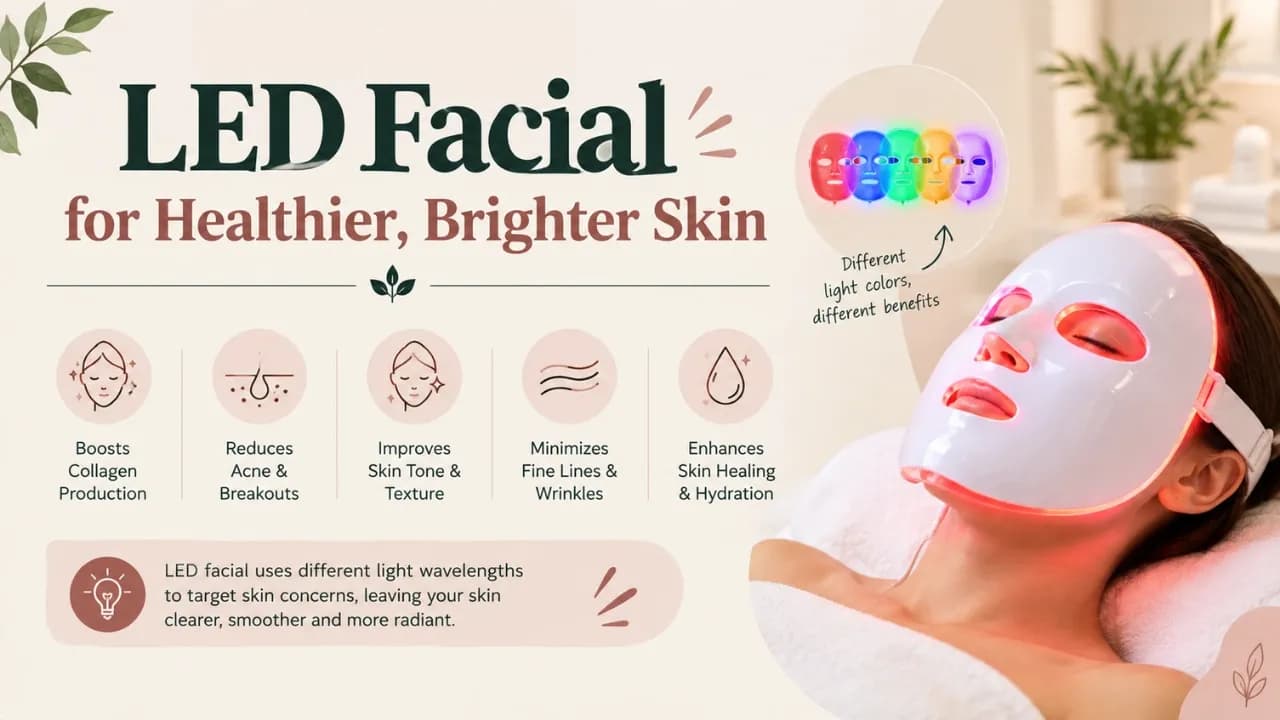
An LED facial, short for Light-Emitting Diode facial, is a non-invasive skin treatment that delivers concentrated, narrow-band light wavelengths into the skin's layers. Unlike UV light, LED light does not cause cellular damage — it triggers photochemical reactions that support skin repair and renewal.
LED facial treatment is used to address acne, fine lines, hyperpigmentation, redness, and slow healing. The treatment is painless, requires no recovery period, and takes approximately 20–30 minutes per session.
LED therapy can complement a broader skin care plan, but it should be matched to the specific concern and skin condition.
According to Kibo Skin's clinical team, LED facial therapy works across all skin tones and is one of the few professional-grade treatments with a strong safety record even for sensitive skin types.
Core facts at a glance:
- Wavelengths used: 415 nm (blue), 633 nm (red), 830 nm (near-infrared)
- Session duration: 20–30 minutes
- Downtime: None
- Suitable for: Most skin types, including sensitive skin
- Setting: Professional clinic or at-home LED facial mask
How LED Facial Works: The Complete Breakdown
LED facial treatment works because specific light wavelengths penetrate to different depths within skin tissue and trigger distinct biological responses.
Step-by-step mechanism:
- Light emission: The LED device or LED facial mask emits light at a precise wavelength — each colour targets a different skin layer and concern.
- Photon absorption: Skin cells, specifically mitochondria, absorb photons from the LED light. This process is called photobiomodulation.
- Cellular activation: Absorbed light energy stimulates mitochondria to produce more adenosine triphosphate (ATP) — the cell's energy currency — accelerating natural repair processes.
- Targeted response: Depending on wavelength, the light either kills acne-causing bacteria (blue light, 415 nm), boosts collagen and elastin synthesis (red light, 633 nm), or reduces inflammation and supports deep-tissue healing (near-infrared, 830 nm).
- Cumulative benefit: Results compound over multiple sessions. Collagen remodelling, for example, typically becomes visible after 4–6 weeks of consistent LED facial treatment.
Why this matters: LED light therapy works because it supports the skin's own repair machinery rather than forcing external change. This is why side effects are minimal and results are gradual rather than sudden.
Key Benefits of LED Facial: What You Actually Gain
LED facial treatment delivers measurable skin improvements across both short-term and long-term use. Kibo Skin's skin specialists note that consistent use — typically 2–3 sessions per week — is what separates moderate from significant outcomes.
Short-Term Benefits (visible within 1–4 weeks)
- Reduced redness and inflammation: Near-infrared and red light calm overactive immune responses in skin, typically within 1–2 sessions.
- Clearer skin from acne treatment: Blue light at 415 nm destroys Cutibacterium acnes bacteria, reducing breakouts within 2–4 weeks.
- Improved skin hydration and glow: Increased ATP production supports faster cell turnover, giving skin a more luminous appearance after early sessions.
Long-Term Benefits (visible after 4–12 weeks)
- Increased collagen production: Red light stimulates fibroblasts to produce collagen and elastin, reducing fine lines and improving skin firmness. Studies suggest up to a 31% increase in collagen density after 8–12 weeks of consistent red-light therapy.
- Reduced hyperpigmentation: Regular LED facial sessions can lighten dark spots by regulating melanin production over 8–12 weeks.
- Faster wound and post-treatment healing: Near-infrared light (830 nm) accelerates tissue repair, making LED facial treatment particularly useful after procedures like chemical peels or microneedling.
- Improved skin texture: Consistent use smooths uneven texture by supporting continuous cell renewal.
- Reduced pore appearance: Better collagen structure tightens the skin around pores over time.
For people exploring non-invasive clinic-based options for hydration, glow and maintenance, medifacial treatments are another category to discuss with a skin professional.
Short-Term vs. Long-Term Benefits at a Glance
| Timeframe | Benefit | Wavelength Responsible |
|---|---|---|
| 1–2 sessions | Reduced redness | Near-infrared (830 nm) |
| 2–4 weeks | Fewer active breakouts | Blue (415 nm) |
| 4–6 weeks | Improved glow and hydration | Red (633 nm) |
| 8–12 weeks | Collagen increase, firmer skin | Red (633 nm) |
| 8–12 weeks | Reduced dark spots | Red + near-infrared |
Types of LED Facial: Which Is Right for You?
LED facial treatment is not one-size-fits-all. Different light wavelengths target different skin concerns. Most professional devices and at-home LED facial masks offer multiple wavelength options.
Red Light (633 nm) — Anti-Ageing and Repair
Red light penetrates approximately 2–3 mm into skin, reaching the dermis where collagen and elastin are produced. This type of LED facial treatment is best suited for fine lines, sagging skin, and overall radiance. It is the most widely researched LED wavelength for skin applications.
Blue Light (415 nm) — Acne and Oil Control
Blue light acts at the surface of skin and within the upper dermal layers. It is clinically proven to destroy acne-causing bacteria without antibiotics or harsh topicals. Best for oily, acne-prone skin, or for anyone managing recurring breakouts.
For acne-prone skin, home remedies such as multani mitti for acne have different mechanisms and limitations than blue-light treatment.
Near-Infrared Light (830 nm) — Healing and Deep Inflammation
Near-infrared light penetrates deeper than red or blue — up to 5 mm — making it effective for calming deeper inflammation, supporting tissue repair, and reducing chronic skin sensitivity. Kibo Skin recommends near-infrared settings for post-procedure recovery or rosacea-prone skin.
Yellow/Amber Light (590 nm) — Redness and Sensitivity
Yellow light targets superficial blood vessels and helps reduce skin redness, flushing, and sensitivity. It is a good option for those with reactive or rosacea-prone skin.
Comparison: Which LED Wavelength for Which Concern?
| Wavelength | Colour | Depth | Best For |
|---|---|---|---|
| 415 nm | Blue | Surface | Acne, oil control |
| 590 nm | Yellow/Amber | Superficial | Redness, flushing |
| 633 nm | Red | Mid-dermis | Fine lines, collagen, glow |
| 830 nm | Near-infrared | Deep dermis | Healing, inflammation, recovery |
How to Get Started with LED Facial: Step-by-Step Guide
Starting an LED facial routine — whether in a clinic or with an at-home LED facial mask — follows a clear preparation and usage process. Skipping steps reduces efficacy and may irritate skin.
Prerequisites and What You Need
- A professional LED facial device or a clinically certified LED facial mask (look for CE or FDA-cleared devices)
- Clean, dry skin — no active open wounds or active skin infections
- Eye protection if your device does not include a built-in eye shield
- A consistent schedule: most protocols recommend 3–5 sessions per week for the first 4 weeks
Step-by-Step: How to Use an LED Facial Mask at Home
- Cleanse thoroughly. Remove all makeup, SPF, and skincare products. Residue on the skin can block light penetration and reduce treatment effectiveness.
- Pat skin dry. Damp skin is acceptable; wet skin may reduce device contact in mask-style devices.
- Apply any treatment serums (optional). Certain serums — particularly hyaluronic acid or niacinamide — can be applied before LED treatment and may enhance results. Avoid retinol or acids immediately before LED use.
- Put on eye protection. Even if your LED facial mask has eye covers, wear protective goggles if the device emits light near open eyes.
- Select the correct wavelength. Choose your light colour based on your primary skin concern (see Types section above).
- Set the timer. Most professional and at-home LED facial protocols run for 10–20 minutes per session. Do not exceed recommended time.
- Remain still and relax. LED light therapy requires no movement. Maintain device contact with skin for the full session.
- Apply post-treatment moisturiser. After removing the LED facial mask, apply a hydrating, non-active moisturiser to support skin barrier recovery.
If LED is being used around other procedures, tell your provider about any recent chemical peel before beginning a new treatment schedule.
Common Mistakes to Avoid
⚠️ Common Setup Mistakes:
- Using LED facial treatment over active infections, open lesions, or fresh sunburn
- Applying retinoids or AHAs/BHAs immediately before a session — this can cause irritation
- Skipping sessions and expecting accelerated results with longer single sessions
- Using uncertified devices — LED intensity and wavelength accuracy vary significantly between unverified products
- Failing to wear eye protection
Quick-Start Checklist
- Device is CE or FDA-cleared
- Skin is clean and dry
- Correct wavelength selected for concern
- Eye protection in place
- Session timer set to recommended duration
- Post-treatment moisturiser ready
LED Facial vs. Alternatives: An Honest Comparison
LED facial treatment competes with several other skin technologies. Each has different mechanisms, risk profiles, and outcomes. Kibo Skin recommends comparing options based on skin concern, pain tolerance, downtime, and budget.
| Treatment | Mechanism | Pain Level | Downtime | Best For | Approx. Cost per Session |
|---|---|---|---|---|---|
| LED Facial | Photobiomodulation via light wavelengths | None | None | Acne, collagen, redness | ₹1,500–₹5,000 |
| Laser (ablative) | Removes skin layers via heat | Moderate–high | 5–14 days | Deep wrinkles, scarring | ₹8,000–₹25,000 |
| Laser (non-ablative) | Heats dermis without removing surface | Mild–moderate | 1–3 days | Mild wrinkles, texture | ₹5,000–₹15,000 |
| Microcurrent | Low-level electrical current to tone facial muscles | None–mild | None | Lifting, facial contouring | ₹2,000–₹8,000 |
| Chemical Peel | Exfoliating acids remove surface skin | Mild–moderate | 3–7 days | Pigmentation, texture | ₹1,500–₹6,000 |
Kibo Skin's recommendation: For those seeking a safe, no-downtime option that can be done consistently at home or in a clinic, LED facial treatment is a strong starting point. For deeper structural concerns like significant scarring or pronounced wrinkles, LED treatment is best used in combination with laser or microneedling rather than as a standalone solution.
When comparing resurfacing procedures, it is also useful to understand possible chemical peel side effects before choosing between treatment types.
LED Facial Results: What to Expect and When
LED facial results are cumulative and depend on consistency, skin concern, device quality, and individual skin biology. Kibo Skin advises setting realistic expectations before beginning treatment.
Realistic Timeline
| Period | What Typically Happens |
|---|---|
| Sessions 1–3 | Skin may feel calmer, slightly more hydrated. Redness often reduces first. |
| Week 2–4 | Noticeable reduction in active breakouts (blue light users). Improved glow begins. |
| Week 4–6 | Early collagen stimulation effects visible — skin feels firmer, fine lines appear softer. |
| Month 2–3 | Significant reduction in hyperpigmentation. Texture visibly smoother. |
| Month 3–6 | Measurable collagen density increase. Long-term skin quality improvements stabilise. |
Factors That Affect LED Facial Outcomes
- Frequency of use: 3–5 sessions per week consistently outperforms sporadic use
- Wavelength accuracy: Clinically validated devices produce more reliable results than unverified consumer products
- Complementary skincare: Using appropriate serums and SPF alongside LED facial treatment supports faster results
- Skin condition severity: Mild acne or early fine lines respond faster than advanced concerns
- Age: Younger skin typically shows faster collagen response, though LED facial treatment benefits all adult age groups
For deeper texture or scarring concerns, a clinician may discuss collagen-induction procedures such as dermapen microneedling rather than relying on LED alone.
When to consult a professional: If skin worsens, new reactions appear, or no improvement is seen after 8 weeks of consistent LED facial sessions, consult a dermatologist. Kibo Skin recommends an initial consultation before beginning any home LED facial mask routine for skin conditions like rosacea, eczema, or photosensitivity disorders.
Is LED Facial Right for You? Ideal Use Cases
LED facial treatment is appropriate for a wide range of people, but it is not universally suitable. Kibo Skin emphasises honest candidacy assessment before beginning any LED facial protocol.
| LED Facial IS Ideal For | LED Facial is NOT Ideal For |
|---|---|
| Mild to moderate acne | Active skin infections or open wounds |
| Early signs of ageing (fine lines, loss of firmness) | Photosensitive conditions (e.g., lupus) |
| Hyperpigmentation and uneven skin tone | Those on photosensitising medications (consult doctor first) |
| Post-procedure skin recovery | Pregnant individuals (insufficient safety data — consult doctor) |
| Sensitive skin that cannot tolerate chemical treatments | Severe, cystic acne (requires medical treatment first) |
| Rosacea-prone skin (near-infrared and yellow wavelengths) | Those with active cancer in treated area |
| Anyone seeking a no-downtime skin maintenance routine | Deep wrinkles or significant structural skin laxity requiring more intensive intervention |
Expert Tips
- Commit to a schedule. LED facial therapy is dose-dependent. Aim for a minimum of 3 sessions per week for the first 4–8 weeks before evaluating results.
- Always cleanse first. Any barrier on the skin — SPF, makeup, heavy moisturisers — blocks light and reduces treatment efficacy.
- Match wavelength to concern. Using blue light for anti-ageing or red light for acne reduces results. Select the correct light colour for your primary skin goal.
- Combine with complementary actives — strategically. Hyaluronic acid and niacinamide are compatible with LED facial sessions. Retinoids and exfoliating acids should be used on alternate evenings or after, not immediately before, LED treatment.
- Protect skin with SPF after daytime sessions. LED facial treatment increases cellular activity. Sun protection prevents undoing progress.
- Use a clinically certified device. Kibo Skin recommends choosing LED facial masks that are CE-marked or FDA-cleared. Uncertified devices may not deliver accurate wavelengths or sufficient intensity.
- Track your results. Take consistent photographs every 4 weeks under the same lighting conditions to objectively measure change.
- Do not over-treat. More is not always better — stick to recommended session durations. Over-exposure does not accelerate results and may irritate skin.
Common Mistakes to Avoid
⚠️ Mistakes that limit LED facial results:
- Inconsistent frequency — doing 1–2 sessions then stopping
- Applying active ingredients (retinol, AHAs) immediately before sessions
- Purchasing low-cost, uncertified devices with inaccurate wavelengths
- Expecting results in under 2 weeks
- Using LED facial treatment over irritated or broken skin
When Should You See a Dermatologist?
Consult a dermatologist before LED facial treatment if you have a photosensitive disorder, active skin infection, severe or cystic acne, an unexplained rash, or take medication known to increase light sensitivity. Medical review is also appropriate if a home LED routine causes persistent redness, pain, blistering, worsening pigmentation or another unexpected reaction.
Frequently Asked Questions
Q: What does an LED facial do?
An LED facial exposes the skin to selected non-UV light wavelengths. Different wavelengths are used for different goals, such as supporting acne management, calming visible inflammation or supporting collagen-related skin changes.
Q: How long does an LED facial session take?
Session length depends on the device and protocol. The supplied guide describes typical sessions of around 20–30 minutes, while some home-device protocols may use shorter exposure times according to manufacturer instructions.
Q: How many LED facial sessions are needed?
LED results are cumulative rather than immediate. The appropriate frequency and treatment course depend on the concern, wavelength and device, so follow the professional or manufacturer protocol rather than extending individual sessions.
Q: Can LED facial treatment help acne?
Blue-light LED protocols are commonly used as an adjunct for mild to moderate acne. Severe or cystic acne should be assessed medically because light treatment may not address the underlying condition adequately on its own.
Q: Is an LED facial safe for sensitive skin?
LED treatment is generally non-invasive, but suitability depends on the individual. People with photosensitivity, active skin disease or photosensitising medicines should seek professional advice before treatment.
Medical Disclaimer : Information from Kibo Hair Clinics is for educational purposes only. It does not replace diagnosis, trichoscopy, blood test interpretation, prescription treatment, procedure advice, or side-effect counselling from a qualified dermatologist or hair restoration doctor.