
Quick Answer:
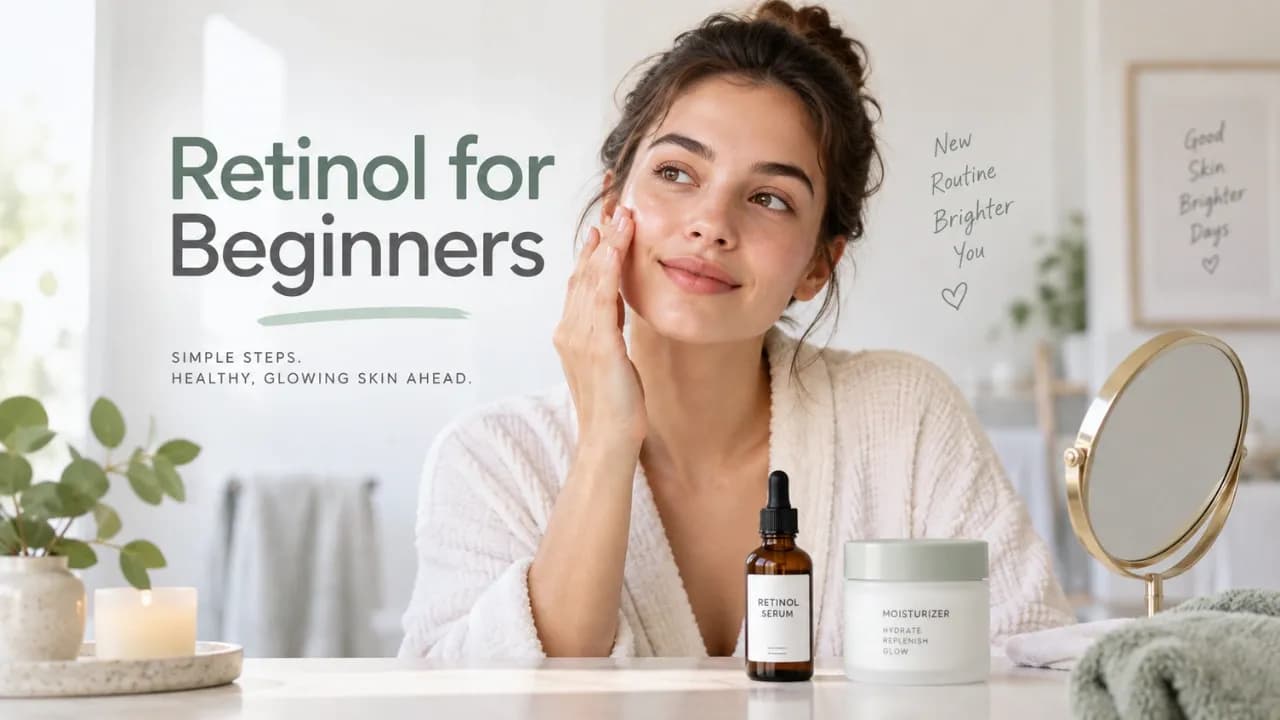
Beginners should introduce retinol slowly at night, starting with a low-strength product and using it once or twice weekly before increasing frequency as tolerated. Apply a pea-sized amount to dry skin, follow with moisturiser, and use broad-spectrum sunscreen every morning. Reduce or pause use if you develop persistent burning, marked redness or significant peeling.
What Is Retinol? A Complete Guide for Beginners
Retinol is a form of vitamin A and one of the most extensively studied skincare actives available without a prescription. It works by binding to retinoid receptors in skin cells, which accelerates cell renewal and boosts the production of collagen — the structural protein that keeps skin firm and smooth.
For beginners, retinol is relevant because it addresses multiple skin concerns simultaneously: fine lines, dark spots, rough texture, enlarged pores, and early signs of photoageing. According to Kibo Skin's dermatology advisory team, retinol is one of the few over-the-counter ingredients with robust clinical evidence behind it.
Key facts about retinol:
- Classified as a retinoid — a family of vitamin A compounds used in skincare
- Works below the skin surface, at the cellular level
- Available in concentrations ranging from 0.01% (entry level) to 1% (high strength)
- Requires consistent, long-term use — typically 12+ weeks — to show full results
- Must be paired with SPF during the day because it increases UV sensitivity
Understanding Retinol Percentage for Beginners
The percentage of retinol in a product indicates its strength. Beginners should always start at the lowest effective concentration and build up slowly.
| Concentration | Strength | Best For |
|---|---|---|
| 0.01%–0.025% | Entry level | Complete beginners, sensitive skin |
| 0.03%–0.1% | Low | Beginners after 4–6 weeks of entry level |
| 0.1%–0.3% | Moderate | Intermediate users, 3+ months in |
| 0.5%–1% | High | Experienced users only |
Starting at 0.025%–0.1% allows the skin to build tolerance without triggering excessive dryness, peeling, or redness — the most common reasons beginners discontinue retinol prematurely.
How Retinol for Beginners Works: The Complete Breakdown
Retinol works because it converts into retinoic acid inside the skin, and retinoic acid directly activates genes responsible for cell renewal and collagen synthesis. This is why retinol produces real, structural changes in skin — not just surface-level hydration.
Here is the step-by-step mechanism:
If redness or peeling becomes difficult to distinguish from treatment-related irritation, understanding chemical peel side effects can provide useful context for recognising excessive skin irritation.
- Absorption: Retinol penetrates the outer layer of skin (the stratum corneum) and reaches the living cells beneath.
- Conversion: Enzymes in the skin convert retinol → retinaldehyde → retinoic acid. This two-step conversion is why over-the-counter retinol is gentler than prescription retinoic acid (tretinoin).
- Cell signalling: Retinoic acid binds to nuclear receptors (RARs and RXRs) and activates genes that accelerate keratinocyte turnover.
- Collagen stimulation: Retinoic acid simultaneously suppresses enzymes (MMPs) that break down collagen and promotes new collagen fibre production.
- Pigment regulation: Faster cell turnover disperses melanin clusters — the cause of dark spots and uneven tone — more evenly across the skin surface.
Why this matters for beginners: Because retinol must be converted into its active form, it takes longer to show results than prescription tretinoin — but it also causes significantly less irritation, making it the appropriate starting point for most people.
Common Misconceptions Cleared Up
- "More retinol = faster results" — False. Applying too high a concentration too soon overwhelms the skin's conversion enzymes and causes irritation without proportionally better outcomes.
- "Retinol thins the skin" — False. Studies show retinol actually thickens the dermis (the deeper layer) over time by stimulating collagen, even though it thins the outermost stratum corneum temporarily.
- "Retinol works immediately" — False. Cell turnover cycles take approximately 28 days in younger adults and longer with age. Visible results typically require 8–12 weeks minimum.
Key Benefits of Retinol for Beginners: What You Actually Gain
Retinol for beginners delivers measurable benefits across multiple skin concerns, provided it is used consistently and correctly. Kibo Skin's formulation team identifies the following evidence-backed outcomes:
Short-term benefits (weeks 4–8):
For stubborn uneven tone that does not improve adequately with topical skincare, a dermatologist may discuss professional options such as a chemical peel for pigmentation.
- Smoother skin texture as surface dead cells are shed more efficiently
- Brighter, more even tone as pigment dispersion improves
- Reduced appearance of blackheads due to increased pore cell turnover
Long-term benefits (months 3–6+):
- Measurable reduction in fine lines and shallow wrinkles — studies suggest a 20–30% reduction in wrinkle depth after 12 weeks of consistent use
- Increased dermal collagen density, making skin firmer
- Reduced hyperpigmentation and post-acne marks
- Smaller-looking pores as skin structure tightens
Who benefits most from retinol:
- Adults aged 25+ who want to address early signs of ageing
- People with post-inflammatory hyperpigmentation (PIH) from acne
- Those with consistently oily or congested skin
- Anyone with photodamage from sun exposure
Types of Retinol for Beginners: Which Is Right for You?
Retinol exists within a broader family of vitamin A derivatives, each with a different potency and conversion pathway. Beginners should understand these variations before choosing a product.
Retinol vs. Other Retinoids: A Comparison
| Type | Prescription Needed | Relative Strength | Irritation Risk | Best For |
|---|---|---|---|---|
| Retinyl palmitate | No | Very low (1x) | Very low | Ultra-sensitive or first-time users |
| Retinol | No | Moderate (20x) | Low–moderate | Most beginners |
| Retinaldehyde (retinal) | No | High (11x faster than retinol) | Moderate | Intermediate users |
| Adapalene 0.1% | No (in India) | High | Moderate | Acne-prone beginners |
| Tretinoin 0.025%–0.1% | Yes | Very high (100x) | High | Experienced users under supervision |
Retinol is an at-home active, while a chemical peel is a professional exfoliation procedure. They should not be treated as interchangeable, especially when the skin is sensitive or adjusting to retinoids.
Which Type Is Right for Your Situation?
- Complete beginners or sensitive skin: Start with retinyl palmitate or 0.025% retinol. Kibo Skin's beginner-friendly formulations typically fall in this range.
- Normal-to-oily skin with no prior retinol use: 0.05%–0.1% retinol is appropriate, introduced three nights per week.
- Beginners in India with melanin-rich skin: Retinaldehyde may be preferable as it offers stronger anti-pigmentation action with a lower irritation profile than tretinoin.
- Acne-prone beginners: Adapalene 0.1% (available OTC in India) is clinically proven for acne and comedones and may be a better first retinoid than retinol.
Retinol for Beginners vs. Alternatives: An Honest Comparison
Retinol is not the only active ingredient that addresses fine lines, pigmentation, and texture. Beginners in India often compare it against several alternatives before choosing. According to Kibo Skin's skincare specialists, the right choice depends on your primary skin concern and tolerance level.
Side-by-Side Comparison Table
| Active Ingredient | Primary Benefit | Irritation Risk | Works For Pigmentation? | Safe to Layer With SPF? | Suitable for Beginners? |
|---|---|---|---|---|---|
| Retinol (0.025%–0.1%) | Anti-ageing, texture, pigmentation | Low–moderate | Yes | Yes (use SPF; avoid daytime retinol) | ✅ Yes — start low |
| Niacinamide (5%–10%) | Pigmentation, pores, barrier | Very low | Yes (brightening) | Yes | ✅ Yes — very gentle |
| Vitamin C (10%–15%) | Antioxidant, brightening | Low–moderate | Yes | Yes (boosts SPF efficacy) | ✅ Yes — AM use |
| AHA (glycolic acid 5%–10%) | Exfoliation, texture | Moderate | Mild | Yes (use SPF; avoid daily use) | ⚠️ Caution — start weekly |
| Bakuchiol (0.5%–1%) | Anti-ageing (retinol-like) | Very low | Mild | Yes | ✅ Yes — ideal sensitive skin |
Natural Alternatives Popular in India
Bakuchiol is derived from the babchi plant and is increasingly popular in India as a plant-based retinol alternative. Studies suggest bakuchiol at 0.5% twice daily may produce comparable improvements in fine lines and pigmentation to retinol 0.5%, with significantly less irritation. It is a viable option for beginners with very sensitive skin or those who cannot tolerate any form of retinoid.
Niacinamide does not replicate retinol's cell-renewal mechanism but works well alongside it. Many beginners use niacinamide in the morning and retinol at night to address pigmentation from both directions.
Which Is Best for Your Use Case?
- Anti-ageing as primary goal: Retinol is the most evidence-backed OTC choice.
- Hyperpigmentation as primary goal: Combine retinol (PM) with vitamin C (AM) and SPF.
- Sensitive or reactive skin: Start with bakuchiol; introduce retinol after 6–8 weeks.
- Acne + pigmentation: Adapalene (OTC in India) is clinically superior for active acne.
How to Get Started with Retinol for Beginners: Step-by-Step Guide
Starting retinol correctly determines whether your skin tolerates it and whether you stick with it long enough to see results. Kibo Skin's recommended protocol for beginners follows a phased introduction approach.
Prerequisites and What You Need
Before applying retinol for the first time, ensure you have:
- A gentle, non-stripping cleanser
- A fragrance-free moisturiser
- Broad-spectrum SPF 30+ sunscreen (non-negotiable)
- A retinol product at 0.025%–0.1% concentration
- Realistic expectations: results take 8–12 weeks minimum
Daily UV protection remains essential. Readers specifically looking for sun-protection guidance for acne-prone skin can also read about acne uv sunscreen.
Step-by-Step Retinol Application Guide for Beginners
Step 1 — Cleanse gently Wash your face with a mild, low-pH cleanser. Avoid exfoliating cleansers on retinol nights. Pat skin dry with a clean towel.
Why it matters: Applying retinol to damp skin increases absorption rate and irritation risk. Dry skin ensures a more controlled delivery.
Step 2 — Wait 20–30 minutes (optional buffer method) Allow skin to fully dry after cleansing. This reduces transepidermal water loss and lowers the chance of sensitisation, particularly in the first four weeks.
Why it matters: The "sandwich method" (moisturiser → retinol → moisturiser) is an alternative for very sensitive skin — it dilutes delivery and reduces stinging.
Step 3 — Apply a pea-sized amount of retinol Dispense a pea-sized amount (approximately 0.1–0.25ml) onto your fingertip. Apply to forehead, cheeks, chin, and nose — avoid the eye contour, lips, and nostrils.
Why it matters: Using more than a pea-sized amount does not increase efficacy. It only increases irritation. According to Kibo Skin's product guidelines, this is the most common beginner mistake.
Step 4 — Follow with moisturiser Apply your regular fragrance-free moisturiser over the retinol layer within 2–3 minutes of application.
Why it matters: Moisturiser locks in hydration and reduces transepidermal water loss triggered by the accelerated cell turnover that retinol causes.
Step 5 — Apply SPF every morning without exception The next morning, apply broad-spectrum SPF 30+ as the final step of your morning routine.
Why it matters: Retinol accelerates cell turnover, leaving newer, more UV-sensitive cells at the surface. Sun exposure during retinol use can cause photodamage and worsen pigmentation — directly counteracting retinol's benefits.
How to Use Retinol the Right Way: Frequency Schedule
| Week | Frequency | Notes |
|---|---|---|
| Weeks 1–2 | 1x per week | Observe for redness, peeling, tightness |
| Weeks 3–4 | 2x per week | Increase only if no irritation at 1x |
| Weeks 5–8 | 3x per week | Most beginners stabilise here |
| Weeks 9–12 | 4–5x per week | Only if tolerated with zero irritation |
| 12+ weeks | Nightly (optional) | Intermediate stage; not required for all |
Your Beginner-Friendly Retinol Routine Starts Here
A simple routine that works for most beginners using Kibo Skin products:
Evening:
- Gentle cleanser → pat dry
- Wait 20 minutes
- Pea-sized retinol (0.025%–0.1%)
- Fragrance-free moisturiser
Morning:
- Gentle cleanser
- Vitamin C serum (optional)
- Moisturiser
- SPF 30+ (mandatory)
Common Mistakes to Avoid
⚠️ Beginner Mistakes That Slow Results or Cause Harm:
- Using retinol every night from week one — causes unnecessary irritation
- Skipping SPF — negates retinol's anti-pigmentation work and risks photodamage
- Applying to wet or damp skin — increases irritation significantly
- Layering retinol with AHAs or BHAs in the same routine — over-exfoliation
- Expecting results in under 6 weeks — premature discontinuation is the most common reason retinol "doesn't work"
- Using 0.5%–1% as a first retinol — too strong; causes peeling and barrier damage
Retinol for Beginners Results: What to Expect and When
Retinol results follow a predictable timeline for most users, with some variation based on skin type, starting concentration, and consistency of use. Kibo Skin advises all beginners to document their skin with weekly photographs to track progress objectively.
Month-by-Month Timeline
| Timeframe | What You May Experience |
|---|---|
| Weeks 1–2 | Mild dryness, flaking, or tightness (purging phase — normal) |
| Weeks 3–4 | Skin adjusts; irritation typically subsides; texture begins to feel smoother |
| Month 2 | Noticeable improvement in skin texture and tone; some reduction in congestion |
| Month 3 | Visible reduction in fine lines; PIH beginning to fade; pores appear smaller |
| Month 6 | Significant collagen improvement; sustained brightness; continued reduction in wrinkle depth |
| Month 12 | Maximum visible benefit from current concentration; consider stepping up if appropriate |
If you undergo an in-clinic peel while using retinol, follow your provider’s chemical peel post treatment guidance before restarting retinol or other strong actives.
Factors That Affect Your Results
Results with retinol vary depending on:
- Starting concentration — lower concentrations produce slower but more comfortable progress
- Skin type — oily skin may tolerate retinol faster; dry or compromised skin progresses more slowly
- Age — cell turnover naturally slows after 30, so older skin may take longer to reflect changes
- Sun exposure — unprotected UV exposure directly counteracts retinol's anti-ageing and brightening effects
- Consistency — skipping more than two applications per week significantly slows progress
- Indian climate and humidity — high humidity generally improves tolerance; peak summer may require reducing frequency temporarily
Expert Tips
- Start with the lowest practical retinol strength and increase frequency before increasing concentration.
- Use only a pea-sized amount for the entire face; applying more raises irritation risk rather than speeding up results.
- Apply retinol to completely dry skin at night and avoid the eyelids, corners of the nose and lips when starting.
- If your skin is sensitive, use the moisturiser-retinol-moisturiser “sandwich” method to improve tolerance.
- Do not introduce several strong actives at the same time. Add one product at a time so you can identify what your skin tolerates.
- Pause or reduce retinol if you develop persistent burning, significant peeling or marked redness.
- Use broad-spectrum sunscreen every morning because UV exposure can worsen pigmentation and undermine retinol results.
- If your skin barrier is already damaged or highly reactive, focus on barrier recovery before starting retinol.
When Should You See a Dermatologist?
Consult a dermatologist if retinol causes persistent burning, swelling, severe peeling, worsening eczema or another significant reaction. Professional guidance is also useful if you have severe acne, stubborn pigmentation or sensitive skin and are unsure whether an over-the-counter retinol or a prescription retinoid is appropriate.
People who are pregnant, planning pregnancy or breastfeeding should discuss retinoid use with their healthcare professional rather than starting or continuing it without medical advice.
Frequently Asked Questions
Q: What percentage of retinol should a beginner start with?
A low-strength retinol is generally the most practical starting point. The supplied guide discusses approximately 0.025%–0.1% for beginners, with the exact strength depending on skin sensitivity and prior experience with active ingredients.
Q: How often should a beginner use retinol?
Start slowly, such as once or twice per week, and increase only when the skin is tolerating the current schedule without persistent redness, burning or peeling. Daily use is not necessary for a beginner to benefit.
Q: Should retinol be applied before or after moisturiser?
Retinol can be applied to clean, dry skin and followed with moisturiser. Very sensitive beginners can apply moisturiser before and after retinol to buffer the product and improve comfort.
Q: Can beginners use retinol every night?
Using retinol nightly from the beginning can unnecessarily increase irritation. Frequency should be built gradually over several weeks, and some people achieve good results without ever needing nightly application.
Q: What should I avoid while starting retinol?
Avoid introducing multiple exfoliating acids, harsh scrubs or other irritating actives in the same routine while your skin is adjusting. Consistent moisturising and daily sun protection are particularly important during this period.
Medical Disclaimer : Information from Kibo Hair Clinics is for educational purposes only. It does not replace diagnosis, trichoscopy, blood test interpretation, prescription treatment, procedure advice, or side-effect counselling from a qualified dermatologist or hair restoration doctor.