
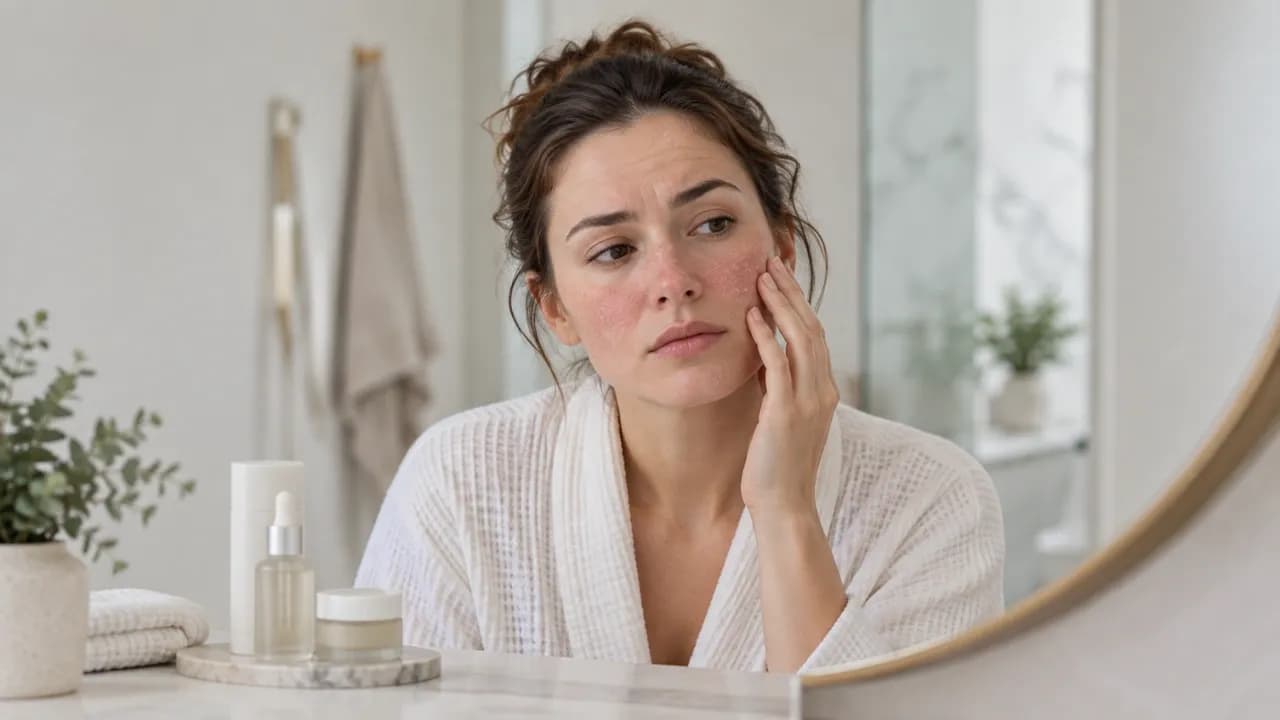
Quick Answer:
Skin barrier damage happens when the outer protective layer of the skin can no longer retain moisture or block irritants effectively. Common signs include persistent dryness, tightness, stinging, redness, flaking and sudden sensitivity to products that were previously comfortable. A simplified routine built around gentle cleansing, barrier-supporting moisturiser and daily sun protection can help recovery, while strong exfoliants and irritating actives should be paused until the skin settles.
What Is Skin Barrier Damage? A Clear Definition
Skin barrier damage refers to the breakdown of the stratum corneum — the skin's outermost protective layer — which normally functions as a physical and chemical shield against environmental aggressors, pathogens, and water loss.
A healthy skin barrier is made up of skin cells (corneocytes) held together by lipids including ceramides, cholesterol, and fatty acids. When this structure is disrupted, the barrier can no longer perform its two primary jobs: keeping moisture in and keeping harmful substances out.
What a damaged skin barrier looks like:
- Skin appears dry, flaky, or rough to the touch
- Redness or uneven skin tone that wasn't present before
- Tightness after cleansing, even after applying moisturiser
- Increased sensitivity to products that were previously tolerated
- Small breakouts or recurring irritation in the same areas
- A dull or compromised skin texture overall
Skin barrier damage is not a cosmetic issue — it is a functional disruption. Kibo Skin identifies it as one of the most under-recognised root causes of chronic skin sensitivity and recurring skincare product reactions.
What Are the Signs and Symptoms of Skin Barrier Damage?
Skin barrier damage symptoms are often mistaken for dehydration, acne, or general sensitivity — but they have a distinct pattern that separates them from other skin conditions.
Primary symptoms of skin barrier damage:
A sudden change in how your skin reacts to your usual skin care routine can be an important clue that the barrier has become compromised.
- Persistent dryness: Skin feels tight, parched, or rough despite regular moisturising
- Stinging or burning: Applying even gentle toners or serums causes immediate discomfort
- Redness or inflammation: Skin looks flushed or blotchy without a clear cause
- Flaking or peeling: Dry patches appear, particularly around the nose, cheeks, or chin
- Increased breakouts: A compromised barrier allows bacteria and irritants to penetrate, triggering acne
- Itching: The skin surface becomes reactive to touch, fabrics, or temperature changes
- Watery but still dry skin: Transepidermal water loss (TEWL) increases — skin loses hydration faster than it can absorb it
How to know if your skin barrier is damaged specifically:
The clearest indicator is sensitivity to products you previously tolerated. If a cleanser, serum, or moisturiser that worked for months suddenly causes stinging, your barrier has likely weakened. A skin barrier damage illustration of the stratum corneum typically shows gaps between skin cells where lipids have been depleted — those gaps are the entry points for irritants and the exit points for moisture.
Studies suggest that individuals with naturally dry or eczema-prone skin have a 30–50% lower ceramide content in their barrier compared to those with healthy skin.
Why Does Skin Barrier Damage Happen? The Core Causes
Skin barrier damage occurs because the lipid matrix holding the stratum corneum together is disrupted faster than the skin can replenish it. Understanding why this happens is the first step toward effective skin barrier damage repair.
The most common causes of skin barrier damage:
Over-exfoliation can also occur after procedures or strong acids. Understanding possible chemical peel side effects can help distinguish expected temporary peeling from excessive irritation or barrier disruption.
- Over-exfoliation: Using AHAs, BHAs, or physical scrubs more than 2–3 times per week can thin the skin surface and disrupt the acid mantle
- Harsh cleansers: Sulfate-based or high-pH cleansers strip natural oils, raising skin pH above the healthy range of 4.5–5.5 and destabilising the barrier
- Hot water exposure: Prolonged hot showers or baths dissolve lipids from the skin surface
- Environmental factors: Cold, dry air in winter reduces atmospheric humidity, accelerating moisture loss by up to 25%
- UV radiation: Unprotected sun exposure degrades collagen and ceramide production, weakening structural integrity
- Fragrance and alcohol in products: These ingredients are among the top five contact irritants identified in dermatological patch testing
- Stress and poor sleep: Elevated cortisol levels reduce the skin's natural lipid synthesis and slow repair processes
- Underlying conditions: Eczema, psoriasis, and rosacea involve a genetically compromised barrier with reduced filaggrin expression — a protein critical to barrier cohesion
Kibo Skin notes that most clients presenting with barrier damage have combined two or more of these triggers simultaneously, which compounds the rate of breakdown significantly.
How Skin Barrier Damage Works: The Mechanism Explained
Understanding how skin barrier damage progresses helps explain why certain repair strategies work and others fail.
The step-by-step breakdown mechanism:
Lipid depletion begins: External triggers (harsh cleansers, over-exfoliation, UV) remove ceramides, fatty acids, and cholesterol from between skin cells. These lipids act as the mortar between bricks in the skin wall.
Acid mantle disruption: The skin's natural pH rises above 5.5. This shift deactivates enzymes that normally regulate skin cell shedding and activates inflammatory pathways instead.
Transepidermal water loss increases: With the lipid matrix compromised, water evaporates freely from the skin. TEWL rates can increase by up to 75% in severely damaged barrier skin compared to healthy skin.
Irritant and allergen penetration: Gaps in the barrier allow environmental irritants, bacteria, and allergens to enter deeper skin layers — triggering immune responses, inflammation, and breakouts.
Inflammatory cascade: The immune system releases cytokines in response to penetrating irritants. Chronic barrier damage keeps this inflammatory state active, creating the cycle of persistent redness and sensitivity.
Repair attempts are overwhelmed: The skin naturally produces ceramides and lipids to repair the barrier, but if the triggering behaviour continues, repair cannot keep pace with damage — leading to cumulative, worsening breakdown.
Why this matters for treatment: Skin barrier damage repair must address both stopping the cause of damage and actively replenishing what was lost. Applying moisturiser alone does not restore the lipid matrix — barrier-specific ingredients like ceramides, niacinamide, and fatty acids are required.
How to Prevent and Repair Skin Barrier Damage: Step-by-Step Guide
Skin barrier damage repair is achievable in most cases within 2 to 8 weeks when the correct protocol is followed consistently. Kibo Skin recommends a four-step framework for healing a damaged barrier.
Prerequisites: What You Need Before You Start
Before beginning repair, assess your current routine for these common barrier disruptors:
If your barrier became reactive after a chemical peel or another exfoliating procedure, pause additional acids and follow the recovery instructions provided by your treating professional.
- Any product containing fragrance, essential oils, or alcohol denat. in the first five ingredients
- Exfoliants used more than twice per week
- Cleanser with a pH above 6.0
- SPF that causes stinging upon application
Remove or pause all actives — retinoids, AHAs, BHAs, vitamin C — for a minimum of 7 days. This is not optional. Continuing actives while repairing the barrier extends recovery time significantly.
Step 1: Switch to a Gentle, pH-Balanced Cleanser
Use a fragrance-free, low-pH cleanser (pH 4.5–5.5) that does not produce a squeaky-clean feeling after rinsing. That squeaky sensation indicates lipid stripping. Cleanse with lukewarm — not hot — water, and pat the skin dry gently rather than rubbing.
Why this matters: Every cleanse with an alkaline product disrupts the acid mantle and extends barrier damage. A pH-correct cleanser stops the cycle of daily disruption.
Step 2: Apply a Ceramide-Containing Moisturiser Immediately After Cleansing
Apply moisturiser within 60 seconds of patting skin dry to seal in residual hydration. Look for formulas containing:
- Ceramides (1, 3, or 6-II): Directly replenish the depleted lipid matrix
- Cholesterol: Works synergistically with ceramides to restore barrier architecture
- Niacinamide (2–5%): Stimulates ceramide synthesis and reduces inflammation
- Hyaluronic acid: Binds water in the upper skin layers to reduce TEWL
Why this matters: A 2003 landmark study by Elias et al. demonstrated that topical ceramide application restored barrier function measurably within 6 hours of application in compromised skin. The combination of ceramides, cholesterol, and fatty acids in a 1:1:1 ratio is most effective.
Step 3: Add a Protective Occlusive Layer at Night
At night, apply a thin layer of an occlusive product — such as petrolatum, squalane, or a dedicated barrier cream — over your moisturiser. This technique, sometimes called "slugging," reduces overnight transepidermal water loss by up to 98%.
Why this matters: The skin performs most of its repair between 11 PM and 3 AM. An occlusive layer during this window maximises the skin's natural repair window without requiring additional active ingredients.
Step 4: Apply Broad-Spectrum SPF 30+ Every Morning
UV exposure is a direct cause of ceramide degradation and collagen breakdown. Applying SPF 30 or higher sunscreen every morning prevents further damage while the barrier repairs.
Daily sunscreen is particularly important during barrier recovery because additional UV exposure can prolong irritation and contribute to pigmentation.
Daily sunscreen is especially important while the barrier is recovering because UV exposure can prolong irritation and contribute to further barrier stress.
Choose a mineral SPF (zinc oxide or titanium dioxide) during the repair phase — these tend to be less irritating than chemical filter formulations for sensitised skin.
Common Mistakes to Avoid:
- Reintroducing actives too early (before 2 full weeks of barrier healing)
- Using too many different "repairing" products simultaneously — this can worsen irritation
- Applying hyaluronic acid serum to dry skin in low-humidity environments, which draws moisture out of the skin instead of in
- Skipping SPF because the skin feels sensitive — SPF is non-negotiable during repair
Types of Skin Barrier Damage: Understanding What You're Dealing With
Skin barrier damage is not a single, uniform condition. It presents differently depending on the cause, severity, and skin type involved. Identifying which type applies to your situation guides the most effective repair strategy.
| Type | Primary Cause | Key Symptoms | Typical Repair Time |
|---|---|---|---|
| Acute mechanical damage | Over-exfoliation, harsh scrubs | Immediate redness, burning, peeling | 1–2 weeks |
| Chemical irritant damage | Actives overuse, high-pH cleansers | Stinging, tightness, sensitivity | 2–4 weeks |
| Environmental damage | Cold, wind, low humidity | Chronic dryness, flaking, dullness | 2–6 weeks |
| UV-induced damage | Chronic sun exposure without SPF | Uneven texture, thin skin, sensitivity | 4–12 weeks |
| Condition-related damage | Eczema, rosacea, psoriasis | Ongoing redness, itch, recurring flares | Ongoing management |
| Stress/cortisol-related damage | Sleep deprivation, chronic stress | Dull skin, increased breakouts, reactivity | 2–4 weeks (with lifestyle changes) |
Kibo Skin's team notes that most individuals present with a combination of two types, most commonly chemical irritant damage layered over environmental exposure.
Skin Barrier Damage vs. Other Skin Conditions: Key Differences
Skin barrier damage is often misidentified as dehydration, acne, or rosacea. Understanding the distinctions prevents ineffective treatment.
| Condition | Looks Like | Key Difference | Treatment Approach |
|---|---|---|---|
| Skin barrier damage | Dryness, redness, sensitivity, breakouts | Sensitivity to previously tolerated products | Barrier repair: ceramides, gentle routine |
| Dehydration | Tight skin, fine lines when pinched | Improves quickly with water intake + humectants | Hyaluronic acid, hydrating serums |
| Acne | Pimples, blackheads, oiliness | Caused by excess sebum + bacteria, not product sensitivity | Salicylic acid, benzoyl peroxide |
| Rosacea | Persistent redness, visible blood vessels | Genetic/chronic condition, not product-triggered | Medical treatment + barrier support |
| Eczema | Itchy, inflamed, scaly patches | Genetic filaggrin deficiency, distinct trigger pattern | Prescription treatment + barrier creams |
If breakouts are a major concern, avoid assuming that every flare is caused by barrier damage. Ingredients such as multani mitti for acne are discussed separately for acne-prone skin, but drying DIY treatments should be avoided while the barrier is actively irritated.
The most reliable differentiator for skin barrier damage specifically is the sudden onset of multi-product sensitivity. If three or more products that worked previously now cause stinging, the barrier is the most likely explanation.
What to Expect: Skin Barrier Damage Repair Timeline
Skin barrier damage repair follows a predictable timeline in most cases, though results vary depending on damage severity, skin type, and consistency of the repair routine.
| Timeframe | What Typically Happens |
|---|---|
| Days 1–3 | Redness and stinging may increase briefly as skin adjusts; avoid all actives |
| Week 1 | Burning sensation on product application begins to reduce; skin may still look dull |
| Week 2 | Visible flaking decreases; tightness after cleansing reduces noticeably |
| Week 3–4 | Skin texture begins to normalise; sensitivity to previously used products decreases |
| Month 2 | Barrier largely functional for mild-to-moderate damage; ceramide levels stabilise |
| Month 3+ | Condition-related or UV-induced damage may still be resolving; skin is significantly more resilient |
If sensitivity began after professional exfoliation, appropriate chemical peel post-treatment care follows the same principle of protecting the recovering skin from unnecessary irritation and sun exposure.
Factors that affect recovery speed:
- Age: Ceramide production naturally declines after age 30, slowing repair in older skin
- Diet: Omega-3 fatty acids (found in fatty fish, flaxseed, and walnuts) support lipid synthesis from within
- Hydration: Drinking adequate water supports cellular turnover, though topical repair remains essential
- Sleep quality: Growth hormone peaks during deep sleep and directly supports skin repair
- Continued irritant exposure: Any reintroduction of harsh products, even once, can reset the repair timeline
Kibo Skin advises a minimum of 4 weeks on the simplified repair routine before evaluating whether to reintroduce actives.
Who Is Most at Risk for Skin Barrier Damage?
Skin barrier damage can affect any skin type, but certain individuals are significantly more susceptible.
Most likely to experience skin barrier damage:
- Individuals with naturally dry or combination-dry skin (lower baseline ceramide production)
- People with eczema, psoriasis, or rosacea — all of which involve structural barrier impairment
- Those over 40, where natural lipid synthesis has declined by an estimated 30–40% compared to younger skin
- Skincare enthusiasts who use multiple actives — the "more is more" approach is a leading cause of clinician-observed barrier damage
- People in cold, dry climates or artificially heated environments (low ambient humidity accelerates TEWL)
- Anyone who regularly swims in chlorinated pools (chlorine is a documented barrier disruptor)
Skin barrier damage is typically less of a concern for:
- Individuals with naturally oily skin, which has a stronger natural lipid layer
- Those using a minimal, low-active skincare routine
- People in warm, humid climates with higher atmospheric moisture
Expert Tips
- Keep the routine simple while the barrier is recovering: cleanser, moisturiser and sunscreen are usually the core steps.
- Avoid stacking multiple exfoliating acids, retinoids and scrubs in the same routine.
- Use lukewarm water rather than hot water when cleansing or showering.
- Choose fragrance-free products when your skin is reactive or stinging.
- Apply moisturiser while the skin is slightly damp to help reduce moisture loss.
- Reintroduce active ingredients gradually rather than restarting your entire previous routine at once.
- Patch test new products before applying them across the face.
- Do not treat persistent burning, itching or inflammation as a normal “purging” phase.
- Use broad-spectrum SPF daily because UV exposure can make an already compromised barrier harder to manage.
When Should You See a Dermatologist?
A damaged skin barrier often improves with a simplified routine, but persistent or severe symptoms may need medical assessment. See a dermatologist if redness, burning, itching or peeling continues despite stopping irritating products, or if the skin develops painful cracks, oozing, crusting or signs of infection.
Professional evaluation is also important when you have eczema, psoriasis, rosacea, severe acne or another diagnosed skin condition. These conditions can overlap with barrier dysfunction, so treating only the dryness or sensitivity may not address the underlying problem.
Frequently Asked Questions
Q: How do I know if my skin barrier is damaged?
Common clues include dryness, tightness, redness, flaking, burning or stinging and increased sensitivity. One particularly useful clue is that products you previously tolerated suddenly begin to sting or irritate your skin.
Q: How long does a damaged skin barrier take to repair?
Mild barrier disruption may begin improving within a few weeks, while more significant or condition-related damage can take longer. Recovery depends on the cause, severity of damage and whether irritating products or environmental triggers are successfully removed.
Q: Should I stop skincare actives when my skin barrier is damaged?
It is generally sensible to temporarily pause potentially irritating actives such as retinoids, AHAs, BHAs and strong vitamin C formulas while the skin is actively stinging, peeling or inflamed. They can be reintroduced gradually once the barrier has settled.
Q: What ingredients help support the skin barrier?
Barrier-supportive moisturisers commonly contain ingredients such as ceramides, cholesterol, fatty acids, niacinamide and humectants. The best formula is one that hydrates without causing additional stinging or irritation.
Q: Can a damaged skin barrier cause acne or breakouts?
A compromised barrier can occur alongside breakouts and increased irritation. However, acne has multiple causes, so persistent or severe breakouts should not automatically be assumed to be caused only by barrier damage.
Medical Disclaimer : Information from Kibo Hair Clinics is for educational purposes only. It does not replace diagnosis, trichoscopy, blood test interpretation, prescription treatment, procedure advice, or side-effect counselling from a qualified dermatologist or hair restoration doctor.