
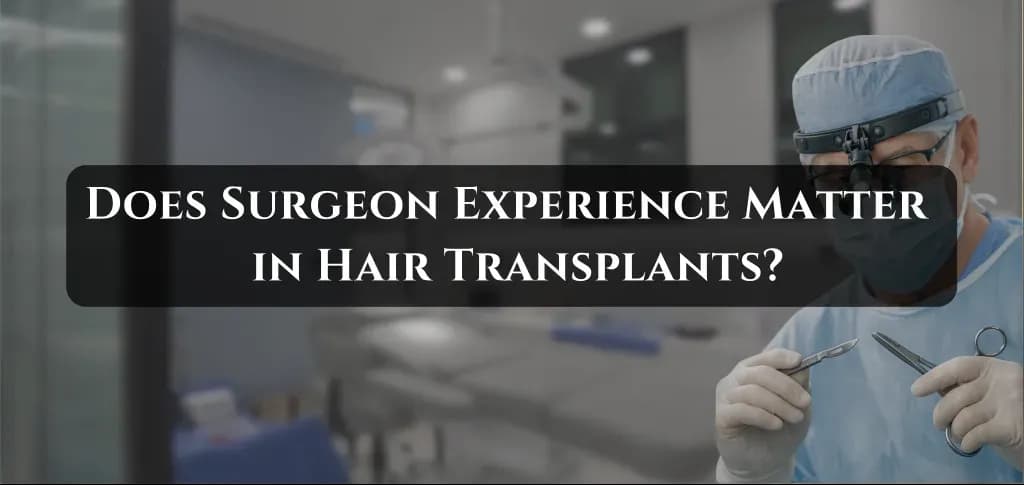
Surgeon experience matters more than clinic location in determining hair transplant success. The city or clinic address does not change how hair follicles behave — but the surgeon's understanding of hair biology, graft handling, donor planning, and long-term hairline design does. A highly experienced surgeon in a smaller city will consistently deliver better outcomes than an inexperienced practitioner in a premium location.
- Graft survival depends on extraction technique and handling — skills built through experience, not geography
- Donor hair is finite and irreplaceable — poor planning by an inexperienced surgeon cannot be corrected later
- A natural hairline requires judgement about age, facial structure, and future hair loss — not a premium address
- Experienced surgeons know when not to operate — recommending non-surgical options when appropriate
- Location matters for infrastructure and hygiene — but cannot compensate for poor surgical skill
Does Surgeon Experience Matter More Than Location in Hair Transplants?
When people start researching hair transplant treatment, one common question comes up early: is it more important to choose the right city or the right surgeon? Many patients feel confused because advertisements often highlight location — metro cities, medical hubs, or popular destinations — while doctors emphasise skill and experience. This complete guide explains why surgeon experience usually matters more than location in hair transplants, and what patients should realistically focus on while making a decision.
What Is Hair Transplant and Why Does It Require Expert Planning?
Hair transplant is considered when hair loss becomes permanent and progressive. In most cases, hair follicles in certain areas of the scalp stop producing healthy hair. Once follicles shrink or become inactive, no oil, shampoo, or home remedy can revive them. A hair transplant works by moving healthy follicles from the donor area — usually the back or sides of the scalp — to bald or thinning areas.
Because this process permanently redistributes your limited donor hair, it requires careful planning. This is precisely where surgeon experience becomes critical. The city or clinic location does not change how hair follicles behave — but the surgeon's understanding of hair biology and long-term planning does. Understanding the full donor area's role in a successful hair transplant is the clearest example of why this planning expertise cannot be substituted by a prestigious clinic address.
Root Causes Behind Hair Loss — and Why They Require Medical Judgment
DHT Sensitivity
DHT (dihydrotestosterone) is the main cause of pattern hair loss. It shrinks genetically sensitive follicles over time. A skilled surgeon plans transplants keeping future DHT-driven loss in mind — not just current bald patches. This forward planning is invisible in marketing but directly determines whether a hairline looks natural at 35 or out of place by 50. Understanding Norwood scale staging is how experienced surgeons map this DHT-driven progression before designing any treatment plan.
Scalp Health
Poor scalp condition, dandruff, inflammation, or infections can affect graft survival after transplant. An experienced doctor evaluates and treats scalp issues before surgery. Patients can also reduce mechanical stress on follicles by following protective grooming routines that minimise tension and breakage — guidance on this can be found in a practical guide to hairstyles that minimise follicle stress.
Nutrition
Hair follicles need adequate protein, iron, and vitamins. Surgeons with medical experience ensure nutritional deficiencies are identified and corrected before surgery — improving both healing and long-term growth outcomes.
Stress and Lifestyle
Chronic stress and irregular routines disrupt hair growth cycles. While stress alone may not cause baldness, it worsens existing hair loss and impacts post-surgery recovery. A less experienced practitioner may skip this holistic assessment and focus only on graft numbers — missing important clinical context that affects the result.
How Hair Loss Shows in Men and Women
In Men
Men typically experience receding hairline, temple thinning, crown baldness, and gradual expansion of bald areas. Because male pattern baldness progresses predictably, an experienced surgeon designs hairlines that still look natural years later — not just impressive at the 12-month mark.
In Women
Women often experience overall thinning, widening of the central parting, and reduced density on the crown. Women need especially careful donor planning. Surgeon experience is crucial here because overharvesting can cause visible thinning at the back of the scalp — a consequence that is permanent and difficult to correct.
Donor hair is finite and once extracted cannot be replaced. An inexperienced surgeon who overharvests or poorly maps the safe donor zone in a patient's first procedure can permanently limit options for future sessions — regardless of how much donor hair remains on paper.
Daily Habits That Make Hair Transplant Outcomes Better or Worse
Habits That Worsen Outcomes
- Smoking — reduces blood supply to grafts, directly lowering survival rates
- Poor sleep and high chronic stress
- Skipping meals or crash dieting during recovery
- Ignoring existing scalp conditions before and after surgery
Habits That Support Better Results
- Balanced, protein-rich diet during recovery
- Proper scalp hygiene before and after surgery
- Following post-surgery instructions strictly
- Attending regular medical follow-ups
An experienced surgeon emphasises these habits before and after surgery, improving long-term success. A clinic's location does not change this guidance — only the surgeon's thoroughness does.
Non-Surgical Options — and Why Experienced Surgeons Recommend Them First
A key sign of an experienced hair transplant doctor is knowing when not to operate. Before recommending surgery, skilled surgeons often suggest medical treatments to slow hair loss, topical solutions to strengthen existing hair, nutritional correction, and monitoring for early-stage loss. Location does not determine this judgment — experience does. Surgeons with limited experience may rush into surgery even when non-surgical options could work and deliver better long-term value for the patient.
When Should Someone Meet a Hair Transplant Doctor?
You should consult a hair specialist if hair fall lasts longer than 6 months, bald patches become clearly visible, family history of baldness exists, medical treatments stop working, or hair loss begins affecting confidence. Meeting an experienced surgeon early often reduces the number of grafts needed later and protects donor hair for future use.
Many clinics offer structured consultation processes for patients planning treatment across cities, including travel and recovery planning. Knowing what to bring and what to ask makes that first appointment far more productive — covered in detail in your first hair transplant consultation: what to prepare and expect.
Why Surgeon Experience Impacts Hair Transplant Success More Than Location
Hair Transplant Is a Skill-Based Procedure
Unlike machines or automated treatments, hair transplant outcomes depend heavily on graft extraction technique, graft handling and storage, implantation angle and depth, and hairline design. These skills improve only with training and experience — not with clinic location. This is why using a structured checklist to compare two hair transplant quotes always focuses on the surgeon's credentials and planning methodology, not on the postcode.
Graft Survival Depends on Expertise
Poor graft handling can damage follicles during the critical period between extraction and implantation, directly reducing survival rates. Experienced surgeons know how to minimise trauma, maintain appropriate temperature control, and maximise the viability of each graft. These factors are covered in detail in a clinical breakdown of graft survival factors that directly influence results.
Donor Planning Is Irreversible
Donor hair is limited. Overharvesting or poor planning cannot be corrected later. Skilled surgeons plan donor usage conservatively for long-term needs — protecting supply for potential future sessions as hair loss continues to progress over years.
Natural Appearance Requires Judgment
A natural hairline is not about density alone. It requires understanding facial proportions, age-appropriate placement, and future hair loss trajectory. This comes from clinical experience — not from operating in a premium location. A hairline that looks impressive at 30 but creates an island effect by 45 is a failure of planning, not technique.
When evaluating clinics, always ask who performs the surgery — not just who conducts the consultation. The "No Ghost Surgery" commitment means the surgeon who plans your procedure is the one who holds the tools during it. This is a clinical standard, not a marketing claim, and it has a direct impact on your result.
Does Location Matter at All?
Location does have some importance. Access to medical infrastructure, hygiene standards, and availability of structured follow-up care all contribute to the overall experience and outcome. However, location alone cannot compensate for lack of surgical skill. A highly experienced surgeon in a smaller city will usually deliver better results than an inexperienced practitioner in a premium metro location.
Patients comparing treatment decisions across regions often review long-term cost and planning differences — for example, how Nashik vs Mumbai hair transplant costs compare when surgeon quality is held constant.
Frequently Asked Questions
Q: Is surgeon experience more important than clinic location?
Yes. Hair transplant success depends more on surgeon skill, planning, and experience than on the city or clinic location. Graft survival, donor management, hairline design, and long-term forecasting are all determined by the surgeon's expertise — not the postcode.
Q: How does surgeon experience affect graft survival?
Experienced surgeons handle grafts carefully during extraction, preparation, and implantation — reducing mechanical trauma and maintaining viability. Poor handling at any stage reduces survival rates, which directly limits how much growth you see at 12 months.
Q: Can a good location guarantee good results?
No. Location alone cannot compensate for poor surgical technique or inadequate planning. Some of the worst hair transplant outcomes in India occur at premium-location clinics. Some of the best outcomes are delivered by specialists in smaller cities or mid-tier locations with exceptional clinical standards.
Q: Should patients choose a surgeon or a clinic first?
Patients should prioritise the surgeon's experience and medical approach over clinic branding or location. Find the surgeon whose credentials, planning methodology, and documented outcomes match your case — then consider the clinic as secondary context.
Q: Does experience matter for future hair loss planning?
Yes — significantly. Skilled surgeons plan transplants considering future hair loss progression, protecting donor hair for potential additional sessions. A surgeon who only addresses your current bald patches without accounting for where your hair loss is heading is not giving you a long-term plan. Reviewing your hair transplant results timeline expectations with a surgeon who maps future loss is an essential part of any credible consultation.
Why Kibo Clinics
At Kibo Clinics in Mumbai, hair transplant procedures are centred around doctor-led expertise rather than location-based appeal. Procedures are conducted by certified surgeons with no delegation of surgical responsibility outside licensed medical professionals. Every patient is evaluated by experienced doctors, donor area and graft planning are done carefully, and hairline design is customised for long-term natural results.
A dedicated post-procedure care team supports patients through structured follow-ups designed to monitor healing, graft growth, and long-term hair stability. The focus is on safety, graft survival, and natural appearance — ensuring that surgeon experience drives outcomes, not marketing or city branding. Results may vary by individual.
References
[1] NCBI Bookshelf. Hair transplantation — clinical overview and surgical principles
[2] PubMed Central. Follicular unit extraction outcomes and graft handling
[3] American Academy of Dermatology. Androgenetic alopecia — overview and treatment options
[4] ISHRS. What is a hair transplant — ISHRS clinical definition
[5] PubMed Central. Donor area assessment and graft planning in hair restoration
Related Articles & Services
Hair Transplant Services
Follicular Unit Extraction (FUE) | Sapphire FUE | Body Hair Transplant (BHT) | Corrective Hair Transplant | Hairline Correction | Direct Hair Transplant (DHT)
Must Read
Why NRIs Choose Mumbai for Hair Transplant | Hair Transplant Quote Structures | Hair Transplant Price vs Value
City-Wise Hair Transplant Cost Pages
Cost of Hair Transplant in Mumbai | Cost of Hair Transplant in Delhi | Cost of Hair Transplant in Pune | Cost of Hair Transplant in Bangalore
Medical Disclaimer : Information from Kibo Hair Clinics is for educational purposes only. It does not replace diagnosis, trichoscopy, blood test interpretation, prescription treatment, procedure advice, or side-effect counselling from a qualified dermatologist or hair restoration doctor.