
Scalp Psoriasis vs. Dandruff: How to Tell the Difference
Published on Wed Mar 18 2026
Karan noticed thick white scales on his scalp that wouldn't wash away with regular shampooing. "Is this just severe dandruff, or could it be something more serious like psoriasis?" Understanding the difference between scalp psoriasis and common dandruff helps you get appropriate treatment rather than struggling with ineffective dandruff remedies for a condition requiring different management.
What Scalp Psoriasis Is
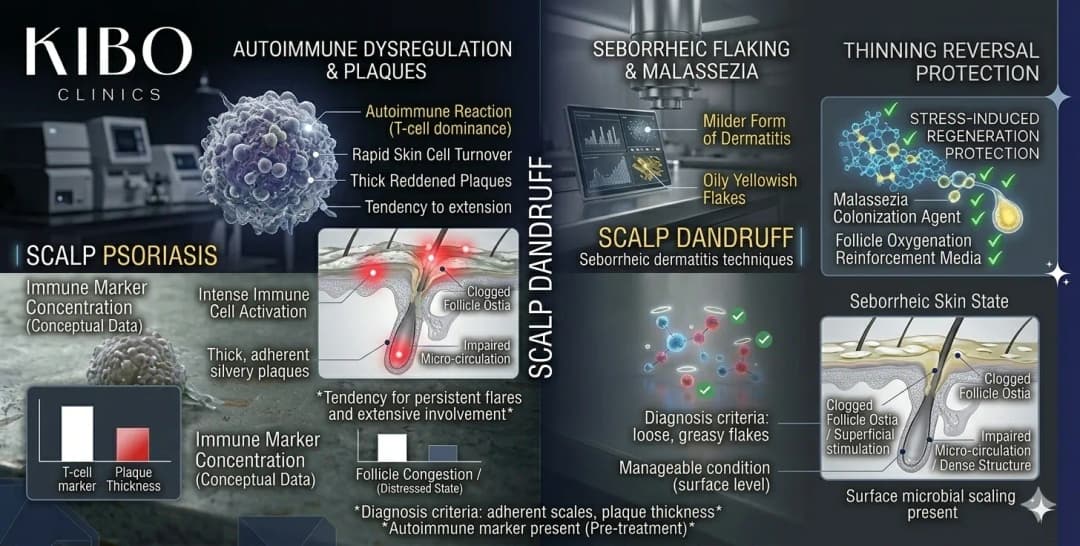
Psoriasis is an autoimmune condition where the immune system attacks skin cells, triggering rapid cell turnover that creates thick, scaly patches. On the scalp, psoriasis appears as well-defined patches of thick white or silver scales often with underlying redness. The scales are typically thicker and more adherent than dandruff flakes, and patches often extend beyond the hairline onto forehead, neck, or ears.
How It Differs From Dandruff
Dandruff creates fine, loose flakes that brush off easily and appears as diffuse scaling across the entire scalp rather than defined patches. Scalp psoriasis produces thick, adherent scales in distinct patches that don't respond well to standard dandruff shampoos. Psoriasis scales have a silvery-white appearance while dandruff flakes are usually yellowish or white without the thick buildup.
For Karan, examination revealed well-demarcated patches of thick silvery scales with underlying redness extending onto his neck and ears, classic for psoriasis rather than simple dandruff.
Treatment Differences
Standard dandruff shampoos containing zinc pyrithione or selenium sulfide often don't adequately control psoriasis. Scalp psoriasis typically requires medicated shampoos containing salicylic acid to help remove scales, coal tar preparations with anti-inflammatory effects, or prescription topical steroids for inflammation control. Severe cases may need systemic medications including biologics that treat psoriasis throughout the body.
Frequently Asked Questions
Can lifestyle changes prevent hair loss?
Lifestyle modifications can slow progression and improve overall hair health, but genetic pattern baldness requires medical or surgical intervention.
How do I know if my hair loss is temporary?
Temporary shedding from stress, nutrition, or medication typically resolves within 6-9 months, while pattern baldness progresses steadily over years.
What vitamin deficiencies cause hair loss?
Iron, vitamin D, vitamin B12, and zinc deficiencies can contribute to hair thinning, though correction only helps if deficiency exists.
Should I use special shampoos for hair loss?
Medicated shampoos help scalp health but dont treat underlying hair loss. Focus on proven treatments like minoxidil or finasteride for actual regrowth.
How often should I wash thinning hair?
Wash as needed based on oil production, typically every 2-3 days. Washing frequency doesnt affect hair loss despite common myths.
Can stress cause permanent hair loss?
Acute stress triggers temporary shedding that resolves naturally. Chronic stress may accelerate genetic hair loss but doesnt solely cause permanent baldness.
Do hair growth supplements actually work?
Supplements only help if you have documented nutritional deficiency. For people with adequate nutrition, supplements provide minimal benefit.
Is thinning hair a sign of health problems?
Sometimes. Sudden significant shedding warrants blood work to check thyroid, iron, and other markers, though most hair loss is genetic.
What foods are best for hair health?
Protein-rich foods, iron sources like lean meat and spinach, and foods with zinc and biotin support hair health, but diet alone wont reverse genetic baldness.
Why Kibo Clinics
At Kibo Clinics, we help patients recognize when scalp conditions require dermatological evaluation beyond self-treatment. Our planning-first philosophy includes proper diagnosis before pursuing hair restoration, as untreated scalp psoriasis can affect transplant candidacy and outcomes.
Disclaimer: This blog is for informational purposes only. Consult qualified healthcare providers for personalized medical advice.
Hair Regrowth Services
Gfc Therapy | Hairline Correction | Bio Fue Hair Transplant | Mesotherapy For Hair Regrowth | Direct Hair Transplant Dht | Iv Hair Boosters
Must Read
Cost Of Hair Transplant In Pune | Intermittent Fasting Hair Loss | Cost Of Hair Transplant In Ludhiana | Understanding Hair Density Vs Thickness In Simple Terms | Pcos Hair Thinning Women Guide | Biotin Supplements Hair Growth
Relevant Blogs
What To Do The Week Before And The Week After A Hair Transplant | Complete Checklist To Compare Two Hair Transplant Quotes | Saw Palmetto Hair Loss Dht Blocker | Why Not Everyone Is A Candidate For The Same Hair Restoration Approach | Minimalist Hair Care Follicle Protection | Mid Scalp Vs Hairline Density | Scalp Sensitivity Hair Pull Tolerance