
Saw Palmetto for Hair Loss: Natural DHT Blocker or Myth?
Published on Sun Apr 12 2026
You may have seen saw palmetto capsules or shampoos claiming to “block DHT naturally.” If you are noticing thinning at the temples or more hair in the shower drain, it is normal to look for a safer, plant-based option. Saw palmetto may help in some cases, but it is not a magic cure and results vary.
Hair loss, especially pattern baldness, is often linked to a hormone called DHT (dihydrotestosterone). Medicines exist that reduce DHT, but many people worry about side effects. That is why saw palmetto, a plant extract, is trending in searches like “natural DHT blocker” and “herbal remedy for hair fall.” Before starting it, you need clear facts—what it can do, what it cannot, and who may actually benefit.
A Common Story: Looking for a “Natural” Solution
Rohit, 29, from Pune, started noticing a receding hairline over two years. His father was bald by 40, so he suspected genetics. He searched online for “how to stop DHT naturally” and found saw palmetto supplements.
He tried over-the-counter capsules for six months. Initially, his hair fall seemed slightly reduced. But the thinning at the front continued slowly. Confused, he wondered whether the supplement was working at all or just delaying the process.
After a scalp assessment, he learned that while saw palmetto may mildly reduce DHT activity, it is usually weaker than medical treatments. It may support early-stage thinning but rarely reverses established bald patches. His treatment plan was adjusted based on actual scalp and follicle condition, not trends.
What Is Saw Palmetto and How Does It Affect Hair?
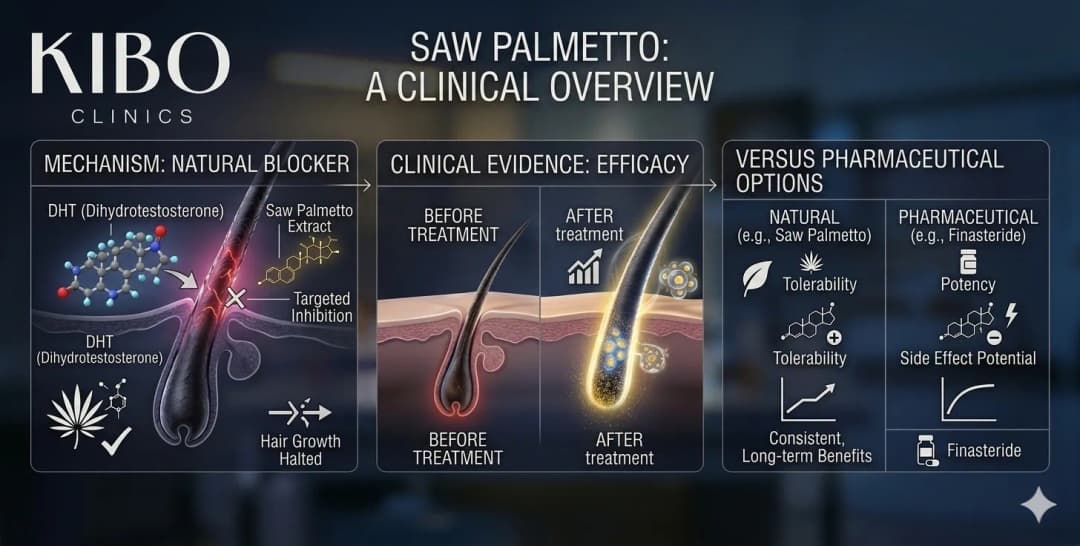
Saw palmetto is an extract from the berries of the Serenoa repens plant. It is traditionally used for prostate health. Researchers found it may reduce the activity of 5-alpha reductase, the enzyme that converts testosterone into DHT.
To understand its role in hair loss, follow the chain:
Healthy scalp supports strong follicles.
Hair follicles are sensitive mini-organs.
In genetically prone individuals, DHT binds to follicle receptors.
Over time, follicles shrink, produce thinner hair, and eventually stop producing visible strands.
This process is called miniaturization and is the main reason behind androgenetic alopecia (male and female pattern hair loss).
Saw palmetto is believed to partially block the enzyme that creates DHT. Lower DHT activity may slow follicle miniaturization. However, studies show the effect is milder compared to prescription medications.
Does It Actually Reduce DHT Levels?
Some small clinical studies suggest saw palmetto can reduce serum DHT levels modestly. But:
The reduction is not as strong or consistent as medical DHT blockers.
Absorption differs between individuals.
There is no standard dose agreed worldwide for hair loss.
So while it may influence DHT, calling it a guaranteed “natural finasteride” is misleading.
How Effective Is Saw Palmetto for Hair Loss?
Research results are mixed.
Some people with early-stage androgenetic alopecia report reduced shedding.
A few small studies show mild improvement in hair density after several months.
Many users notice no visible regrowth, especially in advanced baldness.
It seems more supportive than transformative. It may slow progression in some individuals but rarely regrows hair on completely bald areas.
If someone searches “can saw palmetto regrow hair naturally,” the honest answer is: possibly slow thinning, but unlikely to regrow lost hair significantly.
How Does Saw Palmetto Show in Men and Women?
In men, pattern baldness often begins at the temples and crown. DHT plays a strong role. Saw palmetto may slightly slow recession if started early.
In women, hair thinning is usually diffuse over the top of the scalp. DHT also contributes, but hormonal balance is more complex. Saw palmetto may offer mild support, especially in women with androgen sensitivity, but it is not a primary treatment for female hair loss.
Women with PCOS sometimes explore saw palmetto due to androgen excess. However, hormonal conditions require proper medical supervision.
What Daily Habits Make It Better or Worse?
Certain habits can influence how well any treatment works.
High stress increases cortisol, which can push hair into the shedding phase. Even if DHT is controlled, stress can continue hair fall.
Poor nutrition weakens follicles. Low protein, iron deficiency, and crash dieting reduce hair strength.
Smoking reduces scalp blood circulation. Weak circulation means weaker follicle support.
Overuse of harsh chemical treatments irritates the scalp, affecting follicle health.
Helpful habits include balanced protein intake, iron-rich foods, scalp hygiene, stress management, and proper sleep.
Mistake to avoid: taking multiple “natural DHT blockers” together without guidance. Mixing supplements can strain the liver and give unpredictable results.
What Helps First? (Relief Steps)
If you are in early thinning stage:
Start with a scalp evaluation to confirm pattern hair loss.
Correct nutritional deficiencies if present.
Consider evidence-based topical treatments alongside lifestyle correction.
If choosing saw palmetto, use standardized extracts and track changes over 4–6 months.
Expected timeline:
| Time Period | What You May Notice | Reality Check |
|---|---|---|
| 1–2 Months | Slight reduction in shedding (if responsive) | Too early for regrowth assessment |
| 3–6 Months | Possible stabilization of thinning | Visible regrowth uncommon |
| 6+ Months | Maintenance if effective | No response means reconsider approach |
If there is no improvement after six months, continuing blindly may waste time while follicles continue shrinking.
When to Meet a Hair Specialist
Consult a specialist if:
Hairline is rapidly receding within months.
You see visible scalp at crown.
Hair loss is accompanied by itching, scaling, or redness.
There is sudden heavy shedding (possible telogen effluvium).
Women notice irregular periods or signs of hormonal imbalance.
Early intervention protects follicles before permanent miniaturization occurs.
Common Myths About Saw Palmetto
Myth 1: It works exactly like prescription DHT blockers.
Reality: Its effect is milder and less predictable.
Myth 2: Being natural means zero side effects.
Reality: It may still cause digestive upset, headache, or hormonal effects in some individuals.
Myth 3: It regrows hair on bald areas.
Reality: Once follicles are inactive for long periods, regrowth is unlikely with supplements alone.
Myth 4: More dosage gives faster results.
Reality: High doses do not guarantee better outcomes and may increase risks.
Why Kibo Clinics for Hair Loss Concerns
Many patients choose Kibo Clinics for hair loss concerns because our approach addresses both current thinning and long-term planning. We begin with comprehensive scalp assessment, hair and follicle analysis, and thorough lifestyle and environmental review.
Our No Ghost Surgery pledge ensures the consulting surgeon personally performs your entire procedure, maintaining consistent quality throughout the session. We don't delegate critical steps to technicians.
The Kibo Hair Analysis (scalp and follicle assessment) is the first step in understanding your specific condition. We provide education, guidance, and support without guarantees, exaggerated claims, or miracle cure promises.
For patients who need more than supplements, options such as PRP therapy, medical management, or hair transplant planning are discussed based on stage and donor area strength. We also provide structured 12-month monitoring and follow-up to track progress and adjust the approach if needed.
---
If you are unsure whether saw palmetto is enough for your stage of hair loss, start with a proper scalp evaluation instead of guessing.
---
Frequently Asked Questions
Does saw palmetto really block DHT naturally?
Saw palmetto may reduce the activity of the enzyme that converts testosterone to DHT. However, its effect is usually mild compared to prescription medication. Some people experience reduced shedding, while others notice no change. Results are not guaranteed and depend on genetics and stage of hair loss.
How long should I take saw palmetto for hair loss?
Most users try it for at least 3 to 6 months before assessing results. Hair growth cycles are slow, so early judgment can be misleading. If there is no stabilization after six months, alternative options should be discussed. Long-term use should be monitored for side effects.
Can women take saw palmetto for thinning hair?
Some women use it, especially if hair loss is linked to androgen sensitivity. However, hormonal balance in women is complex. It is not suitable during pregnancy and should be taken under medical guidance. Benefits are usually modest.
Are there side effects of saw palmetto?
Possible side effects include stomach discomfort, headache, reduced libido, or mild hormonal changes. Not everyone experiences these. Because it affects hormones, it should not be taken casually without awareness.
Is saw palmetto better than finasteride?
Finasteride has stronger clinical evidence for DHT reduction. Saw palmetto is considered milder and may be preferred by those seeking herbal options. However, it may not provide similar levels of effectiveness.
Can saw palmetto regrow hair on bald spots?
It is unlikely to regrow hair on completely bald areas where follicles are inactive. It may help slow thinning in early stages. Established baldness usually requires advanced treatments.
Should I use saw palmetto shampoo or capsules?
Capsules may have more systemic effect on DHT. Shampoos have limited contact time with the scalp, so their impact is generally mild. Neither guarantees visible regrowth.
Can I combine saw palmetto with PRP or other treatments?
In some cases, it may be combined with other therapies under supervision. Combination approaches can target different aspects of hair loss. However, stacking multiple treatments without guidance can cause confusion about what is actually working.
Disclaimer
This content is for informational purposes only and does not substitute personalized medical advice. Responses to saw palmetto vary based on genetics, hormonal profile, and stage of hair loss. Supplements are not guaranteed treatments, and professional evaluation is recommended before starting or combining therapies.
Hair Transplant
Sapphire FUE | Direct Hair Transplant | Bio FUE | Corrective Transplant
Hair Regrowth
PRP Therapy | GFC Therapy | Mesotherapy | Microneedling | IV Hair Boosters
Must Read
Hair Transplant Guide | FUE Complete Guide | Procedure Steps | Results Timeline | Norwood Scale
Relevant Blogs
Hair Myths Busted | Hair Breakage Guide | Kibo Experience
---