Non-surgical hair health: what actually slows shedding, which ingredients have evidence behind them, and how to build a routine you will keep. Written by the same team that runs our transplant clinics.
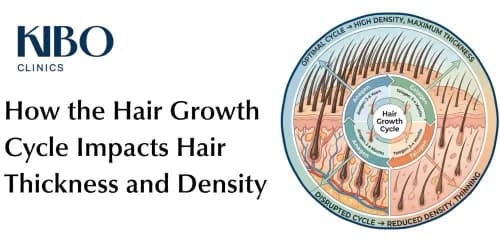
Hair thickness describes the calibre of each individual fibre. Hair density describes how many visible hairs are contributing to coverage in a given area and how much scalp show-through you notice.
Published: August 12, 2026 – 5 min read

The hair growth cycle can recover when the follicle remains alive and the cause of hair fall is temporary or can be corrected. This is common with diffuse shedding after illness, major stress, childbirth, rapid weight loss, some medicines or a clinically relevant deficiency.
Published: August 12, 2026 – 5 min read
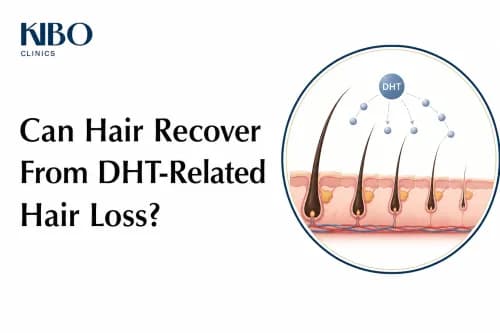
A direct, treatment-focused guide explaining when DHT-related hair loss can improve, when recovery is limited, and why early diagnosis changes the plan.
Published: August 12, 2026 – 5 min read

Yes, hair can recover to some extent from androgenetic alopecia, but the realistic answer depends on how advanced the miniaturisation is. Androgenetic alopecia, also called pattern hair loss, is not simply extra shedding.
Published: August 12, 2026 – 5 min read

Telogen effluvium is a common cause of sudden hair shedding where more hairs than usual move into the resting, or telogen, phase of the hair growth cycle. The follicles are usually not dead. The issue is timing: too many hairs pause growth and prepare to shed around the same period, so the fall looks sudden and alarming.
Published: August 12, 2026 – 5 min read
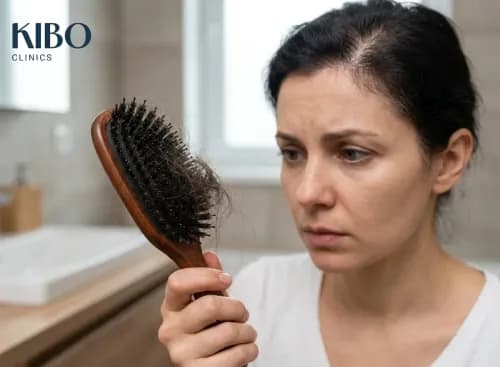
Telogen effluvium is a reactive shedding condition. It happens when a physical, hormonal, nutritional, medical or emotional stressor pushes more follicles than usual out of the active growth phase and into the resting phase.
Published: August 12, 2026 – 5 min read
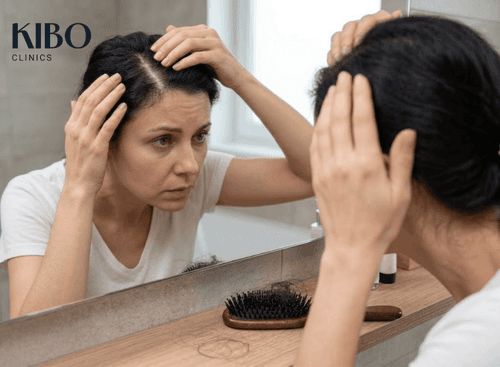
Yes, hair can recover after telogen effluvium when the trigger has passed and the follicles remain healthy. Telogen effluvium is usually a shift in the hair growth cycle, not permanent follicle destruction.
Published: August 12, 2026 – 5 min read

Alopecia areata is an autoimmune form of hair loss in which the body’s immune system targets hair follicles. The result is usually sudden, smooth, round or oval patches of hair loss. For a full overview of symptoms and types, read alopecia areata explained. The important point is that alopecia areata affects the follicle’s behaviour, not just the visible strand.
Published: August 12, 2026 – 5 min read

For unexplained hair loss, a dermatologist is usually the safer first appointment because a dermatologist is a medical doctor who can diagnose disease and prescribe treatment. A trichologist can be useful for non-medical hair and scalp support, but the title does not by itself mean the person has a medical degree.
Published: August 12, 2026 – 5 min read
YOUR HAIR JOURNEY STARTS HERE