Non-surgical hair health: what actually slows shedding, which ingredients have evidence behind them, and how to build a routine you will keep. Written by the same team that runs our transplant clinics.

Discover the truth about silk pillowcases for hair health, understand friction-related hair damage, learn when silk provides genuine benefits versus marketing hype, and get evidence-based hair protection guidance.
Published: August 12, 2026 – 5 min read

Discover how styling products create scalp and hair buildup, understand clarifying versus detox marketing myths, learn effective buildup removal methods, prevent future accumulation, and recognize when scalp issues need medical evaluation.
Published: August 12, 2026 – 5 min read
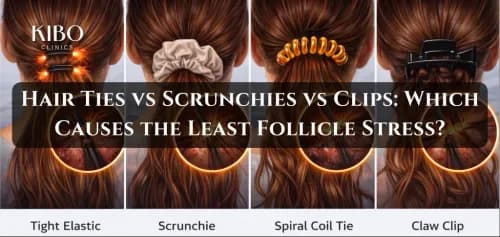
The way you tie your hair matters more than you think. A tight elastic band wrapped around the same section of hair every day creates a concentrated zone of tension, friction, and breakage that can turn into visible thinning over months and years. A scrunchie distributes that same hold across a wider surface area with softer material, reducing the peak stress on any single follicle by 60 to 70 percent.
Published: August 12, 2026 – 5 min read
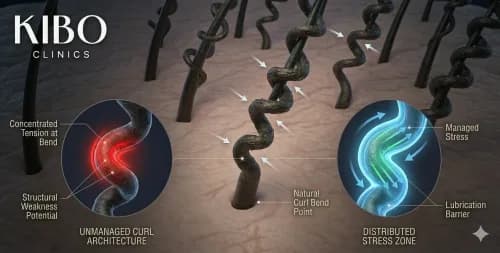
Curly and coily hair can break more easily because its bends, twists and variable cross-sectional shape create points where mechanical stress concentrates. Dermatology references also note that natural scalp oil travels less evenly along a curved strand, so the lengths may be drier and more vulnerable to friction.
Published: August 12, 2026 – 5 min read
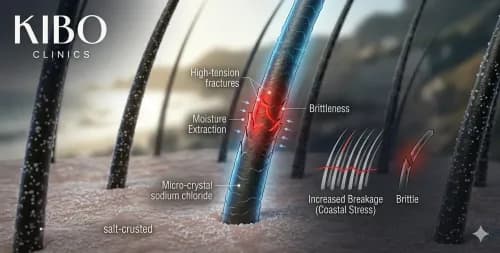
Salt water damages hair by extracting moisture from the cortex and roughening the cuticle making strands brittle and breakage-prone long before any root-level hair fall occurs.
Published: August 12, 2026 – 5 min read
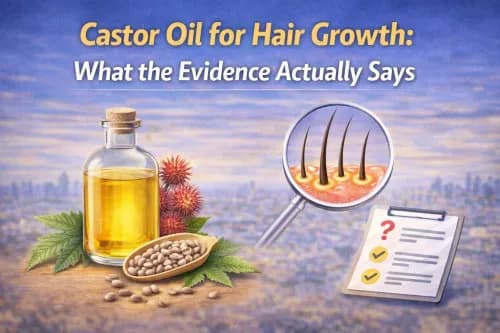
Castor oil for hair growth is widely popular — but current scientific evidence does not support the claim that it directly increases hair growth or creates new hair follicles. What it does effectively is improve hair quality by reducing breakage, locking in moisture, and supporting scalp health. This can make hair appear thicker over time, but it does not change the biological rate of hair growth.
Published: August 12, 2026 – 5 min read
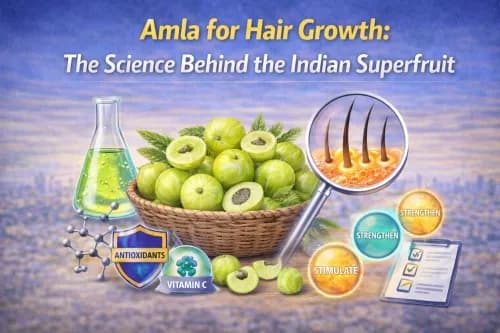
Amla may support hair and scalp health, but it is not proven to regrow hair in the same way as established medical treatments. The strongest direct human evidence comes from a small trial of an oral syrup containing amla fruit in women with androgenetic alopecia.
Published: August 12, 2026 – 5 min read

Mumbai’s air has high levels of particulate matter, traffic emissions, construction dust, and seasonal smog. All of these contribute to hair fall by settling on the scalp, stressing the hair follicles, and weakening the hair shaft. Pollutants such as PM₂.₅ and PM₁₀ mix with sweat, oil, and product buildup, which can leave the scalp congested without oxygen and make hair feel dry, dull, or brittle.
Published: August 12, 2026 – 5 min read
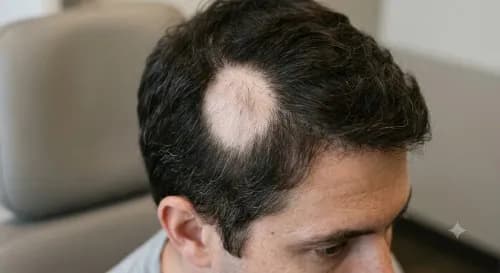
Hair often can grow back after alopecia areata because the follicles usually remain present beneath the skin. The immune system interrupts active growth, but it does not normally replace follicles with scar tissue. Some people recover without treatment, some regrow faster with treatment, and others have incomplete or repeated episodes.
Published: August 12, 2026 – 5 min read
YOUR HAIR JOURNEY STARTS HERE
