Non-surgical hair health: what actually slows shedding, which ingredients have evidence behind them, and how to build a routine you will keep. Written by the same team that runs our transplant clinics.
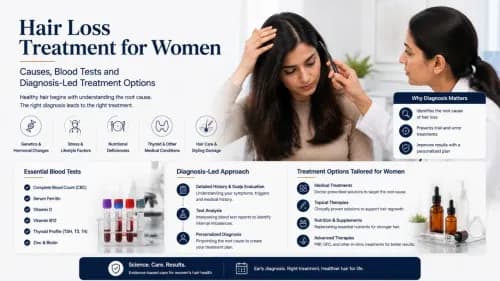
Female hair loss can have several causes, including female-pattern hair loss, hormonal conditions such as PCOS or thyroid disease, nutritional deficiencies, postpartum changes, menopause, and stress. Identifying the cause is the first step towards choosing the right hair treatment for women.
August 27, 2026 – 5 min read
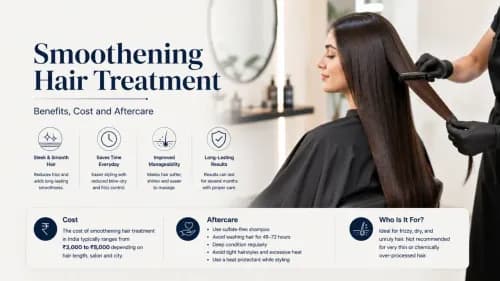
Hair smoothening treatment can soften natural waves, tame frizz and add a glossy finish while keeping some natural bounce, making hair easier to manage without necessarily making it completely straight. The treatment can also cause dryness, breakage or irritation, so understanding the process, cost, side effects and maintenance helps you make an informed choice.
August 21, 2026 – 5 min read
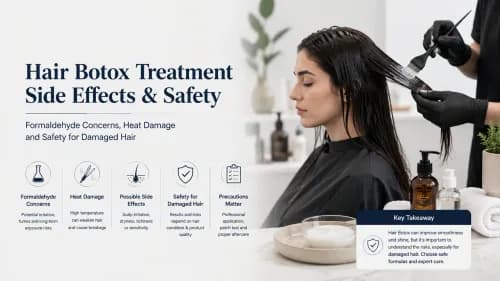
Hair Botox is a salon conditioning treatment that can temporarily improve hair smoothness, shine, and manageability. However, side effects can include scalp irritation, chemical sensitivity, dryness, texture changes, and hair breakage, particularly when fragile hair is exposed to chemical or heat stress.
August 17, 2026 – 5 min read

A vegan hair treatment is a product, salon service, supplement, or medical formulation made without animal-derived ingredients. While some vegan treatments improve hair quality, support scalp health, or help correct a confirmed nutritional deficiency, they do not automatically treat medical hair loss.
August 17, 2026 – 5 min read
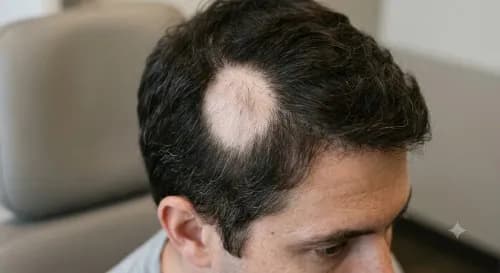
Hair often can grow back after alopecia areata because the follicles usually remain present beneath the skin. The immune system interrupts active growth, but it does not normally replace follicles with scar tissue. Some people recover without treatment, some regrow faster with treatment, and others have incomplete or repeated episodes.
August 12, 2026 – 5 min read

Alopecia areata is an autoimmune form of hair loss in which the body’s immune system targets hair follicles. The result is usually sudden, smooth, round or oval patches of hair loss. For a full overview of symptoms and types, read alopecia areata explained. The important point is that alopecia areata affects the follicle’s behaviour, not just the visible strand.
August 12, 2026 – 5 min read
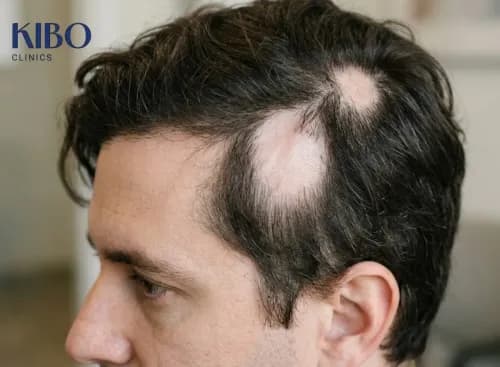
Alopecia areata is an autoimmune, usually non-scarring form of hair loss. In simple terms, the immune system reacts against hair follicles and interrupts active hair production. The result is often a sudden smooth patch on the scalp, beard, eyebrow or another hair-bearing area. Because “alopecia” means hair loss and “areata” means patchy, the name itself describes the most common pattern.
September 10, 2026 – 5 min read
Yes, hair can recover after telogen effluvium when the trigger has passed and the follicles remain healthy. Telogen effluvium is usually a shift in the hair growth cycle, not permanent follicle destruction.
August 12, 2026 – 5 min read
Telogen effluvium is a reactive shedding condition. It happens when a physical, hormonal, nutritional, medical or emotional stressor pushes more follicles than usual out of the active growth phase and into the resting phase.
August 12, 2026 – 5 min read

Telogen effluvium is a common cause of sudden hair shedding where more hairs than usual move into the resting, or telogen, phase of the hair growth cycle. The follicles are usually not dead. The issue is timing: too many hairs pause growth and prepare to shed around the same period, so the fall looks sudden and alarming.
August 12, 2026 – 5 min read

Yes, hair can recover to some extent from androgenetic alopecia, but the realistic answer depends on how advanced the miniaturisation is. Androgenetic alopecia, also called pattern hair loss, is not simply extra shedding.
August 12, 2026 – 5 min read
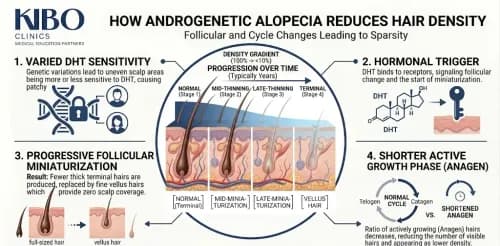
Androgenetic alopecia reduces hair density gradually because it changes how susceptible follicles behave over time. The follicle does not usually stop producing hair in one sudden moment. Instead, the same follicle produces a thinner, shorter and less visible strand with each affected cycle. That is why early pattern hair loss can look like reduced volume before it looks like obvious baldness.
August 31, 2026 – 5 min read
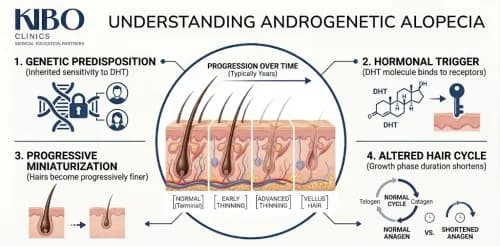
Androgenetic alopecia is the medical name for genetic pattern hair loss. In men, it is commonly called male pattern baldness. In women, it is often called female pattern hair loss. The word “androgenetic” points to two main drivers: androgen hormones and inherited sensitivity of specific scalp follicles.
August 12, 2026 – 5 min read
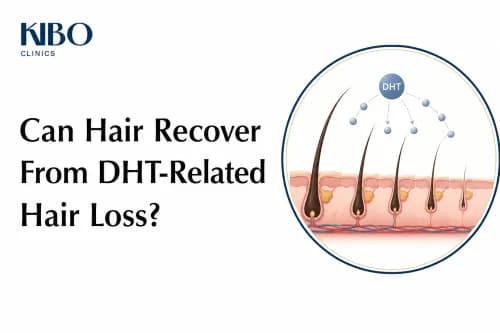
A direct, treatment-focused guide explaining when DHT-related hair loss can improve, when recovery is limited, and why early diagnosis changes the plan.
August 12, 2026 – 5 min read

The hair growth cycle can recover when the follicle remains alive and the cause of hair fall is temporary or can be corrected. This is common with diffuse shedding after illness, major stress, childbirth, rapid weight loss, some medicines or a clinically relevant deficiency.
August 12, 2026 – 5 min read
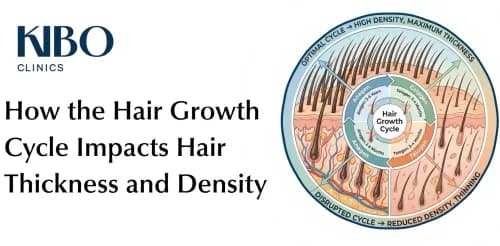
Hair thickness describes the calibre of each individual fibre. Hair density describes how many visible hairs are contributing to coverage in a given area and how much scalp show-through you notice.
August 12, 2026 – 5 min read
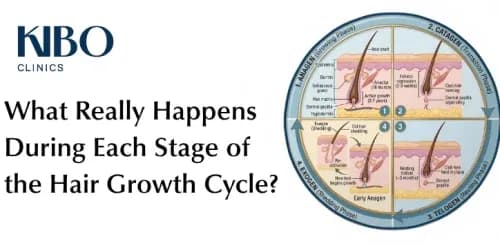
The hair growth cycle is the repeating process through which a follicle makes a hair shaft, slows down, rests, releases the old shaft and begins again. The strand above the scalp is not the whole story.
August 12, 2026 – 5 min read
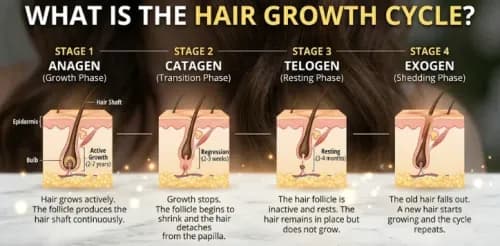
The hair growth cycle is the repeating biological process that controls how each follicle grows a strand, slows down, rests, sheds the old strand, and starts again. A follicle is not a permanent hair-producing machine. It moves through active and resting states, and the visible hair on your scalp is only the part of that cycle you can see.
August 12, 2026 – 5 min read

If you switched to an expensive professional shampoo and conditioner for hair fall and nothing improved, the products are not failing you - they are solving a different problem. Repair shampoos fix shaft damage: dryness, breakage, split ends.
August 12, 2026 – 5 min read
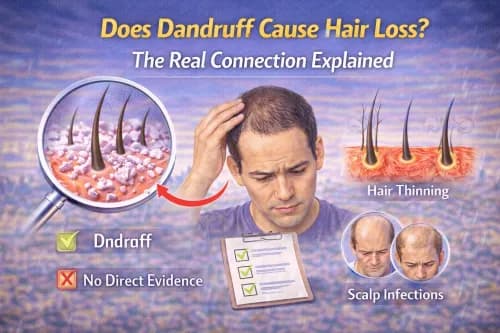
Dandruff itself does not directly cause permanent hair loss, but it can lead to increased hair shedding when left untreated. The itching, inflammation, and fungal overgrowth associated with dandruff weaken the scalp environment and can damage hair roots over time. Once the scalp condition is treated, hair fall usually improves.
August 12, 2026 – 5 min read
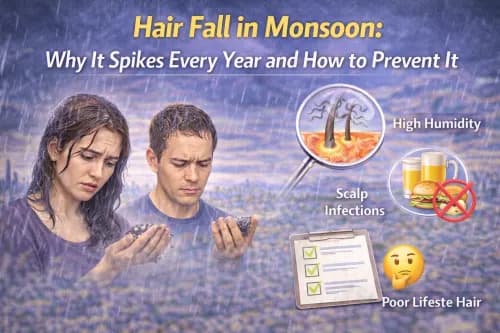
This guide separates what's actually happening during monsoon hair fall into four pathways: shaft breakage, scalp conditions, possible seasonal shedding, and unrelated disease. It covers the real seasonal research (with its limitations), how to tell shedding from breakage, dandruff from fungal infection, practical monsoon hair care, and clear red flags for when to see a dermatologist.
September 16, 2026 – 5 min read
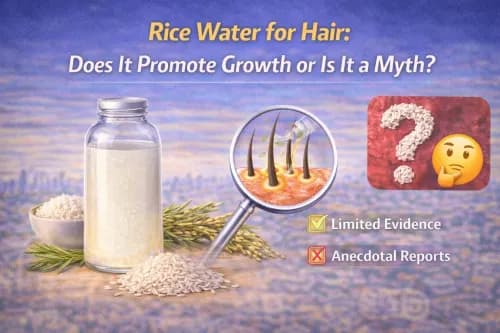
There is no strong clinical evidence that homemade rice water makes scalp follicles grow faster, increases hair density or reverses hair loss. Its more realistic role is as a temporary hair-shaft rinse that may improve smoothness or reduce friction for some people.
August 21, 2026 – 5 min read
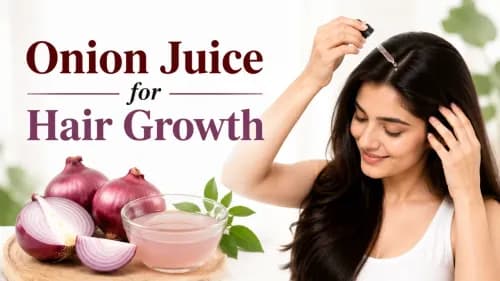
Onion Juice for Hair Growth has limited evidence, mainly for patchy alopecia areata. Learn what studies show, risks, safe use, and better-supported options.
August 21, 2026 – 5 min read
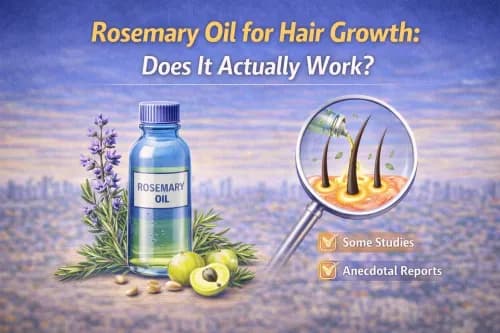
Rosemary oil for hair growth does have real scientific support — but with limitations. Studies show it can improve hair growth by increasing blood circulation, reducing inflammation, and mildly inhibiting DHT (a hormone linked to hair loss). However, its effects are gradual and most useful in early-stage hair thinning. It does not regrow hair in completely inactive follicles.
August 12, 2026 – 5 min read
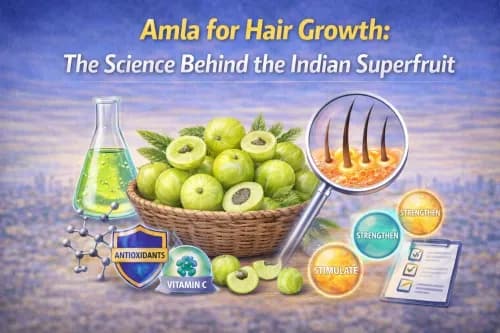
Amla may support hair and scalp health, but it is not proven to regrow hair in the same way as established medical treatments. The strongest direct human evidence comes from a small trial of an oral syrup containing amla fruit in women with androgenetic alopecia.
August 12, 2026 – 5 min read
YOUR HAIR JOURNEY STARTS HERE