Not ready for a hair transplant, but losing more hair than you'd like? PDO (Polydioxanone) thread therapy is a minimally invasive, non-surgical treatment that uses FDA-cleared, biodegradable sutures inserted directly into the scalp to reawaken dormant hair follicles, improve scalp blood flow, and stimulate new collagen. The threads dissolve naturally over months, but the regenerative effects they trigger can last considerably longer.
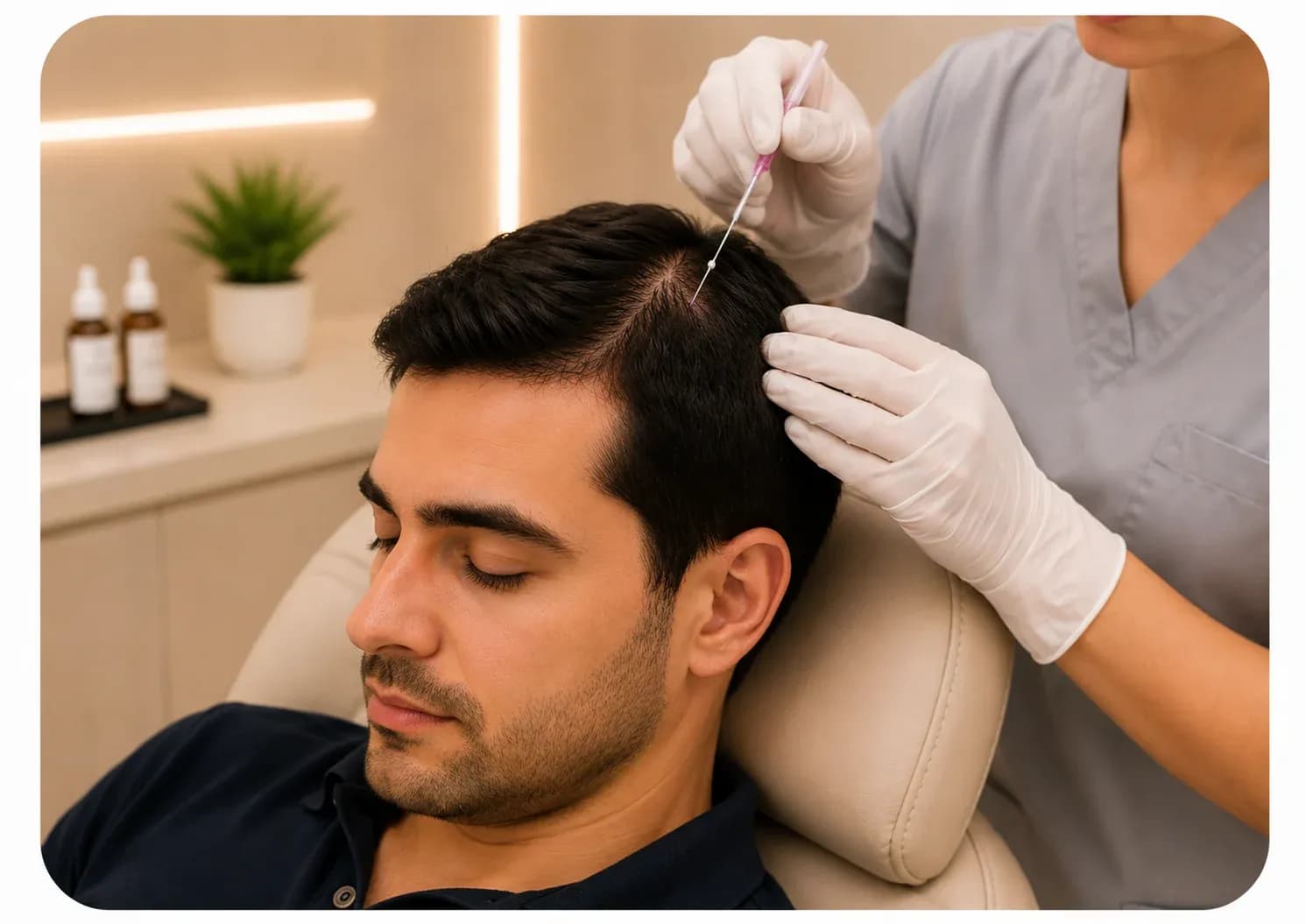
PDO (Polydioxanone) threads are fine, biodegradable medical sutures, the same material that has been used safely in surgical stitching for decades. When inserted beneath the scalp, they act as a scaffold that triggers a cascade of biological activity
A thorough evaluation of your scalp condition, hair loss pattern, follicle density, and overall health is conducted. This determines which areas will benefit most from thread placement and how many threads are appropriate. Both under-threading and over-threading carry risks and must be carefully calibrated.
A local anaesthetic is applied to the scalp before treatment begins. Most patients describe the procedure as quick and comfortable. The threads are inserted using fine needles smaller than those used in standard injections.
PDO monofilament threads are inserted into the dermis (middle layer of skin) of the scalp, typically 1 cm apart. Thread count is carefully controlled. 20–40 threads per session are inserted. The needles are withdrawn; the threads remain in place.
Where clinically appropriate, PDO threads may be administered alongside PRP or GFC in the same session. combining threads with PRP produces better outcomes than either treatment alone.
Recovery is rapid for most patients. Aftercare instructions are provided, including avoiding hot showers, hair colouring, and vigorous scalp massage for initial days.
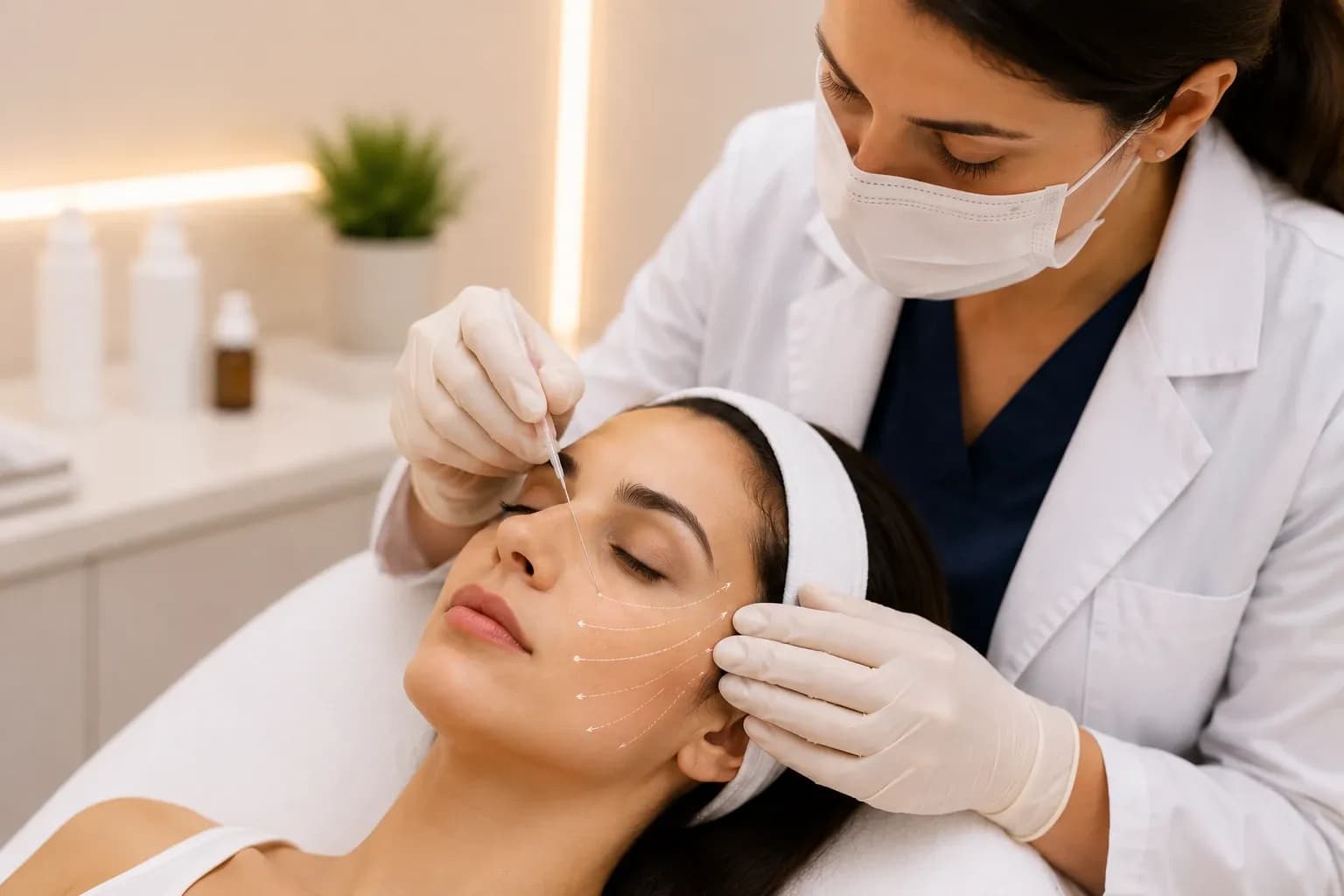
Ensure only qualified medical professionals administer PDO thread procedures never aesthetic technicians.
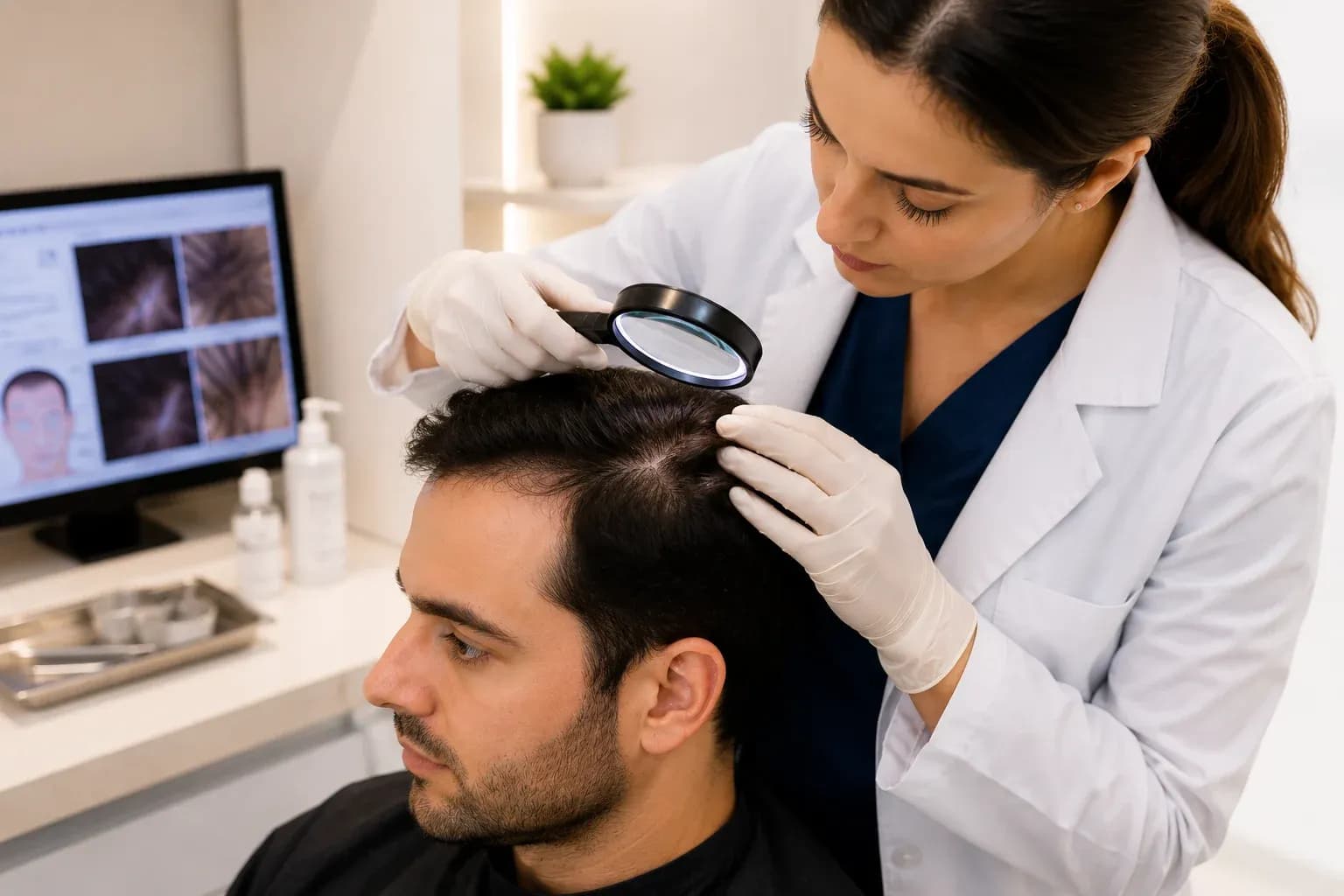
Conduct a detailed scalp assessment before every treatment to determine optimal thread type, placement, count, and depth.
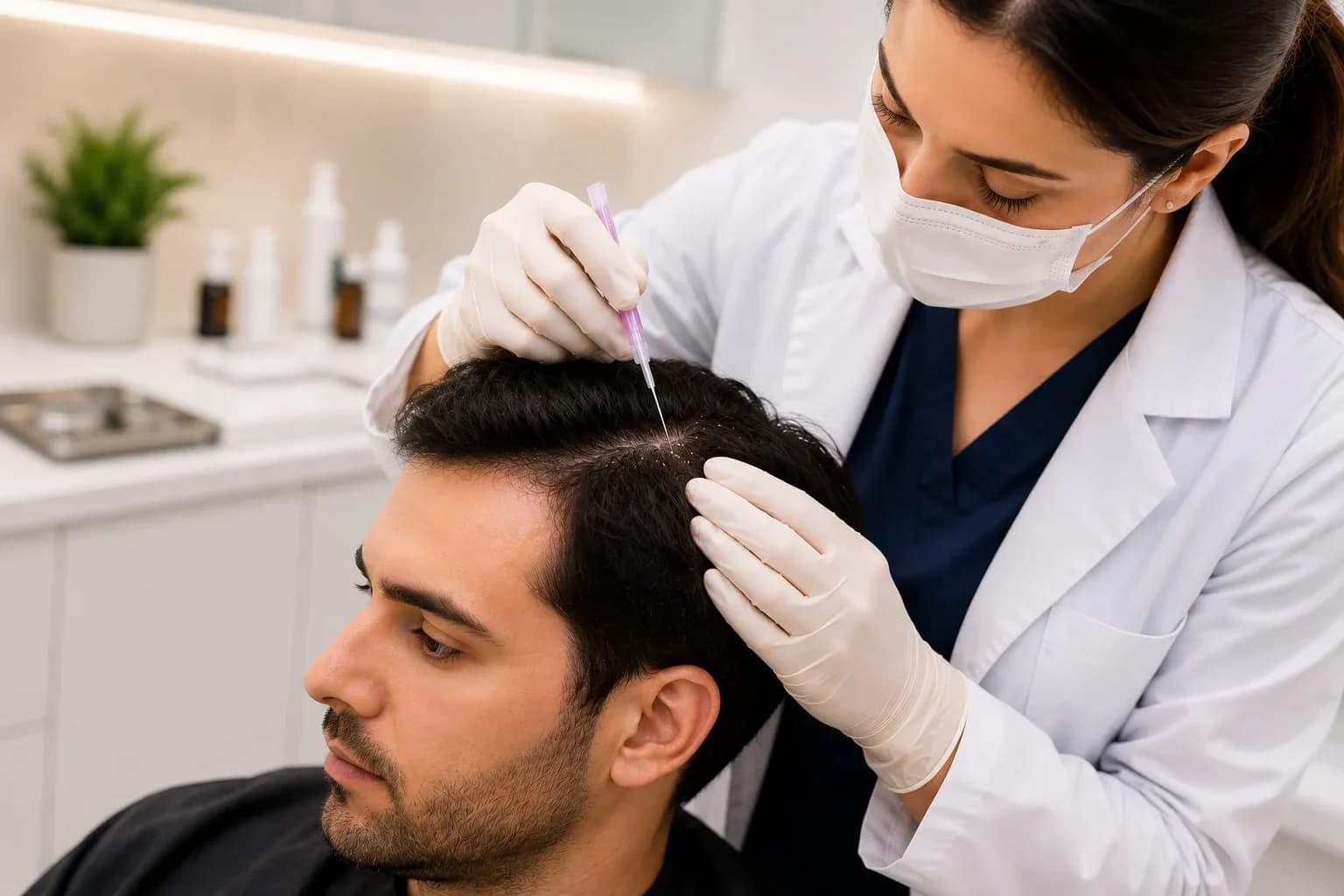
Calibrate thread count precisely avoiding both under-treatment and the over-threading that can trigger fibrotic complications.
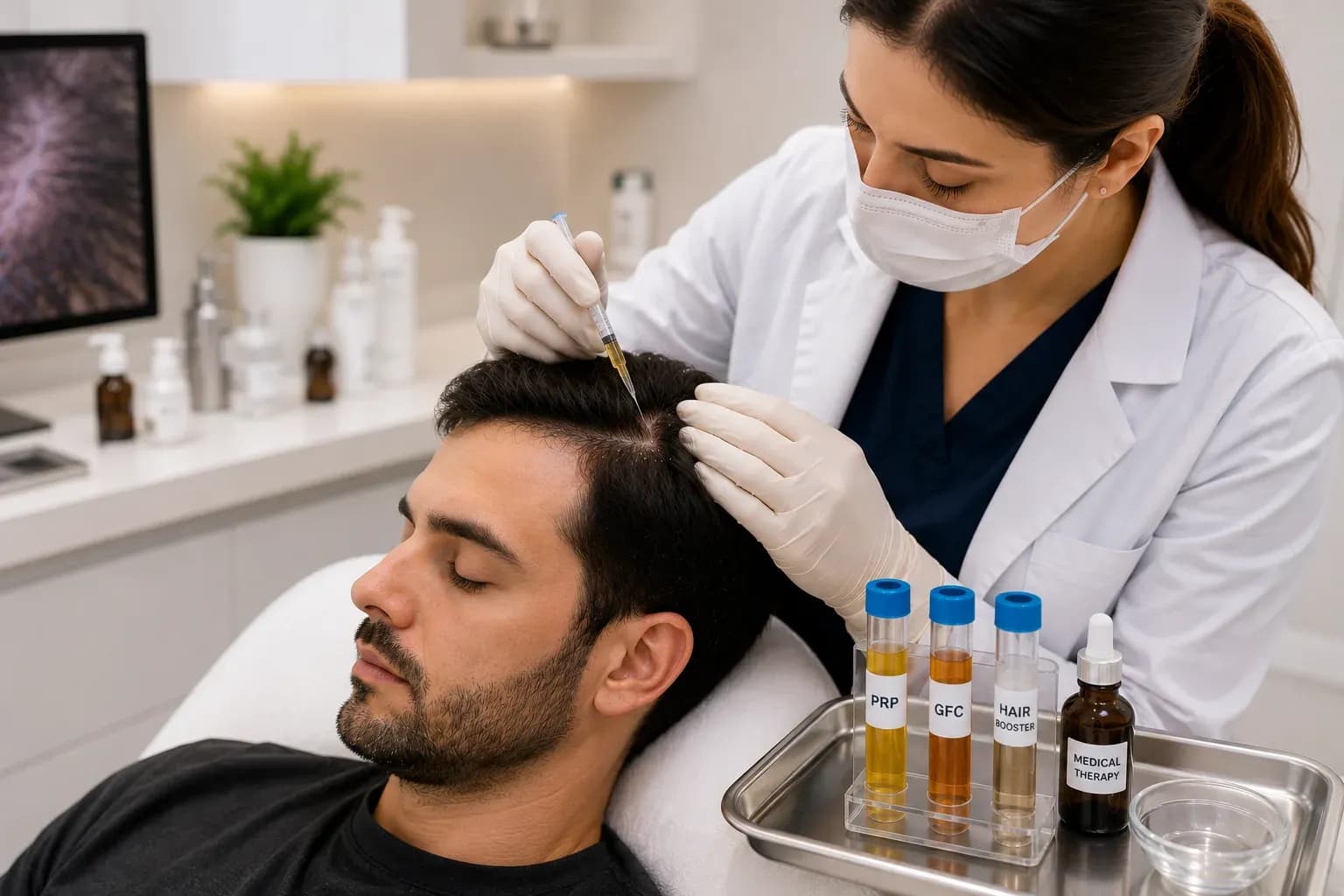
Integrate combination therapy (PRP, GFC, medical therapy) where clinically supported to maximise results.
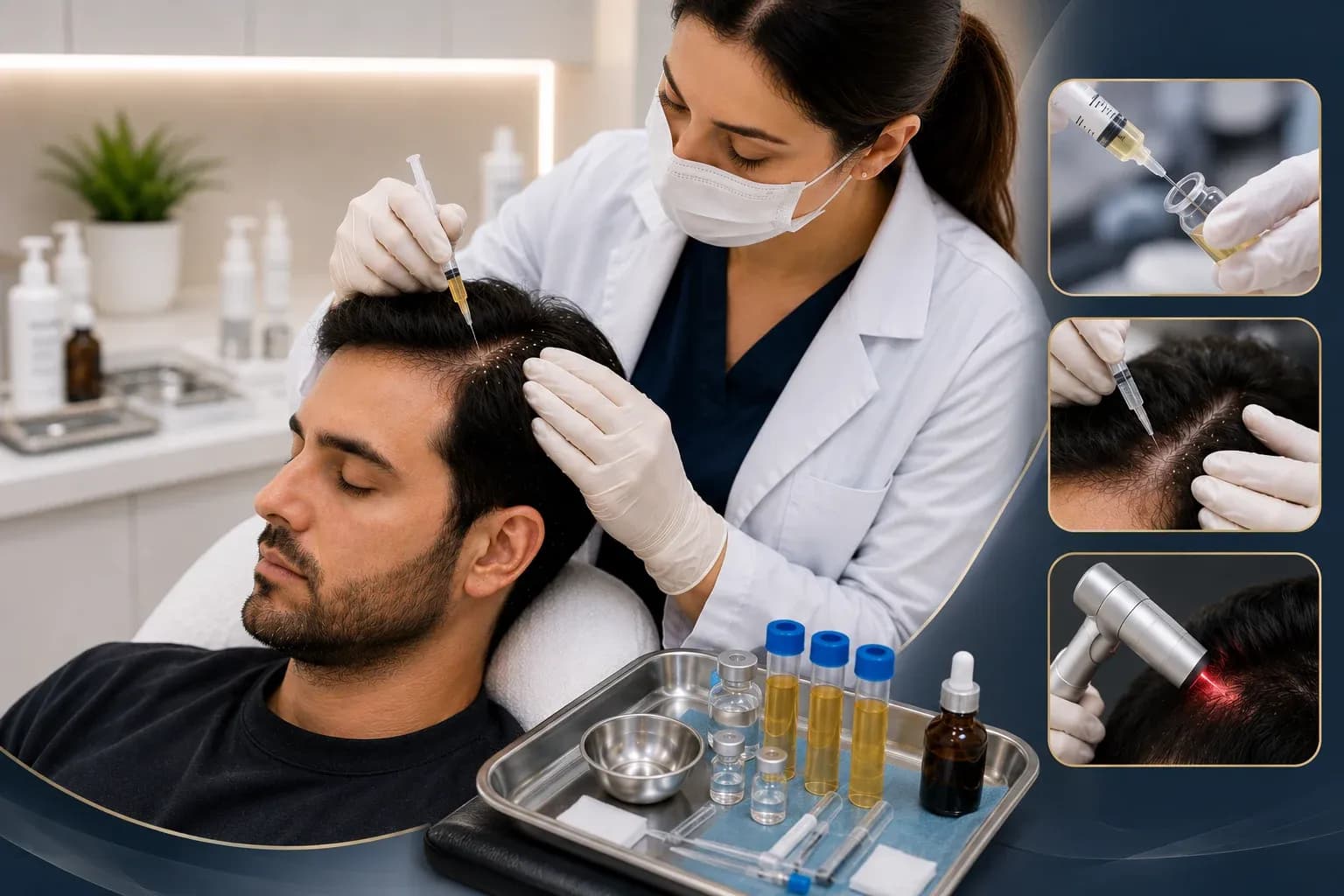
Apply advanced pain management techniques and maintain a fully sterile environment throughout.
PDO thread therapy is suitable for those who:
Experience diffuse thinning and reduced hair density especially women with female pattern hair loss (Ludwig Grade I–II).
Present with early-to-moderate androgenetic alopecia (Norwood Grade I–III for men) where follicles are weakened but still present.
Have not responded adequately to Minoxidil or Finasteride and are looking for an additional treatment modality.
Seek to improve scalp vascularity and circulation for better hair health.
Are not suitable candidates for a surgical hair transplant.
Want to enhance the results of PRP, GFC, LLLT, or medical therapy with a complementary treatment.
Have undergone a hair transplant and wish to improve density and quality in the surrounding areas.
A personalised consultation with our doctor will determine whether PDO Threads for hair growth is the right option for you.
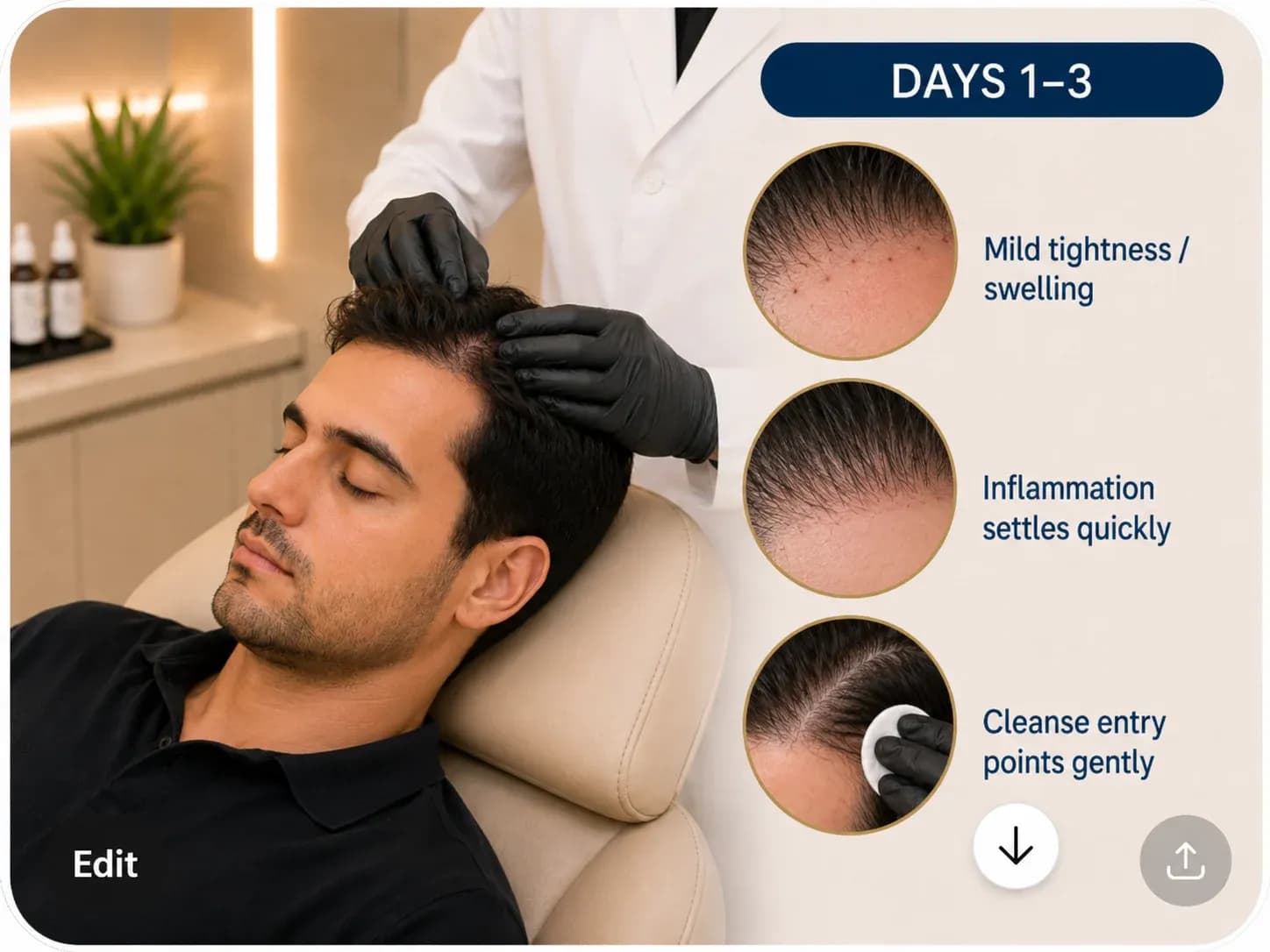
Mild tightness, swelling, or pinprick marks at insertion sites are normal and expected. Peak inflammation settles quickly. Gently cleanse entry points as directed by your doctor.
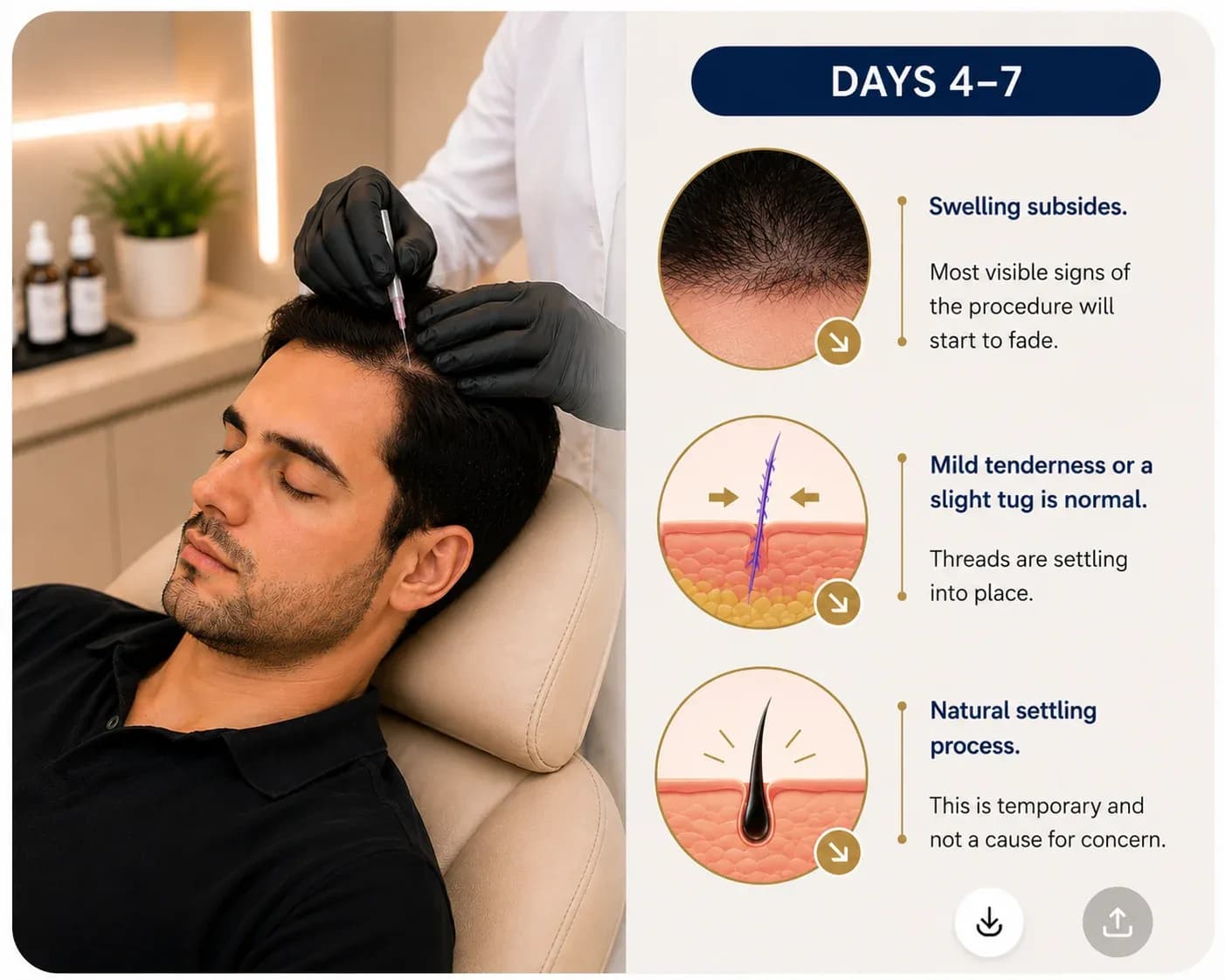
Swelling subsides. You may feel mild tenderness or a slight tug as threads settle. This is the natural settling process and is not a cause for concern.
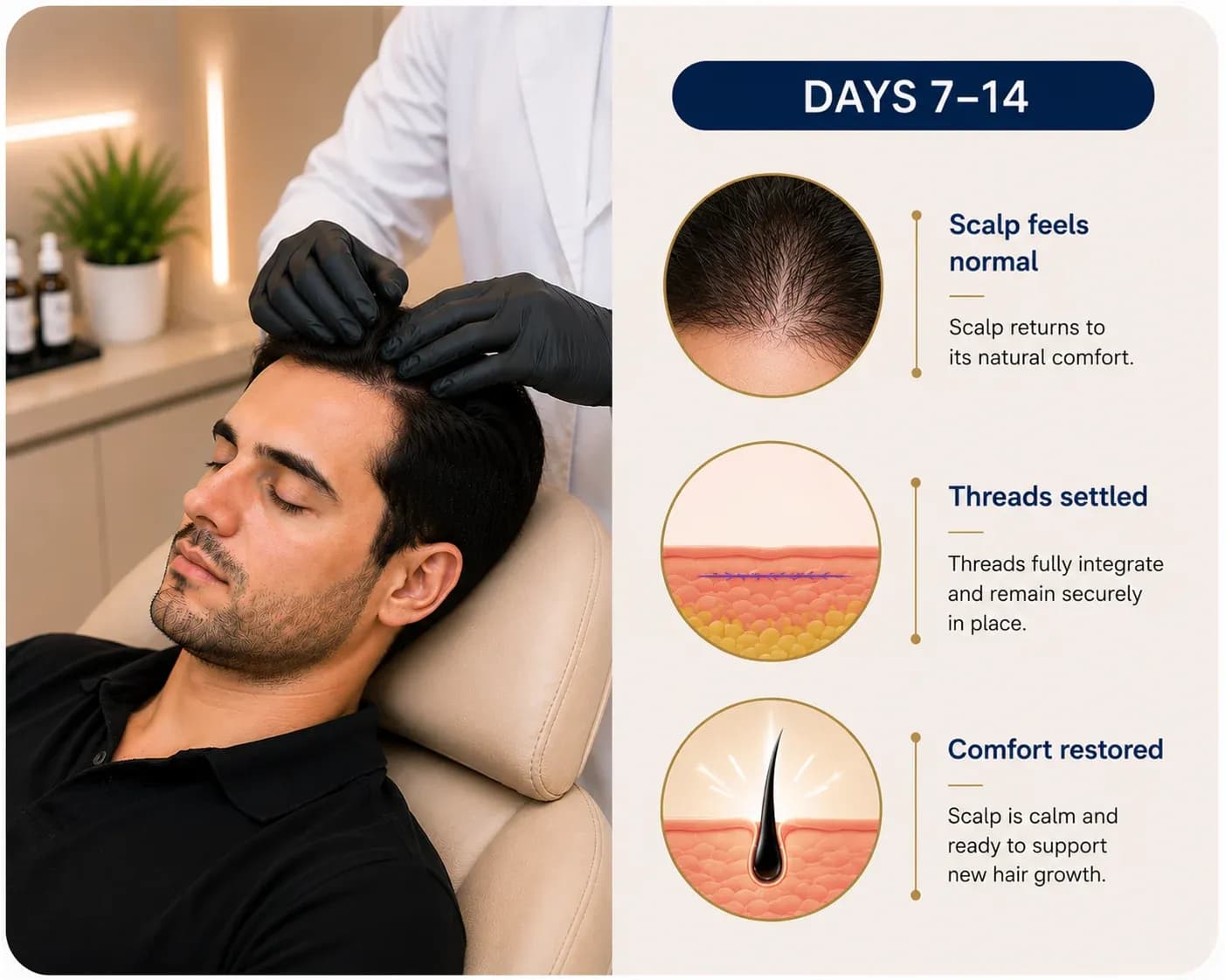
Scalp returns to normal comfort as threads fully settle into position.
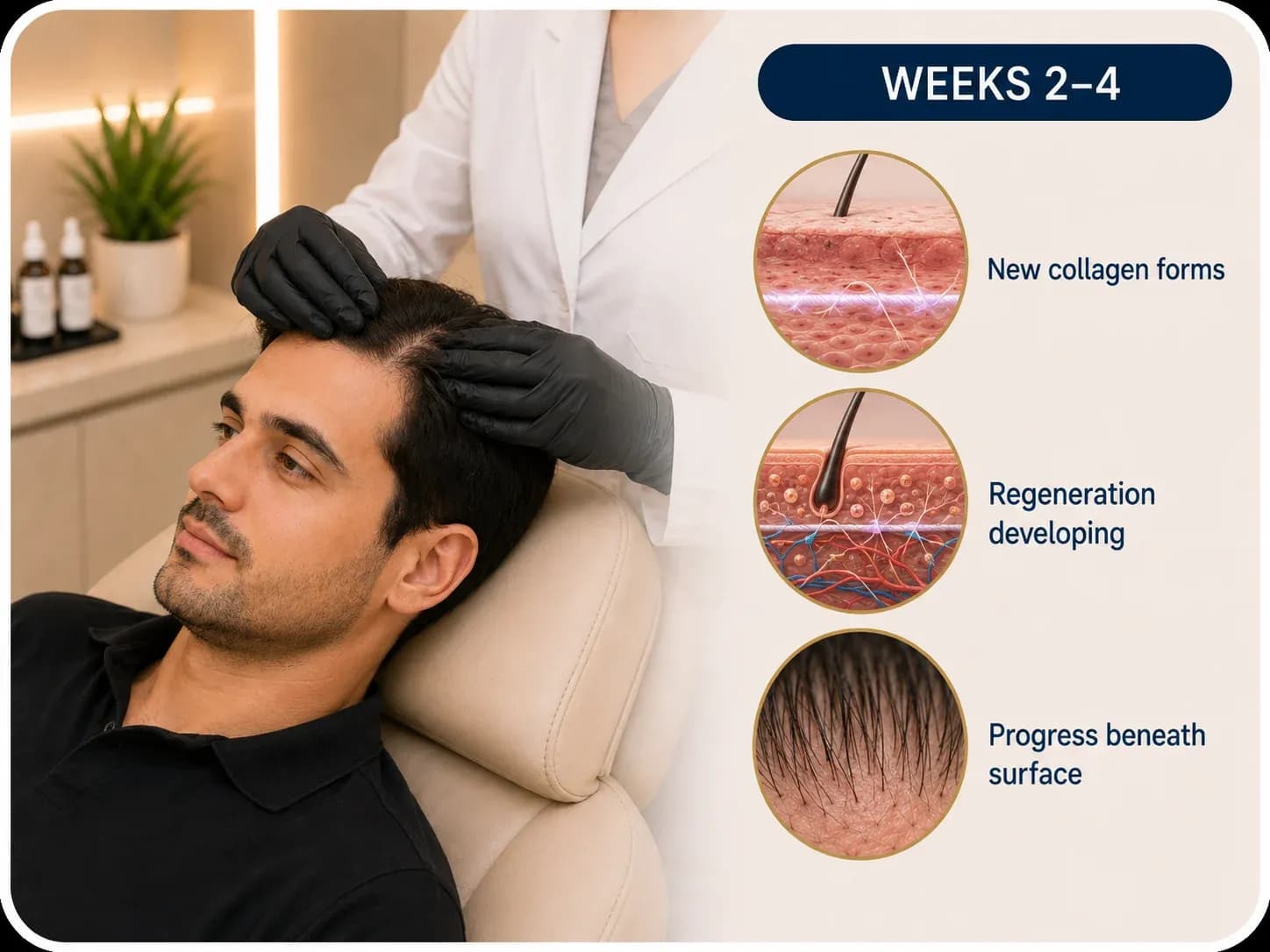
New collagen begins forming around the threads beneath the surface. Long-term regenerative changes are developing even if no visible difference is apparent yet.
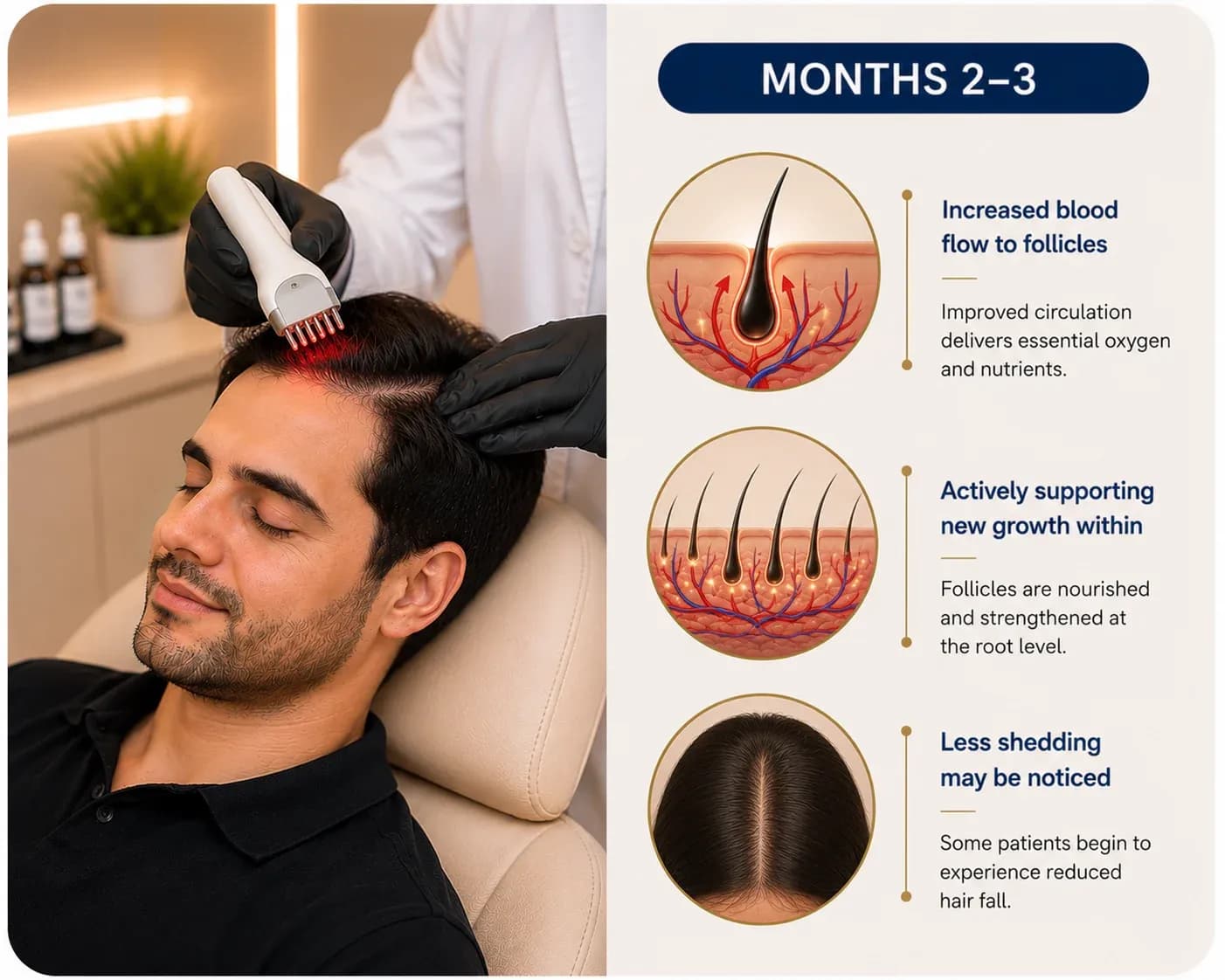
A quieter phase externally but increased blood flow to follicles is actively supporting new growth within. Some patients begin to notice slightly less shedding.
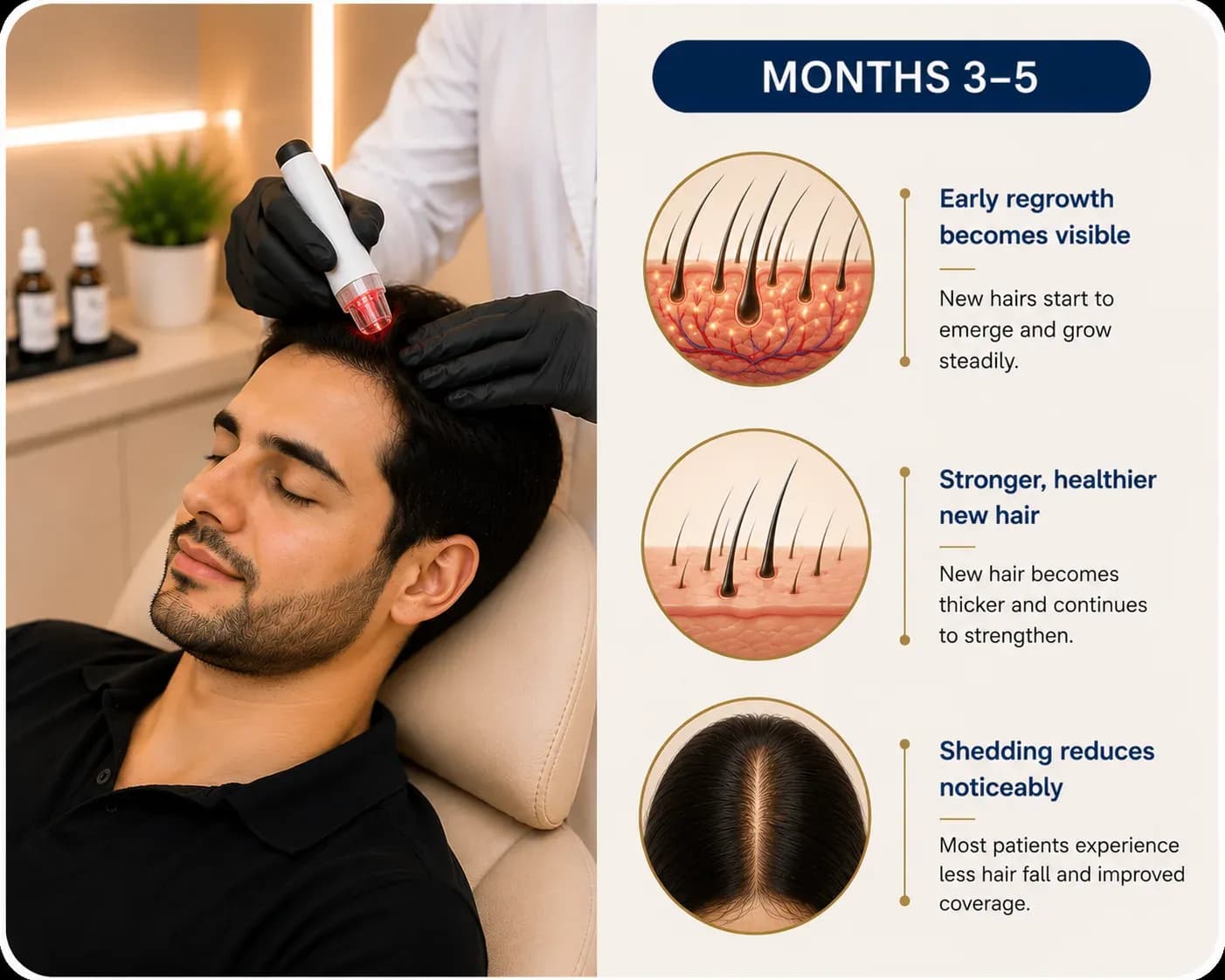
Early regrowth becomes visible and hair shedding reduces noticeably for most patients.
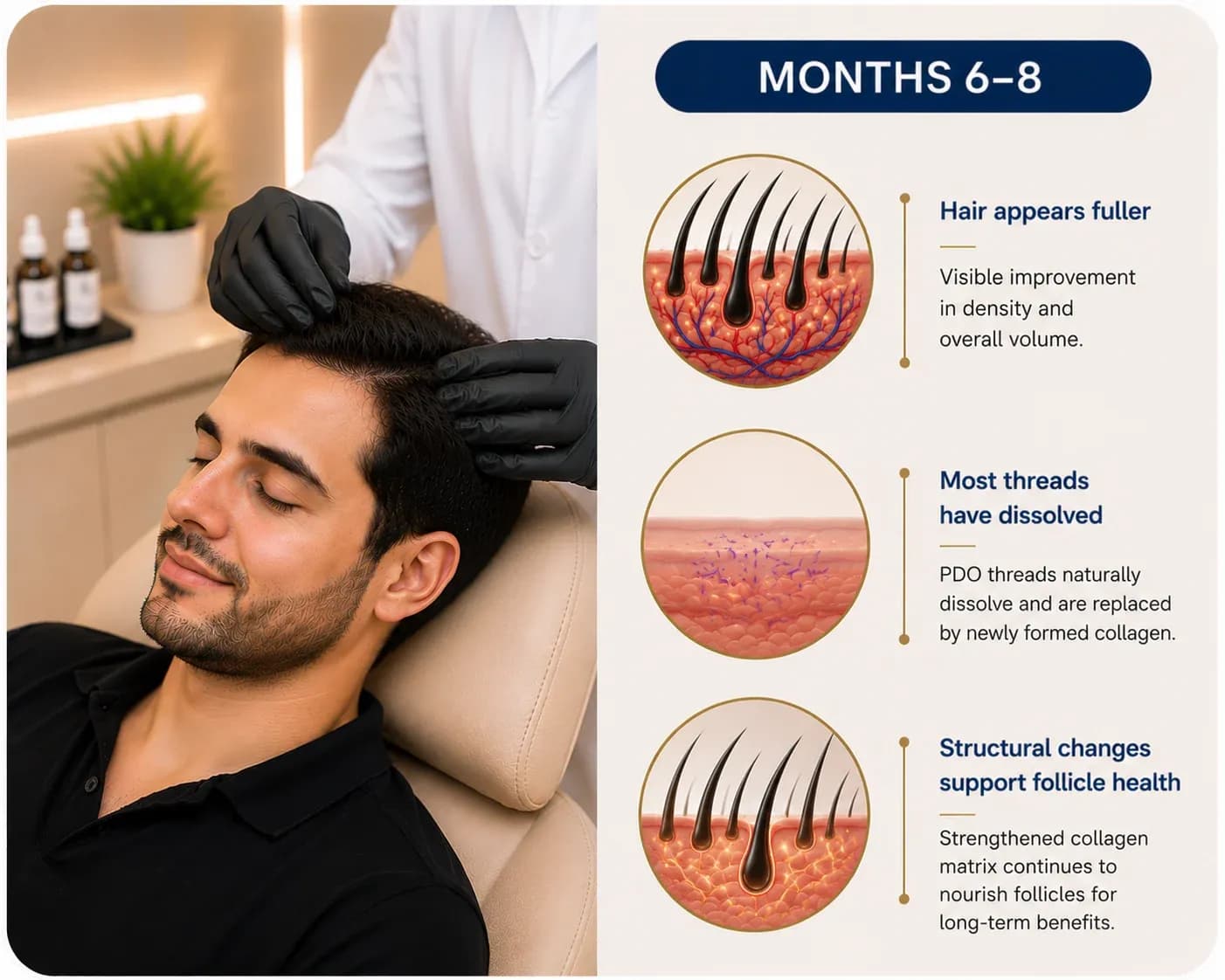
Hair appears fuller. Most threads have dissolved and been replaced by newly formed collagen the structural changes now support ongoing follicle health.
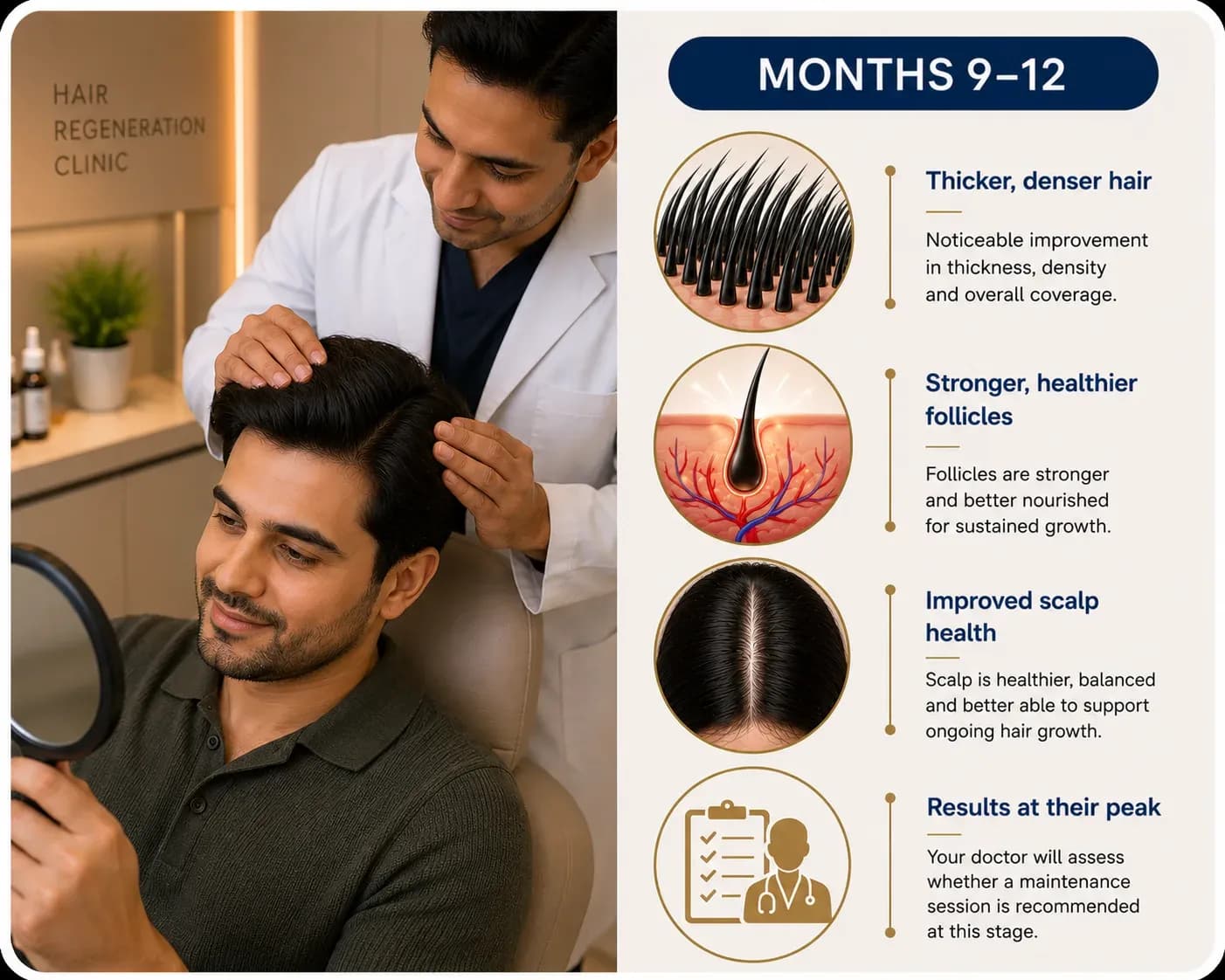
Thicker, denser hair with improved scalp health. Results are typically at their peak. Your doctor will assess whether a maintenance session is recommended at this stage.
PDO (polydioxanone) threads are fine, biodegradable medical sutures the same material used safely in surgery for decades inserted into the scalp using fine needles. Once in place, they trigger collagen and elastin production, improve blood flow through angiogenesis, and release growth factors that activate stem cells in the hair follicle bulge. Dormant or weakened follicles are reactivated, producing stronger, denser hair growth over time.
promising results particularly for patients with early-to-moderate hair loss, where follicles are still present but weakened. Sincreases in hair count and density in both men and women.. Results vary between individuals and are best assessed after a clinical consultation.
PDO mono threads placed in the scalp typically dissolve within 6–8 months. The regenerative effects improved collagen structure, better scalp vascularity, and activated follicles can persist for 12–18 months, making this a durable non-surgical hair restoration option.
Discomfort is minimal. Local anaesthesia is administered before treatment begins and most patients describe the procedure as quick and comfortable. The threads are inserted using fine needles. Any post-procedural tenderness or tightness typically resolves within a few days and is a normal part of the healing response.
Temporary side effects may include mild swelling, redness, or bruising at insertion sites typically resolving within 3–7 days. A small number of patients experience brief shock loss before regrowth begins. Serious complications are rare when the procedure is performed by a qualified practitioner. Following your doctor's aftercare instructions minimises all risks.
The cost varies based on the number of threads used, your scalp condition, and the complexity of the treatment plan. A consultation with our doctor is required to determine the appropriate approach and provide an accurate cost estimate.
This depends from patient to patient, but even if multiple sessions are required should be , spaced several months apart, to achieve optimal improvement. Your doctor will recommend the most appropriate schedule based on your individual response, hair loss pattern, and whether combination therapy is being used.
PDO thread therapy is best suited for individuals with mild-to-moderate hair thinning where follicles are weakened but still present. It is particularly effective for patients who have not responded adequately to Minoxidil or Finasteride. Patients with advanced hair loss where follicle density has been severely depleted, or those with active scalp infections, are generally not good candidates. A consultation with our doctor will confirm suitability.
Recovery is generally rapid most patients resume normal activities the same day or within 24–48 hours. In the days following treatment, avoid hot showers, hair colouring, vigorous scalp massage, and strenuous exercise. Your doctor will provide specific aftercare instructions based on your procedure.
Yes, and combination therapy is strongly supported by published research. PDO threads work particularly well alongside PRP, GFC, LLLT, topical agents, and oral medications. Research consistently shows that combining PDO threads with PRP produces better outcomes than either treatment alone. Your doctor will develop a personalised plan based on your hair loss pattern, lifestyle, and clinical needs.
Book a free consultation with our experienced doctors to discover your best options and gain clear insight into your expected results.
YOUR HAIR JOURNEY STARTS HERE