
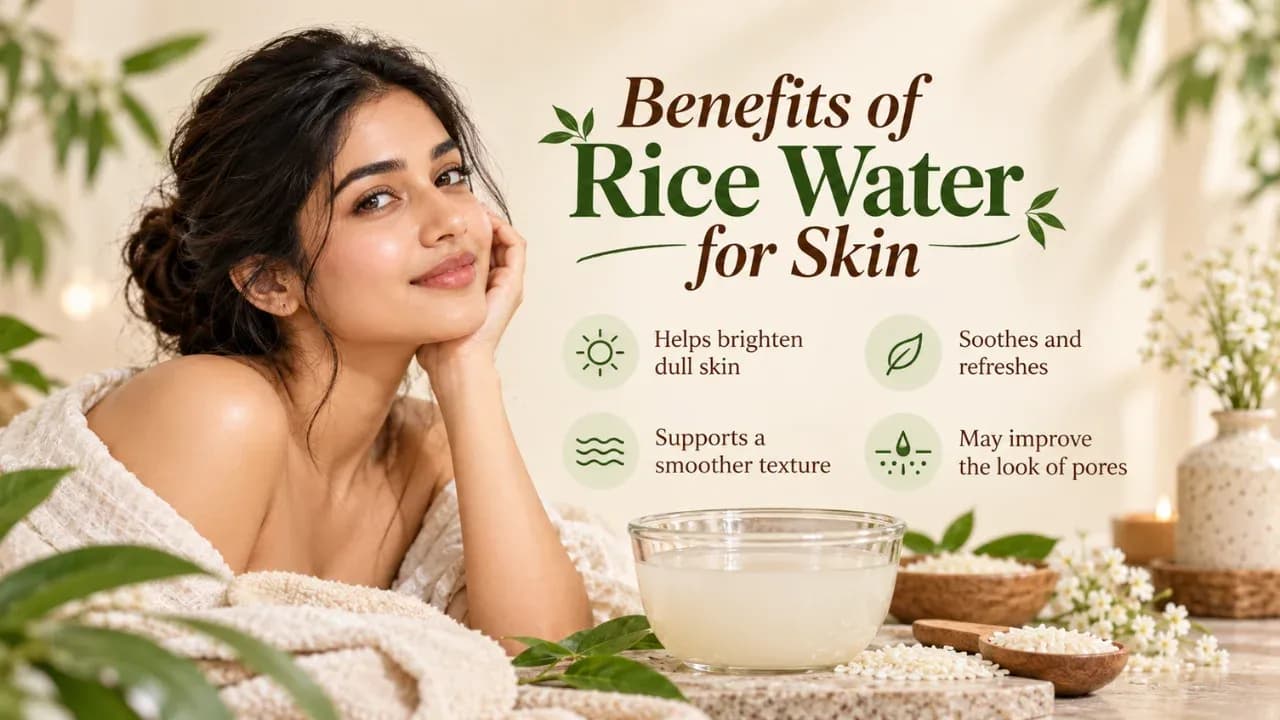
Quick Answer:
Rice water delivers measurable skin benefits through three clinically recognised mechanisms: antioxidant protection, skin barrier reinforcement, and mild melanin regulation. Applied consistently as a toner, most people see reduced redness and smoother texture within 2-4 weeks. Visible brightening takes 6-8 weeks. The key active compounds are inositol, ferulic acid, and allantoin. Rice water will not bleach skin, eliminate acne overnight, or replace a dermatologist-formulated brightening serum for moderate pigmentation concerns. What it will do, reliably, is improve overall skin quality with almost no risk of irritation, and at negligible cost.
What Is Rice Water for Skin?
Rice water is the starchy liquid remaining after rinsing or soaking uncooked rice in water. It contains a concentrated mix of vitamins, amino acids, minerals, and antioxidants released from the rice grain during contact with water.
Rice water for skin is used as a toner, face wash, face mask, or spot treatment. It is suitable for most skin types, including sensitive and oily skin.
Key active compounds found in rice water:
- Inositol, a carbohydrate that may penetrate the epidermis and stimulate cell regeneration
- Ferulic acid, an antioxidant that neutralises free radicals generated by UV exposure and pollution
- Allantoin, a compound with documented soothing and anti-inflammatory properties
- Kojic acid, present in fermented rice water; inhibits tyrosinase, the enzyme responsible for melanin synthesis
- Vitamins B1, B3, C, and E, nutrients that support skin repair and brightness
- Amino acids, building blocks that support collagen synthesis and skin structure
Rice water sits at an interesting intersection: centuries of use in East Asian skincare traditions, and increasingly supported by emerging clinical evidence. According to Kibo Skin's clinical team, the bioactive compounds in rice water are real and biologically active, the open question is whether homemade preparations consistently deliver them at concentrations sufficient for clinical effect.
What Are the Proven Benefits of Rice Water for Skin?
Rice water provides multiple skin benefits backed by both traditional use and emerging clinical evidence. The strength of evidence varies by benefit type.
Does Rice Water Lighten Skin Permanently? The Honest Answer
No — rice water does not permanently lighten skin. This is the single most important distinction to make before starting any rice water routine.
Rice water reduces the activity of tyrosinase, the enzyme your skin uses to produce melanin. When tyrosinase activity is lower, your skin produces less new pigment, which gradually makes existing dark spots and uneven tone less prominent over 6-8 weeks. The moment you stop applying rice water consistently, tyrosinase activity returns to its baseline. Any brightening achieved is maintained only through continued use.
This is fundamentally different from bleaching or depigmentation. Bleaching agents (such as prescription hydroquinone) remove or destroy existing melanin. Rice water does not do this. It regulates future pigment production, not existing pigment deposits.
What this means in practice:
- If you have mild sun-induced uneven tone and apply rice water daily for 8 weeks, you are likely to see a noticeable improvement.
- If you stop, the improvement fades gradually over several weeks as melanin production normalises.
- If your pigmentation is deeper (post-inflammatory hyperpigmentation from acne, melasma, or significant sun damage), rice water will produce limited visible results on its own because those pigment deposits are in the deeper dermis, not regulated by surface tyrosinase activity.
For deeper or persistent pigmentation, a dermatologist-formulated approach — such as a targeted chemical peel for pigmentation or a prescription-grade brightening agent — will deliver more predictable, lasting outcomes than rice water alone.
Brightens Skin Tone
Rice water contains ferulic acid and, in fermented preparations, kojic acid, both of which inhibit tyrosinase activity and reduce melanin production. Regular application may reduce dark spots and uneven pigmentation within 6-8 weeks of consistent daily use.
Rice water may support mild surface unevenness, but persistent marks often need a more targeted approach such as a chemical peel for dark spots.
Reduces Inflammation and Redness
Allantoin in rice water has a clinically observed anti-inflammatory effect. It can calm irritated, sunburned, or reactive skin without disrupting the skin's natural pH balance. This is one of the most robust benefits supported by current evidence.
Strengthens the Skin Barrier
The amino acids and starch in rice water form a light film on the outermost skin layer (stratum corneum). This film may reduce transepidermal water loss (TEWL) and improve barrier integrity over time, functioning similarly to a light emollient.
Minimises the Appearance of Pores
Rice water has mild astringent properties. It temporarily tightens skin and reduces the visible appearance of enlarged pores, particularly for oily and combination skin types. This effect is temporary, not structural.
Provides Anti-Ageing Effects
Inositol, a key compound in rice water, has been shown in research to penetrate the skin and stimulate fibroblast activity, supporting collagen production and skin firmness. Studies suggest it may reduce the appearance of fine lines with consistent use over 6-12 weeks.
Soothes Eczema and Dry Skin
A 2002 study published in the European Journal of Dermatology found that bathing in rice starch water for 15 minutes twice daily reduced the severity of atopic dermatitis symptoms by approximately 20% compared to tap water baths.
Improves Skin Texture and Radiance
The mild enzymatic action of rice water helps remove dead skin cells from the surface, resulting in smoother texture and a visible improvement in skin radiance within 2-4 weeks of regular use.
Summary, what rice water can and cannot do:
| Rice Water Can | Rice Water Cannot |
|---|---|
| Brighten uneven tone within 6–8 weeks | Permanently lighten skin or remove existing pigment |
| Reduce redness via allantoin’s anti-inflammatory action | Treat active acne breakouts or bacterial infection |
| Temporarily tighten pores and reduce excess sebum | Replace SPF, retinoids, or clinical brightening agents |
| Reinforce the skin barrier and reduce moisture loss | Permanently close or alter pore size |
| Mildly support acne-prone skin by reducing inflammation | Correct significant skin laxity or deep wrinkles |
How Does Rice Water Work on Skin? The Complete Mechanism
Rice water benefits the skin through four primary mechanisms. Each operates independently, producing a cumulative effect with consistent use.
1. Antioxidant Neutralisation
Ferulic acid and vitamin E in rice water neutralise free radicals generated by UV exposure and pollution. This works because antioxidants donate electrons to unstable molecules, preventing them from damaging skin cells and accelerating visible ageing.
2. Barrier Film Formation
Starch and amino acids in rice water coat the stratum corneum, the outermost skin layer. This film reduces moisture loss and protects against environmental irritants, functioning similarly to a light emollient. The effect supports long-term barrier health with consistent application.
3. Melanin Inhibition
Kojic acid (fermented preparations) and ferulic acid reduce the activity of tyrosinase, the enzyme responsible for melanin synthesis. Less tyrosinase activity means less pigment is produced, which gradually lightens dark spots and evens skin tone over 6-8 weeks.
For deeper or recurring uneven tone, a professionally selected chemical peel for pigmentation may offer more predictable exfoliation and pigment control.
Important clarification: Rice water does not bleach the skin. It regulates excess melanin production rather than removing existing pigment permanently. Once application stops, tyrosinase activity returns to baseline.
4. Cell Turnover Stimulation
Inositol penetrates the skin's surface and signals cells to regenerate faster. Research published in the International Journal of Cosmetic Science identified inositol as capable of penetrating the epidermis and stimulating fibroblast activity. Faster turnover means older, damaged skin cells are replaced more quickly, improving texture and reducing visible signs of ageing.
What Are the Short-Term and Long-Term Benefits of Rice Water for Skin?
Rice water's benefits accumulate progressively. The timeline below is based on consistent daily application as a toner.
| Timeframe | Expected Outcome |
|---|---|
| 1–2 weeks | Reduced redness, temporary pore tightening, mild sebum control |
| 3–4 weeks | Improved hydration, smoother texture, calmer reactive skin |
| 6–8 weeks | Visible brightening, gradual reduction in dark spots and pigmentation |
| 3+ months | Reduced fine lines, stronger skin barrier, improved post-acne marks |
Results depend on rice variety used, preparation method (plain, soaked, or fermented), consistency of application, and individual skin biology. Inconsistent application is a common reason users report limited results.
What Does the Research Actually Say? Evidence on Rice Water for Skin
The evidence base for rice water in skincare is real but limited. Here is an honest summary of what the peer-reviewed literature and authoritative sources actually say, as of 2024.
What the Studies Show
1. Atopic dermatitis (eczema): One of the strongest findings A 2002 study published in the European Journal of Dermatology (Grimalt et al.) tested starch baths using rice water in children with atopic dermatitis. Participants who bathed in rice starch water for 15 minutes twice daily for two weeks showed approximately a 20% reduction in symptom severity scores compared to plain tap water baths. This is one of the few controlled studies on rice water in dermatology and remains the most-cited evidence for its anti-inflammatory skin benefit.
2. Inositol penetration and cell regeneration Research published in the International Journal of Cosmetic Science demonstrated that inositol, a carbohydrate present in rice water, can penetrate the epidermis and stimulate fibroblast activity. Fibroblasts are the cells responsible for collagen production. The implication is that inositol may support skin firmness and accelerate cell turnover, though the concentrations achieved in homemade rice water preparations versus laboratory formulations may differ significantly.
3. Ferulic acid as an antioxidant Ferulic acid's antioxidant properties are well-established in dermatological literature. A review in the Journal of Clinical and Aesthetic Dermatology (2014) confirmed ferulic acid's ability to stabilise vitamins C and E and independently neutralise UV-generated free radicals. Rice water contains ferulic acid, though concentration varies by preparation method and rice variety.
4. Kojic acid in fermented rice water Kojic acid, produced during fermentation of rice, is a recognised tyrosinase inhibitor with peer-reviewed evidence for reducing melanin synthesis. It is used as an active ingredient in regulated cosmetic formulations. Its presence in fermented rice water is confirmed, though concentrations in home preparations are not standardised and are likely lower than in commercial products.
What Authoritative Sources Including the Cleveland Clinic Say
The Cleveland Clinic has addressed rice water in its consumer health content, noting that while the active compounds in rice water — inositol, ferulic acid, allantoin — are biologically real and individually studied, the clinical evidence for rice water as a preparation (as opposed to its isolated compounds) remains limited. Their guidance aligns with the consensus position: rice water is a low-risk, low-cost adjunct to skincare, not a replacement for evidence-based treatments for moderate to severe skin concerns.
The Bottom Line on Evidence Strength
| Benefit | Evidence Quality | Study Type Available |
|---|---|---|
| Reduces atopic dermatitis symptoms | Moderate | Controlled clinical trial (2002) |
| Antioxidant protection via ferulic acid | Strong for the compound, limited for the preparation | In vitro and review literature |
| Melanin inhibition via kojic acid | Strong for the compound, indirect for rice water | Mechanistic and in vitro |
| Inositol cell regeneration | Moderate | Cosmetic science research |
| Pore tightening / sebum control | Anecdotal and mechanistic rationale | No clinical trials |
| Anti-ageing effects on fine lines | Weak | No direct RCTs on rice water |
The honest position: rice water is backed by emerging science, not conclusive clinical trials. It is appropriate as a low-risk daily adjunct, but claims of dramatic results should be viewed with scepticism.
What Are the Types of Rice Water for Skin and Which Should You Use?
Three main preparation methods exist for rice water, each producing a different concentration of active compounds.
| Type | Preparation Method | Concentration | Best For |
|---|---|---|---|
| Plain rinse water | Rinse 1 cup of rice with 2 cups of water | Low | Sensitive, reactive skin |
| Soaked rice water | Soak rice for 30 minutes to 24 hours | Medium | Normal, combination skin, general brightening |
| Fermented rice water | Soak for 24–48 hours at room temperature | High | Oily skin, post-acne marks, anti-ageing concerns |
Plain Rinse Rice Water
This is the mildest preparation. It retains surface starch and a small amount of vitamins. Suitable for daily use on sensitive skin or as a first introduction to rice water. It does not contain kojic acid, as fermentation has not occurred.
Soaked Rice Water
Soaking for at least 30 minutes draws out higher concentrations of inositol, amino acids, ferulic acid, and vitamins into the liquid. This is the most commonly recommended preparation for general skin brightening and hydration. Suitable for most skin types.
Fermented Rice Water
Fermentation increases the concentration of pitera, a naturally occurring yeast derivative, lowers pH to approximately 4.5-5.0, and enhances the bioavailability of active compounds including kojic acid. This preparation is most effective for oily skin, anti-ageing concerns, and post-acne hyperpigmentation. It may cause irritation on very sensitive or rosacea-prone skin. A patch test is recommended before first use.
Rice variety matters: Short-grain or jasmine rice releases higher amounts of starch and inositol compared to long-grain or parboiled rice. Short-grain and jasmine rice are commonly preferred for more concentrated preparations.
How to Prepare and Use Rice Water for Skin: Step-by-Step
Start with soaked rice water for most skin types before progressing to fermented preparations.
Side Effects of Rice Water on Face: Who Should Be Cautious
Rice water is genuinely low-risk for most skin types. However, 'low-risk' is not the same as 'risk-free', and there are specific skin conditions where rice water requires modification or should be avoided.
Known Side Effects of Rice Water on the Face
1. Protein overload in dry or damaged hair (relevant when used on scalp or in hair masks): Rice water is high in protein. Overuse on already protein-saturated hair strands can cause brittleness. This is less relevant for facial skin but worth noting if you are applying rice water to hairline areas.
2. Fermented rice water irritation: The lower pH of fermented preparations (approximately 4.5-5.0) can cause stinging, redness, or dryness on sensitive skin if applied undiluted. Always dilute fermented rice water 1:1 with plain water for the first two to three weeks of use.
3. Bacterial contamination from improper storage: Rice water stored at room temperature for more than 24 hours, or refrigerated for more than five days, can develop bacterial growth. Applying contaminated rice water to the face can cause new breakouts or irritation. Always store in a sealed glass jar in the refrigerator and discard after five days.
4. Starch build-up on oily skin: For very oily skin types, the starch film left by concentrated rice water can occasionally feel heavy or contribute to clogged pores if not followed by a proper cleanse at night.
Is Rice Water Good for Rosacea?
This is a nuanced answer. Rice water has properties that both support and complicate rosacea-prone skin.
Potentially helpful: Allantoin's anti-inflammatory action may reduce general redness and calm reactive skin. Plain rinse rice water (lowest concentration, no fermentation) is the safest preparation for rosacea-prone skin.
Potentially harmful: Fermented rice water, with its lower pH and higher concentration of bioactives, may trigger flushing or irritation in rosacea-prone individuals, particularly those whose rosacea is associated with a compromised skin barrier.
Clinical guidance: If you have diagnosed rosacea, consult a dermatologist before adding fermented rice water to your routine. Plain rinse rice water used every other day is generally a safe starting point for most rosacea subtypes. Discontinue immediately if redness, burning, or flushing worsens.
Who Should NOT Use Rice Water on Their Face
| Skin Condition | Recommendation |
|---|---|
| Active rosacea (papulopustular subtype) | Avoid fermented; patch test plain rinse water first |
| Open acne wounds or active cysts | Do not apply directly to broken skin |
| Eczema in acute flare | Pause until flare subsides; use only plain rinse water in remission |
| Confirmed rice or grain allergy | Avoid entirely |
| Psoriasis on face | Consult dermatologist before use |
| Post-procedure skin (laser, chemical peel, microneedling) | Wait until full barrier recovery; confirm with clinician |
How to Prepare Soaked Rice Water
- Measure and rinse, Take ½ cup of uncooked short-grain or jasmine rice. Rinse briefly with cold water to remove dust and surface debris.
- Soak, Add 2 cups of clean, room-temperature water to the rinsed rice. Let it soak for 30 minutes (up to 24 hours for higher concentration).
- Strain, Pour the liquid through a fine sieve into a clean bowl or glass jar. Discard the rice or cook it.
- Store, Refrigerate in a sealed glass jar. Use within 4-5 days. Always use cold or room-temperature water, hot water degrades heat-sensitive vitamins.
- Dilute if needed, For sensitive skin, dilute with an equal part of plain water before first use.
How to Apply Rice Water on Your Face
- Cleanse first, Wash your face with a gentle cleanser and pat dry.
- Apply as a toner, Soak a cotton pad in rice water and swipe gently across the face in upward strokes. Alternatively, pour a small amount into clean palms and press into skin.
- Leave on, Do not rinse off. Allow 2-3 minutes to absorb fully.
- Follow with moisturiser, Apply your regular moisturiser immediately after to seal in hydration. Rice water is a toner, not a moisturiser, an occlusive or emollient step is still required.
- Frequency, Once daily (morning or evening) for normal to oily skin. Every other day for dry or sensitive skin.
Common Mistakes to Avoid
- Using unwashed rice, Always rinse rice before soaking to remove surface contaminants and pesticide residues.
- Skipping a patch test, Test on the inner wrist for 24 hours before first facial application, particularly for fermented preparations.
- Using fermented water undiluted initially, The lower pH of fermented rice water can cause irritation if not diluted 1:1 with plain water for the first 2-3 weeks.
- Storing for more than 5 days, Improperly stored rice water can develop bacterial growth and cause skin breakouts or irritation.
- Applying to broken or actively inflamed skin, Avoid applying rice water directly to open acne wounds, active cysts, or broken skin.
- Applying after heavier serums or moisturisers, Rice water is a water-based first step. Apply before serums, not after.
Does Rice Water Help with Acne? What the Evidence Actually Shows
Rice water is not an acne treatment in the clinical sense. It does not kill Cutibacterium acnes bacteria or unclog blocked pores the way salicylic acid does. What the evidence shows is more limited — and more specific.
When acne marks or persistent congestion need stronger intervention, a dermatologist may consider chemical peel treatment alongside proven acne care protocols.
1. Anti-Inflammatory Action via Allantoin
Allantoin, present in rice water, has documented anti-inflammatory properties confirmed in dermatological literature. Inflammation is a core driver of acne severity — particularly the redness and swelling around active breakouts. Rice water applied as a toner may reduce post-breakout redness and calm reactive skin, even without addressing the underlying bacterial cause. This is the most evidence-supported acne-adjacent benefit of rice water.
2. Mild Sebum Regulation
Rice water's astringent properties temporarily reduce excess sebum on the skin surface. Excess sebum contributes to comedone formation — the blocked pores that become blackheads and whiteheads. Rice water may reduce the conditions that allow acne to develop, rather than treating existing breakouts. The effect is mild and temporary, requiring consistent daily application.
3. pH Support for the Skin Microbiome
Fermented rice water has a naturally lower pH of approximately 4.5-5.0, close to the skin's optimal acid mantle pH. Maintaining this pH level may discourage overgrowth of Cutibacterium acnes and support a balanced skin microbiome. No peer-reviewed clinical trials have yet directly measured this effect in human participants using rice water — this remains a mechanistic hypothesis supported by general skin microbiome research.
4. Post-Acne Mark Support
Rice water provides indirect support for the marks left after breakouts resolve. Inositol accelerates surface cell turnover, replacing post-inflammatory cells faster. Ferulic acid and kojic acid (in fermented preparations) inhibit the excess melanin production triggered by inflammation. Together, these effects may gradually lighten post-acne dark marks over 8-12 weeks of consistent use.
For a detailed breakdown of what rice water can and cannot do for acne scars specifically, see the dedicated section below.
Does Rice Water Help with Acne Scars and Post-Acne Marks?
Rice water can help with post-acne marks — but the type of mark matters. The distinction between an acne scar and a post-acne dark spot is clinically important, because they respond to rice water very differently.
Post-Acne Hyperpigmentation (Dark Marks) — Rice Water Can Help
Post-acne hyperpigmentation (PIH) is the flat, discoloured patch left after a pimple resolves. It is caused by excess melanin deposited in the upper layers of the skin during the inflammation response. Because PIH is a surface-level pigmentation issue, rice water's tyrosinase-inhibiting compounds (ferulic acid in plain preparations, kojic acid in fermented preparations) can reduce the darkness of these marks over time.
Expected timeline for PIH improvement with daily rice water use:
- 4-6 weeks: Marks may appear slightly less red or brown
- 8-12 weeks: Noticeable lightening in many users, particularly for recent marks
- 3+ months: Significant improvement in post-acne tone if the skin is not being reinjured by new breakouts
Results are most reliable for superficial PIH in Fitzpatrick skin types I-III. Darker skin tones (IV-VI) may find rice water insufficient for deeper PIH because melanin is distributed more densely in the lower epidermis.
Acne Scars (Textural Changes) — Rice Water Cannot Help
True acne scars — icepick, boxcar, or rolling scars — are structural depressions caused by collagen loss in the dermis. No topical ingredient at surface concentrations, including rice water, can rebuild collagen in the dermis or alter the textural profile of a scar. These require clinical interventions such as microneedling, resurfacing peels, or laser treatments.
If you are unsure whether your marks are PIH or true scarring, a dermatologist assessment is the most efficient next step. Applying rice water to textural scarring for months without result is a common and avoidable delay in effective treatment.
What Rice Water Actually Does for Post-Acne Skin
Even when it cannot resolve marks directly, rice water provides indirect support for post-acne skin:
- Allantoin reduces lingering redness and inflammation around healing breakouts
- Inositol accelerates surface cell turnover, replacing damaged cells faster
- Barrier reinforcement reduces the transepidermal water loss that slows post-inflammatory healing
Think of rice water as a supportive maintenance step after acne treatment, not a replacement for it.
Rice Water vs. Clinical Alternatives: An Honest Comparison
Rice water occupies a specific niche in skincare: it is a gentle, low-cost, low-risk option with broad but mild benefits. Understanding where it sits relative to other popular options helps you use it appropriately rather than expect results it cannot deliver.
| Approach | Cost | Evidence Strength | Ideal For | Limitations |
|---|---|---|---|---|
| Plain rice water | Negligible (DIY) | Emerging / limited RCTs | Daily maintenance, sensitive skin, mild brightening | Slow results; inconsistent concentration |
| Fermented rice water | Negligible (DIY) | Moderate for key compounds | Oily skin, post-acne PIH, anti-ageing maintenance | Requires dilution; irritation risk |
| Niacinamide serum (4–10%) | Low–Medium | Strong — multiple RCTs | Pore appearance, redness, mild pigmentation | Formulation quality varies |
| Vitamin C serum (10–20%) | Medium–High | Strong — multiple RCTs | UV-induced pigmentation, collagen support | Can irritate sensitive skin |
| Kojic acid cream (1–2%) | Low–Medium | Moderate | Melasma, post-acne PIH | Can cause contact dermatitis |
| Chemical peel (dermatologist-administered) | High | Strong for pigmentation and texture | Moderate–severe PIH, acne scarring, uneven texture | Requires downtime and supervision |
When to Stay with Rice Water
Rice water is the right choice when your skin concerns are mild, your budget is a constraint, you have sensitive or reactive skin that has not tolerated commercial actives well, or you want a low-risk daily maintenance step alongside your regular skincare.
When to Consider Clinical Alternatives
If you have been applying rice water consistently for 8-12 weeks without seeing measurable improvement in your skin concern — particularly for PIH, acne marks, or significant uneven tone — this is a signal that your concern may be deeper than surface-level tyrosinase regulation can address. A dermatologist consultation at this point is a practical next step, not an overreaction.
Does rice water actually help with acne?
Does rice water lighten skin permanently?
Does rice water cause acne or make breakouts worse?
Is fermented rice water better than plain rice water for skin?
How long does rice water take to show results on skin?
Does rice water have kojic acid in it?
Can I use rice water if I have rosacea?
Medical Disclaimer : Information from Kibo Hair Clinics is for educational purposes only. It does not replace diagnosis, trichoscopy, blood test interpretation, prescription treatment, procedure advice, or side-effect counselling from a qualified dermatologist or hair restoration doctor.