
Quick Answer:
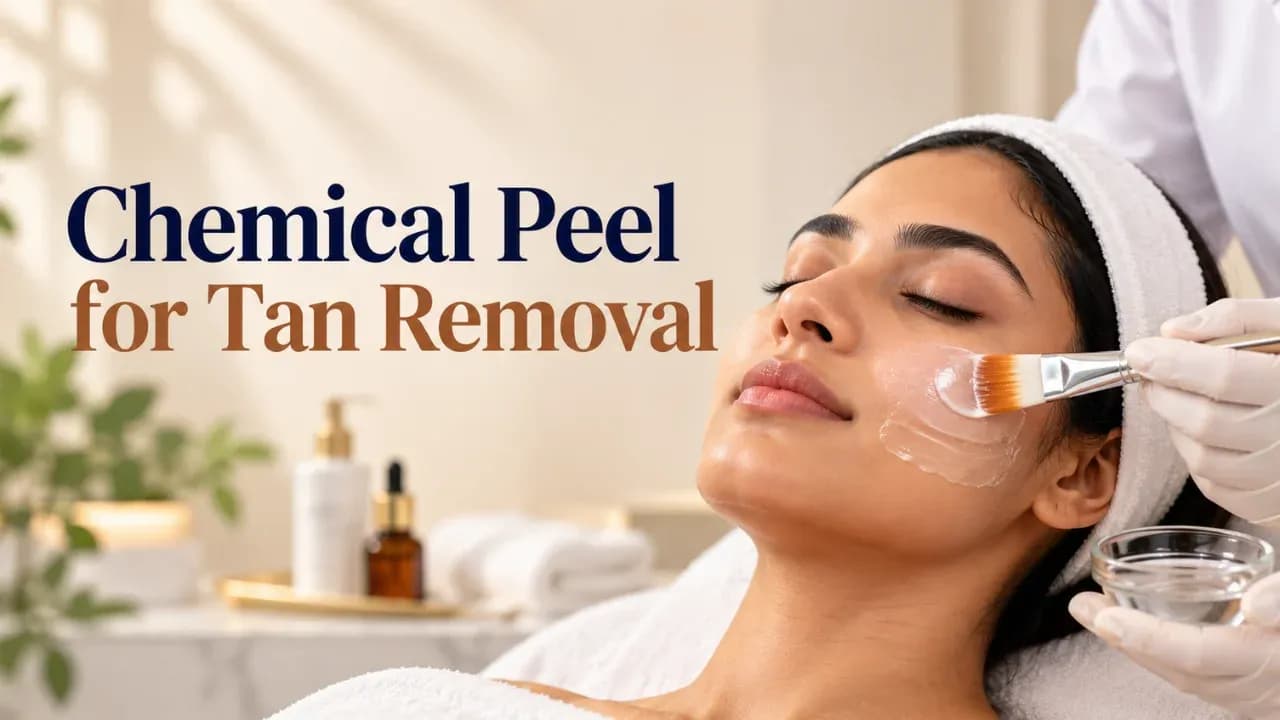
A chemical peel for tan removal works by applying an acid-based solution to the skin that helps exfoliate the outermost layer of pigmented, sun-damaged cells, revealing fresher, more evenly toned skin beneath. Visible improvement may occur over several sessions, depending on peel depth, skin type and the severity of the tan. Chemical peels are used by dermatologists to address sun tan, uneven pigmentation and dullness caused by UV exposure.
What Is a Chemical Peel for Tan Removal?
A chemical peel for tan removal is a dermatological treatment in which a chemical solution, typically an alpha-hydroxy acid (AHA), beta-hydroxy acid (BHA), or trichloroacetic acid (TCA), is applied to the skin to accelerate exfoliation and remove tan-affected surface cells.
The treatment targets the outer skin layers, where UV exposure can increase melanin and contribute to uneven pigmentation. As dead skin cells shed, the skin may appear smoother and more even-toned. Results depend on the type of pigmentation and the treatment selected.
Key facts about chemical peels for tan removal:
- May be used on the face and other sun-exposed areas, depending on the formulation.
- Professional treatments are selected according to skin type and pigmentation concerns.
- Can help improve some forms of sun-related uneven tone and surface pigmentation.
- Usually requires a course of treatments for gradual improvement.
A dermatologist may recommend a chemical peel when sun tan or uneven pigmentation does not improve sufficiently with a suitable skincare routine. Not every dark patch is caused by tanning, so an assessment can help determine the appropriate treatment.
How Does a Chemical Peel for Tan Removal Work?
Chemical peels work by loosening the bonds between surface skin cells and encouraging controlled exfoliation. Depending on the peel used, this process can help reduce the appearance of superficial pigmentation and improve skin texture.
Step-by-step process:
- Skin assessment: A qualified professional evaluates the skin, pigmentation, sensitivity and medical history before selecting a peel.
- Solution application: The selected chemical solution is applied to the treatment area according to the treatment plan.
- Controlled exfoliation: The solution encourages the shedding of surface skin cells. The response and recovery time vary with the peel's depth and formulation.
- Gradual improvement: As the skin recovers, some surface pigmentation and uneven texture may become less noticeable.
- Skin recovery: Appropriate moisturising, sun protection and post-treatment care help support healing and reduce the risk of further pigmentation.
Important to know: One session may not remove a deep or long-standing tan. Results are gradual, and treatment should be tailored to the cause of pigmentation and the individual's skin response.
Key Benefits of a Chemical Peel for Tan Removal
A professionally selected chemical peel treatment may improve the appearance of sun-damaged skin. Benefits vary according to the peel, skin type and underlying concern.
Potential short-term benefits:
- Brighter-looking skin as surface cells shed.
- Smoother skin texture.
- Improvement in the appearance of some surface-level dark patches.
- A more even-looking skin tone in suitable candidates.
Potential benefits over a treatment course:
- Gradual improvement in some forms of post-sun pigmentation.
- More consistent skin tone when treatment is appropriate and maintained.
- Improved texture, depending on the peel and the concern being treated.
- Better maintenance of results when combined with sun protection and a suitable skincare routine.
Chemical peels are not risk-free. Irritation, burns, scarring and post-inflammatory hyperpigmentation can occur, particularly when the peel is too strong or unsuitable for the skin. People with darker skin tones may need particular care when selecting treatment.
Types of Chemical Peel for Tan Removal: Which Is Right for You?
The most suitable chemical peel depends on skin type, the severity and cause of pigmentation, sensitivity and expected recovery time. Chemical peels are commonly grouped by how deeply they act on the skin.
| Peel Type | Common Ingredients | Depth | Typical Use | Treatment Plan |
|---|---|---|---|---|
| Superficial peel | Glycolic acid, lactic acid, mandelic acid | Outer skin layer | Selected mild pigmentation and uneven tone | Often a series of sessions |
| Medium-depth peel | Trichloroacetic acid (TCA), selected combination peels | Deeper than a superficial peel | Selected pigmentation and sun damage | Clinician-directed |
| Deep peel | Strong medical-grade agents in selected cases | Deep skin layers | Specific severe sun-damage concerns in carefully selected patients | Specialist supervision and recovery planning |
| At-home exfoliating products | Product-dependent acids at consumer strengths | Generally superficial | Routine exfoliation when suitable | Follow label instructions; do not use professional-strength peels at home |
How the treatment may be selected:
- For facial pigmentation: A dermatologist may consider a superficial peel suited to the individual's skin type and concern.
- For body areas: The treatment depends on the area, pigmentation, skin sensitivity and the depth of the concern.
- For home care: Avoid high-strength acids and professional peel solutions. A clinician can advise whether an over-the-counter product is appropriate.
How to Get Started with a Chemical Peel for Tan Removal
A suitable preparation and aftercare plan can help reduce the risk of irritation and pigmentation changes. Follow the instructions given by your treating professional, as preparation varies by peel type.
Before treatment:
- Limit direct sun exposure and avoid treatment on sunburned skin.
- Tell your clinician about medications, skincare products, allergies and previous skin reactions.
- Ask which products, including retinoids and exfoliants, should be paused and when they can be restarted.
- Discuss active skin conditions, a history of cold sores, pregnancy or breastfeeding, and any recent procedures.
- Do not proceed if the skin is infected, broken or significantly irritated without medical advice.
What happens during treatment:
- Skin cleansing: The treatment area is cleansed and prepared according to the clinician's protocol.
- Peel application: The selected solution is applied and monitored by the treating professional.
- Removal or neutralisation: The product is removed or neutralised when required by its formulation and protocol.
- Aftercare: A suitable moisturiser and sun protection are recommended, along with instructions for the recovery period.
Common mistakes to avoid:
- Using a peel on sunburned, broken or irritated skin.
- Skipping sunscreen after treatment.
- Combining several exfoliating acids or irritating active ingredients without guidance.
- Picking, scratching or pulling off peeling skin.
- Attempting medium-depth or deep peels at home.
Chemical Peel for Tan Removal vs. Alternatives
Several treatments may be considered for tan and uneven pigmentation. The appropriate option depends on the underlying cause, skin type, expected downtime and professional assessment. Results and costs vary.
| Treatment | How It Works | Considerations | Downtime |
|---|---|---|---|
| Chemical peel | Uses a chemical solution to encourage controlled exfoliation. | Peel depth and formulation should suit the skin and pigmentation. | Varies by peel depth. |
| Laser treatment | Uses selected light or laser energy to target specific skin concerns. | Device selection and settings require professional assessment. | Depends on the device and treatment intensity. |
| Microdermabrasion | Physically exfoliates the surface skin layer. | May be more suitable for selected surface-texture concerns than deeper pigmentation. | Often minimal, depending on the treatment. |
| Topical skincare | Uses selected ingredients to support skin tone and pigmentation management. | Requires consistency and ingredient selection appropriate to the skin. | Usually none, though irritation can occur. |
How to think about treatment options:
- A chemical peel may be considered for selected surface pigmentation and texture concerns.
- Laser treatment may be appropriate for certain pigmentation concerns when the device and settings are carefully selected.
- Topical skincare and sun protection may help maintain skin tone and complement in-clinic treatment.
Is a Chemical Peel for Tan Removal Right for You?
Chemical peels may suit some people with sun-related uneven pigmentation, but they are not appropriate for everyone. A dermatologist can assess skin type, active conditions, medication use and the likelihood of post-inflammatory hyperpigmentation before recommending treatment.
| May Be Considered For | Requires Caution or Medical Review |
|---|---|
| Selected cases of sun-related uneven tone. | Active skin infections, open wounds or significant irritation. |
| People seeking improvement in certain superficial pigmentation concerns. | A history of abnormal scarring or poor wound healing. |
| People able to follow the prescribed aftercare and sun-protection routine. | Pregnancy, breastfeeding, recent isotretinoin use or photosensitising medicines, depending on the treatment. |
| People who have had their pigmentation assessed by a qualified professional. | Active eczema, rosacea or other conditions that may be aggravated by a peel. |
Who should avoid or delay a peel? People with certain active skin conditions, infections or medication-related risks may need to avoid or postpone treatment. A clinician should review individual circumstances before proceeding.
Chemical Peel for Tan Removal Results: What to Expect
Results are usually gradual and vary from person to person. The type and depth of peel, the cause of pigmentation, skin tone, aftercare and sun exposure all influence the outcome. Some people experience temporary redness, dryness or peeling while the skin recovers.
| Timeframe | What May Happen |
|---|---|
| First few days | Temporary redness, tightness, dryness or sensitivity may occur. |
| Following days | Some peels cause visible flaking or peeling as the skin renews. |
| Following weeks | The skin's appearance may gradually improve as it recovers and any recommended treatment course continues. |
| Maintenance | Sun protection and a suitable skincare routine help reduce the risk of new sun-related pigmentation. |
Factors that affect results:
- Skin type: Some skin tones have a higher risk of post-inflammatory hyperpigmentation and may need a more cautious treatment plan.
- Cause and depth of pigmentation: Superficial tanning may respond differently from melasma or other pigmentation conditions.
- Aftercare: Following professional instructions and using sun protection are important during recovery.
- Treatment plan: The number and spacing of sessions depend on the peel and the individual's response.
Chemical Peel for Tan Removal Cost: What to Budget
Chemical peel treatment cost in Mumbai can vary according to the peel type, clinic, treatment area, clinician's assessment and number of sessions required. The ranges below are indicative estimates rather than guaranteed prices.
| Peel Type | Indicative Cost per Session in India | Cost Considerations |
|---|---|---|
| Superficial peel | ₹1,500–₹3,500 | The total depends on the recommended course. |
| Medium-depth peel | ₹3,000–₹8,000 | Professional assessment and aftercare may affect the overall cost. |
| Deep peel | ₹15,000–₹35,000 or more | Specialist supervision and recovery needs can add to the total. |
| At-home exfoliating product | Varies by product | Consumer products are not equivalent to professional chemical peels. |
Ask the clinic what is included in the quoted price, how many sessions may be recommended, what aftercare is required and what additional costs could apply. A dermatologist should determine whether a peel is appropriate before you commit to a course.
Does a chemical peel remove tan completely?
How many chemical peel sessions are needed for tan removal?
How much does a chemical peel for tan removal cost in India?
Is a chemical peel safe for Indian skin tones?
What should I do after a chemical peel?
Can I use a chemical peel at home?
Medical Disclaimer : Information from Kibo Hair Clinics is for educational purposes only. It does not replace diagnosis, trichoscopy, blood test interpretation, prescription treatment, procedure advice, or side-effect counselling from a qualified dermatologist or hair restoration doctor.