
Quick Answer
Dermapen microneedling uses a motorised pen with adjustable fine needles to create controlled micro-injuries in facial skin. This stimulates collagen and elastin production and can improve acne scars, enlarged pores, uneven texture and early signs of ageing. Most treatment plans involve 3–6 sessions spaced around 4–6 weeks apart, with visible improvement developing gradually rather than after a single session.
What Is Dermapen Microneedling Treatment Face? A Complete Guide
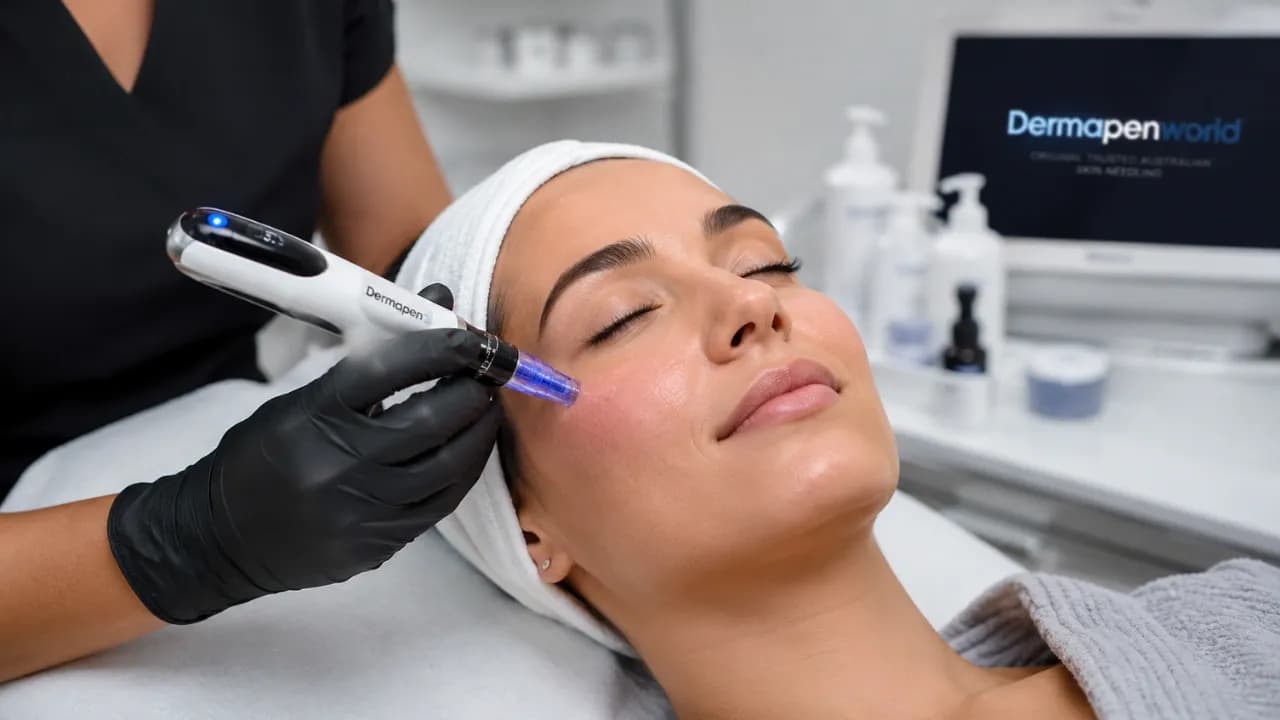
The Dermapen is a motorised, pen-shaped device fitted with a sterile cartridge of ultra-fine needles. It stamps the skin repeatedly at a controlled depth — creating thousands of micro-punctures per second — without tearing surrounding tissue.
Unlike manual derma rollers, the Dermapen delivers consistent needle depth and speed, which reduces tissue drag and lowers the risk of post-procedure complications. The treatment is suitable for most skin types and targets acne scars, uneven texture, pigmentation, and early signs of ageing.
Key facts at a glance:
- Needle depth: 0.25 mm to 2.5 mm, adjusted per zone and concern
- Session duration: 30-60 minutes including numbing time
- Downtime: Typically 24-72 hours of redness
- Sessions required: 3-6 sessions for most concerns, spaced 4-6 weeks apart
- Suitable for: Fitzpatrick skin types I-VI, including Indian and darker skin tones
Kibo Clinics' dermatology team performs microneedling sessions using calibrated device settings matched to each patient's skin condition and concern depth.
How Dermapen Microneedling Treatment Face Works: The Complete Breakdown
Dermapen microneedling treatment face works because controlled micro-injury activates the skin's wound-healing cascade, which produces new collagen and elastin as a repair response.
Step-by-step mechanism:
- Numbing cream applied, A topical anaesthetic is applied 20-30 minutes before treatment to minimise discomfort during the procedure.
- Micro-channels created, The Dermapen device is passed across the face in a grid-like pattern. Each pass creates up to 1,300 microchannels per second in the epidermis and upper dermis.
- Controlled inflammation triggered, The micro-injuries activate platelets and fibroblasts. These cells release growth factors including TGF-β and PDGF, which initiate tissue repair.
- Collagen synthesis begins, New collagen type I and III is laid down over the following 4-6 weeks, gradually thickening and firming the dermis.
- Skin remodelling continues, Collagen remodelling may continue for up to 12 months after a full course, progressively improving the appearance of scars, lines, and pores.
- Serum absorption enhanced, The open microchannels allow topical serums (such as hyaluronic acid or peptides) to penetrate up to 80% deeper than normal, amplifying results.
Because the Dermapen's vertical needle motion minimises lateral tearing, the dermapen microneedling treatment face close up experience is significantly more comfortable and precise than roller-based alternatives.
Key Benefits of Dermapen Microneedling Treatment Face: What You Actually Gain
Dermapen microneedling treatment for the face delivers structural skin improvement — not just surface-level glow. It works at the dermal level to rebuild collagen, reduce scar depth, and improve tone across all skin types.
Core benefits:
- Collagen induction: Stimulates new collagen production, visibly reducing fine lines and wrinkles after 2-3 sessions
- Acne scar reduction: Clinical studies report a 50-70% improvement in atrophic acne scars after 4-6 sessions
- Improved skin texture: Enlarged pores appear reduced as dermal volume increases beneath the skin surface
- Even skin tone: Encourages cellular turnover, fading post-inflammatory hyperpigmentation over 6-8 weeks
- Firmer skin: Increased elastin production improves skin elasticity, particularly along the jawline and cheeks
- Stretch mark and scar improvement: Suitable for superficial facial scarring with consistent visible improvement
- Enhanced product absorption: Microchannels allow active ingredients to reach deeper skin layers during and immediately after treatment
- Safe for all skin types: Adjustable settings make dermapen one of few clinic treatments suitable for darker Fitzpatrick IV-VI skin tones without the hyperpigmentation risk associated with laser
Short-term vs. long-term benefits:
| Timeframe | What You Notice |
|---|---|
| 24–72 hours | Skin appears flushed; texture may feel smoother |
| 1–2 weeks | Skin may feel firmer with mild glow improvement |
| 4–6 weeks | Visible texture and scar improvement begins |
| 3–6 months | Collagen remodelling improves tone and firmness |
| 12 months | Cumulative results from a completed course become clearer |
Kibo Clinics' clinical team notes that patients receiving a dermapen protocol consistently report higher satisfaction when sessions are spaced at the recommended 4-6 week intervals.
Dermapen Microneedling Treatment Face Results: What to Expect & Real Timelines
Dermapen microneedling treatment results are cumulative — each session builds on the last. Results vary based on skin concern, age, needle depth, and number of sessions completed.
Realistic result timeline:
| Month | Expected Changes |
|---|---|
| Month 1 | Redness settles; skin feels smoother |
| Month 3 | Pores, fine lines and early scar changes become more noticeable |
| Month 6 | Texture, acne scars and firmness may show stronger improvement |
| Month 12 | Longer-term collagen remodelling is more fully expressed |
Factors that affect outcomes:
- Skin concern severity (superficial vs. deep scarring)
- Patient age and baseline skin condition
- Number and spacing of sessions
- At-home skincare routine between sessions
- Use of complementary treatments (LED therapy, vitamin C serums, PRP)
What the evidence shows:
- A randomised controlled trial in the Journal of Cutaneous and Aesthetic Surgery (Majid, 2014) found that 4 microneedling sessions at 4-week intervals produced a 60% improvement in acne scar severity scores. [1]
- Research in Dermatologic Surgery (Aust et al., 2008) reported that microneedling increased transepidermal collagen density by up to 400% after 6 months of treatment. [2]
- Patients with Fitzpatrick skin types IV-VI showed equivalent scar improvement to lighter skin types without laser-related side effects, per a 2018 review in the International Journal of Dermatology. [4]
A real patient outcome (anonymised): A 29-year-old female patient with moderate boxcar acne scars (Goodman-Baron grade 3) completed a 6-session course over 6 months at Kibo Clinics. At the 6-month review, scar grade reduced to grade 1-2 with no post-inflammatory hyperpigmentation. Skin texture was rated 'significantly improved' by the treating dermatologist. This reflects a typical outcome for patients who complete the full course with consistent aftercare.
How to Get Started with Dermapen Microneedling Treatment Face: Step-by-Step Guide
Starting dermapen microneedling treatment face at a qualified clinic involves several preparation and procedural steps. Following these correctly minimises discomfort and maximises results.
Prerequisites before your first session:
- Avoid active retinoid use for 5-7 days before treatment
- Discontinue blood-thinning supplements (e.g., fish oil, aspirin) 48 hours prior if medically cleared to do so
- Arrive with clean, product-free skin on the day of treatment
- Disclose all skin conditions, medications, and recent sun exposure to your practitioner
- Avoid direct sun exposure and tanning beds for 2 weeks before treatment
Step-by-step: What happens at your appointment
- Consultation and skin assessment, Your practitioner evaluates skin type, concern areas, and selects appropriate needle depth settings for the dermapen microneedling treatment face.
- Cleanse and prep, Skin is cleansed with an antiseptic solution to remove bacteria and surface debris.
- Topical numbing, Anaesthetic cream is applied and left for 20-30 minutes until the treatment area is fully numb.
- Device pass, The Dermapen is glided across each zone (forehead, cheeks, nose, chin) in a systematic pattern. Practitioners adjust depth per zone, typically 0.5-1.5 mm for the face.
- Serum application, A hyaluronic acid or growth factor serum is applied immediately after, absorbing through the open microchannels.
- Soothing mask or cooling, A calming mask may be applied to reduce post-procedure inflammation.
- Aftercare instructions given, You receive a written aftercare plan covering skincare restrictions and sun protection for the next 72 hours.
Common mistakes to avoid:
- Booking a treatment within 2 weeks of a significant sun event or holiday
- Using active exfoliants (AHAs, BHAs, retinol) within 48-72 hours post-treatment
- Applying makeup within 24 hours of the procedure
- Missing follow-up sessions, which breaks the collagen induction cycle
- Choosing unqualified providers offering below-market pricing
Kibo Skin Clinic Clinic's practitioners perform every microneedling dermapen treatment face clinic session using single-use, sterile cartridges to eliminate cross-contamination risk.
Dermapen Microneedling Treatment Face Best Practices: Expert Tips & Strategies
Following evidence-based best practices for dermapen microneedling treatment significantly improves both safety and outcomes. The most common reason results disappoint is not the treatment — it is what happens between sessions.
If you are comparing microneedling with peels, understanding possible chemical peel side effects can help you choose the safer option for your skin type.
Expert Tips
- Use SPF 30+ daily: Post-treatment skin is more susceptible to UV damage. Daily broad-spectrum SPF prevents pigmentation reversal and supports healing.
- Hydrate consistently: Apply a fragrance-free hyaluronic acid serum morning and night for the first week after each session.
- Space sessions correctly: Minimum 4 weeks between sessions allows the collagen induction cycle to complete before the next treatment stimulus.
- Match needle depth to concern: Fine lines require 0.5-1 mm depth; acne scars and deeper texture issues typically need 1.5-2 mm. Depth decisions should always be made by a trained practitioner.
- Avoid active ingredients post-treatment: Retinol, vitamin C, and exfoliating acids should be paused for 48-72 hours after each session to prevent irritation through open microchannels.
- Combine with topical actives between sessions: Vitamin C serum and niacinamide used between sessions support collagen production and fade pigmentation progressively.
- Keep a treatment log: Photographing results under consistent lighting at each session interval helps practitioners adjust depth and frequency based on your individual skin response.
- Inform your provider of all medications: Isotretinoin users must wait at least 6 months after completing the medication before undergoing dermapen microneedling treatment.
Common mistakes to avoid:
- Undergoing treatment with active acne breakouts or open skin lesions in the treatment area
- Using low-quality home derma rollers as a substitute for a clinical Dermapen session
- Expecting single-session results equivalent to a full course
- Applying occlusive products (heavy oils, petroleum jelly) in the first 24 hours post-treatment
Dermapen Microneedling Treatment Face vs. Alternatives: An Honest Comparison
Dermapen microneedling treatment face competes with several other skin rejuvenation treatments. The right choice depends on skin concern, skin type, downtime tolerance, and budget.
For patients comparing exfoliation-based options, a chemical peel treatment may be considered when pigmentation, dullness, and surface texture are the main concerns.
| Treatment | Best For | Downtime | Skin Types | Average Cost (India) |
|---|---|---|---|---|
| Dermapen Microneedling | Scars, texture, tone, pores | 24–72 hours | I–VI | ₹3,000–₹8,000/session |
| Derma Roller (home) | Mild texture, product absorption | 12–24 hours | All | ₹500–₹2,000/device |
| Hydrafacial | Surface hydration, glow | None | All | ₹4,000–₹10,000/session |
| Chemical Peel | Pigmentation, fine lines | 3–7 days | Requires skin-type appropriate selection | ₹2,000–₹6,000/session |
| Laser Resurfacing | Deep scars, wrinkles | 5–14 days | Selected patients | ₹8,000–₹25,000/session |
| Botox | Dynamic wrinkles | None | All | ₹8,000–₹20,000/area |
Key comparisons:
Dermapen microneedling vs. derma rollers, Clinical Dermapen devices operate at 110 stamps per second with adjustable depth, compared to the uncontrolled rolling motion of home devices. Derma rollers create micro-tears in skin tissue due to lateral drag; the Dermapen's vertical puncture motion reduces trauma significantly. For acne scar treatment, clinical dermapen microneedling treatment face close up protocols consistently outperform home roller results.
Dermapen microneedling vs. Hydrafacial, Hydrafacial is a surface-level cleansing and hydration treatment with no collagen-induction mechanism. It provides immediate glow with no downtime but does not address scarring, deep texture, or loss of firmness. Dermapen targets structural dermal changes.
Dermapen microneedling vs. Botox, Botox addresses muscle-driven expression lines (forehead, crow's feet) but does not improve skin texture, tone, or scars. Dermapen treats surface and mid-dermal concerns. The two treatments are often used together for comprehensive facial rejuvenation.
Recommendation: For patients with acne scarring, enlarged pores, or uneven texture across all skin tones, dermapen microneedling treatment face is typically the most cost-effective and safest clinical option. For surface hydration only, Hydrafacial may be sufficient. For deep lines with a movement component, combining Dermapen with Botox may be optimal.
Dermapen Microneedling Cost in India: What to Expect from Pricing & Packages
Dermapen microneedling treatment for the face is not a one-size-one-price procedure. What you pay per session depends on the clinic's location, device generation, practitioner credentials, and the depth of treatment required for your specific skin concern.
Typical price ranges in India (2025):
| What You're Paying For | Price Range |
|---|---|
| Single session — texture/glow | ₹3,000–₹5,000 |
| Single session — scars/deeper needling | ₹5,000–₹8,000 |
| 4-session package | ₹12,000–₹25,000 |
| 6-session package | ₹18,000–₹40,000 |
| Microneedling + PRP | ₹8,000–₹15,000 |
| Microneedling + growth factor serum | ₹5,500–₹10,000 |
What affects the price?
- Depth of treatment: Superficial sessions (0.5 mm for glow) cost less than deeper sessions (1.5-2 mm for acne scars).
- Device generation: Clinics using a current-generation Dermapen device (Dermapen 4 or equivalent) charge a premium over older mechanical roller-based devices.
- Practitioner level: A session supervised or performed by a dermatologist carries a higher fee than one performed by a technician alone.
- Add-on serums: Growth factor serum, PRP, or hyaluronic acid applied through the microchannels adds cost but meaningfully improves outcomes.
- City tier: Metro clinics (Mumbai, Delhi, Bengaluru, Hyderabad) typically charge 20-40% more than Tier 2 city clinics.
Is it worth it?
For patients with moderate acne scarring, a full 6-session course at ₹18,000-₹40,000 compares favourably with fractional laser (₹48,000-₹1,50,000 for an equivalent course) and produces comparable scar improvement without the 7-14 day downtime or laser-related pigmentation risk on Indian skin tones. For patients whose primary concern is surface glow or mild texture, a 3-session course is typically sufficient and costs ₹9,000-₹18,000.
Avoid clinics offering sessions below ₹1,500 — at that price point, single-use sterile cartridges are typically not used, and the device is rarely the true Dermapen; this significantly increases infection risk and reduces efficacy.
One citable fact: A full 6-session dermapen course in India typically costs ₹18,000-₹40,000 — significantly less than an equivalent fractional laser course while producing comparable scar improvement results.
Is Dermapen Microneedling Treatment Face Right for You? Ideal Use Cases
Dermapen microneedling treatment face is appropriate for a broad range of patients but is not universally suitable.
Patients with stubborn dark patches may also discuss a chemical peel for pigmentation with their dermatologist if surface discoloration is a major concern.
Ideal For Not Recommended For Acne scar improvement (atrophic, boxcar, rolling scars) Active acne with open lesions or cystic breakouts Uneven skin texture and enlarged pores Patients on isotretinoin (within last 6 months) Mild to moderate skin laxity and loss of firmness Active eczema, psoriasis, or rosacea flare in treatment area Hyperpigmentation and uneven skin tone Blood clotting disorders or anticoagulant medication use All Fitzpatrick skin types including darker tones (IV-VI) Keloid scarring history (risk of worsening)
Frequently Asked Questions
Q: Does Dermapen microneedling hurt?
Most patients feel mild vibrating pressure after numbing cream is applied. Sensitive areas such as the forehead or nose may feel slightly more intense.
Q: How many Dermapen sessions are needed for acne scars?
Mild scars may need 3–4 sessions, while moderate or deeper scars often require 5–6 sessions spaced around 4–6 weeks apart.
Q: Is Dermapen microneedling safe for Indian or darker skin tones?
It can be suitable for darker skin tones when needle depth and aftercare are selected appropriately. Professional assessment is important to minimise irritation and pigmentation risk.
Q: How is Dermapen different from an at-home derma roller?
Dermapen uses controlled vertical needle movement and adjustable depth. Home rollers use a rolling action and generally provide less precise depth control.
Q: How long do Dermapen microneedling results last?
Results from a completed course may remain visible for around 12–18 months, depending on ageing, sun exposure and the concern treated. Maintenance sessions may be recommended.
Medical Disclaimer : Information from Kibo Hair Clinics is for educational purposes only. It does not replace diagnosis, trichoscopy, blood test interpretation, prescription treatment, procedure advice, or side-effect counselling from a qualified dermatologist or hair restoration doctor.