
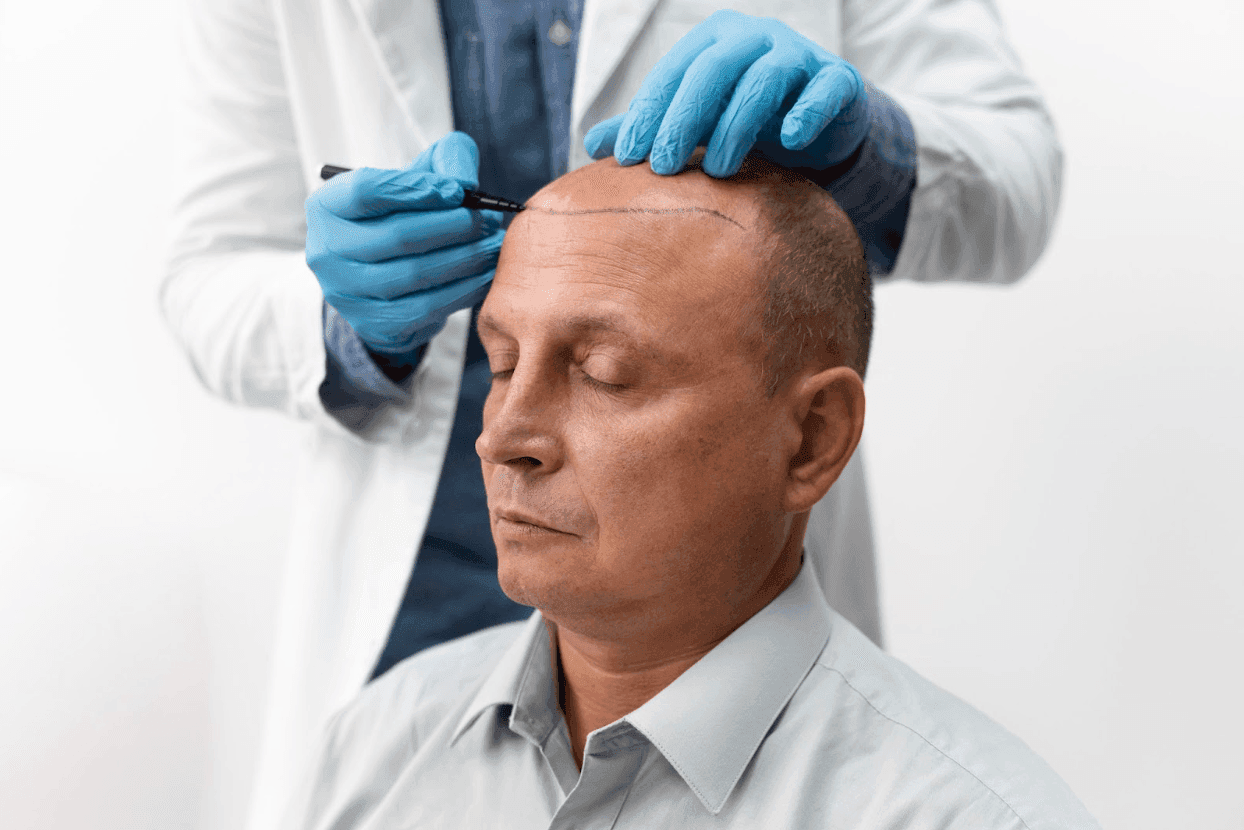
Hair transplants are a globally accepted treatment for hair loss. It’s an outpatient procedure, meaning you don’t have to stay overnight in a clinic. But how safe is a hair transplant? A lot of it comes down to the surgeon’s skills, the level of sterility in the clinic, and how well you care for your scalp afterwards. However, as with any type of surgery, there's always a small risk of bleeding, infection, or an allergic reaction to the anesthetic.
If you're wondering if a hair transplant is safe in India, the answer is yes. A hair transplant is safe, as long as it’s done by a qualified surgeon in a clean, professional setup. Clinics in India adhere to global hygiene standards, and many surgeons have received international training.
This blog discusses more about a common apprehension: Is a hair transplant safe? It explains what safety means, the associated risks, potential side effects, and steps you can take for better healing.
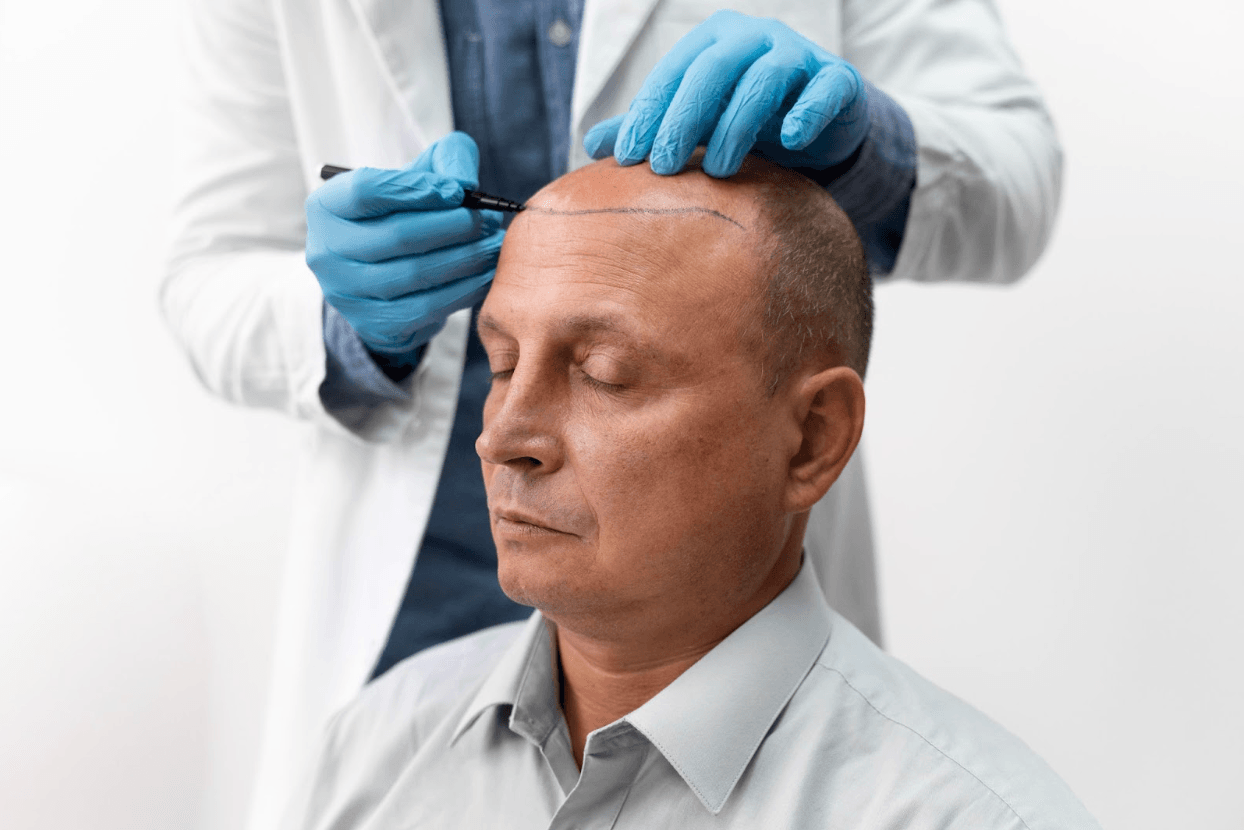
Safety Measures and Considerations
Is a hair transplant safe or not depends on whether a clinic adheres to established medical protocols, which have been outlined below:
Qualified Surgeon and Clinic
The safe and successful hair transplant highly relies on a specialist. Here is how to find the one:
- Board-Certified Professionals: Find a local board-certified surgeon who meets strict standards of training, expertise, and ethics in hair restoration.
- Specialization in Hair Restoration Procedures: The hair restoration specialist should have refined skills and deeper knowledge of hair transplantation methods.
- Experience Reduces Complications: An experienced surgeon's expertise influences graft survival and aesthetics, making procedures safer.
Sterile Environment
A sterile environment is non-negotiable in any surgical procedure, including hair transplantation:
- Surgical-Grade Infrastructure: A reputable clinic features interiors that strictly adhere to rigorous surgical standards.
- Instrument Sterilization: Autoclaving is a common method for this purpose and is considered a standard procedure for cleaning of instruments.
- Cleanroom Setups Reduce Infection Risks: In some advanced clinics, cleanroom technology works wonders to maintain a controlled air environment with a minimal microbial load.
Pre-operative Care
The pre-operative care prepares you well for your surgery:
- Medical Screening, Blood Tests: Your surgeon may ask you to undergo several medical screenings and blood tests to assess your medical history.
- Avoiding Blood Thinners, Smoking: You may be advised to avoid consuming blood thinners and quitting smoking for a considerable period before you undergo your hair restoration surgery.
- Patch Test for Anesthesia: A patch test is performed using local anesthesia to rule out any potential allergic reactions.
Post-operative Care
A proper post-operative hair care is quite important to ensure that your healing is optimal with minimal side effects:
- Wound hygiene and antibiotics: Follow gentle cleaning instructions for recipient and donor areas; your surgeon may prescribe oral antibiotics.
- Anti-inflammatory care: Swelling is common, which can be managed with anti-inflammatory medicines or cold compresses.
- Monitoring graft survival: You may need regular clinic visits to monitor healing and graft survival.
Hair transplant procedures, when performed at reputed centers and under the guidance of skilled surgeons, yield high success rates with minimal complications.
Potential Risks and Complications
Is a hair transplant safe and permanent? Yes, it is. However, it still carries a low risk of complications. Here are some of the associated risks and complications:
Infection
Infection is a rare complication of a hair transplant because:
- Strict sterilization procedures are followed in the most reputable clinics. They prioritize sterilization by using aseptic techniques.
- Your surgeon can manage infections with antibiotics.
Bleeding
- Expect minor bleeding during the extraction and incision phases of the procedure.
- However, your surgeon can effectively control bleeding with the help of direct pressure, tumescent solution, and careful technique.
Scarring
Your scarring type largely depends on the transplant method you choose:
- FUE = Minimal Dot Scars: Follicular Unit Extraction (FUE) is a procedure where your surgeon will extract individual follicular units. This procedure might leave behind minimal circular dot scars.
- FUT = Linear Scar if Not Properly Closed: Follicular Unit Transplantation (FUT) is a strip harvesting method that leaves behind a linear scar in the donor area.
Swelling and Numbness
You may temporarily experience swelling and numbness in your forehead or eyelids, which is common due to the tumescent solution and your body’s response. This swelling typically subsides within 48 to 72 hours.
Most of these hair transplant side effects are temporary and can be managed with proper aftercare. Just make sure you’re working with a qualified surgeon who follows strict hygiene protocols.
Hair Growth Issues
Hair transplant patients may experience hair growth challenges that stem from various factors during and after the procedure, such as:
- Poor handling of grafts during extraction and implantation can reduce graft survival rates, leading to patchy or uneven results.
- A delayed growth phase doesn't necessarily indicate failure, as transplanted hair typically follows a natural cycle where initial shedding occurs before permanent growth begins.
These hair transplant side effects are often temporary and resolve as the healing process progresses.
Allergic Reactions
Some patients may develop allergic reactions to local anesthesia or topical sprays used during the hair transplant, ranging from mild skin irritation to more serious reactions.
Any unusual symptoms, swelling, or persistent discomfort must be reported to your doctor.
With many patients asking, "Is hair transplant safe and permanent?" understanding these potential reactions helps ensure both safety and long-term success of the procedure.
Why People Choose Hair Transplants?
Many people choose the hair transplant procedure as a preferred solution to treat their hair loss. Here are a few of the reasons why they believe so:
Long-Term Solution vs. Temporary Options
Unlike topical solutions, oral medications, and even platelet-rich plasma (PRP) therapy, hair transplants are a unique permanent treatment option.
Natural-Looking Results
Like modern non-surgical methods, traditional hair transplants have advanced, with techniques like FUE and FUT achieving natural results.
Psychological and Social Confidence Improvement
Hair loss significantly impacts your psychology and decreases your overall self-esteem and creating anxiety. Hair restoration is essential for regaining your self-image and confidence.
Are There Any Side Effects of Hair Transplant in India?
You may be apprehensive of the side effects of a hair transplant, and that is normal. Here are some hair transplant side effects:
Scarring
Scarring is unavoidable in surgery. While minimally noticeable in FUE, improper FUT may leave visible scars.
Itching
Itching is quite a common aspect of your healing process in both the donor and recipient areas.
Folliculitis
Folliculitis is an inflammation that you will notice around your hair follicles. You do not need to worry a lot about it, as your surgeon will prescribe mild antibiotics to manage it.
Altered Sensation
Changes in scalp sensation are temporary after a hair transplant. You may experience numbness or tingling for weeks, which should normalize as nerves regenerate.
Shock Loss
Shock loss is a temporary shedding of your native hair. You will soon witness a regrowth within 3-4 months.
So, is a hair transplant safe? Yes, a hair transplant is safe when done by a qualified surgeon in a hygienic clinical setting. Most hair transplant side effects, like swelling or redness, are temporary and easily manageable.
Can You Go Bald After a Hair Transplant?
A well-performed hair transplant shouldn't cause baldness. Patients must understand that it redistributes existing hair from donor areas to thinning or bald regions.
Hair transplant does not prevent future genetic hair loss in the non-transplanted areas. Therefore, the question, "Is hair transplant safe and permanent?" needs to be understood in this context.
- Natural progression of androgenetic alopecia may continue.
- Non-transplanted areas might thin over time.
- Maintenance therapy, such as finasteride or PRP, is often recommended.
Long-Term Results
The longevity and aesthetic outcome of a hair transplant are primary concerns for patients contemplating the procedure. This is mainly regarding questions like, "Is a hair transplant permanent?".
The good news is that with proper care, hair transplants are safe and have a very long-term outcome. Here is what you can witness in the long term:
1. Grafts are permanent in the recipient area
Transplanted hair follicles from resistant areas like the back or sides of your scalp stay resistant after moving to the recipient zone, making results permanent.
2. Results begin at 3–4 months, with full growth within 12 months
Initial shedding occurs weeks after surgery. New hair starts growing at 3–4 months and matures by 12 months.
3. With proper care, they last for many years
Good postoperative care can ensure transplanted hair lasts for many years.
4. Healthy lifestyle and hormone balance are key beyond medication
A balanced diet, stress management, no smoking, and hormone control support the health of transplanted and native hair, improving outcomes.
FAQs
-
What are the risks of a hair transplant?
The risks are generally minor and include temporary swelling, numbness, mild pain, and itching.
-
How long do hair transplants last?
A hair transplant will typically be a permanent solution. When properly maintained, it can last for more than 10 years. However, you need to work on its maintenance.
-
Is a hair transplant 100% successful?
No medical procedure or surgeon can guarantee 100% success. Your hair transplant results also depend on your health, following post-operative steps, and your surgeon’s skill.
-
What is the best age for a hair transplant?
There is no single defined age as the best age to undergo a hair transplant procedure.
-
Do donor hairs grow back?
You won’t see your donor hair regrow, as the surgeon extracts individual follicles. Surrounding hair continues to grow, covering the extraction area, leaving the donor site unchanged.
-
What happens 10 years after a hair transplant?
Ten years post-transplant, your hair will still grow naturally, with maintenance therapy recommended to prolong results.
Final Thoughts
The answer to "Is hair transplant safe?" is a confident yes. Hair transplant is a clinically effective and remarkably safe outpatient procedure, provided a qualified and experienced surgeon performs it in a sterile, professional environment. While common side effects, such as temporary swelling, mild discomfort, and itching, are manageable and resolve quickly, serious risks are exceedingly rare.
Considering a hair transplant? Start your hair transplant journey today. Schedule a consultation with Kibo Clinic’s experts to understand your personalized safety and success profile. Kibo’s guided assessment will identify the most suitable approach for your unique hair loss pattern and objectives. Contact Kibo now and book a consultation.
Medical Disclaimer : Information from Kibo Hair Clinics is for educational purposes only. It does not replace diagnosis, trichoscopy, blood test interpretation, prescription treatment, procedure advice, or side-effect counselling from a qualified dermatologist or hair restoration doctor.