
Summary
This article compares hair transplants and cosmetic hair fibres from a medical and long-term perspective. It explains how each option works, what results realistically look like over time, and how factors like donor hair quality, growth cycles, maintenance effort, and overall cost influence outcomes. The guide is based on clinical viewpoints from the medical leadership team at Kibo Clinics, where all procedures and consultations are conducted only by certified dermatologists and transplant surgeons.
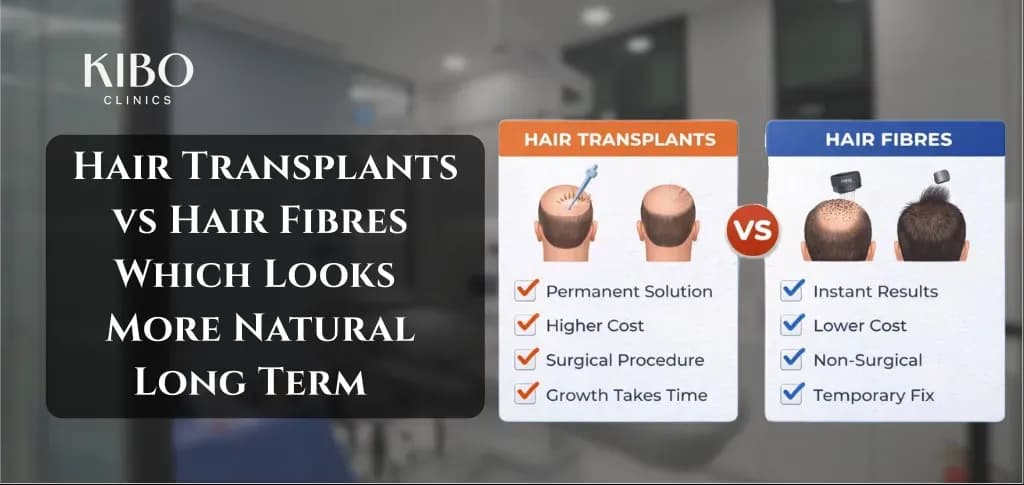
When thinning becomes noticeable, many people look for a fast visual fix. Cosmetic hair fibres can make hair appear fuller in minutes, while a hair transplant is a medical procedure designed to restore real, growing hair over months. Both approaches can improve confidence, but they work in fundamentally different ways. Understanding those differences helps you avoid unrealistic expectations and choose a path that aligns with your long-term goals.
If you are new to medical restoration and want a broader overview of how modern techniques work, our complete hair transplant guide explains the process, recovery phases, and treatment planning in simple terms.
How Hair Fibres Work
Hair fibres are tiny, colored strands made from materials like keratin or cotton. They cling to existing hair through static charge and create the appearance of thicker coverage. Fibres are popular for events or daily use because they are quick to apply and immediately improve the look of thinning areas.
However, fibres depend entirely on the presence of existing hair. They do not stimulate growth, strengthen follicles, or change the underlying pattern of hair loss. Rain, sweat, or washing removes them, which means maintenance is continuous.
How Hair Transplants Work
A hair transplant is a surgical procedure that moves follicles from a donor area, usually the back or sides of the scalp, to thinning or bald regions. These transplanted follicles continue to grow naturally because they retain their resistance to hormonal hair thinning.
Modern techniques such as FUE and DHT focus on precision extraction, careful graft handling, and natural implantation angles. You can explore how these methods differ in our DHI vs FUE technique comparison, which breaks down comfort, healing, and visual outcomes.
Short-Term Appearance vs Long-Term Reality
Fibres offer an instant cosmetic improvement, which is why they are appealing for early thinning or special occasions. The downside is that the look disappears as soon as the fibres are washed away.
Transplanted hair follows a biological growth cycle. Most patients see an initial shedding phase, followed by gradual regrowth and thickening over several months. A realistic month-by-month breakdown is explained in the hair transplant results timeline, which helps set expectations for visible change.
Natural Look: What Actually Determines It
A natural appearance is not just about adding hair. It depends on hairline design, graft placement, angle of implantation, and how donor hair is selected and preserved. Poor donor management can limit density and future options.
This is why understanding the role of the donor area in a successful hair transplant is essential before committing to any clinic or technique.
Maintenance and Lifestyle Fit
Hair fibres require daily or frequent application. Activities like swimming, intense workouts, or being caught in the rain can quickly remove them. For some people, this routine becomes part of their lifestyle.
Transplanted hair, once fully grown, can be washed, cut, and styled like natural hair. The main commitment is during the recovery and early growth phase, when aftercare and patience matter most.
Cost Over Time
Fibres appear inexpensive upfront, but long-term use can add up due to repeated purchases. A transplant is a higher initial investment, but it is designed as a one-time medical solution for lasting coverage.
For a realistic breakdown of what patients often overlook, our guide on hidden hair transplant costs in smaller cities explains follow-ups, revisions, and long-term value.
Who Is a Better Candidate for Each Option
Fibres may suit people with very early thinning who want a temporary visual boost without medical intervention.
Transplants are more appropriate for individuals with visible recession or bald areas who have a healthy donor zone and stable hair loss. Clinical evaluation helps determine suitability and realistic density goals.
Medical Oversight and Safety
At Kibo Clinics, all consultations and surgical procedures are carried out exclusively by certified dermatologists and trained hair transplant surgeons. This ensures that treatment planning, donor assessment, and implantation follow medical protocols rather than cosmetic shortcuts.
If you want to understand how a structured consultation should work, our guide on what to expect at your first hair transplant consultation outlines the clinical checks and discussion points patients should look for.
Transplants vs Other Cosmetic Alternatives
Fibres are not the only non-surgical option people explore. Some compare transplants with hair patches or camouflage sprays. Each comes with different comfort levels, visibility risks, and lifestyle trade-offs.
You can read a detailed comparison in hair transplant vs hair patch and see visual differences in our transplant vs camouflage sprays guide.
Making a Realistic Decision
The choice between fibres and a transplant is not about which looks better in a mirror today. It is about how you want your hair to behave years from now. Fibres offer convenience and flexibility. Transplants offer permanence and biological growth.
A medical evaluation helps align expectations with what your donor area, scalp health, and hair loss pattern can realistically support.
Frequently Asked Questions
Do hair fibres damage natural hair or scalp?
Hair fibres themselves do not damage hair follicles. However, frequent application without proper scalp cleansing can lead to product buildup, which may irritate the scalp or worsen conditions like dandruff and folliculitis. Regular washing and scalp hygiene are important for long-term use.
Can hair fibres be used after a hair transplant?
Yes, but only after the scalp has fully healed. Certified dermatologists at Kibo Clinics typically advise waiting until the grafts are securely anchored and there is no redness or scabbing before applying any cosmetic products.
Which option looks more natural up close?
A well-designed hair transplant tends to look more natural in close-up and under different lighting conditions because it involves real, growing hair. Fibres can look convincing from a distance but may appear uneven or artificial under bright light or physical contact.
Is a hair transplant permanent?
Transplanted follicles are generally resistant to hormonal hair thinning and can grow for a lifetime. However, surrounding native hair may continue to thin over time, which is why long-term medical planning and follow-up care are important.
How long does it take to see visible results after a transplant?
Initial shedding usually occurs in the first few weeks. New growth typically begins around three to four months, with visible improvement by six months and more complete results between twelve and eighteen months.
Are hair fibres suitable for advanced baldness?
Fibres require existing hair to cling to. In advanced baldness where large areas lack hair, fibres may not provide even coverage or a stable appearance.
Is a medical consultation required before choosing a transplant?
Yes. At Kibo Clinics, every treatment plan is built only after a consultation with a certified dermatologist or qualified hair transplant surgeon. This ensures donor assessment, scalp health evaluation, and realistic outcome planning.
Can I combine hair fibres with medical hair regrowth treatments?
Many patients use fibres while undergoing non-surgical regrowth treatments such as PRP or medical therapy. Your doctor can guide you on safe use without interfering with scalp health or treatment effectiveness.
What is more cost-effective in the long term?
Fibres are lower cost initially but require continuous repurchase. A transplant involves a higher one-time investment but is designed as a permanent restoration solution, making it more cost-effective for many patients over time.
Who should avoid a hair transplant?
People with poor donor density, unstable hair loss, certain medical conditions, or unrealistic expectations may be advised to delay or avoid surgery. A clinical evaluation helps determine suitability.
Conclusion
Hair fibres and hair transplants serve different purposes. One is a cosmetic cover, the other is a clinical restoration. Understanding the timeline, maintenance, and biological limits behind each option helps you make an informed, long-term decision rather than a quick fix.
Disclaimer
This content is for educational purposes only. Individual suitability for medical or cosmetic hair loss solutions varies. A certified dermatologist or qualified hair transplant surgeon should evaluate your condition before any clinical decision.
References
https://ishrs.org/hair-loss-classifications
https://aad.org/public/diseases/hair-loss
https://ncbi.nlm.nih.gov/books/NBK430849
https://healthline.com/health/hair-transplant
Hair Transplant Services
FUE Hair Transplant in India | Sapphire FUE Hair Transplant Technique | Direct Hair Transplant (DHT) Procedure | Unshaven Hair Transplant Option | Corrective Hair Transplant Surgery | Body Hair Transplant (BHT)
Hair Regrowth Services
PRP Therapy for Hair Regrowth | GFC Therapy for Hair Fall Control | Mesotherapy for Hair Regrowth | Microneedling for Hair Growth | Low-Level Laser Therapy (LLLT) | IV Hair Boosters for Hair Health
Must Read
Hair Transplant Results Timeline: What Growth Really Looks Like | Hair Transplant vs Hair Patch: Lifestyle and Long-Term Comfort | Hair Transplant vs Camouflage Sprays: Visual Comparison Guide | Hidden Costs of Hair Transplants in Smaller Cities | Why the Donor Area Limits What Fibres Can’t Replace
Hair Loss Treatment in Indian Cities
Hair Transplant Cost in Mumbai | Hair Transplant Cost in Delhi | Hair Transplant Cost in Bangalore | Hair Transplant Cost in Hyderabad | Hair Transplant Cost in Pune | Hair Transplant Cost in Chennai
Medical Disclaimer : Information from Kibo Hair Clinics is for educational purposes only. It does not replace diagnosis, trichoscopy, blood test interpretation, prescription treatment, procedure advice, or side-effect counselling from a qualified dermatologist or hair restoration doctor.