
Hair Transplant vs Hair Patch: Which Solution Lasts Longer?
Published on Sun Mar 22 2026
Blog Summary
Patients often ask a simple question that carries many practical layers. Which solution lasts longer, a hair transplant or a hair patch. In this in depth guide, I explain how each option works, what a patient can expect over time, how long the results can reasonably last, and how day to day life differs with each choice. You will find step by step overviews, clear comparison tables, recovery and adaptation timelines, and friendly expert advice on safety, hygiene, and aftercare. Throughout, I will reference established medical authorities so that your decision is grounded in evidence. Mumbai is a major hub for advanced hair restoration, and clinics such as Kibo Hair Sciences focus on safety, natural looking outcomes, and long term support for patients.
Introduction to Hair Restoration Choices
Hair restoration has two broad paths. Surgical restoration that moves your own living follicles to thinning areas. Non surgical coverage that uses an external hair system, often called a hair patch, wig, or scalp prosthesis. A hair transplant can produce permanent, natural looking growth when the procedure is performed correctly and when ongoing native hair loss is managed with appropriate therapy. This position is clearly described by the American Academy of Dermatology and by leading hair restoration societies.
A hair patch, which is a form of non surgical hair replacement, provides immediate coverage and styling flexibility. Dermatology resources list wigs and hairpieces as valid camouflage and cosmetic options for people who prefer a non surgical route.
The question of what lasts longer is really a question about biology versus a device. A transplant moves living follicles that continue to grow on your scalp. A hair patch does not change the biology of hair loss. It is an external system that requires regular maintenance and periodic replacement. Authoritative dermatology sources describe the transplant outcome as potentially permanent, while also reminding patients that ongoing thinning in untreated areas can continue and should be managed.
How Each Solution Works
What is a Hair Transplant
A hair transplant is a surgical procedure that moves hair follicles from a donor area on the scalp to areas with thinning or baldness. Two well established techniques are Follicular Unit Extraction and Follicular Unit Transplantation. The living grafts are placed into tiny recipient sites at angles that mimic natural growth, which allows the hair to grow and be cut or styled like the rest of your hair. Trusted public health and dermatology sources provide neutral, patient friendly overviews of the procedure and its safety profile.
What is a Hair Patch
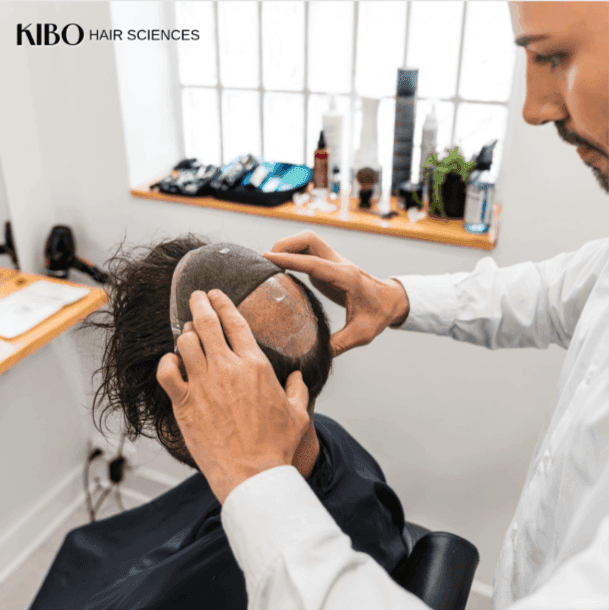
A hair patch is a non surgical hair replacement system. It is a custom or ready made hairpiece that is attached to the scalp or existing hair with tapes, clips, or liquid adhesives. The American Academy of Dermatology describes wigs and scalp prostheses as cosmetic options that can conceal hair loss. This route can help many people who prefer a quick visual change without surgery.
Longevity and Biology
The longevity of a hair transplant is rooted in donor dominance, the concept that follicles taken from the back and sides often retain their resistance to the hormone that drives pattern hair loss when moved to thinning areas. As a result, transplanted hair can last for many years and is often described by professional societies as a permanent solution, while also noting that results depend on proper donor selection and patient specific variables.
By contrast, a hair patch provides coverage only while it is maintained and worn. It does not stop hair loss because it does not change follicle biology. Dermatology resources describe wigs and prostheses as camouflage rather than medical treatment. This distinction is important when you consider what will last longer in a biological sense.
Ideal Candidate Criteria
Hair Transplant
A suitable candidate for a transplant typically has stable or predictable pattern hair loss, a healthy donor area, realistic expectations, and the ability to follow aftercare. Medicines may be recommended to help preserve surrounding native hair, which protects the look of the transplant over time.
Hair Patch
A suitable candidate for a hair patch prefers a non surgical path, wants immediate coverage, or has limited donor supply. People who enjoy frequent style changes sometimes choose a hair system for flexibility. The choice is cosmetic rather than medical and can be used at any stage of hair loss.
Step by Step Overview
Hair Transplant, a Patient Journey
- Pre operative consultation with scalp assessment and planning
- Local anaesthesia for comfort
- Graft harvesting with Follicular Unit Extraction or with Follicular Unit Transplantation
- Recipient site creation to match direction and density goals
- Precise graft placement
- Immediate post procedure care and home instructions
These steps are outlined across public and association resources that describe the patient experience and safety checkpoints.
Hair Patch, a Patient Journey
- Measurement and base selection
- Colour match and density selection
- Cut in and blending
- Attachment with tapes, clips, or cosmetic adhesives
- Home care instructions for cleaning and re attachment schedule
Safety, Hygiene, and Comfort
Any medical procedure requires attention to hygiene and sterile technique. National health services list the most common general risks associated with surgery, and these are addressed through careful protocols, anaesthesia safety, and follow up. For hair patches, comfort and scalp health depend on proper cleaning, gentle removal, and avoidance of prolonged traction. Dermatology guidance on traction related hair problems emphasises that long lasting tension on hair can cause breakage or loss, which is why professional fitting and periodic rest are advisable.
Kibo Hair Sciences focuses on clean rooms, sterile instruments, and methodical aftercare to keep the experience smooth and predictable. Patients in Mumbai often appreciate scheduled check ins because the local climate can be warm and humid, which makes good hygiene especially important during early healing.
Lifestyle, Styling, and Daily Activities
With a successful transplant, you can cut, colour, and style the transplanted hair like your own. Water activities and exercise can be resumed after the early healing period. National health guidance notes a short recovery window with common sense restrictions immediately after surgery.
With a hair patch, you can enjoy an instant change in appearance. Activities are generally possible, but the system requires cleaning, re attachment, and occasional replacement of adhesives or bases to maintain comfort and appearance. Dermatology sources frame hair systems as cosmetic aids rather than medical treatment, which aligns with this practical understanding.
Cost of Ownership Over Time
Because a transplant moves living follicles, many patients view it as a long horizon investment in their appearance. Maintenance may include medical therapy for ongoing pattern thinning of native hair.
Because a hair patch is a device, cost of ownership includes regular salon or clinic visits for re attachment and care, along with periodic system replacement. Exact schedules vary with base materials, daily routine, and the environment. Mumbai residents often ask about heat and humidity. Good cleaning habits and breathable base choices can help maintain comfort.
Recovery and Adaptation Timeline
Table One. Recovery or Adaptation at a Glance
| Approach | Day 1 to 3 | Day 4 to 7 | Week 2 | Month 1 to 3 | Month 6 to 12 |
| Hair transplant | Mild redness and swelling are common and then reduce, sleep with head elevated, follow washing plan | Light scabs form and begin to shed | Skin tone begins to normalise, hair enters resting phase | Shedding of short transplanted hairs can occur and is expected, new growth begins beneath the skin | Visible growth and thickening, styling freedom increases |
| Hair patch | Immediate coverage on day one, learn cleaning routine | Re attachment visit if needed, small adjustments for comfort | Routine cleaning cadence established | Confident day to day use, schedule periodic re attachment | System refresh or replacement based on wear, colour match, and lifestyle |
Hair transplant milestones and early restrictions are described in neutral national health guidance. The adaptation row reflects common user pathways for hair systems, which are cosmetic rather than medical treatments.
Detailed Comparison
Hair Transplant versus Hair Patch
| Dimension | Hair transplant | Hair patch |
| Core concept | Your own living follicles moved to thinning areas | External hair system attached to scalp or hair |
| Longevity | Considered a permanent solution when donor selection is correct, with ongoing native hair loss managed | Lasts while worn and maintained, replacement required to keep appearance |
| Look and feel | Grows naturally, can be cut and styled | May look very natural with professional blending, does not grow |
| Maintenance | Early aftercare, routine hair care, medical therapy may be advised | Regular cleaning and re attachment, periodic system replacement |
| Recovery or downtime | Short post procedure recovery, return to routine after early period | No medical recovery, immediate cosmetic change |
| Risks and comfort | General surgical risks are small and are managed by trained teams, follow up reduces issues | Irritation or traction can occur if systems are not fitted or maintained correctly |
| Candidate fit | Healthy donor area, realistic goals, willingness to follow aftercare | People seeking non surgical coverage or with limited donor supply |
Longevity statements for transplantation are supported by dermatology and hair restoration association resources. Camouflage role of hair systems is supported by dermatology patient education content.
Which One Lasts Longer
If you define lasting as biological permanence, a hair transplant is the longer lasting option in appropriate candidates because the follicles are alive and continue to grow. Association resources describe transplantation as permanent when performed to standard, with the practical reminder that ongoing hair loss can continue in non transplanted areas without medical management.
If you define lasting as a flexible visual change without surgery, a hair patch can be a useful cosmetic solution that you control and update on your own schedule. Dermatology sources present hair systems as a valid choice within a full spectrum of options.
The most helpful path is an honest consultation that covers your goals, lifestyle, and long term expectations. Kibo Clinic teams explain both routes in simple language, share what recovery and maintenance look like over months and years, and support whichever choice aligns with your priorities. Patients in Mumbai often begin with a non surgical system while planning a future transplant, or move directly to transplantation when donor supply and goals are aligned.
Frequently Asked Questions
Do transplanted hairs really keep growing for many years Professional societies explain that transplants are considered permanent when donor selection is correct and when hair loss in non transplanted areas is managed thoughtfully.
Will I need medicines after a hair transplant Dermatology guidance notes that medicines can help slow ongoing thinning in non transplanted hair, which preserves the overall look over time. Your dermatologist will guide you on suitability and timing.
Can a hair patch harm my scalp A well fitted and well maintained system is designed for comfort. If a system creates constant pulling, dermatologists caution that traction related hair problems can occur, so professional fitting and gentle routines are important.
How soon can I return to work after a transplant National health guidance describes a short recovery period with simple instructions. Many people return to light work within a few days. Your care team will personalise advice.
Which choice is best if I want immediate change A hair patch gives instant coverage on day one. A transplant builds density gradually as transplanted hairs cycle and grow in the months that follow.
Why Choose Kibo Hair Sciences Clinic
Kibo Hair Sciences brings a dermatologist led approach, strict sterilisation, and methodical planning to every transplant. The team also provides honest guidance on non surgical options for people who want coverage without a procedure. Individual aftercare plans, climate aware advice for Mumbai residents, and friendly follow up help you stay comfortable and confident over the long term.
Services
Hair Regrowth Solutions
GFC Therapy | IV Hair Booster | Low-Level Laser Helmet Therapy | Mesotherapy for Hair Regrowth | Microneedling for Hair Regrowth | PDO Threads for Hair Regrowth | PRP Therapy
Hair Transplant Options
Follicular Unit Extraction (FUE) | Sapphire FUE | Body Hair Transplant | Corrective Hair Transplant | Hairline Correction | Unshaven Hair Transplant | Direct Hair Transplant (DHT) | Real Time FUE | Bio FUE
Related Blogs
Hair Transplant vs Hair Fibres: Long-Term Outlook | Scalp Micropigmentation vs Transplant | Hair Transplants vs Wigs: Lifestyle Comfort | Transplant vs Camouflage Sprays | SMP with Hair Transplants Explained | Same Graft Count, Different Results | Graft Survival Factors and Outcomes | Hairline Design vs Graft Count | Transplants and First Impressions | Long-Term Maintenance After Transplant