
Hard Water and Hair Loss: How to Protect Your Scalp in Mumbai
Published on Wed Mar 18 2026
Sameer moved to Mumbai and noticed his hair becoming progressively drier and more difficult to manage. "I'm using the same products that worked in Pune," he said, "but now my hair feels coated and looks dull. Could Mumbai's water quality be affecting my hair?" Understanding how hard water impacts hair helps you adapt your protective hair care to local water conditions.
What Makes Mumbai's Water "Hard"
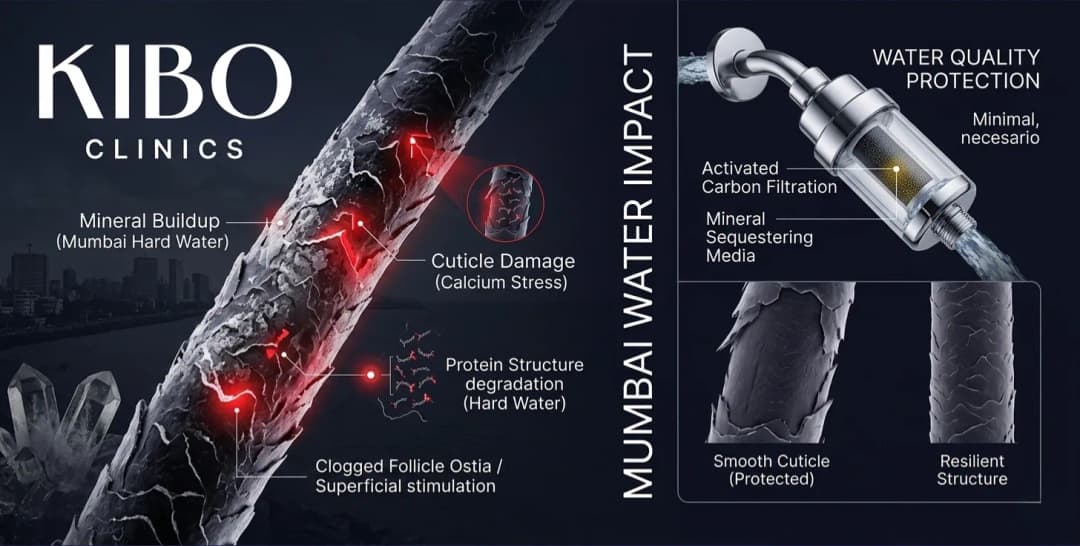
Hard water contains high concentrations of dissolved minerals, primarily calcium and magnesium, picked up as water passes through limestone and chalk deposits. Mumbai's water hardness varies by area and season, with some neighborhoods experiencing very hard water while others have moderate levels. The minerals in hard water don't rinse cleanly from hair, instead forming deposits that accumulate over time.
These mineral deposits create a coating on hair shafts that makes hair feel rough, look dull, and resist styling products which can't penetrate the mineral layer effectively. On the scalp, mineral buildup can clog follicle openings and potentially contribute to dryness and flaking.
How Hard Water Affects Different Hair Types
Fine hair shows hard water effects most dramatically, becoming limp and coated with relatively small amounts of mineral buildup. Color-treated hair may fade faster in hard water and take on brassy or greenish tones from copper in the water. Dry or damaged hair becomes even drier as mineral deposits prevent moisture penetration. Curly and textured hair often becomes frizzier and harder to define in hard water conditions.
For Sameer, his already fine hair became progressively more weighted down with mineral deposits, losing the volume and movement he'd had in Pune's softer water.
Signs Your Hair Problems Come From Hard Water
Hair that feels squeaky or sticky even after thorough rinsing suggests mineral coating rather than clean strands. Progressive dullness despite unchanged product routine indicates buildup rather than product failure. Soap scum rings in your sink or shower and white deposits on faucets confirm hard water in your home. Hair that styles well when you travel but becomes unmanageable at home strongly suggests local water quality issues.
Solutions for Managing Hard Water Effects
Chelating or clarifying shampoos specifically designed to remove mineral buildup should be used weekly or biweekly rather than daily. Apple cider vinegar rinses after shampooing can help dissolve mineral deposits, though vinegar must be properly diluted to avoid scalp irritation. Installing shower head filters reduces some mineral content, though effectiveness varies and filters require regular replacement.
Whole-home water softening systems provide the most complete solution but represent significant investment. Using bottled or filtered water for final rinses removes minerals that regular tap water would deposit. Adjusting product choices to work with hard water rather than against it, such as using lightweight products that don't add to buildup, helps manage the condition.
For Sameer, we recommended starting with a chelating shampoo weekly plus apple cider vinegar rinses, evaluating whether these affordable interventions provided sufficient improvement before considering shower filter or softener installation.
Long-Term Hard Water Exposure and Hair Health
Chronic mineral buildup can contribute to hair breakage by roughening cuticles and creating weak points in the hair shaft. The dryness from blocked moisture penetration makes hair more brittle and prone to damage. However, hard water itself doesn't cause pattern baldness or permanent follicle damage, meaning it affects hair quality more than quantity.
If you notice increased shedding after moving to a hard water area, it's more likely from the stress of relocation or other factors rather than the water directly causing hair loss.
Frequently Asked Questions
Can lifestyle changes prevent hair loss?
Lifestyle modifications can slow progression and improve overall hair health, but genetic pattern baldness requires medical or surgical intervention.
How do I know if my hair loss is temporary?
Temporary shedding from stress, nutrition, or medication typically resolves within 6-9 months, while pattern baldness progresses steadily over years.
What vitamin deficiencies cause hair loss?
Iron, vitamin D, vitamin B12, and zinc deficiencies can contribute to hair thinning, though correction only helps if deficiency exists.
Should I use special shampoos for hair loss?
Medicated shampoos help scalp health but dont treat underlying hair loss. Focus on proven treatments like minoxidil or finasteride for actual regrowth.
How often should I wash thinning hair?
Wash as needed based on oil production, typically every 2-3 days. Washing frequency doesnt affect hair loss despite common myths.
Can stress cause permanent hair loss?
Acute stress triggers temporary shedding that resolves naturally. Chronic stress may accelerate genetic hair loss but doesnt solely cause permanent baldness.
Do hair growth supplements actually work?
Supplements only help if you have documented nutritional deficiency. For people with adequate nutrition, supplements provide minimal benefit.
Is thinning hair a sign of health problems?
Sometimes. Sudden significant shedding warrants blood work to check thyroid, iron, and other markers, though most hair loss is genetic.
What foods are best for hair health?
Protein-rich foods, iron sources like lean meat and spinach, and foods with zinc and biotin support hair health, but diet alone wont reverse genetic baldness.
Why Kibo Clinics
At Kibo Clinics, we understand that Mumbai's specific environmental conditions including water quality create unique hair care challenges. Our planning-first philosophy includes practical strategies for managing local water conditions while pursuing hair restoration goals. We help you distinguish between problems from environmental factors you can modify versus genetic hair loss requiring medical intervention.
Disclaimer: This blog is for informational purposes only. Consult qualified healthcare providers for personalized medical advice.
Hair Regrowth Services
Iv Hair Boosters | Prp Therapy | Direct Hair Transplant Dht | Corrective Hair Transplant | Realtime Fue Hair Transplant | Microneedling For Hair Regrowth
Must Read
What To Bring On Hair Transplant Procedure Day | Body Hair Vs Scalp Restoration | Hair Loss In Hyderabad | Transition From Tight Hairstyles | Questions To Ask At Your Hair Transplant Consultation | Understanding The Language Of Natural Hairline
Relevant Blogs
Superfoods Hair Density Diet | Hardik Pandya Hair Transplant Guide | Cost Of Hair Transplant In Chandigarh | Crown Grafts Visual Density | Beard Transplant In Mumbai Cost Guide | Best Hair Transplant In Chembur | Hair Transplant Quote Structures And Transparent Pricing